Proverbs 7
KAKAƗYARI NIUKIEYA XAPAYARI WIXARIKAKƗ · Tap a verse to see its cross-references.
Mari'itɨarika xeime 'ɨyaya hepaɨtsita
1Temaikɨ, ne'ɨkitsikatsie yaketinekamieni,
meta ne'aitsika keneuti'uta 'a'iyaritsie.
2Yaketinekamieni kenemɨti'aita pe'ayenieretɨ 'apekaniuyeikamɨkɨ,
ne'ɨkitsika kene'ɨwiyani 'ahɨxi mɨyɨwi kepemɨtikweriwayurie hepaɨ.
3'A'itɨwametetsie keneutapietɨkani,
kenaka'utɨa 'a'iyaritsie paitɨ.
4Titakɨ yapemɨtimaiwe mɨkɨ pumatsiparewieni yaxeikɨa 'akuri hepaɨ,
titakɨ kepemɨtimate mɨkɨ pumatsiparewieni kemɨ'ane pemumate hepaɨ.
5Mɨkɨ mepɨmatsixɨna 'ukaratsi mɨka'a'ɨya hepaɨtsita,
meta 'uka mɨwikie hepaɨtsita pepɨ'a'ɨwiyani witsitikuxatakaku.
6Heiwa nekiita ne'ayekaitɨ
'itupari 'etsimayewatsie neheunieretɨ,
7Nepɨne'ɨwiyaxɨ temari memɨka'u'iyari wahetsie,
mɨkɨ temari watsata xeime kwi nepuxei
xeime yemekɨ 'atsimɨkatimate.
8Kayetsie kananuyani, 'etsikina kaniye'ani,
hikɨ 'anɨari 'umietɨ 'ukaratsi kiiya hepa kaneyani.
9Hikɨ kanikɨyɨrirɨmekaitɨni.
'Ari waɨkawa 'ukuyɨrekuri.
10Yapauka 'ukaratsi kanewayeyani 'enukunakeke,
'uka tuminikɨ muyuwitɨnɨa hepaɨ reyukukemaritɨatɨ,
yuhetsie pɨkamatsiɨkɨkai kemɨtiyurienikekai.
11(Mɨkɨ 'uka waɨkawa pɨtikuxata 'utahiwatɨ hipame kawa'enietɨ,
mɨpaɨ memɨ'anene 'ukarawetsixi yukiita yemekɨ mepɨkahayetei.
12Kaye'utɨma mepu'uwa meta teɨteri memayuxeɨrietsie,
meta yamepɨtehupa 'itsikinatsie).
13Hikɨ yapauka temaikɨ kananakawiyatɨyani meta kani'itseni,
metatsiere kayukatewiyakamekɨ mɨpaɨ katinitahɨawe:
14«Nekiita 'aixɨa memɨteyuxeiyanikɨ mawariyari nekanexeiyani,
tɨratu nemuwewiekai nekakaɨyari hamatɨa hikɨri nekatinaye'atɨani.
15'Ayumieme nepeyetɨa nepɨmatsihekunakixɨ,
nepɨmatsikuwaunekai, 'ari nepɨmatsi'ukaxei.
16Ne'utatsie nekaneika'ita
rinu 'ixurikiyari waɨkawa mɨti'utɨka 'Ekipitu miemekɨ.
17Nemukahuputsie witsimu'ɨa nekaneukawirieni,
mixaxi witsimu'ɨa, 'aruhe meta kanera.
18Hikɨmɨ, naki'eriya tekɨxi winuyari naime tepanu'ieni,
naki'eriyakɨ tepuyutitemamawieni tsepa temukatariyarie.
19Nekɨna yukie pɨka'uka,
kanayeyani hikɨ 'ateewa paitɨ.
20Yutumini waɨkawa kane'ɨni,
kwitɨwa pɨkanuani xeimetseri kaneyurimɨkɨ».
21Mɨpaɨ witsitikuxaxatɨwatɨ,
kanikemakaxɨani.
22Hikɨ 'ana 'utɨmana kaneyani,
tuuru huyeta metɨa hemierienike hepaɨ,
maxa winiyaritsie muyewierixɨ hepaɨ,
23'ɨrɨkɨ mumɨiya yutawitsie,
wiki winiyaritsie muyewierixɨ hepaɨ,
'atsikatimaitɨ mana yutukari kanitatɨmaiyamɨkɨ.
24'Ayumieme hikɨ temaikɨ, keneneu'eni,
neniuki yemekɨ keneu'eni.
25'A'iyari xaɨtsie pɨka'uyuyuipikeni 'uka kemɨmetikɨhɨawekɨ,
mɨkɨ 'ɨxatsieya huyeyari 'utɨa pepɨkaheuyewautseni,
26karikɨ yumɨiretɨ mɨpaɨ mekateniukwini,
mepuyumɨire kɨmana memukwi.
27Kiitana mɨki teukiyapa kanihɨkɨtɨni,
yunaitɨ muwa memɨtahake mepɨtakukuwe.
Did you know?
The Trap of Seduction
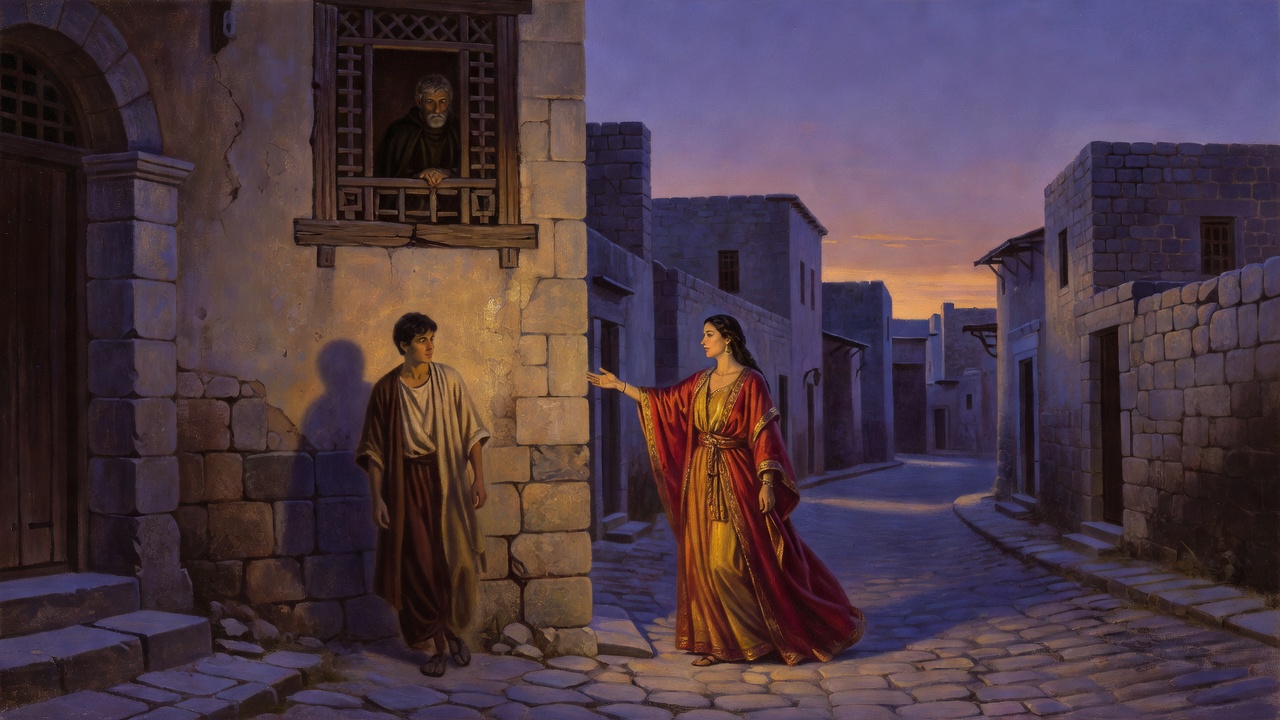
- The narrator observes the scene through the lattice of a house window, watching the street below as twilight fades into the dark of night. This literary perspective presents the story as an eyewitness account warning against wandering into places of temptation.Sources: the Bible text itself
- The seductress mentions that she has paid her vows and offered peace offerings, meaning she had meat from sacrifices prepared for a feast. She further appeals to luxury by mentioning colored linen imported from Egypt and perfumes of myrrh, aloes, and cinnamon.Sources: the Bible text itself
- To counter the allure of the stranger, the teacher urges the youth to embrace wisdom as a sister and understanding as a close relative. Cultivating an intimate, familial relationship with wisdom is framed as the vital defense against deceptive speech.Sources: the Bible text itself
Notes written with AI assistance from open sources (Theographic Bible Metadata, CC BY-SA 4.0; Easton’s Bible Dictionary, public domain) and reviewed before publishing.
Places in this chapter
- Egypt · 30.129, 31.308 · verse 16
Only places identified with high confidence are shown (90% or more according to the scholarly sources compiled by OpenBible). Period map: DARE (Digital Atlas of the Roman Empire), CC BY 4.0; modern map: © OpenStreetMap contributors; places: OpenBible.info (CC BY 4.0).
Credits and license for this translation
KAKAƗYARI NIUKIEYA XAPAYARI WIXARIKAKƗ
The Holy Bible in the in Huichol language of Mexico, 2020 edition
La Santa Biblia en lengua huichol de México, edición 2020
copyright © 2020 Wycliffe Bible Translators, Inc.
Language: Huichol
Translation by: Wycliffe Bible Translators, Inc.
Huichol [hch], Mexico
Copyright Information
© 1988-2020, Wycliffe Bible Translators, Inc.
This translation text is made available to you under the
terms of the Creative Commons License: Attribution-Noncommercial-No Derivative Works.
( http://creativecommons.org/licenses/by-nc-nd/3.0/ )
In addition, you have permission to port the text to different file formats, as long as you
do not change any of the text or punctuation of the Bible.
You may share, copy, distribute, transmit, and extract portions
or quotations from this work, provided that you include the above copyright
information:
You must give Attribution to the work.
You do not sell this work for a profit.
You do not make any derivative works that change any of the actual words or punctuation of the Scriptures.
Permissions beyond the scope of this license may be
available if you contact
us with your request.
The Holy Bible
in Huichol
© 1988-2020, Wycliffe Bible Translators, Inc.
This translation is made available to you under the terms of the
Creative Commons Attribution-Noncommercial-No Derivatives license 4.0.
You may share and redistribute this Bible translation or extracts from it in any format, provided that:
You include the above copyright and source information.
You do not sell this work for a profit.
You do not change any of the words or punctuation of the Scriptures.
Pictures included with Scriptures and other documents on this site are licensed just for use with those Scriptures and documents.
For other uses, please contact the respective copyright owners.
2025-09-03
Source: http://ebible.org/hch/ · eBible.org