Nehemiah 8
KAKAƗYARI NIUKIEYA XAPAYARI WIXARIKAKƗ · Tap a verse to see its cross-references.
1Hikɨ teɨteri yunaitɨ mekaniuyukuxeɨrieni, takwa Haa kitenieyari hɨxie mukumakaitsie. Hikɨ ti'ɨkitame 'Etsitɨraxi mekananayexeiya 'inɨari niukiyari Muitsexi hetsɨa mieme makaterɨwakɨ, Yawé 'ixaheritsixi mɨwayetuiriekai yamemɨtekahunikɨ. 2Hikɨ 'atahutarieka metseritsie mexɨakame tukaritsie, mawari wewiwame 'Etsitɨraxi 'inɨari niukiyari kani'atɨani memayuxeɨrie wahɨxie, mekaniyuxeɨriekaitɨni 'ukitsi meta 'ukari metatsiere tɨɨri memɨteheutamariwawe, 3kanekaterɨwa yunaime wahɨxie mana takwa Haa kitenieyari hɨxie. Yunaitɨ teɨteri kayuwatɨ mekaniumakaitɨni me'i'enietɨ, 'inɨari niukiyari xapayari kemɨtikuterɨwarɨwakai, ximeri me'utayuaka tukake mekateniutahayewa.
4Ti'ɨkitame 'Etsitɨraxi wapai kanakawekaitɨni kɨyexi 'a'uyeheikametsie mutawewiyakai 'anamieme. Tserietana mekaniuti'ukaitɨni Matatiyaxi, Tsema, 'Aniyaxi, 'Uriyaxi, Kirikiyaxi meta Matsehiyaxi, 'utatanata mekaniuti'ukaitɨni, Perahiyaxi, Mitsaheri, Marikiyaxi, Katsumi, Katsiwarana, Tsakariyaxi meta Metsurani. 5'Etsitɨraxi wapaitɨ nakawekaitɨni yunaitɨ teɨteri mekanixeiyakaitɨni. Kepauka memunenierixɨ 'inɨari niukiyari nanutayepiwakaitɨni, 'ana yunaitɨ 'amekaniti'uni. 6Hikɨ 'Etsitɨraxi Yawé pamɨpariyutsi kaniupitɨani, Kakaɨyari mɨmariwe. Hikɨ teɨteri yunaitɨ teikɨ mekanemeixɨani, mɨpaɨ me'utiyuatɨ: «Mɨpaɨ ketiɨyɨni, mɨpaɨ ketiɨyɨni». Hikɨ mekaniukahɨxima'uni kwiepa, Yawé hepaɨtsita 'aixɨa mekaniutiyuani.
7Rewitsixi Ketsuha, Wanihi, Tserewiyaxi, Kamini, 'Akuwi, Tsawetahi, Huriyaxi, Matsehiyaxi, Kerita, 'Atsariyaxi, Kutsaweri, Kanahani meta Perahiyaxi mekaniwahekɨatɨakaitɨni teɨteri 'inɨari niukiyari, mɨkɨ me'enanatɨ mepɨkakuyuatɨkatei. 8Mɨkɨ 'aixɨa mekateniterɨwakaitɨni 'inɨari niukiyari Kakaɨyari hetsɨa mieme meta mekanihekɨatakaitɨni kemaine memeiti'enietɨkɨkanikɨ.
9Teɨteri me'i'enieka 'inɨari niukiyari mekanitsutɨani me'utitsuatɨ. 'Ayumieme kuwexinaruri Nehemiyaxi, mawari wewiwame meta ti'ɨkitame 'Etsitɨraxi, rewitsixi teɨteri memɨtewa'ɨkitɨakai, mɨpaɨ mekateniwarutahɨawe: «Xepɨka'utitsuanani meta xepɨkanututuixieka, 'ikɨ tukari patsietɨ kanayeimɨkɨ Yawé hetsiemieme takakaɨyari».
10Hikɨta Nehemiyaxi mɨpaɨ katiniwarutahɨawe: «Xekeneuhuniri. 'Aixɨa xeketenekwaka, xeketene'ieka mɨrakaka meta 'ikwaikɨ xekeneyuparewieka kemɨ'ane mɨkarexeiya hamatɨa, 'ikɨ tukari patsietɨ matɨakɨ Yawé hetsiemieme. Xepɨkanututuixieka, temawierika Yawé hetsiemieme katanitɨrɨkariyani».
11Yaxeikɨatsiere rewitsixi yunaime mekaniwanɨtɨakaitɨni. Mɨpaɨ metewakɨhɨawetɨ: «Kayuwatɨ. Xepɨkanututuixieka, 'ikɨ tukari kanipatsieka».
12Hikɨ yunaitɨ teɨteri mekanekɨne metehekwanike metehe'ienike meta 'ikwai meteheyutaminike, meyutemamawietɨ metehetimaika kememɨteheta'ɨkitɨarie.
Xamaru 'ixɨarariyari
13'Uxa'arieka, yunaitɨ 'ukirawetsixi, mawari wewiwamete yunaitɨ meta rewitsixi, 'Etsitɨraxi ti'ɨkitame hetsɨa mekaniuyukuxeɨrieni 'inɨari niukiyari memuyuti'ɨkitɨanikɨ kehapaɨ mɨtikuxatatɨka. 14Mana mekanikaxeiya mɨpaɨ re'ukame Yawé Muitsexi kemɨtiuta'aitɨa kename 'ixɨarari memɨwewienitsie 'atahuta metseriyaritsie 'ixaheritsixi xamarutɨa me'ukutetɨkanikekai, 15mɨpaɨta katine'ukaitɨni meketewarutaxatɨanike naitsarie kiekaritsie meta Kerutsaremetsie 'ikɨ 'aitsika: «Yemuritsie xekenehu huriwu xawari xekenetɨyu, huriwu yeuta mieme, tsikwai, takɨ meta naime tita waɨka mɨtixawariyatɨka, xamaru temɨtiwewienikɨ, kemɨre'uxa».
16Teɨteri yamekatenikakɨne tupiriya mekani'atɨani, mɨkɨkɨ xamaru mekaniutiwewieni kii heima, takwa, Kakaɨyari tukieya takwayaritsie, Haa kitenieyari takwayaritsie meta 'Epɨrahini kitenieyari takwayaritsie. 17Yunaitɨ teɨteri mehehapanieka memu'axɨa xamaru mekaniutiwewieni mɨkɨtɨa mekanayetetɨkateitɨni. Mɨpaɨ mepɨkateyuriwawekai 'ixaheritsixi kepauka Kutsuhexi Nuni nu'aya 'amuyeikakaitsietɨtɨ, 'ixɨarari mariweme mekaniuwewieni.
18'Ixɨarari mewewietɨ 'atahuta tukari mekaniuyurieni, naime mɨkɨ tukaritsie 'Etsitɨraxi 'inɨari niukiyari Kakaɨyari hetsɨa mieme kaniwaterɨwiriekaitɨni. 'Atahaika tukaritsie 'ixɨarari mɨpatsie mekaniuwewieni, kemɨre'ukai 'inɨari niukiyari.
Did you know?
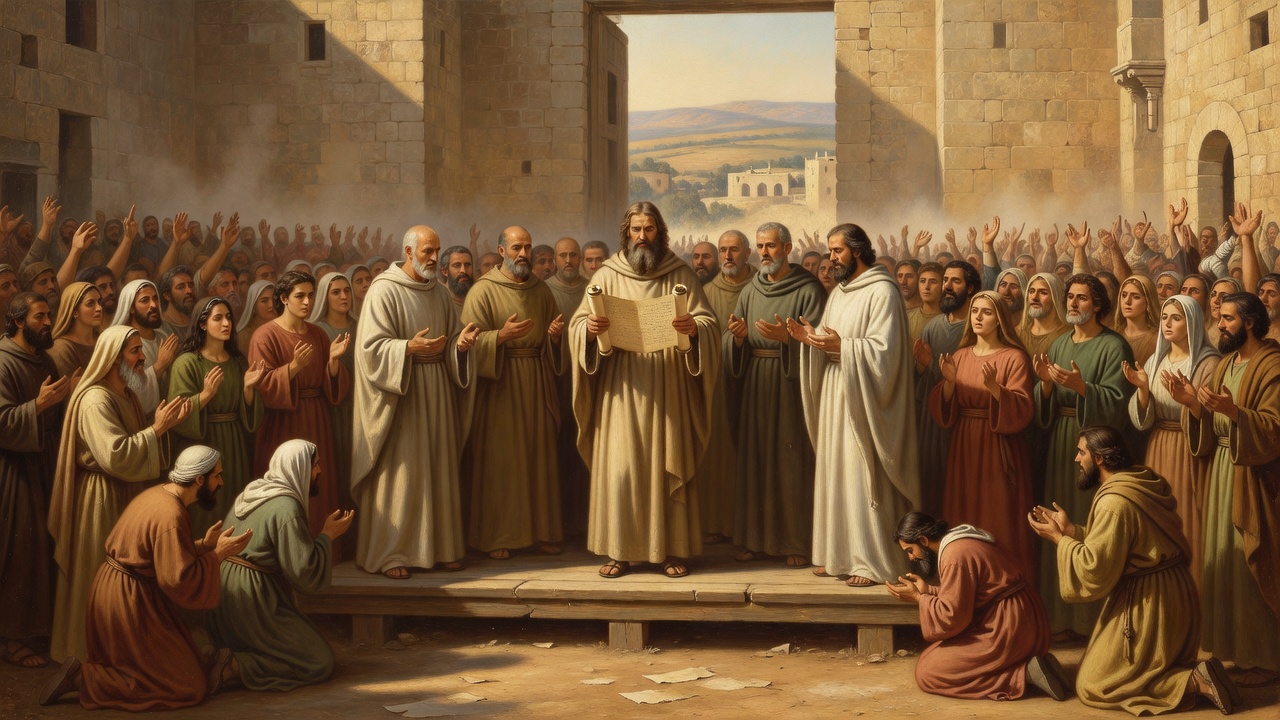
The Reading of the Law and the Feast of Booths
- Ezra the scribe, a priest descended from Aaron who had led exiles back from Babylon, read the Book of the Law of Moses from daybreak until noon to the assembly in Jerusalem. Standing on a high wooden platform in the square before the Water Gate, he read while Levites explained the text so the entire crowd could understand.Sources: the Bible text itself · Ezra · Water Gate · Jerusalem
- When the people wept upon hearing the Law read, Nehemiah the governor, Ezra, and the Levites instructed them not to grieve on a holy day. The people were told to celebrate with rich food and sweet drinks, share portions with those who had nothing prepared, and take comfort in the joy of the Lord.Sources: the Bible text itself
- After discovering the command in the Law to live in booths during the seventh month, the returned exiles gathered palm, olive, and myrtle branches to build shelters across Jerusalem's rooftops, courts, and squares by the Water Gate and the Gate of Ephraim. The text notes that the Israelites had not celebrated this feast in such a manner since the time of Joshua son of Nun.Sources: the Bible text itself · Water Gate · Gate of Ephraim
Notes written with AI assistance from open sources (Theographic Bible Metadata, CC BY-SA 4.0; Easton’s Bible Dictionary, public domain) and reviewed before publishing.
Places in this chapter
- Water Gate · Today: in Jerusalem · 31.777, 35.234 · verses 1, 3, 16
- Jerusalem · 31.777, 35.234 · verse 15
- Ephraim Gate · Today: in Jerusalem · 31.777, 35.234 · verse 16
Only places identified with high confidence are shown (90% or more according to the scholarly sources compiled by OpenBible). Period map: DARE (Digital Atlas of the Roman Empire), CC BY 4.0; modern map: © OpenStreetMap contributors; places: OpenBible.info (CC BY 4.0).
Credits and license for this translation
KAKAƗYARI NIUKIEYA XAPAYARI WIXARIKAKƗ
The Holy Bible in the in Huichol language of Mexico, 2020 edition
La Santa Biblia en lengua huichol de México, edición 2020
copyright © 2020 Wycliffe Bible Translators, Inc.
Language: Huichol
Translation by: Wycliffe Bible Translators, Inc.
Huichol [hch], Mexico
Copyright Information
© 1988-2020, Wycliffe Bible Translators, Inc.
This translation text is made available to you under the
terms of the Creative Commons License: Attribution-Noncommercial-No Derivative Works.
( http://creativecommons.org/licenses/by-nc-nd/3.0/ )
In addition, you have permission to port the text to different file formats, as long as you
do not change any of the text or punctuation of the Bible.
You may share, copy, distribute, transmit, and extract portions
or quotations from this work, provided that you include the above copyright
information:
You must give Attribution to the work.
You do not sell this work for a profit.
You do not make any derivative works that change any of the actual words or punctuation of the Scriptures.
Permissions beyond the scope of this license may be
available if you contact
us with your request.
The Holy Bible
in Huichol
© 1988-2020, Wycliffe Bible Translators, Inc.
This translation is made available to you under the terms of the
Creative Commons Attribution-Noncommercial-No Derivatives license 4.0.
You may share and redistribute this Bible translation or extracts from it in any format, provided that:
You include the above copyright and source information.
You do not sell this work for a profit.
You do not change any of the words or punctuation of the Scriptures.
Pictures included with Scriptures and other documents on this site are licensed just for use with those Scriptures and documents.
For other uses, please contact the respective copyright owners.
2025-09-03
Source: http://ebible.org/hch/ · eBible.org