Luke 6
KAKAƗYARI NIUKIEYA XAPAYARI WIXARIKAKƗ · Tap a verse to see its cross-references.
'Uxipiya tukaritsie tɨriku kememɨte'utikwai teyɨ'ɨkitɨwamete
1Merikɨtsɨ 'uxipiya tukaritsie Ketsutsi tɨriku ma'iwiyatsie kaniuyeyani, teyɨ'ɨkitɨwamete tɨriku mɨayeyari mekananutihurukakaitɨni, yumamatsie me'ititɨminatɨ mekanikwakaitɨni. 2Hikɨ paritseutsixi hipatɨ mɨpaɨ mekaniutiyuani:
—¿Titayarikuta xeme kemɨkareuyewetse xeteyurie 'uxipiya tukaritsie?
3Ketsutsi mɨpaɨ katiniwarutahɨawe:
—¿Kari, tɨma xepɨka'ekaterɨwawawe kemɨtiuyuri Rawiri kepauka memuhakakwi mɨkɨ meta hamatɨana memu'uwakai? 4Kakaɨyari kiyata kaneutahani, paa muwa Kakaɨyari hɨxie mamanekai 'anaka'ɨka, kanitikwani, mɨkɨ heitserie pɨkahexeiyakai mitikwanikɨ, mawari wewiwamete xeikɨa heitserie mepexeiyakai. Metatsiere kaniwarumini mɨkɨ 'utɨmana memeu'uwakai.
5Mɨpaɨta katiniwarutahɨawe:
—Heitserie nekanexeiyani 'uxipiya tukari hepaɨtsitata Yuri Tewi nehɨkɨtɨtɨ.
6Merikɨtsɨ tawari 'uxipiya tukaritsie tukita kaneutahani, hikɨ kanitsutɨani ti'ɨkitatɨ. Tewi muwa kanayekateitɨni mɨmamawakikai yutserieta, 7mɨkɨ 'inɨarikɨ memɨte'ɨkitametetɨkai meta paritseutsixi mekanihupiekaitɨni, tsiparatsɨ xɨka 'uxipiya tukaritsie 'enayehɨanike tɨma, me'utiyuatɨ, mɨkɨkɨ memitaxanetakɨ. 8Timaitɨ kememɨteyɨkɨhɨawekai, mɨpaɨ katinitahɨawe tewi mɨmamawakikai:
—Kenanukukexi, tahixɨapa keneutakexi.
'Anukukeka mana kaniutakeni. 9Hikɨ Ketsutsi mɨpaɨ katiniwarutahɨawe:
—'Ipaɨ nepɨtixeku'iwawiya: ¿'Uxipiya tukaritsie tiheitserie 'aixɨa mɨtiyurieneni, nutsu 'axamɨtiyurieneni? ¿Tiheitserie para tewi mutawikweitsitɨani, nutsu mika'unakɨ pɨta?
10Yunaime waranuxeiyatɨyaka, mɨpaɨ tewi katiniutahɨawe:
—'Amama keneutatsera.
Mɨpaɨ tiuyurieku mamaya 'aixɨa 'anetɨ kanayani. 11Mɨkɨ kwinimieme mekateniuyeha'ani, hikɨ mekanitsutɨani metekuxatatɨ Ketsutsi kememɨyurienikekai.
Tamamata heimana huta nɨ'ariekate
12Merikɨtsɨ 'ana hɨritsie kaneutiyune yutanenewienike, xeitɨkari nenewieri kanipitɨakaitɨni yukakaɨyari. 13Hikɨ 'ukatareku, yu'aurie kaniwarutahɨawe yuhetsɨa miemete teyɨ'ɨkitɨwamete, watsata kaniwaranuyeteɨxɨ tamamata heimana yuhutame, nɨ'ariekate katiniwaruterɨwa mɨkɨ: 14Tsimuni ('arike Pekuru mɨtiterɨwaxɨ), 'Atɨrexi Tsimuni 'iwaya, Kakuwu, Wani, Piripe, Wariturume, 15Mateu, Tumaxi, Kakuwu 'Aripeu nu'aya, Tsimuni tserutitsita mɨtitewakai, 16Kura Kakuwu nu'aya, Kura 'Itsikariutitanaka 'arikeke miyetua.
Ketsutsi kemɨtiwaruparewi yumɨireme
17Hikɨ wahamatɨa 'ukateka, makuweritsie kaniwakeni. Yumɨiretɨ hetsɨana miemete teyɨ'ɨkitɨwamete, meta yumɨiretɨ teɨteri naitsarie Kureyatsie Kerutsaremetsie memeyekɨ, hipatɨ haramara tetsita memeyekɨ Tiru 'aurie Tsiruni 'aurie, 18mana mekaniu'axɨakaitɨni memi'enienikɨ, 'aixɨa meteheu'erietɨ memayeitɨarienikɨ kwiniya kememɨtehexeiyakai. Mɨkɨ kakaɨyarixi 'axamemɨ'anene memɨwanɨkai 'aixɨa meteheu'erietɨ mepayeitɨarie, 19teɨteri yunaitɨ mekanimayɨakukaitɨni tɨrɨkariya hetsiena mayeneikakaikɨ yunaime 'aixɨa meteheu'eriekame muwarayeitɨwakai.
20Merikɨtsɨ yuhetsɨa miemete teyɨ'ɨkitɨwamete waxeiyatɨ mɨpaɨ kaniutayɨni:
«'Aixɨa xekani'itɨarieka xeme tixaɨtɨ xemɨkatehexeiya,
Kakaɨyari xekanexeiyani tixe'aitɨwametɨme.
21'Aixɨa xekani'itɨarieka xeme hikɨ xemeuhakakwiku,
xekanitihuxaikuni.
'Aixɨa xekani'itɨarieka xeme hikɨ xemutitsuana,
xekaniutinawekuni.
22'Aixɨa xekani'itɨarieka xeme kepauka teɨteri memɨxe'uxiwe'erie,
kepauka memɨkaxenaki'erie yuhetsɨa, kepauka 'axamemutiyuane xehepaɨtsita, kepauka memɨxexani'erie 'axaxemɨ'anene me'utiyuatɨ,
Yuri Tewi hetsie xemɨtewiyakɨ.
23»Xekeneyutemamawieka waɨkawa 'iya tukaritsie, xeketeneuye'ani, waɨkawa taheima mieme xekana'iwakuni. Wa'ukiyarima yaxeikɨa mepɨwaruyuri Kakaɨyari niukametemama.
24»Matsi xɨa'ui, xeme xemɨxikutsixi,
'ariri yunaki'eriya xekanaye'atɨani.
25Xɨa'ui xeme hikɨ xemɨhuxa,
xepeuhakakwikuni.
Xɨa'ui xeme hikɨ xemutinawe,
xepɨyuhiwerieka xeputitsuanani.
26Xɨa'ui xeme kepauka yunaitɨ teɨteri witsimemutiyuane xehepaɨtsita.
Xe'ukiyarima yaxeikɨa mepɨwaruyuri Kakaɨyari niukametemama memɨte'itawakai.
Kemɨreuyewetse memɨtatsi'aye'unie wahepaɨtsita
27»Matsi mɨpaɨ nepɨtixekɨhɨawe xeme xemɨ'enana: Xekeniwanaki'erieka mɨkɨ memɨxe'aye'unie, 'aixɨa xekeniwayurieka mɨkɨ memɨxe'uxiwe'erie, 28mɨkɨ 'axamemutiyuane xehepaɨtsita wahepaɨtsita 'aixɨa xekeneutiyuaneni xeme, xekeneyunenewieka mɨkɨ memɨxetsewixima wahetsiemieme. 29Kemɨ'ane 'a'aurita mɨmatsiheutiwani, ta'aurie kenawetsi tapata mɨmatsiheutiwanikɨ. Kemɨ'ane mɨmatsinawairieni 'a'ɨkari, pepɨka'ikweririeka 'akamixata mɨmatsinawairienikɨ. 30Kemɨ'ane tixaɨtɨ mɨmatiutawawiri, ketineupitɨa, kemɨ'ane 'apini mɨmatinawairieni, pepɨka'iwiyani. 31Kemɨtixenake, teɨteri yamemɨxeyurienikɨ xeme, kemɨtixenake xeme, mɨkɨ kanixe'inɨaritɨkamɨkɨ, yaxemɨwayurienikɨ hipame meri.
32»Xɨkate xewanaki'erieka mɨkɨ memɨxenaki'erie, ¿titakɨ 'aixɨa xetekuxaxatsiwani? 'Axateyuruwamete mekaniwanaki'erieka mɨkɨ memɨwanaki'erie. 33Xɨkata 'aixɨa xewayurieka mɨkɨ 'aixɨa memɨxeyurie, ¿titakɨ 'aixɨa xetekuxaxatsiwani? 'Axateyuruwametetɨtɨ mɨpaɨ mepɨteyurie. 34Xɨkata xetewaniɨtɨaka mɨkɨ kemɨ'ane memɨte'ayukatuawawe xeikɨa, ¿titakɨ 'aixɨa xetekuxaxatsiwani? 'Axateyuruwameteta mepɨteyuniɨtɨa tawari memɨte'apiniyariekakɨ. 35Matsitsɨ xekeniwanaki'erieka mɨkɨ memɨxe'aye'unie, 'aixɨa xeketeneyurieka, xeketeneyuniɨtɨaka 'atsixekateyu'iyaritɨatɨ. Mɨpaɨ xeteyurietɨ kwini mieme xekatena'iwakuni, kemɨ'ane taheima makawe niwemama xekanihɨkɨtɨkakuni, mɨkɨ 'aixɨa pɨtiuka'iyari mɨkɨ pamɨpariyutsi memɨkateyupitɨwa wahetsiemieme, mɨkɨ 'axamemɨteyurie wahetsiemieme meta. 36Xeketeneyukanenimayaka, xe'ukiyari kemɨtiyukanenimaya.
Hipame wahetsie xepɨkate'ahɨpani
37»Hipame wahetsie xɨka xekate'ahɨpani, xehetsieta pɨkarahɨiwani. Xɨka xekateyuxanetani, xemeta xepɨkaxanetsieka. Xɨka xekawaranutaxɨrɨwani, xemeta xepɨka'anutaxɨriyani. Xɨka xetewareuyehɨwirieka, xemeta xepɨteheuyehɨwiyarieni. 38Xɨka xetewarini, xemeta xepɨtemikieni: 'Aixɨa ti'inɨatsiekame 'anukapɨnariekame, 'anutakatsiekame, 'anakaxɨrɨweme xepɨmikieni. Karikɨtsɨ hipame kexemɨtewaru'inɨatsiri mɨpaɨta xeme xepɨte'inɨatsiyarieni».
39Merikɨtsɨ 'ikɨ 'ɨxatsi hepaɨtsita tikuxatatɨ katiniwaruta'ɨkitɨani mɨpaɨ 'utaitɨ: «¿Makɨpe ketiyɨwe menuhana xeime makɨpe? ¿Yuhutatɨ mewatixawatsie mekateheukaxɨrieni? 40Tiyɨ'ɨkitɨwame pɨkawe'eme keyuri ti'ɨkitame, peru 'aye'atɨarieme kemɨ'ane mɨti'ɨkitɨa hepaɨ timaiwetɨ kanayeimɨkɨ.
41»¿Titayari petixeiya xatsi 'a'iwa hɨxita meutawiwi, pekahe'eriwatɨ keuruwi 'ahɨxita meutawe? 42¿Kepaɨtɨtɨ petiyɨwe mɨpaɨ pemɨtitahɨawekɨ 'a'iwa: “Neuxei ne'iwa, nepiwaye'itieni xatsi 'ahɨxita meutawiwi”, peka'ixeiyatɨ keuruwi 'ahɨxita meutawe? Yakɨtsɨ peputaine xeikɨa. Keniwaye'iti meri mɨkɨ keuruwi 'ahɨxita meutawe, 'ana 'aixɨa 'anemekɨ peheunieretɨ pekanayeimɨkɨ pemiwaye'itirienikɨ xatsi 'a'iwa hɨxita meutawiwi.
Kɨye kemɨtimatsiɨkɨ yu'ikwaxikɨ
43»Nixewitɨ kɨyexi 'aixɨa mɨ'anene 'ikwaxi 'axa'aneneme pɨkakaxuawitɨwa, mɨkɨ meta kɨye 'axamɨ'ane 'ikwaxi 'aixɨa 'aneneme pɨkakaxuawitɨwa. 44Xexuitɨ kɨye yu'ikwaxikɨ kanimatsiɨkɨni. Xuyatsie pɨkaka'inɨiwa piní takari, witsaxatsie pɨkaka'inɨiwa kaxie. 45Tewi 'iti'utame tita 'aixɨa mɨti'ane yu'iyaritsie, niwayehanimɨkɨ tita 'aixɨa mɨti'ane, tewi 'axamɨtiyuriene pɨta 'iti'utame tita 'axamɨti'ane, niwayehanimɨkɨ tita 'axamɨti'ane. Karikɨ tita yu'iyaritsie mɨtihɨniyani, mɨpaɨ katinikuxatamɨkɨ.
Tsimiyenitu 'aixɨa mɨ'ane 'axamɨ'ane
46»¿Titayarikuta xeme: “Ti'aitame, Ti'aitame 'aku”, xenetekɨhɨawe, 'atsixekateyurietɨ kenemɨtixekɨhɨawe? 47Yunaitɨ nehetsɨa memɨ'axe, neniuki memɨ'enie yametekahutɨ, kememɨ'anene nepɨtixetaxatɨani: 48Tewi kii mutawewi hepaɨ kani'aneni, heukatewame wati'ineka, tetetsiepai netiwewieni tsimiyenituyari. 'Ana haa kaniwayeneni, kitsie kaniukexɨani, peru kaniuyutatexieni 'iwatayuitɨanike, 'aixɨa 'anemekɨ mɨwewiyakaikɨ pɨkawatayua. 49Perutsɨ kemɨ'ane mɨnetsi'enie yakatikamietɨ, mɨkɨ xewitɨ tewi kii mutawewi hepaɨ kani'aneni, kwiepa 'akaime kaniutawewieni xeikɨa, tenariyari pɨka'utawewi. 'Ana hetsiena kaniukexɨani haa, xeimieme nekaina, karima kaniukaweni kii».
Did you know?
The Sabbath, the Twelve, and the Plain
- On a Sabbath, as Jesus passed through the grainfields, his disciples picked heads of grain, rubbed them in their hands, and ate them, and some Pharisees called this unlawful. Jesus recalled that David and his hungry companions ate consecrated bread from the house of God, bread lawful only for the priests, and said that the Son of Man is Lord of the Sabbath. On another Sabbath he restored a man’s withered right hand in the synagogue while scribes and Pharisees watched for a reason to accuse him; a chronology dates both episodes to AD 28.Sources: the Bible text itself · Corn on the Sabbath · Healing a Withered Hand
- After spending the night in prayer on the mountain, Jesus called his disciples and chose twelve, whom he designated apostles. Among them were Simon, whom he named Peter, and Peter’s brother Andrew, fishermen from Bethsaida on the western coast of the Sea of Galilee, and Matthew, a tax collector at Capernaum who had formerly been known as Levi.Sources: the Bible text itself · Simon Peter · Andrew · Matthew
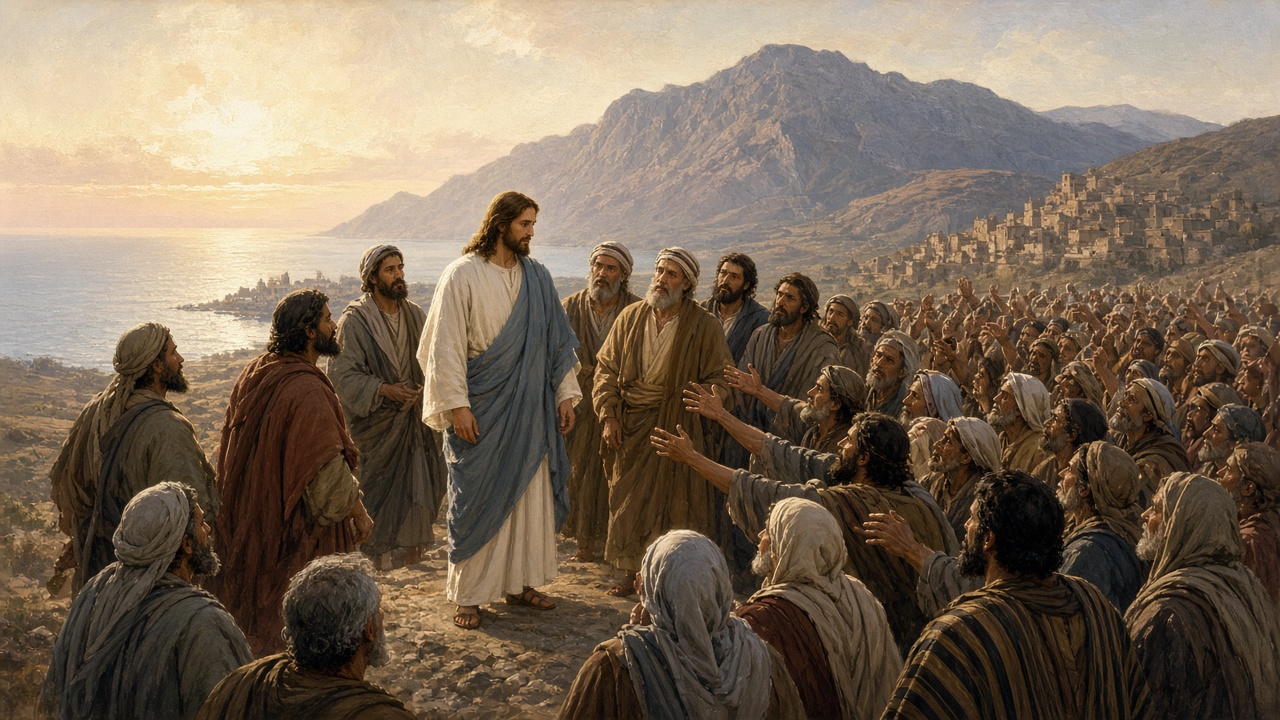
- Jesus came down with them and stood on a level place, where people from Judea, Jerusalem, and the sea coast of Tyre and Sidon had gathered to hear him and to be healed. Tyre and Sidon were ancient Phoenician cities on the Mediterranean; Sidon, the older city, lay about twenty-five miles north of Tyre. A chronology dates this teaching to AD 28 and titles it the Sermon on the Mount, though the narrative places Jesus on level ground after he came down from the mountain.Sources: the Bible text itself · Tyre · Sidon · Sermon on the Mount
Notes written with AI assistance from open sources (Theographic Bible Metadata, CC BY-SA 4.0; Easton’s Bible Dictionary, public domain) and reviewed before publishing.
Places in this chapter
- Jerusalem · 31.777, 35.234 · verse 17
- Judea · Today: Judea 1 · 31.777, 35.234 · verse 17
- Sidon · Today: Sandikli archaeological site in Sidon · 33.561, 35.372 · verse 17
- Tyre · 33.271, 35.196 · verse 17
Only places identified with high confidence are shown (90% or more according to the scholarly sources compiled by OpenBible). Period map: DARE (Digital Atlas of the Roman Empire), CC BY 4.0; modern map: © OpenStreetMap contributors; places: OpenBible.info (CC BY 4.0).
Credits and license for this translation
KAKAƗYARI NIUKIEYA XAPAYARI WIXARIKAKƗ
The Holy Bible in the in Huichol language of Mexico, 2020 edition
La Santa Biblia en lengua huichol de México, edición 2020
copyright © 2020 Wycliffe Bible Translators, Inc.
Language: Huichol
Translation by: Wycliffe Bible Translators, Inc.
Huichol [hch], Mexico
Copyright Information
© 1988-2020, Wycliffe Bible Translators, Inc.
This translation text is made available to you under the
terms of the Creative Commons License: Attribution-Noncommercial-No Derivative Works.
( http://creativecommons.org/licenses/by-nc-nd/3.0/ )
In addition, you have permission to port the text to different file formats, as long as you
do not change any of the text or punctuation of the Bible.
You may share, copy, distribute, transmit, and extract portions
or quotations from this work, provided that you include the above copyright
information:
You must give Attribution to the work.
You do not sell this work for a profit.
You do not make any derivative works that change any of the actual words or punctuation of the Scriptures.
Permissions beyond the scope of this license may be
available if you contact
us with your request.
The Holy Bible
in Huichol
© 1988-2020, Wycliffe Bible Translators, Inc.
This translation is made available to you under the terms of the
Creative Commons Attribution-Noncommercial-No Derivatives license 4.0.
You may share and redistribute this Bible translation or extracts from it in any format, provided that:
You include the above copyright and source information.
You do not sell this work for a profit.
You do not change any of the words or punctuation of the Scriptures.
Pictures included with Scriptures and other documents on this site are licensed just for use with those Scriptures and documents.
For other uses, please contact the respective copyright owners.
2025-09-03
Source: http://ebible.org/hch/ · eBible.org