Lamentations 4
KAKAƗYARI NIUKIEYA XAPAYARI WIXARIKAKƗ · Tap a verse to see its cross-references.
1Huru 'ari pɨka'utixawatɨre.
Huru 'aixɨamɨ'ane putayɨrixɨ puyutakwitama.
Tetexi mɨpatsietɨka kwinimieme mɨraye'atɨka tukita timieme kaye'utɨma katineutiteni.
2Tsiyuni kiekatari,
meripaitɨ mepɨtehaye'akai huru kemɨraye'axe,
hikɨri haxu xariteyari hepaɨ mepɨtexeiyarie,
'iwewame nenikamɨti'ane mitiwewi.
3Yeutari memayu'eririya yutsitsi mepɨyexata
yuniwema mepɨwatsitsitɨa,
peru 'ukari Kerutsaremetari mepɨka'u'iyari.
Yuniwema mepɨwata'e'eiriwa 'aruxi 'amemɨnene makumawetsie memu'uwa wahepaɨ.
4Tɨɨri yemekɨ waɨkawamekɨ mepeuhariku,
waneni 'ari puwawaki.
Paa tɨɨri mekaniku'iwawani,
peru neuxei nixewitɨ pɨkawamimɨkɨ.
5Kemɨ'ane meripaitɨ memɨte'utikwa'akai witsiti'anekame
hikɨ mekanikwiximeni haakakɨ kaye'utɨma.
Meripaitɨ witsimemɨte'ukemarikai mɨyɨtsikimaɨyekɨ
hikɨ xatsitsata mekanikurupetɨweni.
6Ke'axamemɨte'uyuri Tsurumatari
matsi kwinimieme 'axamepɨte'uyuri Kerutsareme kiekatari,
yapauka kaniuka'unarieni,
nixewitɨ pɨka'iparewi.
7Kwinimieme matsi mepɨtetuxakai mana te'aitamete 'ɨwi hepaɨ,
meta retsi hepaɨ,
wawaiyari yemekɨ pɨtataɨrawikai,
Tete mɨraye'axe mutimerɨka hepaɨ mepɨteyuxexeiyakai.
8Peru hikɨ kwinimieme mepɨteheutɨtɨni keyuri yɨxari,
nixewitɨ pɨkawamate kaye'utɨa.
Yuwaiyaritsie kwinimieme mekateniwawakini kɨye hepaɨ,
wa'umeyaritetsie kaniuwerixɨani.
9'Aixɨa mekani'itɨarieka kemɨ'ane memukwi'iwaxɨ 'ixiparakɨ,
keyuri haakakɨ memukwi.
Haaka wara'iwakaku mekanitakukuweni,
karikɨ mɨtiumawekɨ 'ikwaxite 'ɨtsita timieme.
10'Ukarawetsixi 'aixɨa memɨte'u'iyarikai, yumamá mekaniuhɨniri
yuniwematɨme mekaniwaruka'etsa.
Yuniwema wahekɨ mekatenikwakaitɨni,
kepauka Kerutsareme muka'unarietsie.
11Yawé yuhaxɨa kaniutatuani,
yuhaxɨa mɨtiyukukuine kananayetuani.
Tsiyuni taikɨ kaniutataiya
meta kanitaxɨtsitɨani tsutɨmeyari naime.
12Mɨpaɨ mepɨkateha'eriwakai naitsarie te'aitamete,
meta yunaitɨ teɨteri naitsarie kiekatari,
kename Kerutsareme memaye'unie
kiteniena meheutahaxɨanikekai.
13Peru mɨpaɨ katiniɨyɨni.
Kakaɨyari niukametemama 'axamete'uyurieku.
Mawari wewiwamete 'axamete'uyurieku.
Teɨteri 'axamekateyuriekame memɨwarukwikɨ
kiekaritsie kaye'utɨma.
14Yumamatetsie meheuxuxuretɨ,
kaye 'utɨma mekaniu'uwani memɨkaheuneniere wahepaɨ meyɨatɨ.
Xewitɨtɨma pɨkayuwaɨriya muwamayɨanikɨ
tsikeretɨma wa'ixurikitsie.
15Teɨteri mɨpaɨ mekateniwaruhiwiwani: «'Ena xepɨka'u'uwani, xemɨka'itiya.
Xekeneuhuni. Xekeneuhuni. Xepɨkatatsikumaɨwani tame».
Hipame nuiwarite watsata mɨpaɨ mekatenikɨhɨawarɨwani:
«Ku'uwamete mekanihɨkɨtɨni, memuyu'unaxɨaxime.
Mepɨkayɨwawe 'ena memu'uwani yuheyemekɨ».
16Yawé tɨtɨ katiniuyurieni muwareutaxɨriexɨa,
hikɨri pɨkayu'iyaritɨa wahetsiemieme.
Mawari wewiwamete mamariwawemete mepɨkaxatsiwa
meta 'ukirawetsixi mepɨkanenimayatsieri.
17'Imatɨrieka, tahɨxite pɨtitɨximeri
teta'ikwewatɨ yakɨxeikɨa xewitɨ tatsiparewienike te'erietɨ.
Tuxiyutsie paitɨ tetanenieretɨ tekanita'ikwewani
hipatɨ teɨteri memɨtatsitawikweitsitɨanikɨ.
18'Etsiwa temuku'uwatsie tepuhupierie,
kaye 'utɨma temɨye'uwani pɨkayɨweri.
Ta'imatɨrieka tukariyari kanehuraniri, 'ariri kanaye'ani,
tatukari naitɨ pɨ'inɨatsie.
19Memɨtatsi'aye'unie matsi kwinimieme mepayɨwawekai
keyuri kwixɨtsi muyuawitsie miemete,
hɨritsie mepɨtatsi'uweiyatɨkɨkakai,
makumawetsieta mekataniuhupieni.
20Meta kaniuwiyarieni ti'aitame Yawé menayexei,
mɨkɨ hetsie tetewiyatɨ temu'uwakai.
Mɨkɨ pɨhɨkɨtɨkai hetsiena mieme mɨpaɨ temutiyuanekai:
Mɨkɨ 'etɨriyayatɨa te'u'uwatɨ nuiwarite watsata tepu'uwani.
21Kene'atemawieka meta keneutanaweni, 'Erumi kiekariyari,
'Utsi kwieyaritsie, 'uka ti'aitame hepaɨ pemɨtika.
Peru 'arike 'ikɨ tekɨxita 'ekɨta pepanu'ieni,
hikɨ 'ana pepɨtitaweni meta pemawetɨ pepayani.
22Tsiyuni witsipemɨti'ɨimarikai, kanaye'atɨarieni kepemɨtikwinitɨarienikekai,
Kakaɨyari tawariri xeime kwieyaritsie pɨkamatsi'anɨnɨ'ani.
Peru 'ekɨ, mɨmariwe 'Erumi kiekariyari, kamani'uximatɨamɨkɨ ke'axapemɨtiuyurikɨ
meta naime ke'axapemɨtiuyuri katinitahekɨatamɨkɨ.
Did you know?
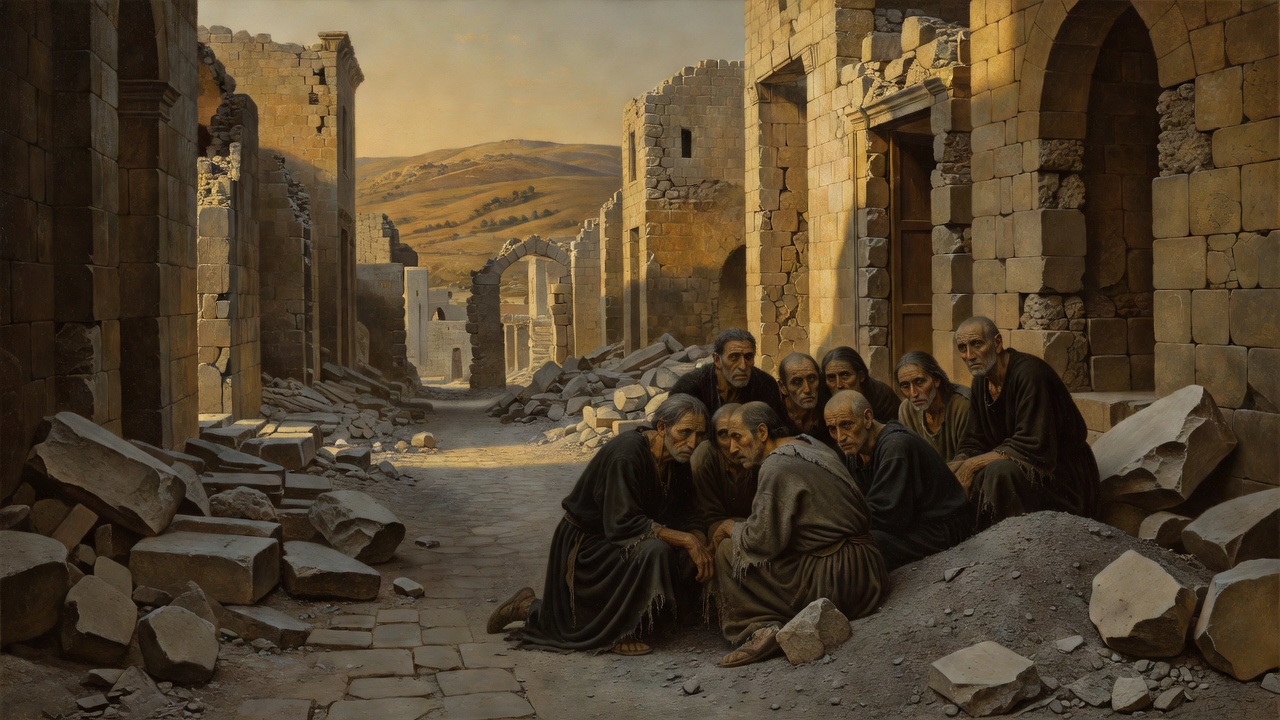
The Agony of the Fallen City
- The poet considers Jerusalem's prolonged suffering worse than the fate of Sodom. While Sodom was overthrown in an instant by divine fire, the inhabitants of Jerusalem endured the agonizing and drawn-out torment of siege and starvation.Sources: the Bible text itself · Sodom
- Before its capture, Jerusalem was widely regarded as an impenetrable mountain city. The text observes that foreign kings and surrounding nations never believed an enemy could breach its fortified gates.Sources: the Bible text itself · Jerusalem
- The chapter closes with an address to Edom dwelling in the land of Uz, warning that judgment will soon overtake her. Uz is mentioned in only three biblical books: Job, Jeremiah, and Lamentations.Sources: the Bible text itself · Uz · Edom
Notes written with AI assistance from open sources (Theographic Bible Metadata, CC BY-SA 4.0; Easton’s Bible Dictionary, public domain) and reviewed before publishing.
Places in this chapter
- Zion · Today: Jerusalem · 31.777, 35.234 · verses 2, 11, 22
- Jerusalem · 31.777, 35.234 · verse 12
- Edom · 30.746, 35.604 · verses 21, 22
Only places identified with high confidence are shown (90% or more according to the scholarly sources compiled by OpenBible). Period map: DARE (Digital Atlas of the Roman Empire), CC BY 4.0; modern map: © OpenStreetMap contributors; places: OpenBible.info (CC BY 4.0).
Credits and license for this translation
KAKAƗYARI NIUKIEYA XAPAYARI WIXARIKAKƗ
The Holy Bible in the in Huichol language of Mexico, 2020 edition
La Santa Biblia en lengua huichol de México, edición 2020
copyright © 2020 Wycliffe Bible Translators, Inc.
Language: Huichol
Translation by: Wycliffe Bible Translators, Inc.
Huichol [hch], Mexico
Copyright Information
© 1988-2020, Wycliffe Bible Translators, Inc.
This translation text is made available to you under the
terms of the Creative Commons License: Attribution-Noncommercial-No Derivative Works.
( http://creativecommons.org/licenses/by-nc-nd/3.0/ )
In addition, you have permission to port the text to different file formats, as long as you
do not change any of the text or punctuation of the Bible.
You may share, copy, distribute, transmit, and extract portions
or quotations from this work, provided that you include the above copyright
information:
You must give Attribution to the work.
You do not sell this work for a profit.
You do not make any derivative works that change any of the actual words or punctuation of the Scriptures.
Permissions beyond the scope of this license may be
available if you contact
us with your request.
The Holy Bible
in Huichol
© 1988-2020, Wycliffe Bible Translators, Inc.
This translation is made available to you under the terms of the
Creative Commons Attribution-Noncommercial-No Derivatives license 4.0.
You may share and redistribute this Bible translation or extracts from it in any format, provided that:
You include the above copyright and source information.
You do not sell this work for a profit.
You do not change any of the words or punctuation of the Scriptures.
Pictures included with Scriptures and other documents on this site are licensed just for use with those Scriptures and documents.
For other uses, please contact the respective copyright owners.
2025-09-03
Source: http://ebible.org/hch/ · eBible.org