John 12
KAKAƗYARI NIUKIEYA XAPAYARI WIXARIKAKƗ · Tap a verse to see its cross-references.
Wetaniyatsie Mariya witsimu'ɨa Ketsutsi kemɨtiukawiri
1Hikɨ 'ataxewi tukari heuyewekaku Patsikwa maye'anikɨ, Ketsutsi Wetaniya kaninuani hakewa Ratsaru manukatei, Ketsutsi menukuketɨa mɨkite watsata. 2Hikɨ mana mekaniwarukuxeɨrieni hamatɨana memɨtekwanikɨ. Marita kaniwaparewiekaitɨni, hamatɨana mematekai, xewitɨ Ratsaru kanihɨkɨtɨkaitɨni. 3Hikɨ Mariya naaru witsimu'ɨa hɨkɨame waɨkawa mɨraye'axe kane'ɨni, meriyu kiruyari hepaɨ paɨmeme, Ketsutsi ketateyatsie kanikawirieni. Ketateya kaniukawatsiɨxa yɨkɨpakɨ. Naitsarie kiita witsikatiniuye'ɨakaitɨni naarukɨ.
4Hikɨ teyɨ'ɨkitɨwametemama xewitɨ, Kura 'Itsikariutitanaka, miyetuanikekai, mɨpaɨ kaniutayɨni:
5—¿Titayariri katiutuiya 'ikɨ witsimu'ɨa haika tsienituyari 'inɨariyarikɨ, temɨwa'ɨitɨanikɨ tixaɨtɨ memɨkatehexeiya?
6Mɨpaɨ kaniutayɨni tixaɨtɨ memɨkatehexeiya mɨwara'eriwakaikɨ pɨkatixaɨ, matsi mɨtinawayametɨkaikɨ pɨta mɨpaɨ kaniutayɨni. Mɨkɨ watumini maname mahananikɨ mɨhɨritɨariekaikɨ, kaniwati'ɨwekaitɨni muwa memeikamanakai.
7Ketsutsi mɨpaɨ kaniutayɨni:
—Keneuhayewa. Mɨkɨ mɨpaɨ katiniuyurieni neteukiya tukaritsie mieme maye'aximekɨ. 8Yuheyemekɨ yuhetsɨa xekaniwarexeiyani tixaɨtɨ memɨkatehexeiya. Matsi ne xepɨkanetsihexeiya yuheyemekɨ.
9Hikɨ huriyutsixi yumɨiretɨ mekateniutamarieni kename muwa Ketsutsi hayekatei, Ketsutsi xeikɨa mepɨkahekuxei, Ratsaru mexeiyakutɨta mɨkite watsata menukuketɨakɨ mekani'axekaitɨni. 10Hikɨ mawari wewiwamete tewa'aitɨwamete meyu'enieka 'axeikɨa mɨpaɨ mekaniutiyuani kename Ratsaruta memienikekai 11yumɨiretɨ huriyutsixi kɨmana memekɨkɨ, Ketsutsi hetsie yuri memɨte'uta'erikɨ.
Kemɨreutaha Kerutsaremetsie
12Merikɨtsɨ 'uxa'arieka yumɨiretɨ teɨteri 'ixɨaramete mekaniu'enanani kename Ketsutsi 'uhamiekai Kerutsareme. 13Parapa mamateya me'uhapatɨ mekanekɨne meheinakiyuka, mɨpaɨ mete'uhiwatɨ:
—Ketaneutawikweitsitɨa 'aixɨa.
—'Aixɨa ketikɨhɨawarɨwani kemɨ'ane Ti'aitame hetsɨa miemetɨtɨ 'umamie hepaɨtsita.
—'Aixɨa ketikɨhɨawarɨwani 'Ixaheritsie Ti'aitame hepaɨtsita.
14Hikɨ Ketsutsi puxu 'utaxeiyaka hetsiena kananutiyerɨni, kemɨre'uxa:
15«Pepɨkaheumaka, neniwe 'uka Tsiyuni,
neuxei, 'ena kaniumieni meti'aitɨwame,
puxu temaikɨ hetsie 'anakaitɨ».
16Teyɨ'ɨkitɨwametemama 'ikɨ mepɨkahetimaiwawekai meripaitɨ. Kepaukake witsi'anetɨ mayeitɨarie Ketsutsi, 'anake mekanaye'erieni mɨpaɨ mɨre'uxakai hepaɨtsitana, mɨpaɨ mɨreye'atɨakaikɨ.
17Mɨkɨ teɨteri hamatɨana meme'uwakai kepauka Ratsaru mutahɨawixɨtsie mɨwayeyanikɨ teukiyata, kepauka menukuketɨa mɨkite watsata, mɨkɨta mekanihekɨatakaitɨni. 18'Ayumieme teɨteri mekaneikunake memu'enanakɨ kename 'ikɨ 'inɨari tiuyuri. 19Hikɨ paritseutsixi mɨpaɨ mekateniyɨkɨhɨawekaitɨni: «Xepɨneniere 'atsitepɨkateyurieni. Kamɨ yunaitɨ kwiepa memɨtama 'utɨmana mekanekɨne».
Kɨriyekutsixi Ketsutsi kememɨtekuwautɨwekai
20Merikɨtsɨ teɨteri memu'axɨa 'ixɨararipa meyutanenewienike, hipatɨ mɨkɨ mekanikɨriyekutsixitɨkaitɨni. 21Mɨkɨ Peripe hetsɨa mekaniu'axɨani Wetsairatsie Karereya kwieyaritsie mekatei hetsɨa, mɨpaɨ mekatenita'iwawiya:
—Neuxei, Ketsutsi tepeuxeiyaku.
22Peripe kaneyani, 'Atɨrexi mɨpaɨ katiniutahɨawe, hikɨ 'Atɨrexi Peripe hamatɨa mekanekɨne, mɨkɨ Ketsutsi mɨpaɨ mekateniutahɨawe. 23Ketsutsi mɨpaɨ katiniwaruta'eiya:
—Tukari kanaye'aniri Yuri Tewi nehɨkɨtɨtɨ witsine'anetɨ nemayanikɨ. 24Yurikɨ mɨpaɨ nekanaineni, xɨka tɨriku 'imɨariyari ka'anukateukieni kwiepa 'ukaweka, yuxaɨta kaniyuhayewa xeikɨa, mexɨka 'anukateukieni, waɨkawa kanititakaimɨkɨ. 25Kemɨ'ane yutukari mɨnaki'erie kanitatɨmaiyamɨkɨ, matsi kemɨ'ane 'ena kwiepa yutukari mɨ'uxiwe'erie, kanitawikweitsitɨamɨkɨ, tukari mɨkaxɨwe hexeiyatɨ kanayeimɨkɨ. 26Xɨka tewi neti'uximayatsiriwame 'ayeimɨkɨni, kenetsiheweiya. Hakewa nemeyeikani, manarita kaniuyeikamɨkɨ neti'uximayatsiriwame. Xɨka tewi neti'uximayatsiriwame hɨkɨtɨni, ne'ukiyari 'aixɨa pɨtixeiyani.
27»Hikɨri ne'iyari kaniyumuinaneni, ¿keri ne'utaineni: “Ne'ukiyari, keneneutawikweitsitɨa 'ikɨ tukaritsie nerainenikeyu”? Matsi hikɨ 'ayumieme nekaninuani 'ena kwiepa. 28Ne'ukiyari, witsipetikɨhɨawarɨwatɨ kene'ayeitɨa».
Hikɨ xewitɨ kaniutaniuni taheima mɨpaɨ 'utaitɨ: «Neri witsinetikɨhɨawarɨwatɨ nepaneyeitɨa, tawarita mɨpaɨ nekatiniyurimɨkɨ». 29Teɨteri yumɨiretɨ mana memɨti'ukai memu'enana mɨpaɨ mekaniutiyuanekaitɨni, kename tɨranari heyɨ, hipatɨta mete'utiyuanekai, kename niuki tuayame 'itahɨawixɨ.
30Hikɨ Ketsutsi mɨpaɨ katiniwaruta'eiya:
—Mɨkɨ nehetsiemieme pɨka'utaniu, xehetsiemieme pɨta putaniu. 31Hikɨrixɨa 'ena kwiepa memɨtama kaniwatahɨawimɨkɨ 'itsɨkame, hikɨrixɨa kwiepa memɨtama mɨtiwa'aitɨa takwa kananuyehɨiyamɨkɨri. 32Peru ne xɨka kwie heima ne'anukuhanieni, yunaime nekaniwarahapamɨkɨ nehepa.
33Mɨpaɨ kaniutainekaitɨni tihekɨatatɨ kemɨtimierienikekai.
34Teɨteri 'ayumieme mɨpaɨ mekatenita'eiya:
—Tame 'inɨari niukiyari tekaniu'enieni kename Kɨritsitu yuheyemekɨ yuhayewa, ¿ketitayari petiutaine kename heuyewetse Yuri Tewi manukuhanienikɨ pe'utaitɨ? ¿Kemɨ'ane pɨhɨkɨ Yuri Tewi mɨtitewa?
35Ketsutsi 'ayumieme mɨpaɨ katiniwarutahɨawe:
—Yapaɨmexɨa xeikɨa hekɨariya xetsata kaniuyeikamɨkɨ. Mexi hekɨariya xehexeiya xekeneu'uwani, yɨriya kapa xeha'iwakɨ. Kemɨ'ane yɨwipa muyeika 'atsipɨkatimate kemɨtimie. 36Mexi hekɨariya xehexeiya, yuri xeketene'erieka hekɨariyatsie, hekɨaripa miemete xemakɨnekɨ.
Mɨpaɨ katinikuxatakaitɨni Ketsutsi, 'arike heyaka kaniyuti'awieta memɨkaheitaxeiyakɨ.
Huriyutsixi yuri kememɨkate'eriekai
37Tsepanetɨ waɨkawa 'inɨarite mɨtiyurienekai wahɨxie, yuri mepɨkate'uta'eri hetsiena. 38Mɨpaɨ katinaye'ani Kitsariyaxi Kakaɨyari niukameya niukieya mɨpaɨ mutayɨkɨ:
«Ti'aitame, ¿kemɨ'ane taniukitsie yuri pɨtiuta'eri,
kemɨ'ane Ti'aitame tɨrɨkariyaya puxeiyatsitɨarie?»
39'Ayumieme mepɨkayɨwawekai yuri memɨteta'erienikɨ, tawarita mɨpaɨ mutayɨkɨ Kitsariyaxi:
40«Kaniwarakɨpiriya wahɨxita,
meta wa'iyari kaniutse'iriya,
kapa yuhɨxikɨ me'unenierekɨ,
meta yu'iyarikɨ meheitimaixɨanikɨ,
kapa mete'uhayewayu 'aixɨa meteheu'eriekame newarayeitɨanikɨ».
41Mɨpaɨ kaniutayɨni Kitsariyaxi kepauka mixei witsikemɨ'anekai, kepauka hepaɨtsitana mɨtikuxatakai.
42Peru mɨyatɨtɨ, hipatɨ teɨteri wa'ukiyarima yumɨiretɨ yuri mekateniuta'erieni hetsiena, paritseutsixi mewamakatɨ mepɨkayuhekɨatakai kapa tukita me'anuyeweiyarienikɨ. 43Waɨkawa kaniwanakekaitɨni teɨteri 'aixɨa memɨtewakɨhɨawenikɨ, 'etsiwa xeikɨa wanakekaku Kakaɨyari pɨta 'aixɨa mɨtiwakɨhɨawenikɨ.
44Hikɨ Ketsutsi mɨpaɨ katiniuhiwa:
—Kemɨ'ane nehetsie yuri mɨti'erie, nehetsie xeikɨa yuri pɨkati'erie, matsi kemɨ'ane mɨnetsiheyenɨ'a hetsie yuri katini'erieka. 45Kemɨ'ane mɨnetsixeiya, mɨnetsiheyenɨ'ata kanixeiyani. 46Ne hekɨariya nehɨkɨtɨtɨ kwiepa nekaninuani, yunaitɨ yuri memɨte'erie nehetsie yɨwipa memɨkayuhayewanikɨ.
47»Xɨka tewi kenemɨtikuxata 'u'enieme, xɨka yakatikayani, ne nepɨka'ixaneta, kwiepa memɨtama newataxanetake nemɨkanuakɨ, kwiepa memɨtama newatawikweitsitɨanike pɨta nemunuakɨ. 48Kemɨ'ane mɨnetsixani'erie, neniuki mɨka'utanaki'eri, kaneixeiyaniri kemɨ'ane mitaxaneta. Mɨkɨ neniuki kenemutayɨ, mɨkɨ kanitaxanetamɨkɨ, tukari 'aye'ayu kepauka mɨtapare. 49Ne nekɨmana 'atsinepɨkatikuxata, matsi mɨnetsiheyenɨ'a ne'ukiyaritɨtɨ, kanetiniuta'aitɨani kenemutaineni kenemɨtikuxatani. 50Ne nekatinimaika tita mɨti'aita, tukari mɨkaxɨwe mɨhɨkɨkɨ. Tita nemɨtikuxata ne, ne'ukiyari kemɨnetiutahɨawixɨ, mɨpaɨ nekatinikuxatani».
Did you know?
The Anointing at Bethany and the Entry into Jerusalem
- Bethany, where Jesus arrived six days before the Passover, lay about two miles east of Jerusalem on the southeastern slope of the Mount of Olives, along the road to Jericho, and took its name from the palm trees that grew there. It was the home of Lazarus, whom Jesus had raised from the dead after four days in the tomb, and of his sisters Martha and Mary; the chief priests planned to kill Lazarus as well, because on his account many people were believing in Jesus.Sources: the Bible text itself · Bethany · Lazarus
- At a dinner where Martha served and Lazarus reclined at the table, Mary anointed Jesus' feet with about a pint of expensive perfume made of pure nard and wiped them with her hair, so the house was filled with the fragrance. Judas Iscariot, son of Simon, whose surname means a man of Kerioth, asked why it was not sold for three hundred denarii for the poor; he was a thief who, as keeper of the money bag, used to take from what was put into it, and he was going to betray Jesus.Sources: the Bible text itself · Judas Iscariot · Simon
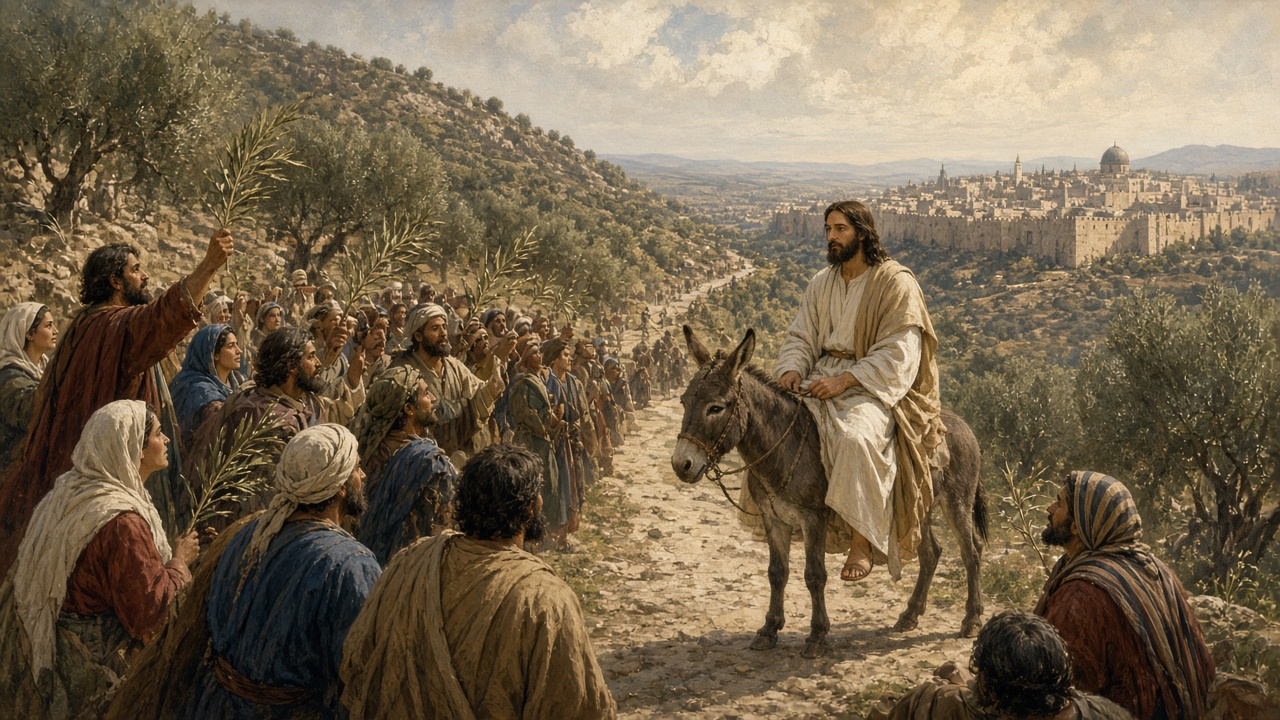
- The next day the great crowd that had come for the feast took palm branches and went out to meet Jesus as he came to Jerusalem, seated on a young donkey, shouting praise to the King of Israel, as it is written of the Daughter of Zion. Zion was the southeastern hill of Jerusalem, where David built a citadel and a palace after taking it, so that it became the city of David. At first his disciples did not understand these things, but after Jesus was glorified they remembered that they had also been written about him.Sources: the Bible text itself · Zion
Notes written with AI assistance from open sources (Theographic Bible Metadata, CC BY-SA 4.0; Easton’s Bible Dictionary, public domain) and reviewed before publishing.
Places in this chapter
- Jerusalem · 31.777, 35.234 · verses 11, 12, 20
- Zion · Today: Jerusalem · 31.777, 35.234 · verse 15
- Galilee · 32.760, 35.527 · verse 21
Only places identified with high confidence are shown (90% or more according to the scholarly sources compiled by OpenBible). Period map: DARE (Digital Atlas of the Roman Empire), CC BY 4.0; modern map: © OpenStreetMap contributors; places: OpenBible.info (CC BY 4.0).
Credits and license for this translation
KAKAƗYARI NIUKIEYA XAPAYARI WIXARIKAKƗ
The Holy Bible in the in Huichol language of Mexico, 2020 edition
La Santa Biblia en lengua huichol de México, edición 2020
copyright © 2020 Wycliffe Bible Translators, Inc.
Language: Huichol
Translation by: Wycliffe Bible Translators, Inc.
Huichol [hch], Mexico
Copyright Information
© 1988-2020, Wycliffe Bible Translators, Inc.
This translation text is made available to you under the
terms of the Creative Commons License: Attribution-Noncommercial-No Derivative Works.
( http://creativecommons.org/licenses/by-nc-nd/3.0/ )
In addition, you have permission to port the text to different file formats, as long as you
do not change any of the text or punctuation of the Bible.
You may share, copy, distribute, transmit, and extract portions
or quotations from this work, provided that you include the above copyright
information:
You must give Attribution to the work.
You do not sell this work for a profit.
You do not make any derivative works that change any of the actual words or punctuation of the Scriptures.
Permissions beyond the scope of this license may be
available if you contact
us with your request.
The Holy Bible
in Huichol
© 1988-2020, Wycliffe Bible Translators, Inc.
This translation is made available to you under the terms of the
Creative Commons Attribution-Noncommercial-No Derivatives license 4.0.
You may share and redistribute this Bible translation or extracts from it in any format, provided that:
You include the above copyright and source information.
You do not sell this work for a profit.
You do not change any of the words or punctuation of the Scriptures.
Pictures included with Scriptures and other documents on this site are licensed just for use with those Scriptures and documents.
For other uses, please contact the respective copyright owners.
2025-09-03
Source: http://ebible.org/hch/ · eBible.org