Haggai 2
KAKAƗYARI NIUKIEYA XAPAYARI WIXARIKAKƗ · Tap a verse to see its cross-references.
Hutarieka Kakaɨyari kemutayɨ: Yawé wahamatɨa kemɨtiuyeikani
1Merikɨtsɨ xeitewiyari heimana xewi tukaritsie 'atahutarieka metseritsie, Yawé tawari niuki 'Akehuxi yuniukame kaneyenɨ'airieni: 2«Tsuruwaweri Tsaratiheri nu'aya keneuta'iwawiya, mukuwexinaruri Kura kwieyaritsie, meta Kutsuhexi Kutsaraki nu'aya, mawari wewiwamete tiwa'aitɨwame mɨhɨkɨ, meta yunaime teɨteri keniwaruta'iwawiya: 3“¿Xewitɨ hikɨ xeme xetsata tiuyeika tuki muxei meripai mieme kemɨtimariwekai? ¿Hikɨta kexete'ixeiya? ¿Wa'atɨ hepaɨna mɨka'ane? 4Hikɨ —Yawé mɨpaɨ kanaineni— Kamɨtsɨ hikɨ Tsuruwaweri pepɨkamaka kene'awaɨriyani. Kutsuhexi Kutsaraki nu'aya pepɨkamaka kene'awaɨriyani. 'Ekɨ mawari wewiwamete tiwa'aitɨwame pekanihɨkɨtɨni. Xekeneyuwaɨriyani, teɨteri 'ena kiekatari. Xeketene'uximayaka, ne xehamatɨa nekaniuyeikani —mɨpaɨ kanaineni Yawé Naimekɨmɨtɨrɨkaɨye—. 5Xetsata ne'iyari kaniuyeikamɨkɨ yuheyemekɨ, tɨratu kenemɨtiuwewi hepaɨ xehamatɨa kepauka 'Ekipitu xemayekɨ”.
»Xepɨkamamaka, 6Yawé mɨpaɨ kanaineni Naimekɨmɨtɨrɨkaɨye: “'Ena mɨtiyehanetsie kwitɨwa, muyuawi nekanitayuitɨamɨkɨ meta kwie, haramara meta kwie makuwaki, 7yunaitɨ nuiwarite memɨtimamanikɨ yanepɨtiyurieni. Hikɨ yupiinite mɨraye'atɨka mekateni'atɨakuni 'ikɨ tukita, hikɨ witsimɨti'anene mɨkɨ netukita katinitahɨnimɨkɨ —Yawé Naimekɨmɨtɨrɨkaɨye mɨpaɨ kanaineni—. 8Pɨrata katininepinitɨni, meta huru katininepinitɨni —kanaineni Yawé Naimekɨmɨtɨrɨkaɨye. 9'Ikɨ tuki hutarieka mieme waɨkawa matsi mariwetɨ payani keyuri matɨari mieme —kanaineni Yawé Naimekɨmɨtɨrɨkaɨye—. Meta 'ena yanepɨtiyurieni kayuwatɨ mumakakɨ”, mɨpaɨ kanaineni Yawé Naimekɨmɨtɨrɨkaɨye».
Hairieka Kakaɨyari kemutayɨ: Mawari wewiwamete kememɨteta'iwawiyarieni
10Hikɨ xeitewiyari heimana nauka tukaritsie 'atanauka metseriyaritsie hutarieka wiyari Raríyu ti'aitakaku, Yawé niukieya kaninuani 'Akehuxi Kakaɨyari niukameya hetsɨa: 11«Yawé Naimekɨmɨtɨrɨkaɨye mɨpaɨ kanaineni: “Mawari wewiwamete keniwaruta'iwawiya tita mɨtipatsietɨka hepaɨtsita”». Hikɨ 'ayumieme 'Akehuxi mɨpaɨ katiniwarutahɨawe:
12—Xɨka xewitɨ wai mɨpatsie yukamixa 'emɨtewikɨ 'ita'eimame heyani, xɨkata mɨkɨ kamixa xeime paa heyuitɨani, yatɨni 'itsari, yatɨni winu, yatɨni hatseiti, yatɨni tsepa tita 'ikwai, ¿mɨkɨta metepatsieni?
Mawari wewiwamete mɨpaɨ mekatenita'eiya:
—Hawaikɨ.
13Tawarita 'Akehuxi mɨpaɨ kaniutayɨni:
—Xɨkata xewitɨ tewi ka'itiyatɨ mɨki memayɨakɨ, xɨka mɨkɨ tiukumayɨani hipame 'ikwaite, ¿mɨkɨta kati'itiyatɨ tiyuhayewa?
Mawari wewiwamete mɨpaɨ mekaniutiyuani:
—Huu.
14Hikɨ 'Akehuxi mɨpaɨ katiniwaruta'eiya:
«'Ikɨ teɨteri mɨpaɨ mekani'aneni,
Ne nehepaɨtsita 'ikɨ nuiwari mɨpaɨ mekani'aneni
—Yawé mɨpaɨ kanaineni—.
Mɨpaɨ kani'aneni wa'uximayatsika naitɨ,
metatsiere wamawari memɨteyetuaya pɨka'itiya.
15»Hikɨri, hikɨ 'ena mɨtiyehane xekeneuyutimaixɨa. Meripaitɨ xeme Yawé tukieya tsutɨmeyari xemɨkatsutɨawekaitsie 'akuxi, 16¿ketixeyuriekai? Kepauka xeme xeitewiyari merirayari 'imɨari xeka'itsanake xemɨyu'eriekai, matsi xeikɨa tamamata merirayari xeniukaxexeiyakaitɨni. Kepaukata kaxie hayari huta tewiyari heimana tamamata rituruyari xekaxeiyake xemɨyu'eriekai, matsi xeikɨa xeitewiyari rituruyari xepukaxexeiyakai. 17Ne xe'etsari nepeuyehɨa xɨrikɨ, meta tekɨmemetekɨ, meta tee kaniuxɨrieni, naime xe'uximayatsikatsie. Peru xeme mɨyatɨtɨ nehetsɨa xepɨkahanuaxɨa —Yawé mɨpaɨ kanaineni—. 18Xekeneuyutimaixɨa hikɨ 'ena mɨtiyehane, xeitewiyari heimana nauka tukaritsie, 'atanauka metseritsie, kepauka Yawé tukieya tenariyari xemukatsutɨatsie. Yemekɨ xekenaye'eriwani: 19Hikɨ yanepɨtayɨni kenemɨtiyurieni 'akuxi 'imɨari muye'ɨnetɨkatsie yetekaku. 'Akuxi kaxie takari kakayaxiwekaku meta xapa takari, meta kɨranaraxi meta huriwu pɨkatikaxuaweriwe, peru hikɨ 'ena mɨtiyehane ne 'aixɨa nepɨxeyurieka».
Naurieka Kakaɨyari kemutayɨ: Tsuruwaweri kemɨtiutahɨawarie
20Xeitewiyari heimana nauka tukaritsie mɨkɨ metseriyaritsie, hutarieka Yawé niukieya 'Akehuxi hetsɨa kaninuani: 21«Tsuruwaweri mɨpaɨ ketineutahɨawi Kura kwieyaritsie mɨkuwexinaruri: “Ne nekanitayuitɨaximeni muyuawi meta kwie. 22Te'aitamete yunaitɨ kwiepa memɨtama watɨrɨkariya nekaniwanawairiemɨkɨ. Wakaxetate nepatixɨrieni wakutsiyarima yunaime, meta kawayutsixi mepatixɨrieni meta memanatei mepɨyutakwini yu'iwamatɨ 'ixiparakɨ mepɨyukwini. 23Mɨpaɨ kanaineni Yawé Naimekɨmɨtɨrɨkaɨye: 'Iya tukaritsie ne 'ekɨ nepɨmetsita'inieni, neti'uximayatsiriwame Tsuruwaweri Tsaratiheri nu'aya —mɨpaɨ kanaineni Yawé— ne nepɨmetsi'anayexei, karikɨ hanira titseyumawame hepaɨ pe'aneme nekamanayeitɨamɨkɨ”, mɨpaɨ kanaineni Yawé Naimekɨmɨtɨrɨkaɨye».
Did you know?
The Promise of Future Glory
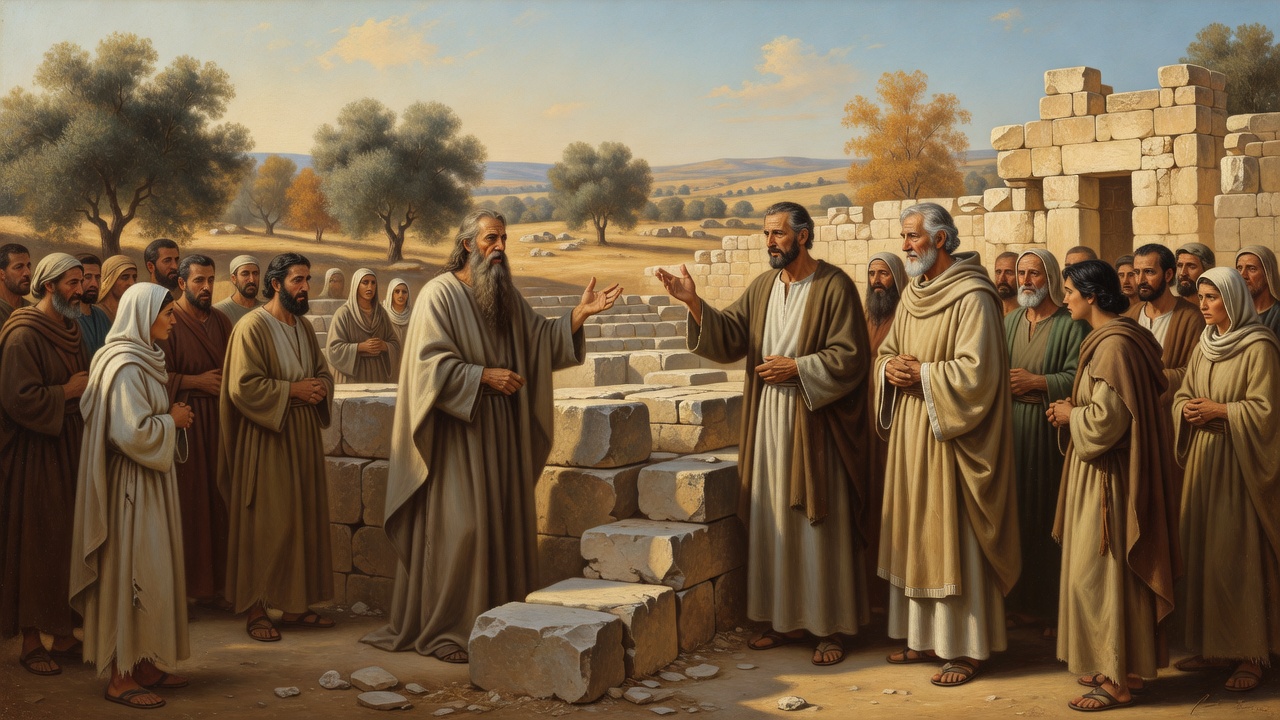
- When the foundation of the second temple was laid after the return from Babylon, older members of the community could still remember the magnificence of the original temple destroyed by Nebuchadnezzar. In response to their discouragement at the modest new structure, Haggai declared that the future glory of this house would surpass its former splendor.Sources: the Bible text itself · Zerubbabel · Haggai
- Haggai consulted the priests on questions of ritual law to illustrate a moral point. According to their rulings, holiness was not easily transmitted through indirect contact, whereas ceremonial defilement—such as from touching a corpse—spread immediately, mirroring how their past neglect had affected their offerings and harvests.Sources: the Bible text itself
- The restoration of the community was led by two key figures: Zerubbabel son of Shealtiel, who served as the civil governor, and Joshua son of Jehozadak, the high priest. At the end of the chapter, Haggai addresses Zerubbabel with the royal imagery of a signet ring, symbolizing divine authority and choice.Sources: the Bible text itself · Zerubbabel · Joshua
Notes written with AI assistance from open sources (Theographic Bible Metadata, CC BY-SA 4.0; Easton’s Bible Dictionary, public domain) and reviewed before publishing.
Places in this chapter
- Egypt · 30.129, 31.308 · verse 5
Only places identified with high confidence are shown (90% or more according to the scholarly sources compiled by OpenBible). Period map: DARE (Digital Atlas of the Roman Empire), CC BY 4.0; modern map: © OpenStreetMap contributors; places: OpenBible.info (CC BY 4.0).
Credits and license for this translation
KAKAƗYARI NIUKIEYA XAPAYARI WIXARIKAKƗ
The Holy Bible in the in Huichol language of Mexico, 2020 edition
La Santa Biblia en lengua huichol de México, edición 2020
copyright © 2020 Wycliffe Bible Translators, Inc.
Language: Huichol
Translation by: Wycliffe Bible Translators, Inc.
Huichol [hch], Mexico
Copyright Information
© 1988-2020, Wycliffe Bible Translators, Inc.
This translation text is made available to you under the
terms of the Creative Commons License: Attribution-Noncommercial-No Derivative Works.
( http://creativecommons.org/licenses/by-nc-nd/3.0/ )
In addition, you have permission to port the text to different file formats, as long as you
do not change any of the text or punctuation of the Bible.
You may share, copy, distribute, transmit, and extract portions
or quotations from this work, provided that you include the above copyright
information:
You must give Attribution to the work.
You do not sell this work for a profit.
You do not make any derivative works that change any of the actual words or punctuation of the Scriptures.
Permissions beyond the scope of this license may be
available if you contact
us with your request.
The Holy Bible
in Huichol
© 1988-2020, Wycliffe Bible Translators, Inc.
This translation is made available to you under the terms of the
Creative Commons Attribution-Noncommercial-No Derivatives license 4.0.
You may share and redistribute this Bible translation or extracts from it in any format, provided that:
You include the above copyright and source information.
You do not sell this work for a profit.
You do not change any of the words or punctuation of the Scriptures.
Pictures included with Scriptures and other documents on this site are licensed just for use with those Scriptures and documents.
For other uses, please contact the respective copyright owners.
2025-09-03
Source: http://ebible.org/hch/ · eBible.org