Ezekiel 46
KAKAƗYARI NIUKIEYA XAPAYARI WIXARIKAKƗ · Tap a verse to see its cross-references.
1»”Yawé naimekɨmɨyɨwe mɨpaɨ kanaineni: 'Itupari tau manatineika hepatsie meuwie katineunakamɨkɨ mɨka'uxipiya tukaritɨnitsie, pɨreuyepierikenike xawatikɨ meta kepauka metsa hekwatɨ manatiwenitsie. 2Ti'aitame kitenie xamaruyaritɨa kaneutahamɨkɨ, kitenie mutuika 'aurie pɨtakeni, hikɨ mawari wewiwamete mawari taiyariyari mepɨwewieni, meta 'aixɨa memɨteyuxeiyanikɨ mawariyari. Mana kitenie ti'aitame kwiepa kanitihɨximakemɨkɨ, hikɨ 'anake kananuyeyeimɨkɨ, 'ana kitenie pɨkareunare kepaukake mukutaikaire.
3»”Xawatikɨ meta kepauka metsa mɨhekwani teɨteri 'ena kwiepa memɨtama Yawé hɨxie mepɨkahɨxima'uni, mana mɨkɨ kitenietsie. 4Mawari taiyariyari ti'aitame, Yawé mɨtitimawirieni xawatikɨ 'ataxewime muxatsi 'etsimemɨpepe meta xeime muxa 'uki, mɨkɨ meyunaitɨ nixewitɨ pɨkatikuyeni. 5Hatsi mawariyari pɨhɨkɨtɨni xeitewiyari kiruyari, xeime muxa 'uki hetsiemieme, peru muxatsi 'etsimemɨpepe wahetsiemieme tsepa kepaɨmeme. Hatsi xeitewiyari kiruyaritsie hatseiti haika rituruyari heimana 'imeriyu mepanutinɨitɨani. 6Metsa hekwatɨ manatiwenitsie pitimawa xeime tsikeru, me'ataxewime muxatsi 'etsimemɨpepe meta xeime muxa 'uki, yunaitɨ mɨkɨ mekatekukuyeme. 7Tsikeru hetsiemieme xeitewiyari kiruyari hatsi pɨtimawa, meta muxa 'uki hetsiemieme. Muxatsi 'etsimemɨpepe wahetsiemieme tsepa kepaɨmeme hatsi muyuri, peru hatsi xeitewiyari kiruyaritsie haika rituruyari heimana 'imeriyu hatseiti pɨyɨni.
8»”Kepauka ti'aitame meutahani, kitenie xamaruyaritɨa kaneutahamɨkɨ, meta yaxeikɨa muwa kanayenemɨkɨ. 9Peru kepauka teɨteri Yawé hɨxie memɨti'uni 'ixɨarari matineikatsie, kemɨ'ane meutahani kitenie tayeta miemetsie tukita hetitunumakenike, kitenie tatsutɨa miemetsie pɨta kanayenemɨkɨ, kemɨ'aneta tatsutɨa miemetsie meutahani tayeta miemetsie pɨta kanayenemɨkɨ. Nixewitɨ hakewa meutaha muwata pɨkahayeneikani, matsi hɨxiena pɨta kanayenemɨkɨ. 10Ti'aitame pɨwanɨka kepauka teɨteri memeutahaxɨani meta kepauka memɨwayekɨne. 11'Ixɨarari matineikatsie kemɨre'inɨari, tsikeru hetsiemieme xeitewiyari kiruyari hatsi pɨyɨni, meta muxa 'uki hetsiemieme yaxeikɨa. Muxatsi 'etsimemɨpepe wahetsiemieme tsepa kepaɨmeme hatsi muyuri, peru hatsi xeitewiyari kiruyaritsie haika rituruyari heimana 'imeriyu hatseiti pɨyɨni.
12»”Kepauka ti'aitame kemɨtiyuwaɨriya mawariyari mɨyetuani Yawé hetsiemieme, tsepa mawari taiyariyari yatɨni 'aixɨa memɨteyuxeiyanikɨ mawariyari, mɨkɨ pɨreuyepiyarieni kitenie tau manatineika hepa meuwietsie, piwewieni yumawari taiyariyari yatɨni memɨyuxewinikɨ mawariyari, yaxeikɨa kemikuyuruwa xawati tukariyaritsie. Hikɨ 'arike kaniwayeyeimɨkɨ, kwitɨta 'utɨana katineunarimɨkɨ.
13»”Ximeri mawari taiyariyari peputiwewiwani Yawé hetsiemieme, xeime muxa xeiwiyari hexeiyakame katikuyeme. 14Meta yaxeikɨa pepitimawani ximeri hatsi mawariyari 'atahuta kiruyari, meta hatseiti xeirituruyari, hatseiti harinatsie panutituare. Mɨkɨ mawari Yawé hetsiemieme pɨhɨkɨtɨni, yamɨtiutiwewiwani, 'aitsika yemekɨ kanihɨkɨtɨni. 15Hikɨ kaniutiwewiwamɨkɨ ximeri, mawari taiyariyari yareuyuhanemekɨ, muxa, hatsi mawariyari meta hatseiti mawariyari.
16»”Mɨpaɨ kanaineni Yawé naimekɨmɨyɨwe: Xɨka ti'aitame yuniwe tiumini yupiinitɨarika, mɨkɨ piinitɨarika mɨkɨta niwemama wapiini katinayeimɨkɨ, mɨkɨ wapiini mɨtihɨkɨkɨ. 17Peru xɨka yupiinitɨarika tiyu'uximayatsiriwame tiumini, mɨkɨ hetsiena pɨtimiemetɨni peru kepauka mɨxɨnarieni, 'ana pɨtiyetuani. Ti'aitame mɨtipiinieya mɨkɨta nuiwarimama katiniwapiinitɨni. 18Ti'aitame teɨteri tiwapiini pɨkatiwanawairieni, meta tita mɨtiwapiini pɨkatiwakunamirieni. Yuniwema pɨtiwayetuirieni tita mɨrexeiya xeikɨa, mɨpaɨ pɨ'aneni nixewitɨ neteɨterima yupiini pɨkatinawaiyarieni”».
19Hikɨ tewi kanenewitɨni kitenie 'aurie, kii tayeta meutineniereta mawari wewiwamete wahetsiemieme mɨpatsie xeikɨa. Mana teti'utɨ kaneniuxeiyatsitɨani 'upaitɨ kemɨtiuye'anekai, tau makayuyuipike hepatsie. 20Hikɨ mɨpaɨ kanetiniutahɨawe: «'Uwa katini'aneni hakewa mawari wewiwamete wai memuka'etsani, 'itiya mawariyari mayanikɨ, meta mɨrayukatuani mawariyari mayanikɨ. Metatsiere muwa puka'etsarɨwani hatsi mawari mayeitɨarie. 'Ikɨ mɨya pɨti'ane takwa hutarieka miemetsie memɨkate'anuyepinenikɨ, teɨteri mɨtipatsietɨka mete'utimayɨanikɨ».
21Hikɨ kanenewitɨni takwa hutarieka miemetsie, kaneniuxeitsitɨani naukakɨa 'etsikinatsie. Naukakɨa 'etsikinatsie takwa 'etsiyeyeume nepuxei. 22Naukakɨa muta'etsikinatsie takwa pukumanekai kurarutɨiyarietɨkaitɨ, naitɨ yaxeikɨa puyeyeukai, xeitewiyari meturuyari pɨtɨkai meta tamamata heimana 'auxɨwi 'atayeyeutɨ. 23Mɨkɨ mɨnauka takwa, yuwarita pexeiyatɨkatei kuraru 'a'atitetewakame, hikɨ naitsarie mahanetsie kuraru yuhetɨa nanaiyame pexeiyakai. 24Hikɨ mɨpaɨ kanetiniutahɨawe: «'Ikɨ ti'etsamete kanihɨkɨtɨni 'uwa memɨteti'etsani tukita memɨte'uximaya teɨteri wamawarika».
Did you know?
Worship, Royal Duties, and Temple Kitchens
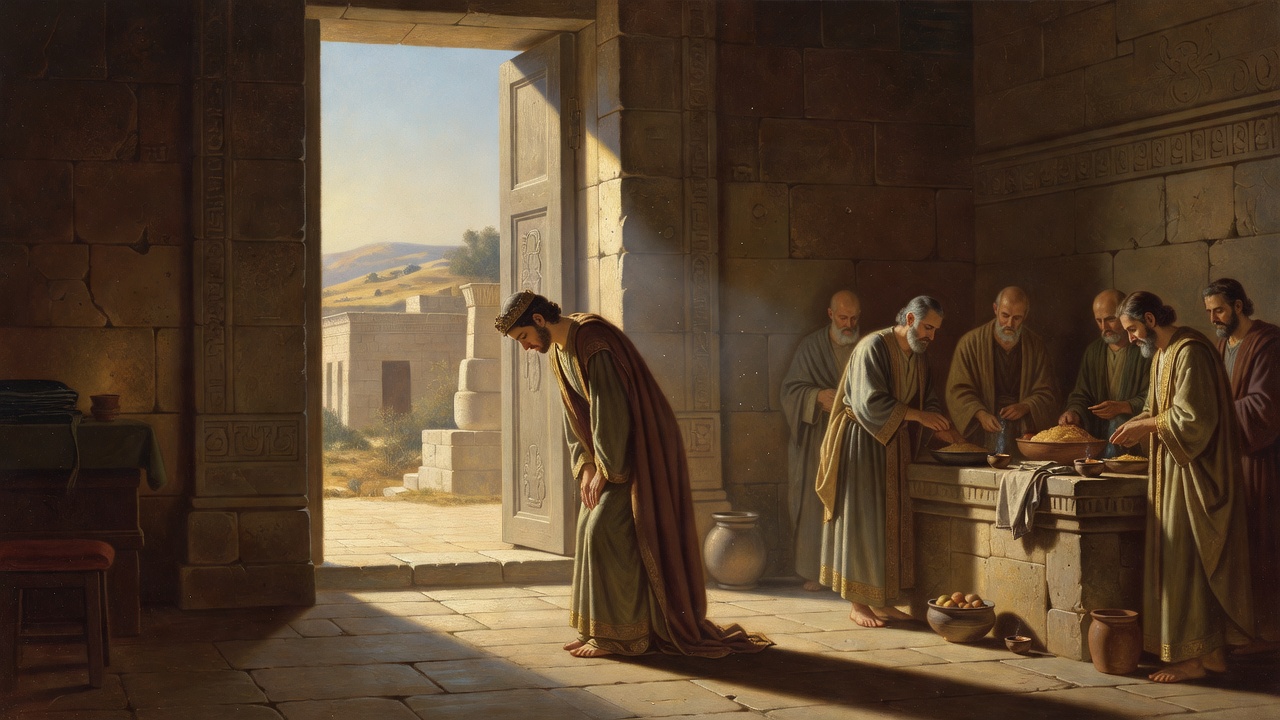
- The east inner gate of the temple was kept shut during the six working days but opened on the Sabbath and New Moon festivals. The prince was instructed to stand by the gatepost and worship at the threshold while the priests offered his sacrifices, after which the gate stayed open until evening.Sources: the Bible text itself
- To regulate worship during the appointed feasts, worshippers entering by the north gate were required to exit through the south gate, and vice versa. Furthermore, property laws strictly prevented the prince from seizing the land of the people, requiring him to provide inheritances only from his own possessions.Sources: the Bible text itself
- The vision details separate cooking areas in the temple complex: special rooms at the western end for priests to boil guilt and sin offerings to avoid transmitting sacredness to the people, and four large enclosed corner courts in the outer court used by temple ministers to cook communal sacrifices.Sources: the Bible text itself
Notes written with AI assistance from open sources (Theographic Bible Metadata, CC BY-SA 4.0; Easton’s Bible Dictionary, public domain) and reviewed before publishing.
Credits and license for this translation
KAKAƗYARI NIUKIEYA XAPAYARI WIXARIKAKƗ
The Holy Bible in the in Huichol language of Mexico, 2020 edition
La Santa Biblia en lengua huichol de México, edición 2020
copyright © 2020 Wycliffe Bible Translators, Inc.
Language: Huichol
Translation by: Wycliffe Bible Translators, Inc.
Huichol [hch], Mexico
Copyright Information
© 1988-2020, Wycliffe Bible Translators, Inc.
This translation text is made available to you under the
terms of the Creative Commons License: Attribution-Noncommercial-No Derivative Works.
( http://creativecommons.org/licenses/by-nc-nd/3.0/ )
In addition, you have permission to port the text to different file formats, as long as you
do not change any of the text or punctuation of the Bible.
You may share, copy, distribute, transmit, and extract portions
or quotations from this work, provided that you include the above copyright
information:
You must give Attribution to the work.
You do not sell this work for a profit.
You do not make any derivative works that change any of the actual words or punctuation of the Scriptures.
Permissions beyond the scope of this license may be
available if you contact
us with your request.
The Holy Bible
in Huichol
© 1988-2020, Wycliffe Bible Translators, Inc.
This translation is made available to you under the terms of the
Creative Commons Attribution-Noncommercial-No Derivatives license 4.0.
You may share and redistribute this Bible translation or extracts from it in any format, provided that:
You include the above copyright and source information.
You do not sell this work for a profit.
You do not change any of the words or punctuation of the Scriptures.
Pictures included with Scriptures and other documents on this site are licensed just for use with those Scriptures and documents.
For other uses, please contact the respective copyright owners.
2025-09-03
Source: http://ebible.org/hch/ · eBible.org