1 Kings 1
KAKAƗYARI NIUKIEYA XAPAYARI WIXARIKAKƗ · Tap a verse to see its cross-references.

About this book
About 1 Kings
- Easton's Bible Dictionary (1897) treats the authorship of the books of Kings as uncertain. A tradition that Jeremiah wrote them is, in Easton's view, supported by passages almost identical with parts of Jeremiah and by events Jeremiah knew personally, yet Easton thinks it more probable that Ezra, after the Captivity, compiled the books from earlier documents, perhaps written by David, Solomon, Nathan, Gad, and Iddo. Easton dates the composition between 561 B.C., when Jehoiachin was released from captivity by Evil-merodach, and 538 B.C., the decree of Cyrus.Sources: Easton: Kings, The Books of
- Easton says these books contain the annals of the kingdom from Solomon's accession until Nebuchadnezzar and the Babylonians subdued it, a period he estimates at about 453 years. 1 Kings opens while David is dying: Adonijah, his fourth son, who had become heir-apparent to the throne after the deaths of Amnon and Absalom, has himself proclaimed king, but Nathan and Bathsheba persuade David to enthrone Solomon at once. Solomon, David's son by Bathsheba, whose history is recorded in 1 Kings 1-11, came to the throne, Easton suggests, at about sixteen or eighteen.Sources: Easton: Kings, The Books of · Adonijah · Solomon
- In the Hebrew Scriptures the two books of Kings originally formed one book; the Septuagint first divided them and, with the Vulgate, numbers them as the third and fourth books of Kings, the books of Samuel being the first and second. Easton notes that Chronicles gives greater prominence to the priestly or Levitical office, while Kings gives greater prominence to the royal office, and that in the threefold division of the Scriptures by the Jews these books are ranked among the Prophets. The narrative points to earlier sources: the book of the acts of Solomon and the chronicles of the kings of Judah and of Israel.Sources: Easton: Kings, The Books of
- After Solomon's death the ten tribes revolted and invited Jeroboam, son of Nebat, to be their king; Easton calls him the first king of those tribes and dates his reign from 976 to 945 B.C. He had fled to Egypt under the protection of Shishak I, and later moved his residence from Shechem, his first capital, to Tirzah, which remained the chief residence of Israel's kings until Omri bought the hill of Shomeron from Shemer for two talents of silver and built Samaria. The later narrative includes Ahab, Omri's son and the seventh king of Israel, whose wife was Jezebel: to the calf worship introduced by Jeroboam he added the worship of Baal, and he was severely admonished by the prophet Elijah.Sources: Jeroboam · Tirzah · Samaria · Ahab
Notes written with AI assistance from open sources (Theographic Bible Metadata, CC BY-SA 4.0; Easton’s Bible Dictionary, public domain) and reviewed before publishing.
'Aruniyaxi ti'aitame kemɨtiyeimɨkɨkai
1Merikɨtsɨ Rawiri ti'aitame waɨkawa kani'ukiratsitɨkaitɨniri, pɨkaheuxɨkakai tsepa waɨkawa memika'ɨkaritɨwakai yaxeikɨa katineuhaɨtɨkaitɨni. 2'Ayumieme 'iparewiwamete mɨpaɨ mekatenitahɨawe: «Xeime 'uka 'ɨimari yuxewime tepɨkuwauni para matsi'ɨwiyanikɨ, meta 'a'aurie mutihupunikɨ mɨmatsi'utixɨriyanikɨ». 3Hikɨ mɨkɨ mekaniukakɨne naitsarie 'ixaheritsixi wahetsɨa 'uka mekuwautɨwetɨ witsimɨ'ane, mekanitaxeiya 'Awitsahaki Tsunemi kiekariyaritsie kiekame, mɨkɨ ti'aitame mekani'atɨirieni. 4Mɨkɨ 'uka yemekɨ witsipɨtiyuxexeiyakai, ti'aitame pɨ'ɨwiyakai meta 'apɨrepiniriwakai tita mɨreuyehɨakai, peru ti'aitame mɨkɨ hatsuaku pɨka'ikumayɨa.
5Merikɨtsɨ 'Aruniyaxi Rawiri nu'aya Kakiti matɨa memeyexei, kaniuyukuha'aritɨani mɨpaɨ 'utaitɨ: «Ti'aitame nepayani». 'Ayumieme yuwaɨkawame kaniwarukuxeɨrieni kuyaxi. Kaxetate kuyaxa miemete meta kawayutsixi kaniwarukuxeɨrieni meta huta tewiyari heimana tamamata kuyaxi 'ihɨwemete. 6'Aruniyaxi pɨtemaikɨtɨkai 'aixɨa pɨtiyuxexeiyakai yakɨ puyumaikai 'Awitsaruni 'utɨa mieme pɨhɨkɨtɨkai. Paapaya Rawiri hatsuaku pɨka'ita'imaiyaxɨ kemɨtiyurienekai 'Aruniyaxi. 7'Ayumieme 'Aruniyaxi Kuhawi Tsariwiya nu'aya matɨa mekatenikuxatakaitɨni 'awie meta mawari wewiwame hamatɨa 'Awiyataxi, mɨkɨta mekaniparewieni. 8'Ikɨta 'Aruniyaxi memɨka'uparewi mepɨhɨkɨtɨkai mawari wewiwame Tsaruki meta Wenahiyaxi Kuyara nu'aya, Natani Kakaɨyari niukameya, Tsimi meta Xeki meta Rawiri kuyaximama memɨkamama.
9Hikɨ 'Aruniyaxi 'Enixukeri haixayari 'aurie katiniutimawa, Tsukereti 'aiyari manukatsie, mana tsikerutsixi memɨwaiyatɨka, tuurutsixi meta muxatsi mekaniwarutimawa. Yu'iwama kaniwaruta'inieni ti'aitame niwemama memɨ'iwamamatɨkaikɨ meta yunaime paratsiyuta te'uximayatamete, Kura kwieyaritsie miemete, 10peru Natani Kakaɨyari niukameya pɨka'uta'ini, Wenahiyaxi meta ti'aitame kuyaximama memɨkamama, meta yu'iwa Tsarumuni pɨka'uta'ini. 11'Ayumieme Natani Tsarumuni maamaya Wetitsawe, mɨpaɨ katiniuta'iwawiya: «¿Mɨpaɨ petimateri, 'Aruniyaxi Kakiti nu'aya ti'aitame mayuyeitɨaxime, tati'aitɨwame Rawiri 'atsikatimaikaku? 12Xɨka pehauyuwikweitsitɨamɨkɨni meta 'aniwe Tsarumuni pehauwikweitsitɨamɨkɨni, keneneupitɨa mɨpaɨ nemɨmatitaxatɨanikɨ: 13Kenemie ti'aitame Rawiri hetsɨa, mɨpaɨ ketinetahɨawi: “¿Tamɨ ne mati'uximayatsiriwame mɨpaɨ pepɨnetiuhɨritɨa, kename neniwe Tsarumuni ti'aitame 'ayanikekai 'a'utɨma? ¿Kepautɨtɨ hikɨ 'Aruniyaxi ti'aitame pɨhɨkɨ?” 14Mexi 'ekɨ perekuxatani Rawiri hamatɨa neta nepautahani para neta yaxeikɨa nemɨreitahɨawekɨ».
15Merikɨte Wetitsawe kaneutahani ti'aitame muyehupu. Mɨkɨri waɨkawa mɨ'ukiratsitɨkaikɨ 'Awitsahaki pi'ɨwiyakai Tsunemi kiekame. 16Wetitsawe kepauka muwa munua kaniukatunumakeni hɨxiena. Hikɨ ti'aitame mɨpaɨ katinita'iwawiya:
—¿Ketitakɨ nematiparewieni?
17Hikɨ Wetitsawe mɨpaɨ katinita'eiya:
—Neti'aitɨwame yapepɨnetiutahɨawixɨ ne mati'uximayatsiriwame, Yawé mɨ'akakaɨyari matsi'eniekaku kename neniwe Tsarumuni ti'aitame 'ayanikekai 'a'utɨma. 18Peru hikɨ matsi 'Aruniyaxi pɨta ti'aitame payuyeitɨaxime, 'ekɨ 'atsipekatimaikaku yuri ti'aitame pemɨhɨkɨ. 19Mɨkɨri mawari kanewewieni turutsixi, tsikerutsixi meta muxatsi kaniwarekwini yumɨireme. Hikɨ kaniwaruta'inieni yunaime ti'aitame 'aniwema, mawari wewiwame 'Awiyataxi meta Kuhawi kuyaxi tiwa'aitɨwame. Peru Tsarumuni pɨka'uta'ini 'aixɨa mɨmati'uximayatsirie. 20Hikɨ neti'aitɨwame meta ti'aitame, yunaitɨ 'ixaheritsixi mekanita'ikwewani yapemɨtayɨnikɨ, kemɨ'ane mɨtita'aita 'a'utɨma 'a'uwenitsie mayerɨni. 21Mexɨka 'ekɨ yapekatayɨwetɨ pe'umɨni, matsi kwitɨwa 'Aruniyaxi pɨtatsikwini ne meta neniwe Tsarumuni matɨa 'axateyuruwamete wahepaɨ.
22Mexi 'akuxi Wetitsawe tikuxatakai ti'aitame hamatɨa, Natani Kakaɨyari niukameya kaninuani. 23Ti'aitame katinetimani kepauka munua. Hikɨ Natani hɨxiena 'utihɨximakeka, 24mɨpaɨ Rawiri katiniutahɨawe:
—Neti'aitɨwame. ¿'Ekɨ mɨpaɨ petiuta'ai kename 'Aruniyaxi 'anukakeni 'a'utɨma? 25Mɨpaɨ nekamatina'iwawiyani yanetimaitɨ mɨkɨ mawari mewewikɨ yumɨireme, turutsixi, muxatsi meta tsikerutsixi memɨwaiyatɨka. Meta yunaime 'aniwema kaniwaruta'inieni, kuyaxi tewa'aitɨwamete, meta mawari wewiwamete 'Awiyataxi mana mɨkɨ yunaitɨ mekatenekwaka mekane'ieka, mɨpaɨ mete'uhiwatɨ hɨxiena: “Ti'aitame 'Aruniyaxi yuheyemekɨ keti'aitani”. 26Peru ne pɨkanetsi'uta'ini 'ahetsiemieme nemɨti'uximaya, yaxeikɨa mawari wewiwame Tsaruki meta Wenahiyaxi Kuyara nu'aya meta Tsarumuni pɨka'uta'ini 'aixɨa mɨmati'uximayatsirie. 27¿Kamɨtsɨ 'ekɨ mɨpaɨ petiuta'ai, tame mate'uximayatsiriwamete yapekatarahɨawetɨ, kemɨ'ane 'a'utɨma 'a'uwenitsie mayerɨnikekai?
Rawiri Tsarumuni ti'aitame kemɨrayeitɨa
28Merikɨtsɨ mɨpaɨ tiu'enaka, ti'aitame Rawiri mɨpaɨ katiniuta'aita:
—Xekenewata'ini Wetitsawe.
Mɨkɨ kaneutayani ti'aitame hɨxie kaniutakeni. 29Hikɨ ti'aitame mɨpaɨ katinitahɨawe:
—Yurikɨ Yawé hɨxie mɨpaɨ nekanaineni, mɨnetsi'uxɨnaxɨ naime 'uximatɨarika hepaɨtsita, 30hikɨ nekaneye'atɨamɨkɨ kenemɨmatiutahɨawixɨ Yawé 'ixaheritsixi takakaɨyari hɨxie. Hikɨ yanepɨtiyurieni ne kenemɨmatiutahɨawixɨ, 'aniwe Tsarumuni ti'aitame payani ne'utɨma, nehetsiemieme pɨtita'aita.
31Hikɨ Wetitsawe ti'aitame hɨxie 'utihɨximakeka, mɨpaɨ kaniutayɨni:
—Neti'aitɨwame meta ti'aitame Rawiri 'aheyemekɨ peke'ayeyurini.
32'Ana Rawiri mɨpaɨ katiniuta'aita:
—Xekenewata'ini mawari wewiwame Tsaruki, meta Natani Kakaɨyari niukameya metatsiere Wenahiyaxi Kuyara nu'aya.
Hikɨ kepauka mɨkɨ yuhaikatɨ memu'axɨa ti'aitame hɨxie, 33ti'aitame mɨpaɨ katiniwarutahɨawe:
—Xekeniwara'inietɨ paratsiyuta memɨte'uximaya, neniwe Tsarumuni xekenanutiyetsa nemuratsie, hikɨ xekenanuwitɨki Kikuni haixayari matiniere paitɨ, 34muwa mawari wewiwame Tsaruki meta Natani Kakaɨyari niukameya hatseiti witsimu'ɨa memeikawirienikɨ, 'Ixaheri kwieyaritsie ti'aitame mayanikɨ. Hikɨ 'ana 'awa kuxinetayari xekenetahɨtsi meta xekenetihiwani mɨpaɨ xe'utiyuatɨ: “Ti'aitame Tsarumuni yuheyemekɨ keti'aitani”. 35Hikɨ mɨpaɨ xeteheyurieme, xekenakunuitɨa Tsarumuni ne'uwenitsie mayerɨnikɨ nehetsiemieme mɨtita'aitakɨ. Karikɨ ne nekanenayexeiya mɨkɨ mɨhɨkɨtɨnikɨ 'Ixaheri kwieyaritsie mɨtita'aita meta Kura kwieyaritsie.
36Wenahiyaxi Kuyara nu'aya mɨpaɨ katinita'eiya:
—Mɨpaɨ ketiɨyɨni. Mɨpaɨta Yawé kehaineni ti'aitame kakaɨyarieya hɨkɨtɨtɨ. 37Ti'aitame Yawé 'ahamatɨa kemɨtiuyeikakai, mɨpaɨta Tsarumuni hamatɨa ketiuyeikani, ketimariwemekɨ pemɨti'aitakai Rawiri ti'aitame, matsi waɨkawa Tsarumuni mariwemekɨ ketiuta'aita.
38Tsaruki mawari wewiwame, Natani Kakaɨyari niukameya meta Wenahiyaxi Kuyara nu'aya, meta kereteutsixi, pereteutsixi, Tsarumuni mekananutiyeni Rawiri ti'aitame murayatsie, meta me'ihɨtɨ 'auriena mekaneutiwetɨkateitɨni kepauka Kikuni haixayari hepa kɨatsata memukahukai. 39Meheta'axɨaka mawari wewiwame Tsaruki hatseiti 'awata mɨyema kanewatihana 'ixuriki tukiyarita Kakaɨyari hetsiemieme muyepatsieta meiyehanakai, hikɨ Tsarumuni kaniukawirieni mu'uyatsie. Meta 'awa mekaniutahɨtsieni, hikɨ yunaitɨ teɨteri mɨpaɨ mekateniuhiwa: «Ti'aitame Tsarumuni yuheyemekɨ keti'aitani». 40Mɨpaɨ tiuyɨku, yunaitɨ mekanekɨne 'utɨmana, pirikɨxakɨ mete'ukayuitɨwatɨ meta me'utihiwatɨ karima temawierikakɨ. Kwinimieme yemekɨ pɨtiyu'eniɨriɨkɨkai wahiwari, kwie 'ɨaritɨ puwatayuanekai.
41Hikɨ 'Aruniyaxi meta yu'inierima yunaitɨ metekwatɨ mekatenitahayewarɨmekaitɨniri kepauka yuariya memu'eni. Kuhawi 'awa yuariyaya 'u'enieka, mɨpaɨ kaniutayɨni:
—¿Ketitayari kuta kwinimieme metehehiwa kiekaritsie?
42Kuhawi 'akuxi tikuxatakaku Kunatani kaninuani, mawari wewiwame 'Awiyataxi nu'aya.
'Aruniyaxi mɨpaɨ katinitahɨawe:
—Keniwataye'a. 'Ekɨ tewi 'aixɨa pemɨtiuka'iyari pepɨhɨkɨ, peuyewetse pemɨ'enierieka, xɨari niuki 'aixɨa 'anuyɨneme pepukutuane.
43Hikɨ Kunatani mɨpaɨ 'Aruniyaxi katiniutahɨawe:
—Neuxei mɨpaɨ pɨka'ane. Rawiri tati'aitɨwame, Tsarumuni kananukakeni mɨti'aitametɨnikɨ. 44Metatsiere kaniwaruta'aitɨani Tsaruki mawari wewiwame, Natani Kakaɨyari niukameya meta Wenahiyaxi Kuyara nu'aya metatsiere kereteutsixi, pereteutsixi, Tsarumuni memanutiyenikɨ ti'aitame murayatsie. 45Tsaruki Natani matɨa ti'aitame mayanikɨ hatseiti witsimu'ɨa mekaneikawirieni Kikuni paitɨ. Muwa paitɨ mekaneitsutɨani teɨteri me'utihiwatɨ temawierikakɨ meta kiekaritsie yaxeikɨa mepeyuxeɨrie. 'Ayumieme mɨkɨ hiwari kana'eniɨriɨkɨni. 46Metatsiere 'ari Tsarumuni ti'aitame 'uwenieyatsie kanayerɨni, 47meta paratsiyuta te'uximayatamete tati'aitɨwame Rawiri mekaneiwaɨritɨatɨwekaitɨni mɨyamɨtiuyurikɨ. Mɨpaɨ paitɨ matsi mekateneikɨhɨawekaitɨni Kakaɨyari Tsarumuni matsi waɨkawa mariweme kehayeitɨani keyuri Rawiri, meta matsi mariwemekɨ ketiuta'aita keyuri Rawiri. Hikɨ ti'aitame Rawiri mɨpaɨ rahɨawarɨwatɨ yu'utatsie 'akaitɨ kananakatutsire 48hikɨ mɨpaɨ kanetayɨni: “'Aixɨa kerahɨawarɨwani Yawé 'ixaheritsixi takakaɨyari, hikɨ mɨnetsi'upitɨa nemixeiyakɨ ne'utɨma mɨtita'aita, ne'uwenitsie 'akaime”.
49Hikɨ mɨpaɨ mete'u'enanaka, yunaitɨ 'Aruniyaxi 'inierimama me'anuku'uka mekaneutayeixɨani waɨkawa memamatɨ. 50'Aruniyaxi, waɨkawa Tsarumuni makatɨ, 'ixuriki tukiyari manuwe kaneuyuta'una, mawari wewiwame 'awateyatsie katinawiyakaitɨni. 51Hikɨ yapauka ti'aitame Tsarumuni mɨpaɨ pɨtiutaxatɨarie:
—Ti'aitame, 'Aruniyaxi kamenimakaka, 'ixuriki tukiyari manuwe mawari wewiwame 'awateyatsie katinawiyani. Mɨpaɨ 'utaitɨ: “Hikɨ kwitɨwa mɨpaɨ kehetayɨni ti'aitame Tsarumuni kename ne kanetsimieni ti'uximayatsiriwame”.
52Hikɨ Tsarumuni mɨpaɨ kaniutayɨni:
—Xɨka yuhemekɨ heitserie 'a'uyeikani, ni'atsipɨkaranuyeyani, peru xɨka tixaɨtɨ tiuyurieni 'uxa'atɨni, kanimieriemɨkɨ.
53Hikɨ ti'aitame Tsarumuni katiniutanɨ'ani mɨwitɨkiemiekɨ. Kepauka 'Aruniyaxi munua, kaniutihɨximakeni ti'aitame Tsarumuni hɨxie, hikɨ mɨkɨ kanitanɨ'ani yukie mɨyemiekɨ.
Did you know?
The Succession to David's Throne
- As David's oldest surviving son after the deaths of Amnon and Absalom, Adonijah claimed the royal succession, backed by the military commander Joab and the high priest Abiathar. However, David chose his younger son Solomon, who was supported by the prophet Nathan, the priest Zadok, and the royal bodyguard under Benaiah.Sources: Adonijah · Solomon · the Bible text itself
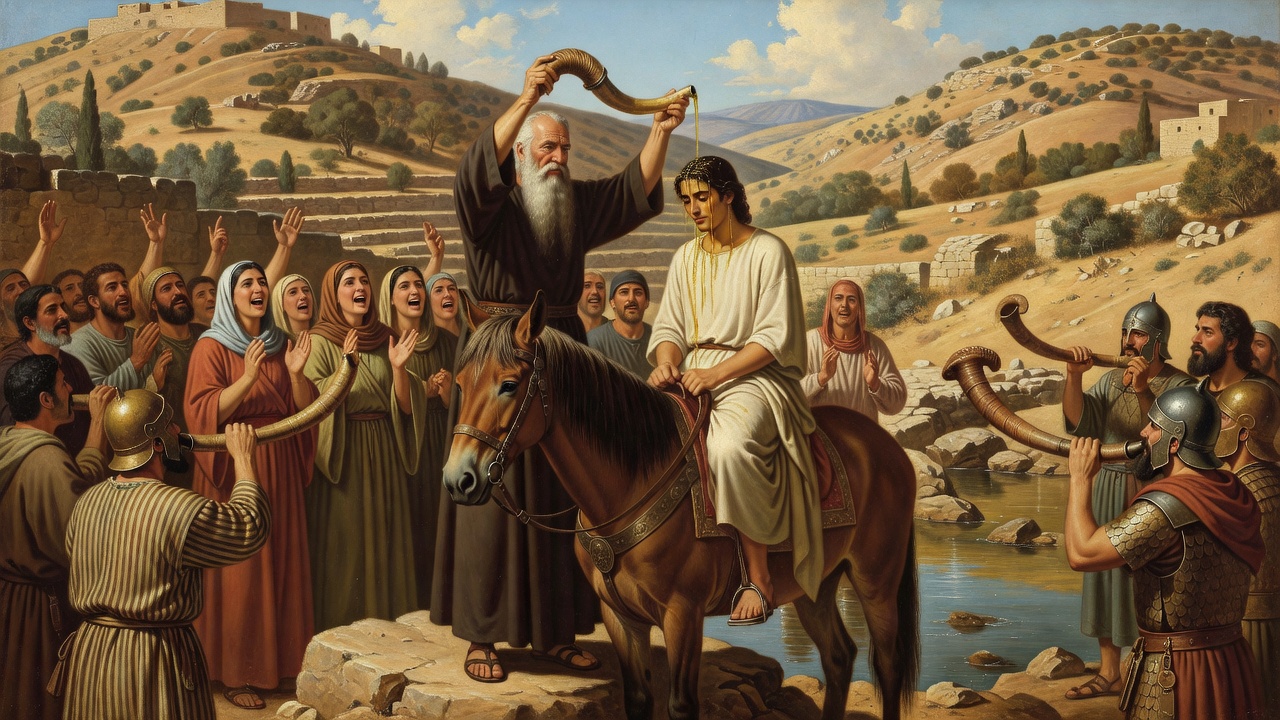
- Riding the king's own mule was a decisive public declaration of royal authority. By David's explicit instruction, Solomon was escorted down to the spring of Gihon, where Zadok anointed him king with oil taken from the tabernacle to the sound of ram's horns and popular celebration.Sources: Gihon · Zadok · the Bible text itself
- Upon hearing of Solomon's public coronation, Adonijah fled in terror and sought asylum by taking hold of the horns of the sacrificial altar. Solomon granted him conditional clemency, sparing his life so long as he proved himself a worthy man.Sources: Adonijah · the Bible text itself
Notes written with AI assistance from open sources (Theographic Bible Metadata, CC BY-SA 4.0; Easton’s Bible Dictionary, public domain) and reviewed before publishing.
Places in this chapter
- Shunem · Today: Sulam · 32.606, 35.334 · verse 3
- Serpent’s Stone · Today: within 100 m of Bir Ayub · 31.767, 35.236 · verse 9
- Gihon · Today: Gihon Spring · 31.773, 35.236 · verses 33, 38, 44, 45
- Jerusalem · 31.777, 35.234 · verse 40
Only places identified with high confidence are shown (90% or more according to the scholarly sources compiled by OpenBible). Period map: DARE (Digital Atlas of the Roman Empire), CC BY 4.0; modern map: © OpenStreetMap contributors; places: OpenBible.info (CC BY 4.0).
Credits and license for this translation
KAKAƗYARI NIUKIEYA XAPAYARI WIXARIKAKƗ
The Holy Bible in the in Huichol language of Mexico, 2020 edition
La Santa Biblia en lengua huichol de México, edición 2020
copyright © 2020 Wycliffe Bible Translators, Inc.
Language: Huichol
Translation by: Wycliffe Bible Translators, Inc.
Huichol [hch], Mexico
Copyright Information
© 1988-2020, Wycliffe Bible Translators, Inc.
This translation text is made available to you under the
terms of the Creative Commons License: Attribution-Noncommercial-No Derivative Works.
( http://creativecommons.org/licenses/by-nc-nd/3.0/ )
In addition, you have permission to port the text to different file formats, as long as you
do not change any of the text or punctuation of the Bible.
You may share, copy, distribute, transmit, and extract portions
or quotations from this work, provided that you include the above copyright
information:
You must give Attribution to the work.
You do not sell this work for a profit.
You do not make any derivative works that change any of the actual words or punctuation of the Scriptures.
Permissions beyond the scope of this license may be
available if you contact
us with your request.
The Holy Bible
in Huichol
© 1988-2020, Wycliffe Bible Translators, Inc.
This translation is made available to you under the terms of the
Creative Commons Attribution-Noncommercial-No Derivatives license 4.0.
You may share and redistribute this Bible translation or extracts from it in any format, provided that:
You include the above copyright and source information.
You do not sell this work for a profit.
You do not change any of the words or punctuation of the Scriptures.
Pictures included with Scriptures and other documents on this site are licensed just for use with those Scriptures and documents.
For other uses, please contact the respective copyright owners.
2025-09-03
Source: http://ebible.org/hch/ · eBible.org