Proverbs 7
כתבי הקודש · Tap a verse to see its cross-references.
1בְּ֭נִי שְׁמֹ֣ר אֲמָרָ֑י וּ֝מִצְוֺתַ֗י תִּצְפֹּ֥ן אִתָּֽךְ׃ 2שְׁמֹ֣ר מִצְוֺתַ֣י וֶחְיֵ֑ה וְ֝תוֹרָתִ֗י כְּאִישׁ֥וֹן עֵינֶֽיךָ׃ 3קָשְׁרֵ֥ם עַל־אֶצְבְּעֹתֶ֑יךָ כָּ֝תְבֵ֗ם עַל־ל֥וּחַ לִבֶּֽךָ׃ 4אֱמֹ֣ר לַֽ֭חָכְמָה אֲחֹ֣תִי אָ֑תְּ וּ֝מֹדָ֗ע לַבִּינָ֥ה תִקְרָֽא׃ 5לִ֭שְׁמָרְךָ מֵאִשָּׁ֣ה זָרָ֑ה מִ֝נָּכְרִיָּ֗ה אֲמָרֶ֥יהָ הֶחֱלִֽיקָה׃ 6כִּ֭י בְּחַלּ֣וֹן בֵּיתִ֑י בְּעַ֖ד אֶשְׁנַבִּ֣י נִשְׁקָֽפְתִּי׃ 7וָאֵ֤רֶא בַפְּתָאיִ֗ם אָ֘בִ֤ינָה בַבָּנִ֗ים נַ֣עַר חֲסַר־לֵֽב׃ 8עֹבֵ֣ר בַּ֭שּׁוּק אֵ֣צֶל פִּנָּ֑הּ וְדֶ֖רֶךְ בֵּיתָ֣הּ יִצְעָֽד׃ 9בְּנֶֽשֶׁף־בְּעֶ֥רֶב י֑וֹם בְּאִישׁ֥וֹן לַ֝֗יְלָה וַאֲפֵלָֽה׃ 10וְהִנֵּ֣ה אִ֭שָּׁה לִקְרָאת֑וֹ שִׁ֥ית ז֝וֹנָ֗ה וּנְצֻ֥רַת לֵֽב׃ 11הֹמִיָּ֣ה הִ֣יא וְסֹרָ֑רֶת בְּ֝בֵיתָ֗הּ לֹא־יִשְׁכְּנ֥וּ רַגְלֶֽיהָ׃ 12פַּ֤עַם ׀ בַּח֗וּץ פַּ֥עַם בָּרְחֹב֑וֹת וְאֵ֖צֶל כָּל־פִּנָּ֣ה תֶאֱרֹֽב׃ 13וְהֶחֱזִ֣יקָה בּ֭וֹ וְנָ֣שְׁקָה־לּ֑וֹ הֵעֵ֥זָה פָ֝נֶ֗יהָ וַתֹּ֣אמַר לֽוֹ׃ 14זִבְחֵ֣י שְׁלָמִ֣ים עָלָ֑י הַ֝יּ֗וֹם שִׁלַּ֥מְתִּי נְדָרָֽי׃ 15עַל־כֵּ֭ן יָצָ֣אתִי לִקְרָאתֶ֑ךָ לְשַׁחֵ֥ר פָּ֝נֶ֗יךָ וָאֶמְצָאֶֽךָּ׃ 16מַ֭רְבַדִּים רָבַ֣דְתִּי עַרְשִׂ֑י חֲ֝טֻב֗וֹת אֵט֥וּן מִצְרָֽיִם׃ 17נַ֥פְתִּי מִשְׁכָּבִ֑י מֹ֥ר אֲ֝הָלִ֗ים וְקִנָּמֽוֹן׃ 18לְכָ֤ה נִרְוֶ֣ה דֹ֭דִים עַד־הַבֹּ֑קֶר נִ֝תְעַלְּסָ֗ה בָּאֳהָבִֽים׃ 19כִּ֤י אֵ֣ין הָאִ֣ישׁ בְּבֵית֑וֹ הָ֝לַ֗ךְ בְּדֶ֣רֶךְ מֵרָחֽוֹק׃ 20צְֽרוֹר־הַ֭כֶּסֶף לָקַ֣ח בְּיָד֑וֹ לְי֥וֹם הַ֝כֵּ֗סֶא יָבֹ֥א בֵיתֽוֹ׃ 21הִ֭טַּתּוּ בְּרֹ֣ב לִקְחָ֑הּ בְּחֵ֥לֶק שְׂ֝פָתֶ֗יהָ תַּדִּיחֶֽנּוּ׃ 22ה֤וֹלֵ֥ךְ אַחֲרֶ֗יהָ פִּ֫תְאֹ֥ם כְּ֭שׁוֹר אֶל־טָ֣בַח יָב֑וֹא וּ֝כְעֶ֗כֶס אֶל־מוּסַ֥ר אֱוִֽיל׃ 23עַ֤ד יְפַלַּ֪ח חֵ֡ץ כְּֽבֵד֗וֹ כְּמַהֵ֣ר צִפּ֣וֹר אֶל־פָּ֑ח וְלֹֽא־יָ֝דַ֗ע כִּֽי־בְנַפְשׁ֥וֹ הֽוּא׃ פ 24וְעַתָּ֣ה בָ֭נִים שִׁמְעוּ־לִ֑י וְ֝הַקְשִׁ֗יבוּ לְאִמְרֵי־פִֽי׃ 25אַל־יֵ֣שְׂטְ אֶל־דְּרָכֶ֣יהָ לִבֶּ֑ךָ אַל־תֵּ֝תַע בִּנְתִיבוֹתֶֽיהָ׃ 26כִּֽי־רַבִּ֣ים חֲלָלִ֣ים הִפִּ֑ילָה וַ֝עֲצֻמִ֗ים כָּל־הֲרֻגֶֽיהָ׃ 27דַּרְכֵ֣י שְׁא֣וֹל בֵּיתָ֑הּ יֹ֝רְד֗וֹת אֶל־חַדְרֵי־מָֽוֶת׃ פ
Did you know?
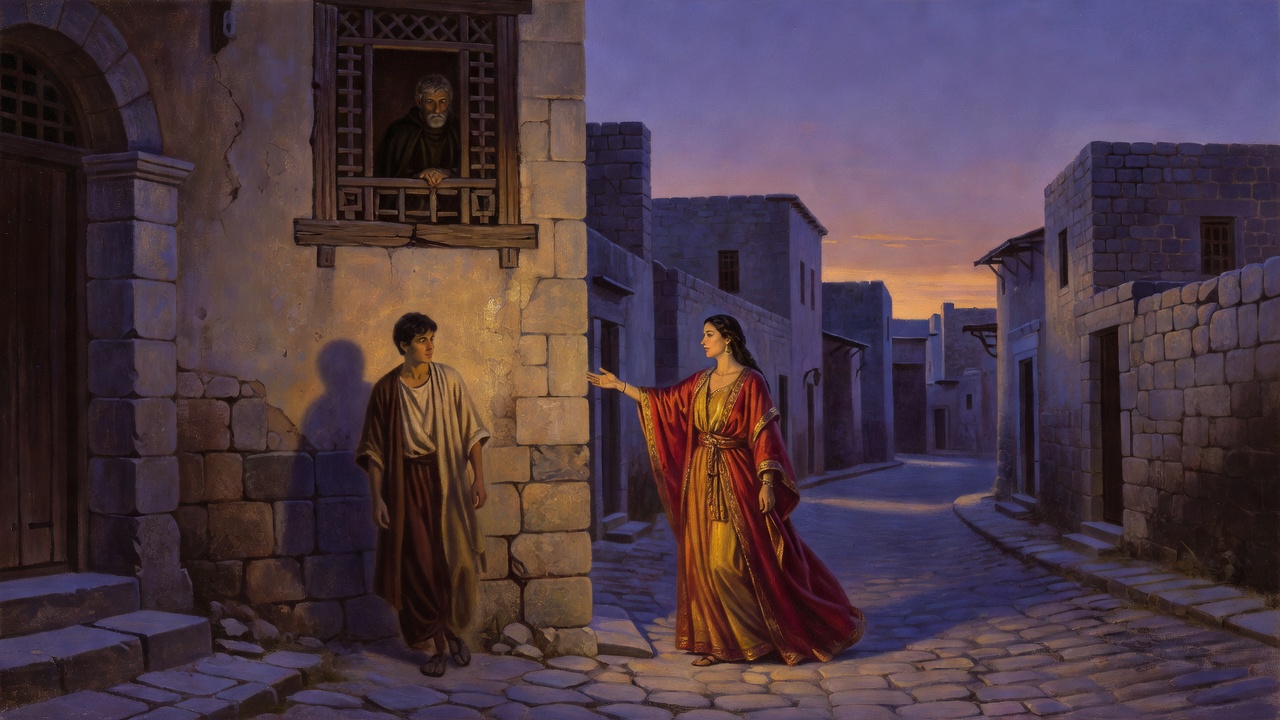
The Trap of Seduction
- The narrator observes the scene through the lattice of a house window, watching the street below as twilight fades into the dark of night. This literary perspective presents the story as an eyewitness account warning against wandering into places of temptation.Sources: the Bible text itself
- The seductress mentions that she has paid her vows and offered peace offerings, meaning she had meat from sacrifices prepared for a feast. She further appeals to luxury by mentioning colored linen imported from Egypt and perfumes of myrrh, aloes, and cinnamon.Sources: the Bible text itself
- To counter the allure of the stranger, the teacher urges the youth to embrace wisdom as a sister and understanding as a close relative. Cultivating an intimate, familial relationship with wisdom is framed as the vital defense against deceptive speech.Sources: the Bible text itself
Notes written with AI assistance from open sources (Theographic Bible Metadata, CC BY-SA 4.0; Easton’s Bible Dictionary, public domain) and reviewed before publishing.
Places in this chapter
- Egypt · 30.129, 31.308 · verse 16
Only places identified with high confidence are shown (90% or more according to the scholarly sources compiled by OpenBible). Period map: DARE (Digital Atlas of the Roman Empire), CC BY 4.0; modern map: © OpenStreetMap contributors; places: OpenBible.info (CC BY 4.0).
Credits and license for this translation
כתבי הקודש
The Hebrew Old Testament, Westminster Leningrad Codex
Public Domain
Language: עברית (Hebrew)
Dialect: Biblical/Ancient
Lemma and morphology data are licensed under a Creative Commons Attribution- ShareAlike license (http://creativecommons.org/licenses/by-sa/3.0/). For attribution purposes, credit the Open Scriptures Hebrew Bible Project. The text of the WLC remains in the public domain.
2017-12-27
Source: http://ebible.org/hboWLC/ · eBible.org