Isaiah 5
כתבי הקודש · Tap a verse to see its cross-references.
1אָשִׁ֤ירָה נָּא֙ לִֽידִידִ֔י שִׁירַ֥ת דּוֹדִ֖י לְכַרְמ֑וֹ כֶּ֛רֶם הָיָ֥ה לִֽידִידִ֖י בְּקֶ֥רֶן בֶּן־שָֽׁמֶן׃ 2וַֽיְעַזְּקֵ֣הוּ וַֽיְסַקְּלֵ֗הוּ וַיִּטָּעֵ֙הוּ֙ שֹׂרֵ֔ק וַיִּ֤בֶן מִגְדָּל֙ בְּתוֹכ֔וֹ וְגַם־יֶ֖קֶב חָצֵ֣ב בּ֑וֹ וַיְקַ֛ו לַעֲשׂ֥וֹת עֲנָבִ֖ים וַיַּ֥עַשׂ בְּאֻשִֽׁים׃ 3וְעַתָּ֛ה יוֹשֵׁ֥ב יְרוּשָׁלִַ֖ם וְאִ֣ישׁ יְהוּדָ֑ה שִׁפְטוּ־נָ֕א בֵּינִ֖י וּבֵ֥ין כַּרְמִֽי׃ 4מַה־לַּעֲשׂ֥וֹת עוֹד֙ לְכַרְמִ֔י וְלֹ֥א עָשִׂ֖יתִי בּ֑וֹ מַדּ֧וּעַ קִוֵּ֛יתִי לַעֲשׂ֥וֹת עֲנָבִ֖ים וַיַּ֥עַשׂ בְּאֻשִֽׁים׃ 5וְעַתָּה֙ אוֹדִֽיעָה־נָּ֣א אֶתְכֶ֔ם אֵ֛ת אֲשֶׁר־אֲנִ֥י עֹשֶׂ֖ה לְכַרְמִ֑י הָסֵ֤ר מְשׂוּכָּתוֹ֙ וְהָיָ֣ה לְבָעֵ֔ר פָּרֹ֥ץ גְּדֵר֖וֹ וְהָיָ֥ה לְמִרְמָֽס׃ 6וַאֲשִׁיתֵ֣הוּ בָתָ֗ה לֹ֤א יִזָּמֵר֙ וְלֹ֣א יֵעָדֵ֔ר וְעָלָ֥ה שָׁמִ֖יר וָשָׁ֑יִת וְעַ֤ל הֶעָבִים֙ אֲצַוֶּ֔ה מֵהַמְטִ֥יר עָלָ֖יו מָטָֽר׃ 7כִּ֣י כֶ֜רֶם יְהוָ֤ה צְבָאוֹת֙ בֵּ֣ית יִשְׂרָאֵ֔ל וְאִ֣ישׁ יְהוּדָ֔ה נְטַ֖ע שַׁעֲשׁוּעָ֑יו וַיְקַ֤ו לְמִשְׁפָּט֙ וְהִנֵּ֣ה מִשְׂפָּ֔ח לִצְדָקָ֖ה וְהִנֵּ֥ה צְעָקָֽה׃ ס 8ה֗וֹי מַגִּיעֵ֥י בַ֙יִת֙ בְּבַ֔יִת שָׂדֶ֥ה בְשָׂדֶ֖ה יַקְרִ֑יבוּ עַ֚ד אֶ֣פֶס מָק֔וֹם וְהֽוּשַׁבְתֶּ֥ם לְבַדְּכֶ֖ם בְּקֶ֥רֶב הָאָֽרֶץ׃ 9בְּאָזְנָ֖י יְהוָ֣ה צְבָא֑וֹת אִם־לֹ֞א בָּתִּ֤ים רַבִּים֙ לְשַׁמָּ֣ה יִֽהְי֔וּ גְּדֹלִ֥ים וְטוֹבִ֖ים מֵאֵ֥ין יוֹשֵֽׁב׃ 10כִּ֗י עֲשֶׂ֙רֶת֙ צִמְדֵּי־כֶ֔רֶם יַעֲשׂ֖וּ בַּ֣ת אֶחָ֑ת וְזֶ֥רַע חֹ֖מֶר יַעֲשֶׂ֥ה אֵיפָֽה׃ פ 11ה֛וֹי מַשְׁכִּימֵ֥י בַבֹּ֖קֶר שֵׁכָ֣ר יִרְדֹּ֑פוּ מְאַחֲרֵ֣י בַנֶּ֔שֶׁף יַ֖יִן יַדְלִיקֵֽם׃ 12וְהָיָ֨ה כִנּ֜וֹר וָנֶ֗בֶל תֹּ֧ף וְחָלִ֛יל וָיַ֖יִן מִשְׁתֵּיהֶ֑ם וְאֵ֨ת פֹּ֤עַל יְהוָה֙ לֹ֣א יַבִּ֔יטוּ וּמַעֲשֵׂ֥ה יָדָ֖יו לֹ֥א רָאֽוּ׃ 13לָכֵ֛ן גָּלָ֥ה עַמִּ֖י מִבְּלִי־דָ֑עַת וּכְבוֹדוֹ֙ מְתֵ֣י רָעָ֔ב וַהֲמוֹנ֖וֹ צִחֵ֥ה צָמָֽא׃ 14לָכֵ֗ן הִרְחִ֤יבָה שְּׁאוֹל֙ נַפְשָׁ֔הּ וּפָעֲרָ֥ה פִ֖יהָ לִבְלִי־חֹ֑ק וְיָרַ֨ד הֲדָרָ֧הּ וַהֲמוֹנָ֛הּ וּשְׁאוֹנָ֖הּ וְעָלֵ֥ז בָּֽהּ׃ 15וַיִּשַּׁ֥ח אָדָ֖ם וַיִּשְׁפַּל־אִ֑ישׁ וְעֵינֵ֥י גְבֹהִ֖ים תִּשְׁפַּֽלְנָה׃ 16וַיִּגְבַּ֛ה יְהוָ֥ה צְבָא֖וֹת בַּמִּשְׁפָּ֑ט וְהָאֵל֙ הַקָּד֔וֹשׁ נִקְדָּ֖שׁ בִּצְדָקָֽה׃ 17וְרָע֥וּ כְבָשִׂ֖ים כְּדָבְרָ֑ם וְחָרְב֥וֹת מֵחִ֖ים גָּרִ֥ים יֹאכֵֽלוּ׃ 18ה֛וֹי מֹשְׁכֵ֥י הֶֽעָוֺ֖ן בְּחַבְלֵ֣י הַשָּׁ֑וְא וְכַעֲב֥וֹת הָעֲגָלָ֖ה חַטָּאָֽה׃ 19הָאֹמְרִ֗ים יְמַהֵ֧ר ׀ יָחִ֛ישָׁה מַעֲשֵׂ֖הוּ לְמַ֣עַן נִרְאֶ֑ה וְתִקְרַ֣ב וְתָב֗וֹאָה עֲצַ֛ת קְד֥וֹשׁ יִשְׂרָאֵ֖ל וְנֵדָֽעָה׃ ס 20ה֣וֹי הָאֹמְרִ֥ים לָרַ֛ע ט֖וֹב וְלַטּ֣וֹב רָ֑ע שָׂמִ֨ים חֹ֤שֶׁךְ לְאוֹר֙ וְא֣וֹר לְחֹ֔שֶׁךְ שָׂמִ֥ים מַ֛ר לְמָת֖וֹק וּמָת֥וֹק לְמָֽר׃ ס 21ה֖וֹי חֲכָמִ֣ים בְּעֵֽינֵיהֶ֑ם וְנֶ֥גֶד פְּנֵיהֶ֖ם נְבֹנִֽים׃ 22ה֕וֹי גִּבּוֹרִ֖ים לִשְׁתּ֣וֹת יָ֑יִן וְאַנְשֵׁי־חַ֖יִל לִמְסֹ֥ךְ שֵׁכָֽר׃ 23מַצְדִּיקֵ֥י רָשָׁ֖ע עֵ֣קֶב שֹׁ֑חַד וְצִדְקַ֥ת צַדִּיקִ֖ים יָסִ֥ירוּ מִמֶּֽנּוּ׃ ס 24לָכֵן֩ כֶּאֱכֹ֨ל קַ֜שׁ לְשׁ֣וֹן אֵ֗שׁ וַחֲשַׁ֤שׁ לֶֽהָבָה֙ יִרְפֶּ֔ה שָׁרְשָׁם֙ כַּמָּ֣ק יִֽהְיֶ֔ה וּפִרְחָ֖ם כָּאָבָ֣ק יַעֲלֶ֑ה כִּ֣י מָאֲס֗וּ אֵ֚ת תּוֹרַת֙ יְהוָ֣ה צְבָא֔וֹת וְאֵ֛ת אִמְרַ֥ת קְדֽוֹשׁ־יִשְׂרָאֵ֖ל נִאֵֽצוּ׃ 25עַל־כֵּ֡ן חָרָה֩ אַף־יְהוָ֨ה בְּעַמּ֜וֹ וַיֵּ֣ט יָד֧וֹ עָלָ֣יו וַיַּכֵּ֗הוּ וַֽיִּרְגְּזוּ֙ הֶֽהָרִ֔ים וַתְּהִ֧י נִבְלָתָ֛ם כַּסּוּחָ֖ה בְּקֶ֣רֶב חוּצ֑וֹת בְּכָל־זֹאת֙ לֹא־שָׁ֣ב אַפּ֔וֹ וְע֖וֹד יָד֥וֹ נְטוּיָֽה׃ 26וְנָֽשָׂא־נֵ֤ס לַגּוֹיִם֙ מֵרָח֔וֹק וְשָׁ֥רַק ל֖וֹ מִקְצֵ֣ה הָאָ֑רֶץ וְהִנֵּ֥ה מְהֵרָ֖ה קַ֥ל יָבֽוֹא׃ 27אֵין־עָיֵ֤ף וְאֵין־כּוֹשֵׁל֙ בּ֔וֹ לֹ֥א יָנ֖וּם וְלֹ֣א יִישָׁ֑ן וְלֹ֤א נִפְתַּח֙ אֵז֣וֹר חֲלָצָ֔יו וְלֹ֥א נִתַּ֖ק שְׂר֥וֹךְ נְעָלָֽיו׃ 28אֲשֶׁ֤ר חִצָּיו֙ שְׁנוּנִ֔ים וְכָל־קַשְּׁתֹתָ֖יו דְּרֻכ֑וֹת פַּרְס֤וֹת סוּסָיו֙ כַּצַּ֣ר נֶחְשָׁ֔בוּ וְגַלְגִּלָּ֖יו כַּסּוּפָֽה׃ 29שְׁאָגָ֥ה ל֖וֹ כַּלָּבִ֑יא ושאג כַּכְּפִירִ֤ים וְיִנְהֹם֙ וְיֹאחֵ֣ז טֶ֔רֶף וְיַפְלִ֖יט וְאֵ֥ין מַצִּֽיל׃ 30וְיִנְהֹ֥ם עָלָ֛יו בַּיּ֥וֹם הַה֖וּא כְּנַהֲמַת־יָ֑ם וְנִבַּ֤ט לָאָ֙רֶץ֙ וְהִנֵּה־חֹ֔שֶׁךְ צַ֣ר וָא֔וֹר חָשַׁ֖ךְ בַּעֲרִיפֶֽיהָ׃ פ
Did you know?
The Song of the Vineyard and the Six Woes
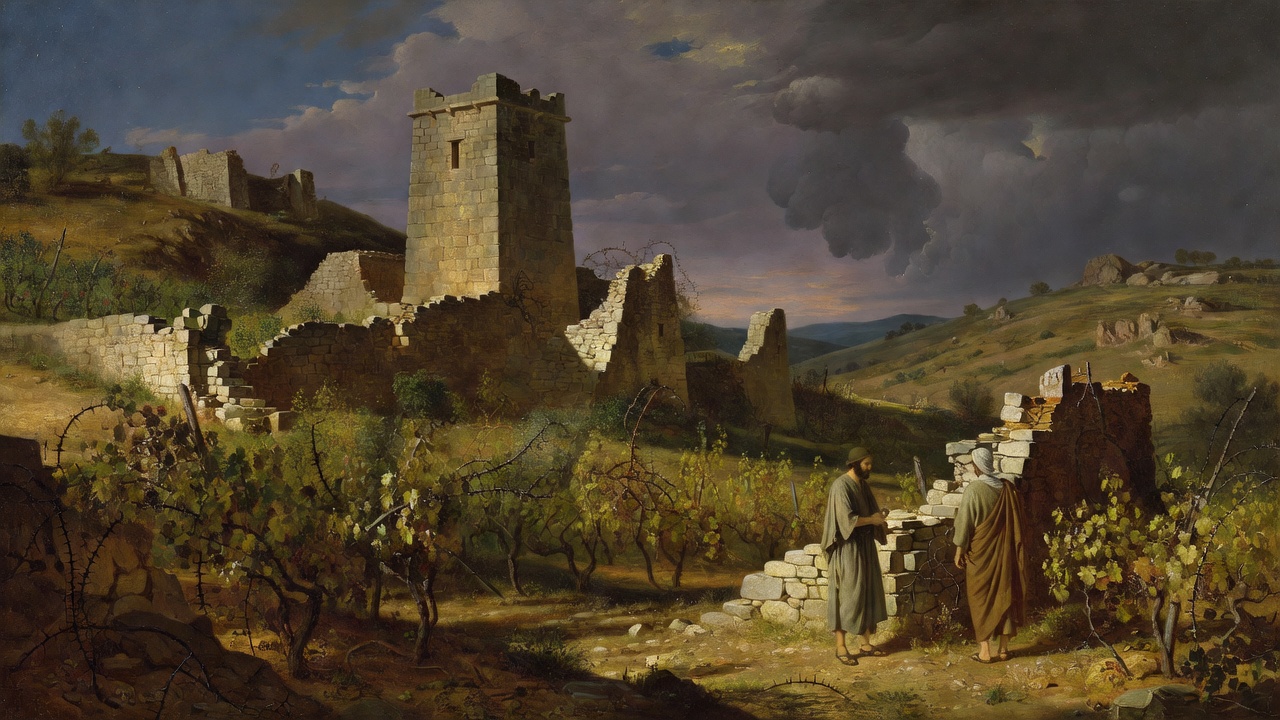
- The opening song in Isaiah 5 describes the elaborate labor of ancient Judean viticulture: clearing rocky hillsides of stones, building a protective stone watchtower, digging out a winepress in the bedrock, and planting prime vines surrounded by a protective hedge and wall. The poem turns into a legal parable where the vineyard represents the house of Israel and the people of Judah, from whom justice was expected instead of bloodshed.Sources: the Bible text itself
- The chapter delivers a series of six prophetic laments or woes, condemning specific social and moral abuses in Judah. These include wealthy landowners consolidating real estate by adding house to house and field to field, judges taking bribes to acquit the guilty while denying justice to the innocent, and leaders indulging in lavish feasting while ignoring divine instruction.Sources: the Bible text itself
- Isaiah's prophetic ministry in Jerusalem addressed the people of Judah over an extended period beginning in the mid-eighth century BC. The chapter concludes with a warning that the Lord would signal distant, disciplined foreign armies equipped with chariots, bows, and swift horses to execute judgment on the land.Sources: Jerusalem · Prophecies of Isaiah · the Bible text itself
Notes written with AI assistance from open sources (Theographic Bible Metadata, CC BY-SA 4.0; Easton’s Bible Dictionary, public domain) and reviewed before publishing.
Places in this chapter
Only places identified with high confidence are shown (90% or more according to the scholarly sources compiled by OpenBible). Period map: DARE (Digital Atlas of the Roman Empire), CC BY 4.0; modern map: © OpenStreetMap contributors; places: OpenBible.info (CC BY 4.0).
Credits and license for this translation
כתבי הקודש
The Hebrew Old Testament, Westminster Leningrad Codex
Public Domain
Language: עברית (Hebrew)
Dialect: Biblical/Ancient
Lemma and morphology data are licensed under a Creative Commons Attribution- ShareAlike license (http://creativecommons.org/licenses/by-sa/3.0/). For attribution purposes, credit the Open Scriptures Hebrew Bible Project. The text of the WLC remains in the public domain.
2017-12-27
Source: http://ebible.org/hboWLC/ · eBible.org