Genesis 32
כתבי הקודש · Tap a verse to see its cross-references.
1וַיַּשְׁכֵּ֨ם לָבָ֜ן בַּבֹּ֗קֶר וַיְנַשֵּׁ֧ק לְבָנָ֛יו וְלִבְנוֹתָ֖יו וַיְבָ֣רֶךְ אֶתְהֶ֑ם וַיֵּ֛לֶךְ וַיָּ֥שָׁב לָבָ֖ן לִמְקֹמֽוֹ׃ 2וְיַעֲקֹ֖ב הָלַ֣ךְ לְדַרְכּ֑וֹ וַיִּפְגְּעוּ־ב֖וֹ מַלְאֲכֵ֥י אֱלֹהִֽים׃ 3וַיֹּ֤אמֶר יַעֲקֹב֙ כַּאֲשֶׁ֣ר רָאָ֔ם מַחֲנֵ֥ה אֱלֹהִ֖ים זֶ֑ה וַיִּקְרָ֛א שֵֽׁם־הַמָּק֥וֹם הַה֖וּא מַֽחֲנָֽיִם׃ פ 4וַיִּשְׁלַ֨ח יַעֲקֹ֤ב מַלְאָכִים֙ לְפָנָ֔יו אֶל־עֵשָׂ֖ו אָחִ֑יו אַ֥רְצָה שֵׂעִ֖יר שְׂדֵ֥ה אֱדֽוֹם׃ 5וַיְצַ֤ו אֹתָם֙ לֵאמֹ֔ר כֹּ֣ה תֹאמְר֔וּן לַֽאדֹנִ֖י לְעֵשָׂ֑ו כֹּ֤ה אָמַר֙ עַבְדְּךָ֣ יַעֲקֹ֔ב עִם־לָבָ֣ן גַּ֔רְתִּי וָאֵחַ֖ר עַד־עָֽתָּה׃ 6וַֽיְהִי־לִי֙ שׁ֣וֹר וַחֲמ֔וֹר צֹ֖אן וְעֶ֣בֶד וְשִׁפְחָ֑ה וָֽאֶשְׁלְחָה֙ לְהַגִּ֣יד לַֽאדֹנִ֔י לִמְצֹא־חֵ֖ן בְּעֵינֶֽיךָ׃ 7וַיָּשֻׁ֙בוּ֙ הַמַּלְאָכִ֔ים אֶֽל־יַעֲקֹ֖ב לֵאמֹ֑ר בָּ֤אנוּ אֶל־אָחִ֙יךָ֙ אֶל־עֵשָׂ֔ו וְגַם֙ הֹלֵ֣ךְ לִקְרָֽאתְךָ֔ וְאַרְבַּע־מֵא֥וֹת אִ֖ישׁ עִמּֽוֹ׃ 8וַיִּירָ֧א יַעֲקֹ֛ב מְאֹ֖ד וַיֵּ֣צֶר ל֑וֹ וַיַּ֜חַץ אֶת־הָעָ֣ם אֲשֶׁר־אִתּ֗וֹ וְאֶת־הַצֹּ֧אן וְאֶת־הַבָּקָ֛ר וְהַגְּמַלִּ֖ים לִשְׁנֵ֥י מַחֲנֽוֹת׃ 9וַיֹּ֕אמֶר אִם־יָב֥וֹא עֵשָׂ֛ו אֶל־הַמַּחֲנֶ֥ה הָאַחַ֖ת וְהִכָּ֑הוּ וְהָיָ֛ה הַמַּחֲנֶ֥ה הַנִּשְׁאָ֖ר לִפְלֵיטָֽה׃ 10וַיֹּאמֶר֮ יַעֲקֹב֒ אֱלֹהֵי֙ אָבִ֣י אַבְרָהָ֔ם וֵאלֹהֵ֖י אָבִ֣י יִצְחָ֑ק יְהוָ֞ה הָאֹמֵ֣ר אֵלַ֗י שׁ֧וּב לְאַרְצְךָ֛ וּלְמוֹלַדְתְּךָ֖ וְאֵיטִ֥יבָה עִמָּֽךְ׃ 11קָטֹ֜נְתִּי מִכֹּ֤ל הַחֲסָדִים֙ וּמִכָּל־הָ֣אֱמֶ֔ת אֲשֶׁ֥ר עָשִׂ֖יתָ אֶת־עַבְדֶּ֑ךָ כִּ֣י בְמַקְלִ֗י עָבַ֙רְתִּי֙ אֶת־הַיַּרְדֵּ֣ן הַזֶּ֔ה וְעַתָּ֥ה הָיִ֖יתִי לִשְׁנֵ֥י מַחֲנֽוֹת׃ 12הַצִּילֵ֥נִי נָ֛א מִיַּ֥ד אָחִ֖י מִיַּ֣ד עֵשָׂ֑ו כִּֽי־יָרֵ֤א אָנֹכִי֙ אֹת֔וֹ פֶּן־יָב֣וֹא וְהִכַּ֔נִי אֵ֖ם עַל־בָּנִֽים׃ 13וְאַתָּ֣ה אָמַ֔רְתָּ הֵיטֵ֥ב אֵיטִ֖יב עִמָּ֑ךְ וְשַׂמְתִּ֤י אֶֽת־זַרְעֲךָ֙ כְּח֣וֹל הַיָּ֔ם אֲשֶׁ֥ר לֹא־יִסָּפֵ֖ר מֵרֹֽב׃ 14וַיָּ֥לֶן שָׁ֖ם בַּלַּ֣יְלָה הַה֑וּא וַיִּקַּ֞ח מִן־הַבָּ֧א בְיָד֛וֹ מִנְחָ֖ה לְעֵשָׂ֥ו אָחִֽיו׃ 15עִזִּ֣ים מָאתַ֔יִם וּתְיָשִׁ֖ים עֶשְׂרִ֑ים רְחֵלִ֥ים מָאתַ֖יִם וְאֵילִ֥ים עֶשְׂרִֽים׃ 16גְּמַלִּ֧ים מֵינִיק֛וֹת וּבְנֵיהֶ֖ם שְׁלֹשִׁ֑ים פָּר֤וֹת אַרְבָּעִים֙ וּפָרִ֣ים עֲשָׂרָ֔ה אֲתֹנֹ֣ת עֶשְׂרִ֔ים וַעְיָרִ֖ם עֲשָׂרָֽה׃ 17וַיִּתֵּן֙ בְּיַד־עֲבָדָ֔יו עֵ֥דֶר עֵ֖דֶר לְבַדּ֑וֹ וַ֤יֹּאמֶר אֶל־עֲבָדָיו֙ עִבְר֣וּ לְפָנַ֔י וְרֶ֣וַח תָּשִׂ֔ימוּ בֵּ֥ין עֵ֖דֶר וּבֵ֥ין עֵֽדֶר׃ 18וַיְצַ֥ו אֶת־הָרִאשׁ֖וֹן לֵאמֹ֑ר כִּ֣י יִֽפְגָּשְׁךָ֞ עֵשָׂ֣ו אָחִ֗י וִשְׁאֵֽלְךָ֙ לֵאמֹ֔ר לְמִי־אַ֙תָּה֙ וְאָ֣נָה תֵלֵ֔ךְ וּלְמִ֖י אֵ֥לֶּה לְפָנֶֽיךָ׃ 19וְאָֽמַרְתָּ֙ לְעַבְדְּךָ֣ לְיַעֲקֹ֔ב מִנְחָ֥ה הִוא֙ שְׁלוּחָ֔ה לַֽאדֹנִ֖י לְעֵשָׂ֑ו וְהִנֵּ֥ה גַם־ה֖וּא אַחֲרֵֽינוּ׃ 20וַיְצַ֞ו גַּ֣ם אֶת־הַשֵּׁנִ֗י גַּ֚ם אֶת־הַשְּׁלִישִׁ֔י גַּ֚ם אֶת־כָּל־הַהֹ֣לְכִ֔ים אַחֲרֵ֥י הָעֲדָרִ֖ים לֵאמֹ֑ר כַּדָּבָ֤ר הַזֶּה֙ תְּדַבְּר֣וּן אֶל־עֵשָׂ֔ו בְּמֹצַאֲכֶ֖ם אֹתֽוֹ׃ 21וַאֲמַרְתֶּ֕ם גַּ֗ם הִנֵּ֛ה עַבְדְּךָ֥ יַעֲקֹ֖ב אַחֲרֵ֑ינוּ כִּֽי־אָמַ֞ר אֲכַפְּרָ֣ה פָנָ֗יו בַּמִּנְחָה֙ הַהֹלֶ֣כֶת לְפָנָ֔י וְאַחֲרֵי־כֵן֙ אֶרְאֶ֣ה פָנָ֔יו אוּלַ֖י יִשָּׂ֥א פָנָֽי׃ 22וַתַּעֲבֹ֥ר הַמִּנְחָ֖ה עַל־פָּנָ֑יו וְה֛וּא לָ֥ן בַּלַּֽיְלָה־הַה֖וּא בַּֽמַּחֲנֶֽה׃ 23וַיָּ֣קָם ׀ בַּלַּ֣יְלָה ה֗וּא וַיִּקַּ֞ח אֶת־שְׁתֵּ֤י נָשָׁיו֙ וְאֶת־שְׁתֵּ֣י שִׁפְחֹתָ֔יו וְאֶת־אַחַ֥ד עָשָׂ֖ר יְלָדָ֑יו וַֽיַּעֲבֹ֔ר אֵ֖ת מַעֲבַ֥ר יַבֹּֽק׃ 24וַיִּקָּחֵ֔ם וַיַּֽעֲבִרֵ֖ם אֶת־הַנָּ֑חַל וַֽיַּעֲבֵ֖ר אֶת־אֲשֶׁר־לוֹ ׃ 25וַיִּוָּתֵ֥ר יַעֲקֹ֖ב לְבַדּ֑וֹ וַיֵּאָבֵ֥ק אִישׁ֙ עִמּ֔וֹ עַ֖ד עֲל֥וֹת הַשָּֽׁחַר׃ 26וַיַּ֗רְא כִּ֣י לֹ֤א יָכֹל֙ ל֔וֹ וַיִּגַּ֖ע בְּכַף־יְרֵכ֑וֹ וַתֵּ֙קַע֙ כַּף־יֶ֣רֶךְ יַעֲקֹ֔ב בְּהֵֽאָבְק֖וֹ עִמּֽוֹ׃ 27וַיֹּ֣אמֶר שַׁלְּחֵ֔נִי כִּ֥י עָלָ֖ה הַשָּׁ֑חַר וַיֹּ֙אמֶר֙ לֹ֣א אֲשַֽׁלֵּחֲךָ֔ כִּ֖י אִם־בֵּרַכְתָּֽנִי׃ 28וַיֹּ֥אמֶר אֵלָ֖יו מַה־שְּׁמֶ֑ךָ וַיֹּ֖אמֶר יַעֲקֹֽב׃ 29וַיֹּ֗אמֶר לֹ֤א יַעֲקֹב֙ יֵאָמֵ֥ר עוֹד֙ שִׁמְךָ֔ כִּ֖י אִם־יִשְׂרָאֵ֑ל כִּֽי־שָׂרִ֧יתָ עִם־אֱלֹהִ֛ים וְעִם־אֲנָשִׁ֖ים וַתּוּכָֽל׃ 30וַיִּשְׁאַ֣ל יַעֲקֹ֗ב וַיֹּ֙אמֶר֙ הַגִּֽידָה־נָּ֣א שְׁמֶ֔ךָ וַיֹּ֕אמֶר לָ֥מָּה זֶּ֖ה תִּשְׁאַ֣ל לִשְׁמִ֑י וַיְבָ֥רֶךְ אֹת֖וֹ שָֽׁם׃ 31וַיִּקְרָ֧א יַעֲקֹ֛ב שֵׁ֥ם הַמָּק֖וֹם פְּנִיאֵ֑ל כִּֽי־רָאִ֤יתִי אֱלֹהִים֙ פָּנִ֣ים אֶל־פָּנִ֔ים וַתִּנָּצֵ֖ל נַפְשִֽׁי׃ 32וַיִּֽזְרַֽח־ל֣וֹ הַשֶּׁ֔מֶשׁ כַּאֲשֶׁ֥ר עָבַ֖ר אֶת־פְּנוּאֵ֑ל וְה֥וּא צֹלֵ֖עַ עַל־יְרֵכֽוֹ׃ 33עַל־כֵּ֡ן לֹֽא־יֹאכְל֨וּ בְנֵֽי־יִשְׂרָאֵ֜ל אֶת־גִּ֣יד הַנָּשֶׁ֗ה אֲשֶׁר֙ עַל־כַּ֣ף הַיָּרֵ֔ךְ עַ֖ד הַיּ֣וֹם הַזֶּ֑ה כִּ֤י נָגַע֙ בְּכַף־יֶ֣רֶךְ יַעֲקֹ֔ב בְּגִ֖יד הַנָּשֶֽׁה׃
Did you know?
At the Jabbok, on the Way to Esau
- Mahanaim means “two camps.” Jacob gave that name to the place near the Jabbok, beyond the Jordan, when the angels of God met him and he said, “This is the camp of God.” There he also divided his people, flocks, herds, and camels into two camps, hoping one might escape if Esau attacked the other.Sources: Mahanaim · the Bible text itself
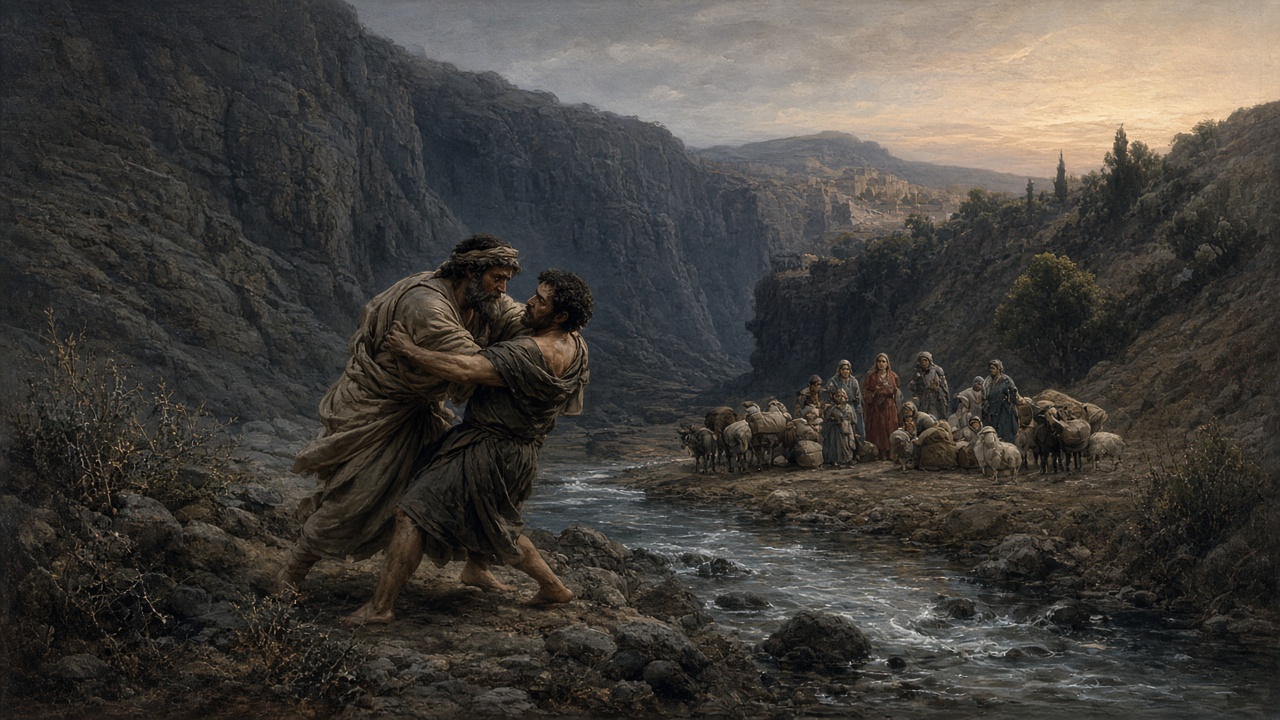
- The Jabbok, whose name is explained as “a pouring out, or a wrestling,” is a stream east of the Jordan. It joins the Jordan about midway between the Sea of Galilee and the Dead Sea, after a course of about 65 miles through a wild, deep ravine. At its ford Jacob sent his two wives, two maidservants, eleven sons, and all he owned across, then remained alone and wrestled with a man until daybreak.Sources: Jabbok · the Bible text itself
- Jacob sent messengers to Esau in the land of Seir, the country of Edom, calling him lord and himself a servant. Seir is a mountainous region along the east side of the Arabah, from the southeastern end of the Dead Sea toward Akabah, the eastern branch of the Red Sea; the Edomites occupied it, and it was allotted to Esau’s descendants. Esau, the firstborn twin and a hunter, had sold his birthright for red lentil stew and was also called Edom, “red,” while Jacob—whose name means “one who follows on another’s heels,” or “supplanter”—had conspired with his mother to deceive Isaac.Sources: the Bible text itself · Seir · Esau (Edom) · Jacob (Israel)
Notes written with AI assistance from open sources (Theographic Bible Metadata, CC BY-SA 4.0; Easton’s Bible Dictionary, public domain) and reviewed before publishing.
Places in this chapter
- Edom · 30.746, 35.604 · verse 3
- Jordan · Today: Jordan River · 31.761, 35.558 · verse 10
- Jabbok · Today: Zarqa River · 32.115, 35.543 · verse 22
Only places identified with high confidence are shown (90% or more according to the scholarly sources compiled by OpenBible). Period map: DARE (Digital Atlas of the Roman Empire), CC BY 4.0; modern map: © OpenStreetMap contributors; places: OpenBible.info (CC BY 4.0).
Credits and license for this translation
כתבי הקודש
The Hebrew Old Testament, Westminster Leningrad Codex
Public Domain
Language: עברית (Hebrew)
Dialect: Biblical/Ancient
Lemma and morphology data are licensed under a Creative Commons Attribution- ShareAlike license (http://creativecommons.org/licenses/by-sa/3.0/). For attribution purposes, credit the Open Scriptures Hebrew Bible Project. The text of the WLC remains in the public domain.
2017-12-27
Source: http://ebible.org/hboWLC/ · eBible.org