Ezekiel 17
כתבי הקודש · Tap a verse to see its cross-references.
1וַיְהִ֥י דְבַר־יְהוָ֖ה אֵלַ֥י לֵאמֹֽר׃ 2בֶּן־אָדָ֕ם ח֥וּד חִידָ֖ה וּמְשֹׁ֣ל מָשָׁ֑ל אֶל־בֵּ֖ית יִשְׂרָאֵֽל׃ 3וְאָמַרְתָּ֞ כֹּה־אָמַ֣ר ׀ אֲדֹנָ֣י יְהוִ֗ה הַנֶּ֤שֶׁר הַגָּדוֹל֙ גְּד֤וֹל הַכְּנָפַ֙יִם֙ אֶ֣רֶךְ הָאֵ֔בֶר מָלֵא֙ הַנּוֹצָ֔ה אֲשֶׁר־ל֖וֹ הָֽרִקְמָ֑ה בָּ֚א אֶל־הַלְּבָנ֔וֹן וַיִּקַּ֖ח אֶת־צַמֶּ֥רֶת הָאָֽרֶז׃ 4אֵ֛ת רֹ֥אשׁ יְנִֽיקוֹתָ֖יו קָטָ֑ף וַיְבִיאֵ֙הוּ֙ אֶל־אֶ֣רֶץ כְּנַ֔עַן בְּעִ֥יר רֹכְלִ֖ים שָׂמֽוֹ׃ 5וַיִּקַּח֙ מִזֶּ֣רַע הָאָ֔רֶץ וַֽיִּתְּנֵ֖הוּ בִּשְׂדֵה־זָ֑רַע קָ֚ח עַל־מַ֣יִם רַבִּ֔ים צַפְצָפָ֖ה שָׂמֽוֹ׃ 6וַיִּצְמַ֡ח וַיְהִי֩ לְגֶ֨פֶן סֹרַ֜חַת שִׁפְלַ֣ת קוֹמָ֗ה לִפְנ֤וֹת דָּלִיּוֹתָיו֙ אֵלָ֔יו וְשָׁרָשָׁ֖יו תַּחְתָּ֣יו יִֽהְי֑וּ וַתְּהִ֣י לְגֶ֔פֶן וַתַּ֣עַשׂ בַּדִּ֔ים וַתְּשַׁלַּ֖ח פֹּארֽוֹת׃ 7וַיְהִ֤י נֶֽשֶׁר־אֶחָד֙ גָּד֔וֹל גְּד֥וֹל כְּנָפַ֖יִם וְרַב־נוֹצָ֑ה וְהִנֵּה֩ הַגֶּ֨פֶן הַזֹּ֜את כָּֽפְנָ֧ה שָׁרֳשֶׁ֣יהָ עָלָ֗יו וְדָֽלִיּוֹתָיו֙ שִׁלְחָה־לּ֔וֹ לְהַשְׁק֣וֹת אוֹתָ֔הּ מֵעֲרֻג֖וֹת מַטָּעָֽהּ׃ 8אֶל־שָׂ֥דֶה טּ֛וֹב אֶל־מַ֥יִם רַבִּ֖ים הִ֣יא שְׁתוּלָ֑ה לַעֲשׂ֤וֹת עָנָף֙ וְלָשֵׂ֣את פֶּ֔רִי לִהְי֖וֹת לְגֶ֥פֶן אַדָּֽרֶת׃ ס 9אֱמֹ֗ר כֹּ֥ה אָמַ֛ר אֲדֹנָ֥י יְהֹוִ֖ה תִּצְלָ֑ח הֲלוֹא֩ אֶת־שָׁרָשֶׁ֨יהָ יְנַתֵּ֜ק וְאֶת־פִּרְיָ֣הּ ׀ יְקוֹסֵ֣ס וְיָבֵ֗שׁ כָּל־טַרְפֵּ֤י צִמְחָהּ֙ תִּיבָ֔שׁ וְלֹֽא־בִזְרֹ֤עַ גְּדוֹלָה֙ וּבְעַם־רָ֔ב לְמַשְׂא֥וֹת אוֹתָ֖הּ מִשָּׁרָשֶֽׁיהָ׃ 10וְהִנֵּ֥ה שְׁתוּלָ֖ה הֲתִצְלָ֑ח הֲלוֹא֩ כְגַ֨עַת בָּ֜הּ ר֤וּחַ הַקָּדִים֙ תִּיבַ֣שׁ יָבֹ֔שׁ עַל־עֲרֻגֹ֥ת צִמְחָ֖הּ תִּיבָֽשׁ׃ פ 11וַיְהִ֥י דְבַר־יְהוָ֖ה אֵלַ֥י לֵאמֹֽר׃ 12אֱמָר־נָא֙ לְבֵ֣ית הַמֶּ֔רִי הֲלֹ֥א יְדַעְתֶּ֖ם מָה־אֵ֑לֶּה אֱמֹ֗ר הִנֵּה־בָ֨א מֶֽלֶךְ־בָּבֶ֤ל יְרוּשָׁלִַ֙ם֙ וַיִּקַּ֤ח אֶת־מַלְכָּהּ֙ וְאֶת־שָׂרֶ֔יהָ וַיָּבֵ֥א אוֹתָ֛ם אֵלָ֖יו בָּבֶֽלָה׃ 13וַיִּקַּח֙ מִזֶּ֣רַע הַמְּלוּכָ֔ה וַיִּכְרֹ֥ת אִתּ֖וֹ בְּרִ֑ית וַיָּבֵ֤א אֹתוֹ֙ בְּאָלָ֔ה וְאֶת־אֵילֵ֥י הָאָ֖רֶץ לָקָֽח׃ 14לִֽהְיוֹת֙ מַמְלָכָ֣ה שְׁפָלָ֔ה לְבִלְתִּ֖י הִתְנַשֵּׂ֑א לִשְׁמֹ֥ר אֶת־בְּרִית֖וֹ לְעָמְדָֽהּ׃ 15וַיִּמְרָד־בּ֗וֹ לִשְׁלֹ֤חַ מַלְאָכָיו֙ מִצְרַ֔יִם לָֽתֶת־ל֥וֹ סוּסִ֖ים וְעַם־רָ֑ב הֲיִצְלָ֤ח הֲיִמָּלֵט֙ הָעֹשֵׂ֣ה אֵ֔לֶּה וְהֵפֵ֥ר בְּרִ֖ית וְנִמְלָֽט׃ 16חַי־אָ֗נִי נְאֻם֮ אֲדֹנָ֣י יְהוִה֒ אִם־לֹ֗א בִּמְקוֹם֙ הַמֶּ֙לֶךְ֙ הַמַּמְלִ֣יךְ אֹת֔וֹ אֲשֶׁ֤ר בָּזָה֙ אֶת־אָ֣לָת֔וֹ וַאֲשֶׁ֥ר הֵפֵ֖ר אֶת־בְּרִית֑וֹ אִתּ֥וֹ בְתוֹךְ־בָּבֶ֖ל יָמֽוּת׃ 17וְלֹא֩ בְחַ֨יִל גָּד֜וֹל וּבְקָהָ֣ל רָ֗ב יַעֲשֶׂ֨ה אוֹת֤וֹ פַרְעֹה֙ בַּמִּלְחָמָ֔ה בִּשְׁפֹּ֥ךְ סֹלְלָ֖ה וּבִבְנ֣וֹת דָּיֵ֑ק לְהַכְרִ֖ית נְפָשׁ֥וֹת רַבּֽוֹת׃ 18וּבָזָ֥ה אָלָ֖ה לְהָפֵ֣ר בְּרִ֑ית וְהִנֵּ֨ה נָתַ֥ן יָד֛וֹ וְכָל־אֵ֥לֶּה עָשָׂ֖ה לֹ֥א יִמָּלֵֽט׃ ס 19לָכֵ֞ן כֹּה־אָמַ֨ר אֲדֹנָ֣י יְהוִה֮ חַי־אָנִי֒ אִם־לֹ֗א אָֽלָתִי֙ אֲשֶׁ֣ר בָּזָ֔ה וּבְרִיתִ֖י אֲשֶׁ֣ר הֵפִ֑יר וּנְתַתִּ֖יו בְּרֹאשֽׁוֹ׃ 20וּפָרַשְׂתִּ֤י עָלָיו֙ רִשְׁתִּ֔י וְנִתְפַּ֖שׂ בִּמְצֽוּדָתִ֑י וַהֲבִיאוֹתִ֣יהוּ בָבֶ֗לָה וְנִשְׁפַּטְתִּ֤י אִתּוֹ֙ שָׁ֔ם מַעֲל֖וֹ אֲשֶׁ֥ר מָֽעַל־בִּֽי׃ 21וְאֵ֨ת כָּל־מברחו בְּכָל־אֲגַפָּיו֙ בַּחֶ֣רֶב יִפֹּ֔לוּ וְהַנִּשְׁאָרִ֖ים לְכָל־ר֣וּחַ יִפָּרֵ֑שׂוּ וִידַעְתֶּ֕ם כִּ֛י אֲנִ֥י יְהוָ֖ה דִּבַּֽרְתִּי׃ ס 22כֹּ֤ה אָמַר֙ אֲדֹנָ֣י יְהוִ֔ה וְלָקַ֣חְתִּי אָ֗נִי מִצַּמֶּ֧רֶת הָאֶ֛רֶז הָרָמָ֖ה וְנָתָ֑תִּי מֵרֹ֤אשׁ יֹֽנְקוֹתָיו֙ רַ֣ךְ אֶקְטֹ֔ף וְשָׁתַ֣לְתִּי אָ֔נִי עַ֥ל הַר־גָּבֹ֖הַ וְתָלֽוּל׃ 23בְּהַ֨ר מְר֤וֹם יִשְׂרָאֵל֙ אֶשְׁתֳּלֶ֔נּוּ וְנָשָׂ֤א עָנָף֙ וְעָ֣שָׂה פֶ֔רִי וְהָיָ֖ה לְאֶ֣רֶז אַדִּ֑יר וְשָׁכְנ֣וּ תַחְתָּ֗יו כֹּ֚ל צִפּ֣וֹר כָּל־כָּנָ֔ף בְּצֵ֥ל דָּלִיּוֹתָ֖יו תִּשְׁכֹּֽנָּה׃ 24וְֽיָדְע֞וּ כָּל־עֲצֵ֣י הַשָּׂדֶ֗ה כִּ֣י אֲנִ֤י יְהוָה֙ הִשְׁפַּ֣לְתִּי ׀ עֵ֣ץ גָּבֹ֗הַ הִגְבַּ֙הְתִּי֙ עֵ֣ץ שָׁפָ֔ל הוֹבַ֙שְׁתִּי֙ עֵ֣ץ לָ֔ח וְהִפְרַ֖חְתִּי עֵ֣ץ יָבֵ֑שׁ אֲנִ֥י יְהוָ֖ה דִּבַּ֥רְתִּי וְעָשִֽׂיתִי׃ פ
Did you know?
The Parable of the Eagles and the Cedar
- Ezekiel presents a political allegory where the first great eagle represents the king of Babylon, who captured Jerusalem's royal leadership and established a vassal king under a solemn covenant. The second eagle represents Egypt and its Pharaoh, to whom the Judean ruler turned for cavalry and military assistance in defiance of his sworn allegiance.Sources: the Bible text itself · Babylon · Egypt · Pharaoh
- In the prophetic message, breaking a political vassal oath made under Babylon was treated not merely as diplomatic rebellion, but as spiritual treason against God, who regarded the sworn pledge as His own oath.Sources: the Bible text itself
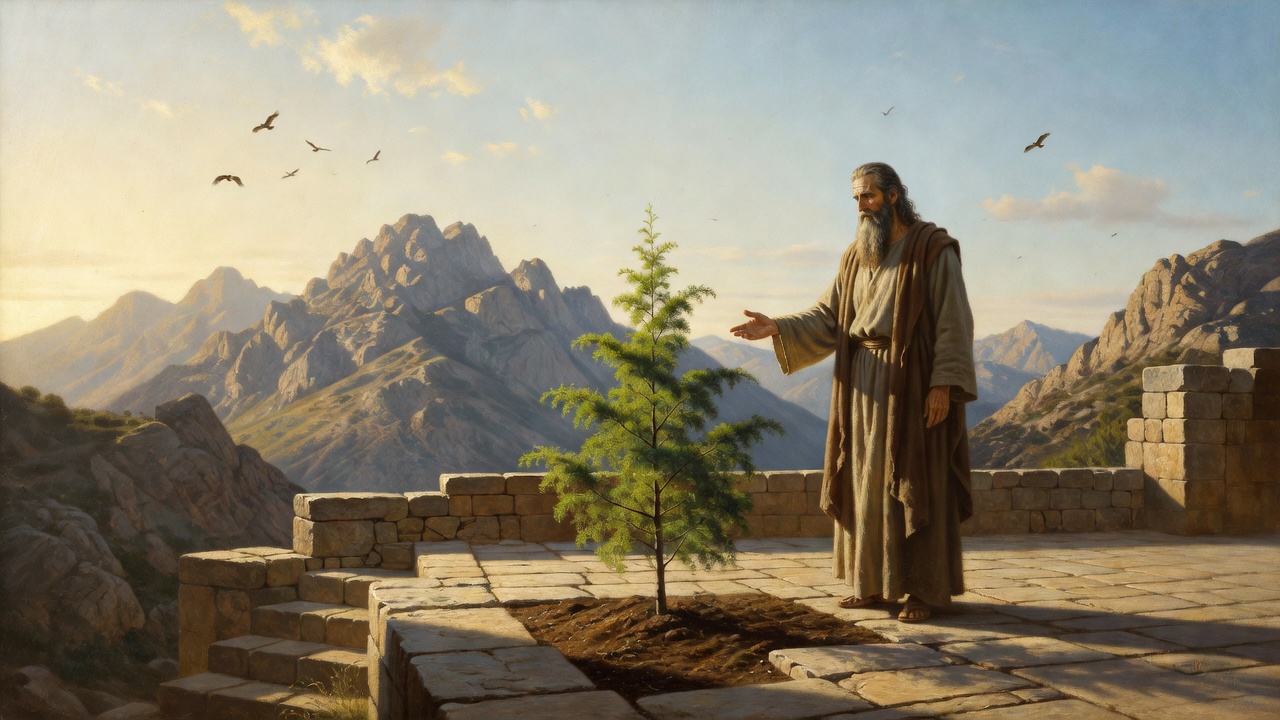
- The chapter concludes with a reversal of human political schemes: God Himself promises to take a tender shoot from the top of the cedar and plant it upon the mountain heights of Israel, where it will grow into a majestic tree offering shelter to birds of every kind.Sources: the Bible text itself
Notes written with AI assistance from open sources (Theographic Bible Metadata, CC BY-SA 4.0; Easton’s Bible Dictionary, public domain) and reviewed before publishing.
Places in this chapter
- Lebanon · 33.540, 35.584 · verse 3
- Canaan · 32.767, 35.333 · verse 4
- Babylon · 32.543, 44.422 · verses 12, 14, 15, 16, 17, 20
- Jerusalem · 31.777, 35.234 · verses 12, 17
- Egypt · 30.129, 31.308 · verse 15
Only places identified with high confidence are shown (90% or more according to the scholarly sources compiled by OpenBible). Period map: DARE (Digital Atlas of the Roman Empire), CC BY 4.0; modern map: © OpenStreetMap contributors; places: OpenBible.info (CC BY 4.0).
Credits and license for this translation
כתבי הקודש
The Hebrew Old Testament, Westminster Leningrad Codex
Public Domain
Language: עברית (Hebrew)
Dialect: Biblical/Ancient
Lemma and morphology data are licensed under a Creative Commons Attribution- ShareAlike license (http://creativecommons.org/licenses/by-sa/3.0/). For attribution purposes, credit the Open Scriptures Hebrew Bible Project. The text of the WLC remains in the public domain.
2017-12-27
Source: http://ebible.org/hboWLC/ · eBible.org