Exodus 5
כתבי הקודש · Tap a verse to see its cross-references.
1וְאַחַ֗ר בָּ֚אוּ מֹשֶׁ֣ה וְאַהֲרֹ֔ן וַיֹּאמְר֖וּ אֶל־פַּרְעֹ֑ה כֹּֽה־אָמַ֤ר יְהוָה֙ אֱלֹהֵ֣י יִשְׂרָאֵ֔ל שַׁלַּח֙ אֶת־עַמִּ֔י וְיָחֹ֥גּוּ לִ֖י בַּמִּדְבָּֽר׃ 2וַיֹּ֣אמֶר פַּרְעֹ֔ה מִ֤י יְהוָה֙ אֲשֶׁ֣ר אֶשְׁמַ֣ע בְּקֹל֔וֹ לְשַׁלַּ֖ח אֶת־יִשְׂרָאֵ֑ל לֹ֤א יָדַ֙עְתִּי֙ אֶת־יְהוָ֔ה וְגַ֥ם אֶת־יִשְׂרָאֵ֖ל לֹ֥א אֲשַׁלֵּֽחַ׃ 3וַיֹּ֣אמְר֔וּ אֱלֹהֵ֥י הָעִבְרִ֖ים נִקְרָ֣א עָלֵ֑ינוּ נֵ֣לֲכָה נָּ֡א דֶּרֶךְ֩ שְׁלֹ֨שֶׁת יָמִ֜ים בַּמִּדְבָּ֗ר וְנִזְבְּחָה֙ לַֽיהוָ֣ה אֱלֹהֵ֔ינוּ פֶּ֨ן־יִפְגָּעֵ֔נוּ בַּדֶּ֖בֶר א֥וֹ בֶחָֽרֶב׃ 4וַיֹּ֤אמֶר אֲלֵהֶם֙ מֶ֣לֶךְ מִצְרַ֔יִם לָ֚מָּה מֹשֶׁ֣ה וְאַהֲרֹ֔ן תַּפְרִ֥יעוּ אֶת־הָעָ֖ם מִמַּֽעֲשָׂ֑יו לְכ֖וּ לְסִבְלֹתֵיכֶֽם׃ 5וַיֹּ֣אמֶר פַּרְעֹ֔ה הֵן־רַבִּ֥ים עַתָּ֖ה עַ֣ם הָאָ֑רֶץ וְהִשְׁבַּתֶּ֥ם אֹתָ֖ם מִסִּבְלֹתָֽם׃ 6וַיְצַ֥ו פַּרְעֹ֖ה בַּיּ֣וֹם הַה֑וּא אֶת־הַנֹּגְשִׂ֣ים בָּעָ֔ם וְאֶת־שֹׁטְרָ֖יו לֵאמֹֽר׃ 7לֹ֣א תֹאסִפ֞וּן לָתֵ֨ת תֶּ֧בֶן לָעָ֛ם לִלְבֹּ֥ן הַלְּבֵנִ֖ים כִּתְמ֣וֹל שִׁלְשֹׁ֑ם הֵ֚ם יֵֽלְכ֔וּ וְקֹשְׁשׁ֥וּ לָהֶ֖ם תֶּֽבֶן׃ 8וְאֶת־מַתְכֹּ֨נֶת הַלְּבֵנִ֜ים אֲשֶׁ֣ר הֵם֩ עֹשִׂ֨ים תְּמ֤וֹל שִׁלְשֹׁם֙ תָּשִׂ֣ימוּ עֲלֵיהֶ֔ם לֹ֥א תִגְרְע֖וּ מִמֶּ֑נּוּ כִּֽי־נִרְפִּ֣ים הֵ֔ם עַל־כֵּ֗ן הֵ֤ם צֹֽעֲקִים֙ לֵאמֹ֔ר נֵלְכָ֖ה נִזְבְּחָ֥ה לֵאלֹהֵֽינוּ׃ 9תִּכְבַּ֧ד הָעֲבֹדָ֛ה עַל־הָאֲנָשִׁ֖ים וְיַעֲשׂוּ־בָ֑הּ וְאַל־יִשְׁע֖וּ בְּדִבְרֵי־שָֽׁקֶר׃ 10וַיֵּ֨צְא֜וּ נֹגְשֵׂ֤י הָעָם֙ וְשֹׁ֣טְרָ֔יו וַיֹּאמְר֥וּ אֶל־הָעָ֖ם לֵאמֹ֑ר כֹּ֚ה אָמַ֣ר פַּרְעֹ֔ה אֵינֶ֛נִּי נֹתֵ֥ן לָכֶ֖ם תֶּֽבֶן׃ 11אַתֶּ֗ם לְכ֨וּ קְח֤וּ לָכֶם֙ תֶּ֔בֶן מֵאֲשֶׁ֖ר תִּמְצָ֑אוּ כִּ֣י אֵ֥ין נִגְרָ֛ע מֵעֲבֹדַתְכֶ֖ם דָּבָֽר׃ 12וַיָּ֥פֶץ הָעָ֖ם בְּכָל־אֶ֣רֶץ מִצְרָ֑יִם לְקֹשֵׁ֥שׁ קַ֖שׁ לַתֶּֽבֶן׃ 13וְהַנֹּגְשִׂ֖ים אָצִ֣ים לֵאמֹ֑ר כַּלּ֤וּ מַעֲשֵׂיכֶם֙ דְּבַר־י֣וֹם בְּיוֹמ֔וֹ כַּאֲשֶׁ֖ר בִּהְי֥וֹת הַתֶּֽבֶן׃ 14וַיֻּכּ֗וּ שֹֽׁטְרֵי֙ בְּנֵ֣י יִשְׂרָאֵ֔ל אֲשֶׁר־שָׂ֣מוּ עֲלֵהֶ֔ם נֹגְשֵׂ֥י פַרְעֹ֖ה לֵאמֹ֑ר מַדּ֡וּעַ לֹא֩ כִלִּיתֶ֨ם חָקְכֶ֤ם לִלְבֹּן֙ כִּתְמ֣וֹל שִׁלְשֹׁ֔ם גַּם־תְּמ֖וֹל גַּם־הַיּֽוֹם׃ 15וַיָּבֹ֗אוּ שֹֽׁטְרֵי֙ בְּנֵ֣י יִשְׂרָאֵ֔ל וַיִּצְעֲק֥וּ אֶל־פַּרְעֹ֖ה לֵאמֹ֑ר לָ֧מָּה תַעֲשֶׂ֦ה כֹ֖ה לַעֲבָדֶֽיךָ׃ 16תֶּ֗בֶן אֵ֤ין נִתָּן֙ לַעֲבָדֶ֔יךָ וּלְבֵנִ֛ים אֹמְרִ֥ים לָ֖נוּ עֲשׂ֑וּ וְהִנֵּ֧ה עֲבָדֶ֛יךָ מֻכִּ֖ים וְחָטָ֥את עַמֶּֽךָ׃ 17וַיֹּ֛אמֶר נִרְפִּ֥ים אַתֶּ֖ם נִרְפִּ֑ים עַל־כֵּן֙ אַתֶּ֣ם אֹֽמְרִ֔ים נֵלְכָ֖ה נִזְבְּחָ֥ה לַֽיהוָֽה׃ 18וְעַתָּה֙ לְכ֣וּ עִבְד֔וּ וְתֶ֖בֶן לֹא־יִנָּתֵ֣ן לָכֶ֑ם וְתֹ֥כֶן לְבֵנִ֖ים תִּתֵּֽנּוּ׃ 19וַיִּרְא֞וּ שֹֽׁטְרֵ֧י בְנֵֽי־יִשְׂרָאֵ֛ל אֹתָ֖ם בְּרָ֣ע לֵאמֹ֑ר לֹא־תִגְרְע֥וּ מִלִּבְנֵיכֶ֖ם דְּבַר־י֥וֹם בְּיוֹמֽוֹ׃ 20וַֽיִּפְגְּעוּ֙ אֶת־מֹשֶׁ֣ה וְאֶֽת־אַהֲרֹ֔ן נִצָּבִ֖ים לִקְרָאתָ֑ם בְּצֵאתָ֖ם מֵאֵ֥ת פַּרְעֹֽה׃ 21וַיֹּאמְר֣וּ אֲלֵהֶ֔ם יֵ֧רֶא יְהוָ֛ה עֲלֵיכֶ֖ם וְיִשְׁפֹּ֑ט אֲשֶׁ֧ר הִבְאַשְׁתֶּ֣ם אֶת־רֵיחֵ֗נוּ בְּעֵינֵ֤י פַרְעֹה֙ וּבְעֵינֵ֣י עֲבָדָ֔יו לָֽתֶת־חֶ֥רֶב בְּיָדָ֖ם לְהָרְגֵֽנוּ׃ 22וַיָּ֧שָׁב מֹשֶׁ֛ה אֶל־יְהוָ֖ה וַיֹּאמַ֑ר אֲדֹנָ֗י לָמָ֤ה הֲרֵעֹ֙תָה֙ לָעָ֣ם הַזֶּ֔ה לָ֥מָּה זֶּ֖ה שְׁלַחְתָּֽנִי׃ 23וּמֵאָ֞ז בָּ֤אתִי אֶל־פַּרְעֹה֙ לְדַבֵּ֣ר בִּשְׁמֶ֔ךָ הֵרַ֖ע לָעָ֣ם הַזֶּ֑ה וְהַצֵּ֥ל לֹא־הִצַּ֖לְתָּ אֶת־עַמֶּֽךָ׃
Did you know?
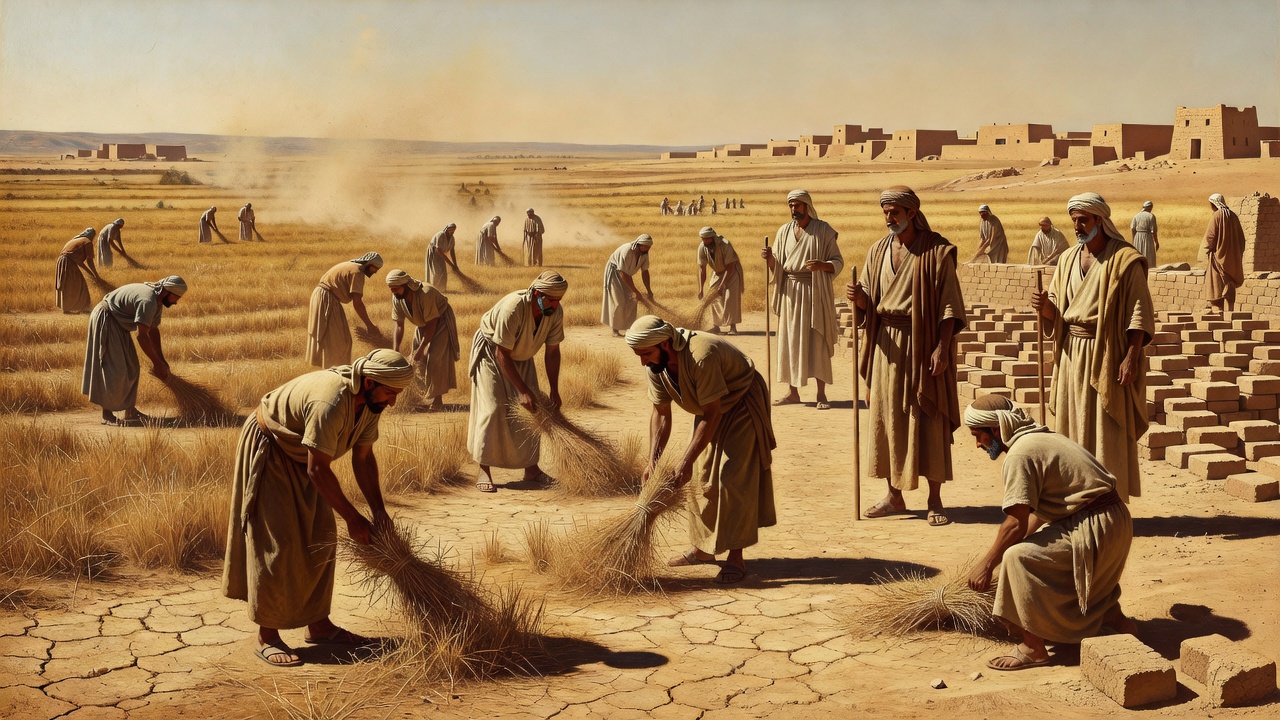
Harder Work After Pharaoh's Refusal
- Easton's Bible Dictionary (1897) says the Pharaoh of the Exodus was probably Menephtah I, the fourteenth and eldest surviving son of Rameses II, but it treats the identification as still an open question: some scholars, it notes, favor Seti II, whose reign it describes as beginning peacefully and ending in sudden disaster. The entry says he resided at Zoan, where he received Moses and Aaron in the interviews recorded in Exodus.Sources: Pharaoh (of the Exodus) · the Bible text itself
- Easton's Bible Dictionary (1897) places Jacob's arrival in Egypt probably about 350 years before Moses was born. It says a Hyksos king, from a pastoral Semitic people of Asia and called a shepherd king, received the family favorably and assigned them Goshen, the best of the land; in this chapter Pharaoh treats the people of Israel, now numerous, as laborers he will not let go.Sources: Moses · the Bible text itself
- Pharaoh answers the request to hold a feast in the wilderness by no longer supplying straw for the bricks, while still requiring the same daily quota. The people scatter through the land of Egypt to gather stubble, and the Israelite foremen whom Pharaoh's taskmasters had set over them are beaten when that quota is not met.Sources: the Bible text itself
Notes written with AI assistance from open sources (Theographic Bible Metadata, CC BY-SA 4.0; Easton’s Bible Dictionary, public domain) and reviewed before publishing.
Places in this chapter
Only places identified with high confidence are shown (90% or more according to the scholarly sources compiled by OpenBible). Period map: DARE (Digital Atlas of the Roman Empire), CC BY 4.0; modern map: © OpenStreetMap contributors; places: OpenBible.info (CC BY 4.0).
Credits and license for this translation
כתבי הקודש
The Hebrew Old Testament, Westminster Leningrad Codex
Public Domain
Language: עברית (Hebrew)
Dialect: Biblical/Ancient
Lemma and morphology data are licensed under a Creative Commons Attribution- ShareAlike license (http://creativecommons.org/licenses/by-sa/3.0/). For attribution purposes, credit the Open Scriptures Hebrew Bible Project. The text of the WLC remains in the public domain.
2017-12-27
Source: http://ebible.org/hboWLC/ · eBible.org