Psalms 87
כתבי הקודש · Tap a verse to see its cross-references.
1לִבְנֵי־קֹ֖רַח מִזְמֹ֣ור שִׁ֑יר יְ֝סוּדָתֹ֗ו בְּהַרְרֵי־קֹֽדֶשׁ׃ 2אֹהֵ֣ב יְ֭הוָה שַׁעֲרֵ֣י צִיֹּ֑ון מִ֝כֹּ֗ל מִשְׁכְּנֹ֥ות יַעֲקֹֽב׃ 3נִ֭כְבָּדֹות מְדֻבָּ֣ר בָּ֑ךְ עִ֖יר הָאֱלֹהִ֣ים סֶֽלָה׃ 4אַזְכִּ֤יר ׀ רַ֥הַב וּבָבֶ֗ל לְֽיֹ֫דְעָ֥י הִנֵּ֤ה פְלֶ֣שֶׁת וְצֹ֣ור עִם־כּ֑וּשׁ זֶ֝֗ה יֻלַּד־שָֽׁם׃ 5וּֽלֲצִיֹּ֨ון ׀ יֵאָמַ֗ר אִ֣ישׁ וְ֭אִישׁ יֻלַּד־בָּ֑הּ וְה֖וּא יְכֹונְנֶ֣הָ עֶלְיֹֽון׃ 6יְֽהוָ֗ה יִ֭סְפֹּר בִּכְתֹ֣וב עַמִּ֑ים זֶ֖ה יֻלַּד־שָׁ֣ם סֶֽלָה׃ 7וְשָׁרִ֥ים כְּחֹלְלִ֑ים כָּֽל־מַעְיָנַ֥י בָּֽךְ׃
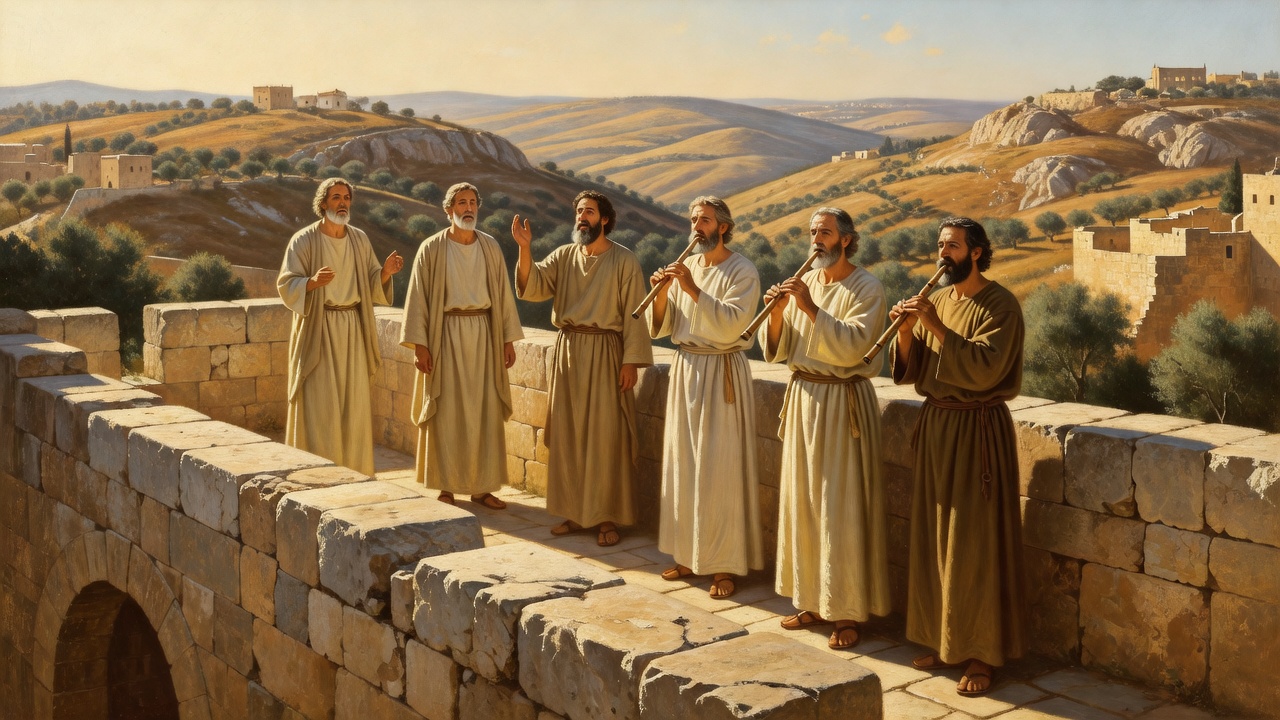
Did you know?
Zion and the Nations
- In Psalm 87, foreign and historically rival regions—including Babylon, Philistia, Tyre, and Cush—are depicted as being registered as native citizens born in Zion, the city of God.Sources: the Bible text itself · Zion · Tyre · Babylon
- The name 'Rahab' in verse 4 is a poetic Hebrew term meaning insolence or pride, used in biblical poetry as a symbolic designation for Egypt.Sources: Rahab · the Bible text itself
- The psalm is attributed to the 'sons of Korah,' a Levitical group that provided musical leadership in Jerusalem centuries after their ancestor Korah led a rebellion in the wilderness.Sources: Korah (Levite) · the Bible text itself
Notes written with AI assistance from open sources (Theographic Bible Metadata, CC BY-SA 4.0; Easton’s Bible Dictionary, public domain) and reviewed before publishing.
Places in this chapter
- Zion · Today: Jerusalem · 31.777, 35.234 · verses 2, 5
- Babylon · 32.543, 44.422 · verse 4
- Cush · Today: Cush 1 · 16.935, 33.751 · verse 4
- Egypt · 30.129, 31.308 · verse 4
- Jerusalem · 31.777, 35.234 · verses 4, 6, 7
- Philistia · 31.664, 34.546 · verse 4
- Tyre · 33.271, 35.196 · verse 4
Only places identified with high confidence are shown (90% or more according to the scholarly sources compiled by OpenBible). Period map: DARE (Digital Atlas of the Roman Empire), CC BY 4.0; modern map: © OpenStreetMap contributors; places: OpenBible.info (CC BY 4.0).
Credits and license for this translation
כתבי הקודש
The Old Testament in ancient Hebrew, following the Masoretic Text
Public Domain
Language: עברית (Hebrew)
Dialect: Biblical/Ancient
2013-12-11
Source: http://ebible.org/hbo/ · eBible.org