Leviticus 3
כתבי הקודש · Tap a verse to see its cross-references.
1וְאִם־זֶ֥בַח שְׁלָמִ֖ים קָרְבָּנֹ֑ו אִ֤ם מִן־הַבָּקָר֙ ה֣וּא מַקְרִ֔יב אִם־זָכָר֙ אִם־נְקֵבָ֔ה תָּמִ֥ים יַקְרִיבֶ֖נּוּ לִפְנֵ֥י יְהוָֽה׃ 2וְסָמַ֤ךְ יָדֹו֙ עַל־רֹ֣אשׁ קָרְבָּנֹ֔ו וּשְׁחָטֹ֕ו פֶּ֖תַח אֹ֣הֶל מֹועֵ֑ד וְזָרְק֡וּ בְּנֵי֩ אַהֲרֹ֨ן הַכֹּהֲנִ֧ים אֶת־הַדָּ֛ם עַל־הַמִּזְבֵּ֖חַ סָבִֽיב׃ 3וְהִקְרִיב֙ מִזֶּ֣בַח הַשְּׁלָמִ֔ים אִשֶּׁ֖ה לַיהוָ֑ה אֶת־הַחֵ֙לֶב֙ הַֽמְכַסֶּ֣ה אֶת־הַקֶּ֔רֶב וְאֵת֙ כָּל־הַחֵ֔לֶב אֲשֶׁ֖ר עַל־הַקֶּֽרֶב׃ 4וְאֵת֙ שְׁתֵּ֣י הַכְּלָיֹ֔ת וְאֶת־הַחֵ֙לֶב֙ אֲשֶׁ֣ר עֲלֵהֶ֔ן אֲשֶׁ֖ר עַל־הַכְּסָלִ֑ים וְאֶת־הַיֹּתֶ֙רֶת֙ עַל־הַכָּבֵ֔ד עַל־הַכְּלָיֹ֖ות יְסִירֶֽנָּה׃ 5וְהִקְטִ֨ירוּ אֹתֹ֤ו בְנֵֽי־אַהֲרֹן֙ הַמִּזְבֵּ֔חָה עַל־הָ֣עֹלָ֔ה אֲשֶׁ֥ר עַל־הָעֵצִ֖ים אֲשֶׁ֣ר עַל־הָאֵ֑שׁ אִשֵּׁ֛ה רֵ֥יחַ נִיחֹ֖חַ לַֽיהוָֽה׃ פ 6וְאִם־מִן־הַצֹּ֧אן קָרְבָּנֹ֛ו לְזֶ֥בַח שְׁלָמִ֖ים לַיהוָ֑ה זָכָר֙ אֹ֣ו נְקֵבָ֔ה תָּמִ֖ים יַקְרִיבֶֽנּוּ׃ 7אִם־כֶּ֥שֶׂב הֽוּא־מַקְרִ֖יב אֶת־קָרְבָּנֹ֑ו וְהִקְרִ֥יב אֹתֹ֖ו לִפְנֵ֥י יְהוָֽה׃ 8וְסָמַ֤ךְ אֶת־יָדֹו֙ עַל־רֹ֣אשׁ קָרְבָּנֹ֔ו וְשָׁחַ֣ט אֹתֹ֔ו לִפְנֵ֖י אֹ֣הֶל מֹועֵ֑ד וְ֠זָרְקוּ בְּנֵ֨י אַהֲרֹ֧ן אֶת־דָּמֹ֛ו עַל־הַמִּזְבֵּ֖חַ סָבִֽיב׃ 9וְהִקְרִ֨יב מִזֶּ֣בַח הַשְּׁלָמִים֮ אִשֶּׁ֣ה לַיהוָה֒ חֶלְבֹּו֙ הָאַלְיָ֣ה תְמִימָ֔ה לְעֻמַּ֥ת הֶעָצֶ֖ה יְסִירֶ֑נָּה וְאֶת־הַחֵ֙לֶב֙ הַֽמְכַסֶּ֣ה אֶת־הַקֶּ֔רֶב וְאֵת֙ כָּל־הַחֵ֔לֶב אֲשֶׁ֖ר עַל־הַקֶּֽרֶב׃ 10וְאֵת֙ שְׁתֵּ֣י הַכְּלָיֹ֔ת וְאֶת־הַחֵ֙לֶב֙ אֲשֶׁ֣ר עֲלֵהֶ֔ן אֲשֶׁ֖ר עַל־הַכְּסָלִ֑ים וְאֶת־הַיֹּתֶ֙רֶת֙ עַל־הַכָּבֵ֔ד עַל־הַכְּלָיֹ֖ת יְסִירֶֽנָּה׃ 11וְהִקְטִירֹ֥ו הַכֹּהֵ֖ן הַמִּזְבֵּ֑חָה לֶ֥חֶם אִשֶּׁ֖ה לַיהוָֽה׃ פ 12וְאִ֥ם עֵ֖ז קָרְבָּנֹ֑ו וְהִקְרִיבֹ֖ו לִפְנֵ֥י יְהוָֽה׃ 13וְסָמַ֤ךְ אֶת־יָדֹו֙ עַל־רֹאשֹׁ֔ו וְשָׁחַ֣ט אֹתֹ֔ו לִפְנֵ֖י אֹ֣הֶל מֹועֵ֑ד וְ֠זָרְקוּ בְּנֵ֨י אַהֲרֹ֧ן אֶת־דָּמֹ֛ו עַל־הַמִּזְבֵּ֖חַ סָבִֽיב׃ 14וְהִקְרִ֤יב מִמֶּ֙נּוּ֙ קָרְבָּנֹ֔ו אִשֶּׁ֖ה לַֽיהוָ֑ה אֶת־הַחֵ֙לֶב֙ הַֽמְכַסֶּ֣ה אֶת־הַקֶּ֔רֶב וְאֵת֙ כָּל־הַחֵ֔לֶב אֲשֶׁ֖ר עַל־הַקֶּֽרֶב׃ 15וְאֵת֙ שְׁתֵּ֣י הַכְּלָיֹ֔ת וְאֶת־הַחֵ֙לֶב֙ אֲשֶׁ֣ר עֲלֵהֶ֔ן אֲשֶׁ֖ר עַל־הַכְּסָלִ֑ים וְאֶת־הַיֹּתֶ֙רֶת֙ עַל־הַכָּבֵ֔ד עַל־הַכְּלָיֹ֖ת יְסִירֶֽנָּה׃ 16וְהִקְטִירָ֥ם הַכֹּהֵ֖ן הַמִּזְבֵּ֑חָה לֶ֤חֶם אִשֶּׁה֙ לְרֵ֣יחַ נִיחֹ֔חַ כָּל־חֵ֖לֶב לַיהוָֽה׃ 17חֻקַּ֤ת עֹולָם֙ לְדֹרֹ֣תֵיכֶ֔ם בְּכֹ֖ל מֹֽושְׁבֹתֵיכֶ֑ם כָּל־חֵ֥לֶב וְכָל־דָּ֖ם לֹ֥א תֹאכֵֽלוּ׃ פ
Did you know?
Regulations for the Peace Offering
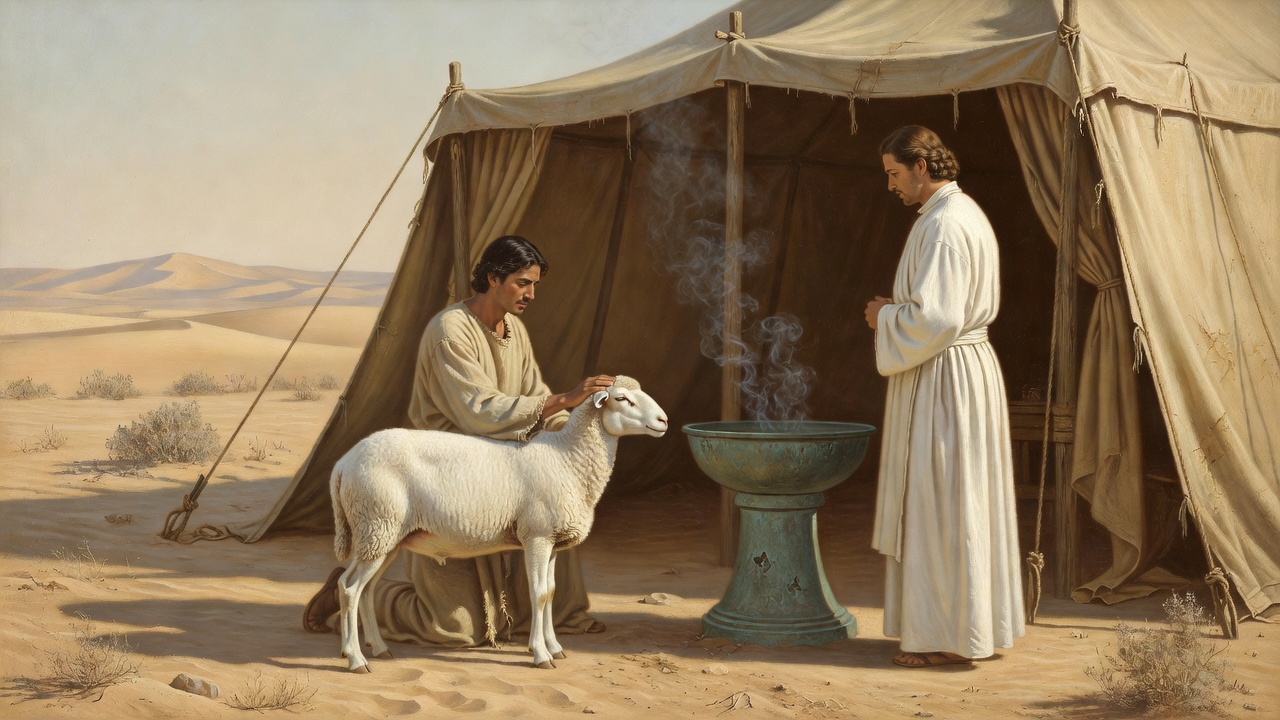
- The peace offering could be taken from the herd or flock, including cattle, sheep, or goats. Unlike certain other sacrifices, the animal offered could be either male or female, as long as it was without blemish.Sources: the Bible text itself
- The worshiper participated directly in the ritual by laying a hand on the animal's head and slaughtering it at the entrance of the Tent of Meeting. Aaron's sons, serving as priests, then splashed the blood on all sides of the altar and burned selected internal fat portions, the kidneys, and the lobe of the liver.Sources: the Bible text itself · Aaron
- The instructions conclude with a permanent statute for all generations: the Israelites were strictly forbidden from eating any fat or blood, establishing that all sacrificial fat belonged to the Lord.Sources: the Bible text itself
Notes written with AI assistance from open sources (Theographic Bible Metadata, CC BY-SA 4.0; Easton’s Bible Dictionary, public domain) and reviewed before publishing.
Credits and license for this translation
כתבי הקודש
The Old Testament in ancient Hebrew, following the Masoretic Text
Public Domain
Language: עברית (Hebrew)
Dialect: Biblical/Ancient
2013-12-11
Source: http://ebible.org/hbo/ · eBible.org