Leviticus 17
כתבי הקודש · Tap a verse to see its cross-references.
1וַיְדַבֵּ֥ר יְהוָ֖ה אֶל־מֹשֶׁ֥ה לֵּאמֹֽר׃ 2דַּבֵּ֨ר אֶֽל־אַהֲרֹ֜ן וְאֶל־בָּנָ֗יו וְאֶל֙ כָּל־בְּנֵ֣י יִשְׂרָאֵ֔ל וְאָמַרְתָּ֖ אֲלֵיהֶ֑ם זֶ֣ה הַדָּבָ֔ר אֲשֶׁר־צִוָּ֥ה יְהוָ֖ה לֵאמֹֽר׃ 3אִ֥ישׁ אִישׁ֙ מִבֵּ֣ית יִשְׂרָאֵ֔ל אֲשֶׁ֨ר יִשְׁחַ֜ט שֹׁ֥ור אֹו־כֶ֛שֶׂב אֹו־עֵ֖ז בַּֽמַּחֲנֶ֑ה אֹ֚ו אֲשֶׁ֣ר יִשְׁחַ֔ט מִח֖וּץ לַֽמַּחֲנֶֽה׃ 4וְאֶל־פֶּ֜תַח אֹ֣הֶל מֹועֵד֮ לֹ֣א הֱבִיאֹו֒ לְהַקְרִ֤יב קָרְבָּן֙ לַֽיהוָ֔ה לִפְנֵ֖י מִשְׁכַּ֣ן יְהוָ֑ה דָּ֣ם יֵחָשֵׁ֞ב לָאִ֤ישׁ הַהוּא֙ דָּ֣ם שָׁפָ֔ךְ וְנִכְרַ֛ת הָאִ֥ישׁ הַה֖וּא מִקֶּ֥רֶב עַמֹּֽו׃ 5לְמַעַן֩ אֲשֶׁ֨ר יָבִ֜יאוּ בְּנֵ֣י יִשְׂרָאֵ֗ל אֶֽת־זִבְחֵיהֶם֮ אֲשֶׁ֣ר הֵ֣ם זֹבְחִים֮ עַל־פְּנֵ֣י הַשָּׂדֶה֒ וֽ͏ֶהֱבִיאֻ֣ם לַֽיהוָ֗ה אֶל־פֶּ֛תַח אֹ֥הֶל מֹועֵ֖ד אֶל־הַכֹּהֵ֑ן וְזָ֨בְח֜וּ זִבְחֵ֧י שְׁלָמִ֛ים לַֽיהוָ֖ה אֹותָֽם׃ 6וְזָרַ֨ק הַכֹּהֵ֤ן אֶת־הַדָּם֙ עַל־מִזְבַּ֣ח יְהוָ֔ה פֶּ֖תַח אֹ֣הֶל מֹועֵ֑ד וְהִקְטִ֣יר הַחֵ֔לֶב לְרֵ֥יחַ נִיחֹ֖חַ לַיהוָֽה׃ 7וְלֹא־יִזְבְּח֥וּ עֹוד֙ אֶת־זִבְחֵיהֶ֔ם לַשְּׂעִירִ֕ם אֲשֶׁ֛ר הֵ֥ם זֹנִ֖ים אַחֲרֵיהֶ֑ם חֻקַּ֥ת עֹולָ֛ם תִּֽהְיֶה־זֹּ֥את לָהֶ֖ם לְדֹרֹתָֽם׃ 8וַאֲלֵהֶ֣ם תֹּאמַ֔ר אִ֥ישׁ אִישׁ֙ מִבֵּ֣ית יִשְׂרָאֵ֔ל וּמִן־הַגֵּ֖ר אֲשֶׁר־יָג֣וּר בְּתֹוכָ֑ם אֲשֶׁר־יַעֲלֶ֥ה עֹלָ֖ה אֹו־זָֽבַח׃ 9וְאֶל־פֶּ֜תַח אֹ֤הֶל מֹועֵד֙ לֹ֣א יְבִיאֶ֔נּוּ לַעֲשֹׂ֥ות אֹתֹ֖ו לַיהוָ֑ה וְנִכְרַ֛ת הָאִ֥ישׁ הַה֖וּא מֵעַמָּֽיו׃ 10וְאִ֨ישׁ אִ֜ישׁ מִבֵּ֣ית יִשְׂרָאֵ֗ל וּמִן־הַגֵּר֙ הַגָּ֣ר בְּתֹוכָ֔ם אֲשֶׁ֥ר יֹאכַ֖ל כָּל־דָּ֑ם וְנָתַתִּ֣י פָנַ֗י בַּנֶּ֙פֶשׁ֙ הָאֹכֶ֣לֶת אֶת־הַדָּ֔ם וְהִכְרַתִּ֥י אֹתָ֖הּ מִקֶּ֥רֶב עַמָּֽהּ׃ 11כִּ֣י נֶ֣פֶשׁ הַבָּשָׂר֮ בַּדָּ֣ם הִוא֒ וַאֲנִ֞י נְתַתִּ֤יו לָכֶם֙ עַל־הַמִּזְבֵּ֔חַ לְכַפֵּ֖ר עַל־נַפְשֹׁתֵיכֶ֑ם כִּֽי־הַדָּ֥ם ה֖וּא בַּנֶּ֥פֶשׁ יְכַפֵּֽר׃ 12עַל־כֵּ֤ן אָמַ֙רְתִּי֙ לִבְנֵ֣י יִשְׂרָאֵ֔ל כָּל־נֶ֥פֶשׁ מִכֶּ֖ם לֹא־תֹ֣אכַל דָּ֑ם וְהַגֵּ֛ר הַגָּ֥ר בְּתֹוכְכֶ֖ם לֹא־יֹ֥אכַל דָּֽם׃ ס 13וְאִ֨ישׁ אִ֜ישׁ מִבְּנֵ֣י יִשְׂרָאֵ֗ל וּמִן־הַגֵּר֙ הַגָּ֣ר בְּתֹוכָ֔ם אֲשֶׁ֨ר יָצ֜וּד צֵ֥יד חַיָּ֛ה אֹו־עֹ֖וף אֲשֶׁ֣ר יֵאָכֵ֑ל וְשָׁפַךְ֙ אֶת־דָּמֹ֔ו וְכִסָּ֖הוּ בֶּעָפָֽר׃ 14כִּֽי־נֶ֣פֶשׁ כָּל־בָּשָׂ֗ר דָּמֹ֣ו בְנַפְשֹׁו֮ הוּא֒ וָֽאֹמַר֙ לִבְנֵ֣י יִשְׂרָאֵ֔ל דַּ֥ם כָּל־בָּשָׂ֖ר לֹ֣א תֹאכֵ֑לוּ כִּ֣י נֶ֤פֶשׁ כָּל־בָּשָׂר֙ דָּמֹ֣ו הִ֔וא כָּל־אֹכְלָ֖יו יִכָּרֵֽת׃ 15וְכָל־נֶ֗פֶשׁ אֲשֶׁ֨ר תֹּאכַ֤ל נְבֵלָה֙ וּטְרֵפָ֔ה בָּאֶזְרָ֖ח וּבַגֵּ֑ר וְכִבֶּ֨ס בְּגָדָ֜יו וְרָחַ֥ץ בַּמַּ֛יִם וְטָמֵ֥א עַד־הָעֶ֖רֶב וְטָהֵֽר׃ 16וְאִם֙ לֹ֣א יְכַבֵּ֔ס וּבְשָׂרֹ֖ו לֹ֣א יִרְחָ֑ץ וְנָשָׂ֖א עֲוֹנֹֽו׃ פ
Did you know?
Sacrificial Slaughter and the Sacredness of Blood
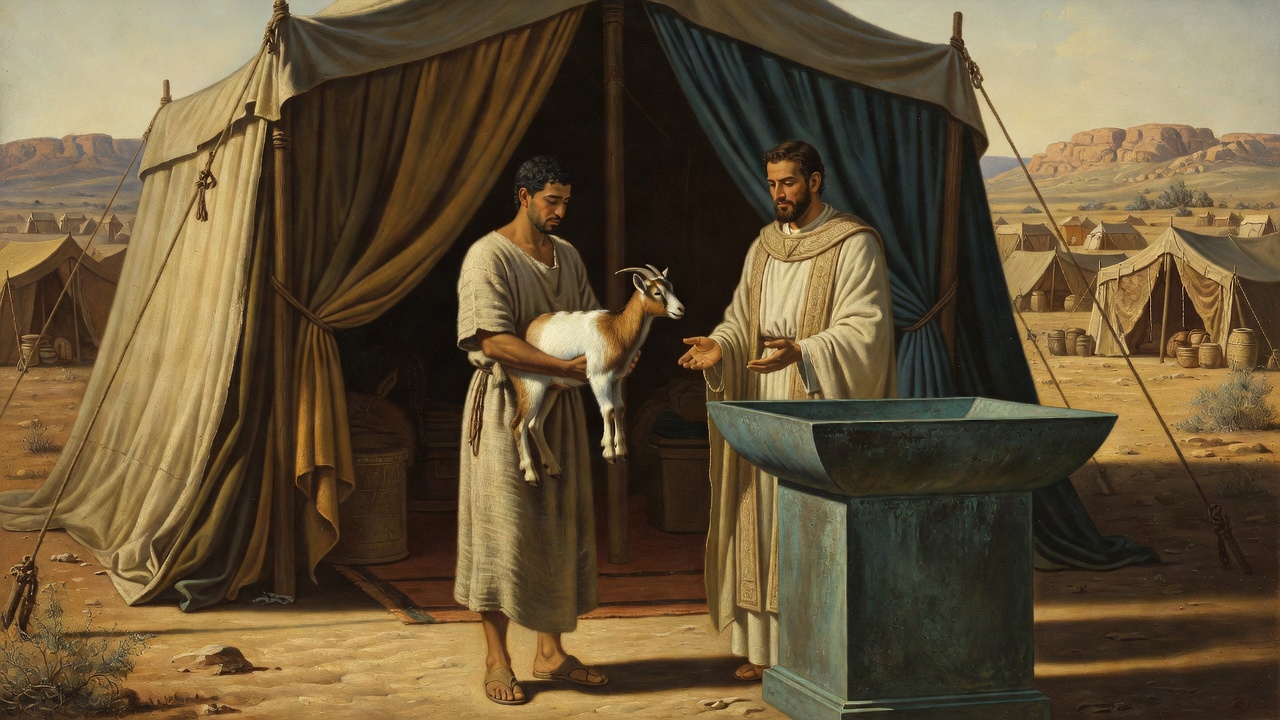
- Leviticus mandates that domestic animals such as oxen, lambs, and goats be brought directly to the entrance of the Tent of Meeting rather than slaughtered in open fields. This rule ensured sacrifices were presented exclusively as peace offerings to the LORD and halted illicit sacrifices to goat demons.Sources: the Bible text itself
- Both native Israelites and resident foreigners were strictly prohibited from eating blood, on penalty of being cut off from the community. The text grounds this law in the theological principle that the life of the flesh is in the blood, which God appointed specifically for making atonement upon the altar.Sources: the Bible text itself
- When Israelites or resident aliens hunted wild animals or birds that were clean for food, they were commanded to drain the blood upon the ground and cover it with dirt. This instruction reinforced that life belongs to God and preserved the sanctity of blood outside the sacrificial sanctuary.Sources: the Bible text itself
Notes written with AI assistance from open sources (Theographic Bible Metadata, CC BY-SA 4.0; Easton’s Bible Dictionary, public domain) and reviewed before publishing.
Credits and license for this translation
כתבי הקודש
The Old Testament in ancient Hebrew, following the Masoretic Text
Public Domain
Language: עברית (Hebrew)
Dialect: Biblical/Ancient
2013-12-11
Source: http://ebible.org/hbo/ · eBible.org