Lamentations 4
כתבי הקודש · Tap a verse to see its cross-references.
1אֵיכָה֙ יוּעַ֣ם זָהָ֔ב יִשְׁנֶ֖א הַכֶּ֣תֶם הַטֹּ֑וב תִּשְׁתַּפֵּ֙כְנָה֙ אַבְנֵי־קֹ֔דֶשׁ בְּרֹ֖אשׁ כָּל־חוּצֹֽות׃ ס 2בְּנֵ֤י צִיֹּון֙ הַיְקָרִ֔ים הַמְסֻלָּאִ֖ים בַּפָּ֑ז אֵיכָ֤ה נֶחְשְׁבוּ֙ לְנִבְלֵי־חֶ֔רֶשׂ מַעֲשֵׂ֖ה יְדֵ֥י יֹוצֵֽר׃ ס 3גַּם־*תַּנִּין (תַּנִּים֙) חָ֣לְצוּ שַׁ֔ד הֵינִ֖יקוּ גּוּרֵיהֶ֑ן בַּת־עַמִּ֣י לְאַכְזָ֔ר *כִּי *עֵנִים (כַּיְעֵנִ֖ים) בַּמִּדְבָּֽר׃ ס 4דָּבַ֨ק לְשֹׁ֥ון יֹונֵ֛ק אֶל־חִכֹּ֖ו בַּצָּמָ֑א עֹֽולָלִים֙ שָׁ֣אֲלוּ לֶ֔חֶם פֹּרֵ֖שׂ אֵ֥ין לָהֶֽם׃ ס 5הָאֹֽכְלִים֙ לְמַ֣עֲדַנִּ֔ים נָשַׁ֖מּוּ בַּחוּצֹ֑ות הָאֱמֻנִים֙ עֲלֵ֣י תֹולָ֔ע חִבְּק֖וּ אַשְׁפַּתֹּֽות׃ ס 6וַיִּגְדַּל֙ עֲוֹ֣ן בַּת־עַמִּ֔י מֵֽחַטַּ֖את סְדֹ֑ם הַֽהֲפוּכָ֣ה כְמֹו־רָ֔גַע וְלֹא־חָ֥לוּ בָ֖הּ יָדָֽיִם׃ ס 7זַכּ֤וּ נְזִירֶ֙יהָ֙ מִשֶּׁ֔לֶג צַח֖וּ מֵחָלָ֑ב אָ֤דְמוּ עֶ֙צֶם֙ מִפְּנִינִ֔ים סַפִּ֖יר גִּזְרָתָֽם׃ ס 8חָשַׁ֤ךְ מִשְּׁחֹור֙ תָּֽאֳרָ֔ם לֹ֥א נִכְּר֖וּ בַּחוּצֹ֑ות צָפַ֤ד עֹורָם֙ עַל־עַצְמָ֔ם יָבֵ֖שׁ הָיָ֥ה כָעֵֽץ׃ ס 9טֹובִ֤ים הָיוּ֙ חַלְלֵי־חֶ֔רֶב מֵֽחַלְלֵ֖י רָעָ֑ב שֶׁ֣הֵ֤ם יָז֙וּבוּ֙ מְדֻקָּרִ֔ים מִתְּנוּבֹ֖ת שָׂדָֽי׃ ס 10יְדֵ֗י נָשִׁים֙ רַחֲמָ֣נִיֹּ֔ות בִּשְּׁל֖וּ יַלְדֵיהֶ֑ן הָי֤וּ לְבָרֹות֙ לָ֔מֹו בְּשֶׁ֖בֶר בַּת־עַמִּֽי׃ ס 11כִּלָּ֤ה יְהוָה֙ אֶת־חֲמָתֹ֔ו שָׁפַ֖ךְ חֲרֹ֣ון אַפֹּ֑ו וַיַּצֶּת־אֵ֣שׁ בְּצִיֹּ֔ון וַתֹּ֖אכַל יְסֹודֹתֶֽיהָ׃ ס 12לֹ֤א הֶאֱמִ֙ינוּ֙ מַלְכֵי־אֶ֔רֶץ *וְכֹל (כֹּ֖ל) יֹשְׁבֵ֣י תֵבֵ֑ל כִּ֤י יָבֹא֙ צַ֣ר וְאֹויֵ֔ב בְּשַׁעֲרֵ֖י יְרוּשָׁלָֽ͏ִם׃ ס 13מֵֽחַטֹּ֣את נְבִיאֶ֔יהָ עֲוֹנֹ֖ות כֹּהֲנֶ֑יהָ הַשֹּׁפְכִ֥ים בְּקִרְבָּ֖הּ דַּ֥ם צַדִּיקִֽים׃ ס 14נָע֤וּ עִוְרִים֙ בַּֽחוּצֹ֔ות נְגֹֽאֲל֖וּ בַּדָּ֑ם בְּלֹ֣א יֽוּכְל֔וּ יִגְּע֖וּ בִּלְבֻשֵׁיהֶֽם׃ ס 15ס֣וּרוּ טָמֵ֞א קָ֣רְאוּ לָ֗מֹו ס֤וּרוּ ס֙וּרוּ֙ אַל־תִּגָּ֔עוּ כִּ֥י נָצ֖וּ גַּם־נָ֑עוּ אָֽמְרוּ֙ בַּגֹּויִ֔ם לֹ֥א יֹוסִ֖יפוּ לָגֽוּר׃ ס 16פְּנֵ֤י יְהוָה֙ חִלְּקָ֔ם לֹ֥א יֹוסִ֖יף לְהַבִּיטָ֑ם פְּנֵ֤י כֹהֲנִים֙ לֹ֣א נָשָׂ֔אוּ *זְקֵנִים (וּזְקֵנִ֖ים) לֹ֥א חָנָֽנוּ׃ ס 17*עֹודֵינָה (עֹודֵ֙ינוּ֙) תִּכְלֶ֣ינָה עֵינֵ֔ינוּ אֶל־עֶזְרָתֵ֖נוּ הָ֑בֶל בְּצִפִּיָּתֵ֣נוּ צִפִּ֔ינוּ אֶל־גֹּ֖וי לֹ֥א יֹושִֽׁעַ׃ ס 18צָד֣וּ צְעָדֵ֔ינוּ מִלֶּ֖כֶת בִּרְחֹבֹתֵ֑ינוּ קָרַ֥ב קִצֵּ֛ינוּ מָלְא֥וּ יָמֵ֖ינוּ כִּי־בָ֥א קִצֵּֽינוּ׃ ס 19קַלִּ֤ים הָיוּ֙ רֹדְפֵ֔ינוּ מִנִּשְׁרֵ֖י שָׁמָ֑יִם עַל־הֶהָרִ֣ים דְּלָקֻ֔נוּ בַּמִּדְבָּ֖ר אָ֥רְבוּ לָֽנוּ׃ ס 20ר֤וּחַ אַפֵּ֙ינוּ֙ מְשִׁ֣יחַ יְהוָ֔ה נִלְכַּ֖ד בִּשְׁחִיתֹותָ֑ם אֲשֶׁ֣ר אָמַ֔רְנוּ בְּצִלֹּ֖ו נִֽחְיֶ֥ה בַגֹּויִֽם׃ ס 21שִׂ֤ישִׂי וְשִׂמְחִי֙ בַּת־אֱדֹ֔ום *יֹושַׁבְתִּי (יֹושֶׁ֖בֶת) בְּאֶ֣רֶץ ע֑וּץ גַּם־עָלַ֙יִךְ֙ תַּעֲבָר־כֹּ֔וס תִּשְׁכְּרִ֖י וְתִתְעָרִֽי׃ ס 22תַּם־עֲוֹנֵךְ֙ בַּת־צִיֹּ֔ון לֹ֥א יֹוסִ֖יף לְהַגְלֹותֵ֑ךְ פָּקַ֤ד עֲוֹנֵךְ֙ בַּת־אֱדֹ֔ום גִּלָּ֖ה עַל־חַטֹּאתָֽיִךְ׃ פ
Did you know?
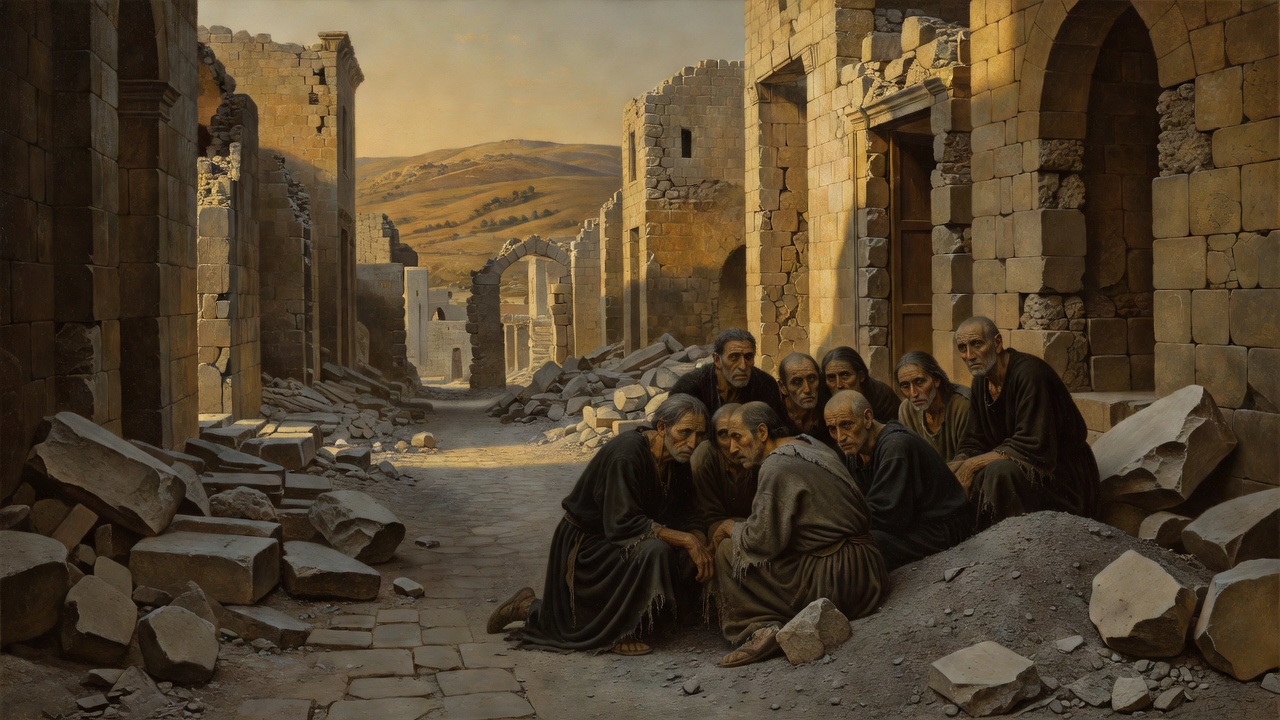
The Agony of the Fallen City
- The poet considers Jerusalem's prolonged suffering worse than the fate of Sodom. While Sodom was overthrown in an instant by divine fire, the inhabitants of Jerusalem endured the agonizing and drawn-out torment of siege and starvation.Sources: the Bible text itself · Sodom
- Before its capture, Jerusalem was widely regarded as an impenetrable mountain city. The text observes that foreign kings and surrounding nations never believed an enemy could breach its fortified gates.Sources: the Bible text itself · Jerusalem
- The chapter closes with an address to Edom dwelling in the land of Uz, warning that judgment will soon overtake her. Uz is mentioned in only three biblical books: Job, Jeremiah, and Lamentations.Sources: the Bible text itself · Uz · Edom
Notes written with AI assistance from open sources (Theographic Bible Metadata, CC BY-SA 4.0; Easton’s Bible Dictionary, public domain) and reviewed before publishing.
Places in this chapter
- Zion · Today: Jerusalem · 31.777, 35.234 · verses 2, 11, 22
- Jerusalem · 31.777, 35.234 · verse 12
- Edom · 30.746, 35.604 · verses 21, 22
Only places identified with high confidence are shown (90% or more according to the scholarly sources compiled by OpenBible). Period map: DARE (Digital Atlas of the Roman Empire), CC BY 4.0; modern map: © OpenStreetMap contributors; places: OpenBible.info (CC BY 4.0).
Credits and license for this translation
כתבי הקודש
The Old Testament in ancient Hebrew, following the Masoretic Text
Public Domain
Language: עברית (Hebrew)
Dialect: Biblical/Ancient
2013-12-11
Source: http://ebible.org/hbo/ · eBible.org