Genesis 44
כתבי הקודש · Tap a verse to see its cross-references.
1וַיְצַ֞ו אֶת־אֲשֶׁ֣ר עַל־בֵּיתֹו֮ לֵאמֹר֒ מַלֵּ֞א אֶת־אַמְתְּחֹ֤ת הָֽאֲנָשִׁים֙ אֹ֔כֶל כַּאֲשֶׁ֥ר יוּכְל֖וּן שְׂאֵ֑ת וְשִׂ֥ים כֶּֽסֶף־אִ֖ישׁ בְּפִ֥י אַמְתַּחְתֹּֽו׃ 2וְאֶת־גְּבִיעִ֞י גְּבִ֣יעַ הַכֶּ֗סֶף תָּשִׂים֙ בְּפִי֙ אַמְתַּ֣חַת הַקָּטֹ֔ן וְאֵ֖ת כֶּ֣סֶף שִׁבְרֹ֑ו וַיַּ֕עַשׂ כִּדְבַ֥ר יֹוסֵ֖ף אֲשֶׁ֥ר דִּבֵּֽר׃ 3הַבֹּ֖קֶר אֹ֑ור וְהָאֲנָשִׁ֣ים שֻׁלְּח֔וּ הֵ֖מָּה וַחֲמֹרֵיהֶֽם׃ 4הֵ֠ם יָֽצְא֣וּ אֶת־הָעִיר֮ לֹ֣א הִרְחִיקוּ֒ וְיֹוסֵ֤ף אָמַר֙ לַֽאֲשֶׁ֣ר עַל־בֵּיתֹ֔ו ק֥וּם רְדֹ֖ף אַחֲרֵ֣י הָֽאֲנָשִׁ֑ים וְהִשַּׂגְתָּם֙ וְאָמַרְתָּ֣ אֲלֵהֶ֔ם לָ֛מָּה שִׁלַּמְתֶּ֥ם רָעָ֖ה תַּ֥חַת טֹובָֽה׃ 5הֲלֹ֣וא זֶ֗ה אֲשֶׁ֨ר יִשְׁתֶּ֤ה אֲדֹנִי֙ בֹּ֔ו וְה֕וּא נַחֵ֥שׁ יְנַחֵ֖שׁ בֹּ֑ו הֲרֵעֹתֶ֖ם אֲשֶׁ֥ר עֲשִׂיתֶֽם׃ 6וַֽיַּשִּׂגֵ֑ם וַיְדַבֵּ֣ר אֲלֵהֶ֔ם אֶת־הַדְּבָרִ֖ים הָאֵֽלֶּה׃ 7וַיֹּאמְר֣וּ אֵלָ֔יו לָ֚מָּה יְדַבֵּ֣ר אֲדֹנִ֔י כַּדְּבָרִ֖ים הָאֵ֑לֶּה חָלִ֙ילָה֙ לַעֲבָדֶ֔יךָ מֵעֲשֹׂ֖ות כַּדָּבָ֥ר הַזֶּֽה׃ 8הֵ֣ן כֶּ֗סֶף אֲשֶׁ֤ר מָצָ֙אנוּ֙ בְּפִ֣י אַמְתְּחֹתֵ֔ינוּ הֱשִׁיבֹ֥נוּ אֵלֶ֖יךָ מֵאֶ֣רֶץ כְּנָ֑עַן וְאֵ֗יךְ נִגְנֹב֙ מִבֵּ֣ית אֲדֹנֶ֔יךָ כֶּ֖סֶף אֹ֥ו זָהָֽב׃ 9אֲשֶׁ֨ר יִמָּצֵ֥א אִתֹּ֛ו מֵעֲבָדֶ֖יךָ וָמֵ֑ת וְגַם־אֲנַ֕חְנוּ נִֽהְיֶ֥ה לַֽאדֹנִ֖י לַעֲבָדִֽים׃ 10וַיֹּ֕אמֶר גַּם־עַתָּ֥ה כְדִבְרֵיכֶ֖ם כֶּן־ה֑וּא אֲשֶׁ֨ר יִמָּצֵ֤א אִתֹּו֙ יִהְיֶה־לִּ֣י עָ֔בֶד וְאַתֶּ֖ם תִּהְי֥וּ נְקִיִּֽם׃ 11וֽ͏ַיְמַהֲר֗וּ וַיֹּורִ֛דוּ אִ֥ישׁ אֶת־אַמְתַּחְתֹּ֖ו אָ֑רְצָה וַֽיִּפְתְּח֖וּ אִ֥ישׁ אַמְתַּחְתֹּֽו׃ 12וַיְחַפֵּ֕שׂ בַּגָּדֹ֣ול הֵחֵ֔ל וּבַקָּטֹ֖ן כִּלָּ֑ה וַיִּמָּצֵא֙ הַגָּבִ֔יעַ בְּאַמְתַּ֖חַת בִּנְיָמִֽן׃ 13וֽ͏ַיִּקְרְע֖וּ שִׂמְלֹתָ֑ם וַֽיַּעֲמֹס֙ אִ֣ישׁ עַל־חֲמֹרֹ֔ו וַיָּשֻׁ֖בוּ הָעִֽירָה׃ 14וַיָּבֹ֨א יְהוּדָ֤ה וְאֶחָיו֙ בֵּ֣יתָה יֹוסֵ֔ף וְה֖וּא עֹודֶ֣נּוּ שָׁ֑ם וַיִּפְּל֥וּ לְפָנָ֖יו אָֽרְצָה׃ 15וַיֹּ֤אמֶר לָהֶם֙ יֹוסֵ֔ף מָֽה־הַמַּעֲשֶׂ֥ה הַזֶּ֖ה אֲשֶׁ֣ר עֲשִׂיתֶ֑ם הֲלֹ֣וא יְדַעְתֶּ֔ם כִּֽי־נַחֵ֧שׁ יְנַחֵ֛שׁ אִ֖ישׁ אֲשֶׁ֥ר כָּמֹֽנִי׃ 16וַיֹּ֣אמֶר יְהוּדָ֗ה מַה־נֹּאמַר֙ לַֽאדֹנִ֔י מַה־נְּדַבֵּ֖ר וּמַה־נִּצְטַדָּ֑ק הָאֱלֹהִ֗ים מָצָא֙ אֶת־עֲוֹ֣ן עֲבָדֶ֔יךָ הִנֶּנּ֤וּ עֲבָדִים֙ לַֽאדֹנִ֔י גַּם־אֲנַ֕חְנוּ גַּ֛ם אֲשֶׁר־נִמְצָ֥א הַגָּבִ֖יעַ בְּיָדֹֽו׃ 17וַיֹּ֕אמֶר חָלִ֣ילָה לִּ֔י מֵעֲשֹׂ֖ות זֹ֑את הָאִ֡ישׁ אֲשֶׁר֩ נִמְצָ֨א הַגָּבִ֜יעַ בְּיָדֹ֗ו ה֚וּא יִהְיֶה־לִּ֣י עָ֔בֶד וְאַתֶּ֕ם עֲל֥וּ לְשָׁלֹ֖ום אֶל־אֲבִיכֶֽם׃ פ 18וַיִּגַּ֨שׁ אֵלָ֜יו יְהוּדָ֗ה וַיֹּאמֶר֮ בִּ֣י אֲדֹנִי֒ יְדַבֶּר־נָ֨א עַבְדְּךָ֤ דָבָר֙ בְּאָזְנֵ֣י אֲדֹנִ֔י וְאַל־יִ֥חַר אַפְּךָ֖ בְּעַבְדֶּ֑ךָ כִּ֥י כָמֹ֖וךָ כְּפַרְעֹֽה׃ 19אֲדֹנִ֣י שָׁאַ֔ל אֶת־עֲבָדָ֖יו לֵאמֹ֑ר הֲיֵשׁ־לָכֶ֥ם אָ֖ב אֹו־אָֽח׃ 20וַנֹּ֙אמֶר֙ אֶל־אֲדֹנִ֔י יֶשׁ־לָ֙נוּ֙ אָ֣ב זָקֵ֔ן וְיֶ֥לֶד זְקֻנִ֖ים קָטָ֑ן וְאָחִ֨יו מֵ֜ת וַיִּוָּתֵ֨ר ה֧וּא לְבַדֹּ֛ו לְאִמֹּ֖ו וְאָבִ֥יו אֲהֵבֹֽו׃ 21וַתֹּ֙אמֶר֙ אֶל־עֲבָדֶ֔יךָ הֹורִדֻ֖הוּ אֵלָ֑י וְאָשִׂ֥ימָה עֵינִ֖י עָלָֽיו׃ 22וַנֹּ֙אמֶר֙ אֶל־אֲדֹנִ֔י לֹא־יוּכַ֥ל הַנַּ֖עַר לַעֲזֹ֣ב אֶת־אָבִ֑יו וְעָזַ֥ב אֶת־אָבִ֖יו וָמֵֽת׃ 23וַתֹּ֙אמֶר֙ אֶל־עֲבָדֶ֔יךָ אִם־לֹ֥א יֵרֵ֛ד אֲחִיכֶ֥ם הַקָּטֹ֖ן אִתְּכֶ֑ם לֹ֥א תֹסִפ֖וּן לִרְאֹ֥ות פָּנָֽי׃ 24וַיְהִי֙ כִּ֣י עָלִ֔ינוּ אֶֽל־עַבְדְּךָ֖ אָבִ֑י וַנַּ֨גֶּד־לֹ֔ו אֵ֖ת דִּבְרֵ֥י אֲדֹנִֽי׃ 25וַיֹּ֖אמֶר אָבִ֑ינוּ שֻׁ֖בוּ שִׁבְרוּ־לָ֥נוּ מְעַט־אֹֽכֶל׃ 26וַנֹּ֕אמֶר לֹ֥א נוּכַ֖ל לָרֶ֑דֶת אִם־יֵשׁ֩ אָחִ֨ינוּ הַקָּטֹ֤ן אִתָּ֙נוּ֙ וְיָרַ֔דְנוּ כִּי־לֹ֣א נוּכַ֗ל לִרְאֹות֙ פְּנֵ֣י הָאִ֔ישׁ וְאָחִ֥ינוּ הַקָּטֹ֖ן אֵינֶ֥נּוּ אִתָּֽנוּ׃ 27וַיֹּ֛אמֶר עַבְדְּךָ֥ אָבִ֖י אֵלֵ֑ינוּ אַתֶּ֣ם יְדַעְתֶּ֔ם כִּ֥י שְׁנַ֖יִם יָֽלְדָה־לִּ֥י אִשְׁתִּֽי׃ 28וַיֵּצֵ֤א הָֽאֶחָד֙ מֵֽאִתִּ֔י וָאֹמַ֕ר אַ֖ךְ טָרֹ֣ף טֹרָ֑ף וְלֹ֥א רְאִיתִ֖יו עַד־הֵֽנָּה׃ 29וּלְקַחְתֶּ֧ם גַּם־אֶת־זֶ֛ה מֵעִ֥ם פָּנַ֖י וְקָרָ֣הוּ אָסֹ֑ון וְהֹֽורַדְתֶּ֧ם אֶת־שֵׂיבָתִ֛י בְּרָעָ֖ה שְׁאֹֽלָה׃ 30וְעַתָּ֗ה כְּבֹאִי֙ אֶל־עַבְדְּךָ֣ אָבִ֔י וְהַנַּ֖עַר אֵינֶנּ֣וּ אִתָּ֑נוּ וְנַפְשֹׁ֖ו קְשׁוּרָ֥ה בְנַפְשֹֽׁו׃ 31וְהָיָ֗ה כִּרְאֹותֹ֛ו כִּי־אֵ֥ין הַנַּ֖עַר וָמֵ֑ת וְהֹורִ֨ידוּ עֲבָדֶ֜יךָ אֶת־שֵׂיבַ֨ת עַבְדְּךָ֥ אָבִ֛ינוּ בְּיָגֹ֖ון שְׁאֹֽלָה׃ 32כִּ֤י עַבְדְּךָ֙ עָרַ֣ב אֶת־הַנַּ֔עַר מֵעִ֥ם אָבִ֖י לֵאמֹ֑ר אִם־לֹ֤א אֲבִיאֶ֙נּוּ֙ אֵלֶ֔יךָ וְחָטָ֥אתִי לְאָבִ֖י כָּל־הַיָּמִֽים׃ 33וְעַתָּ֗ה יֵֽשֶׁב־נָ֤א עַבְדְּךָ֙ תַּ֣חַת הַנַּ֔עַר עֶ֖בֶד לַֽאדֹנִ֑י וְהַנַּ֖עַר יַ֥עַל עִם־אֶחָֽיו׃ 34כִּי־אֵיךְ֙ אֶֽעֱלֶ֣ה אֶל־אָבִ֔י וְהַנַּ֖עַר אֵינֶנּ֣וּ אִתִּ֑י פֶּ֚ן אֶרְאֶ֣ה בָרָ֔ע אֲשֶׁ֥ר יִמְצָ֖א אֶת־אָבִֽי׃
Did you know?
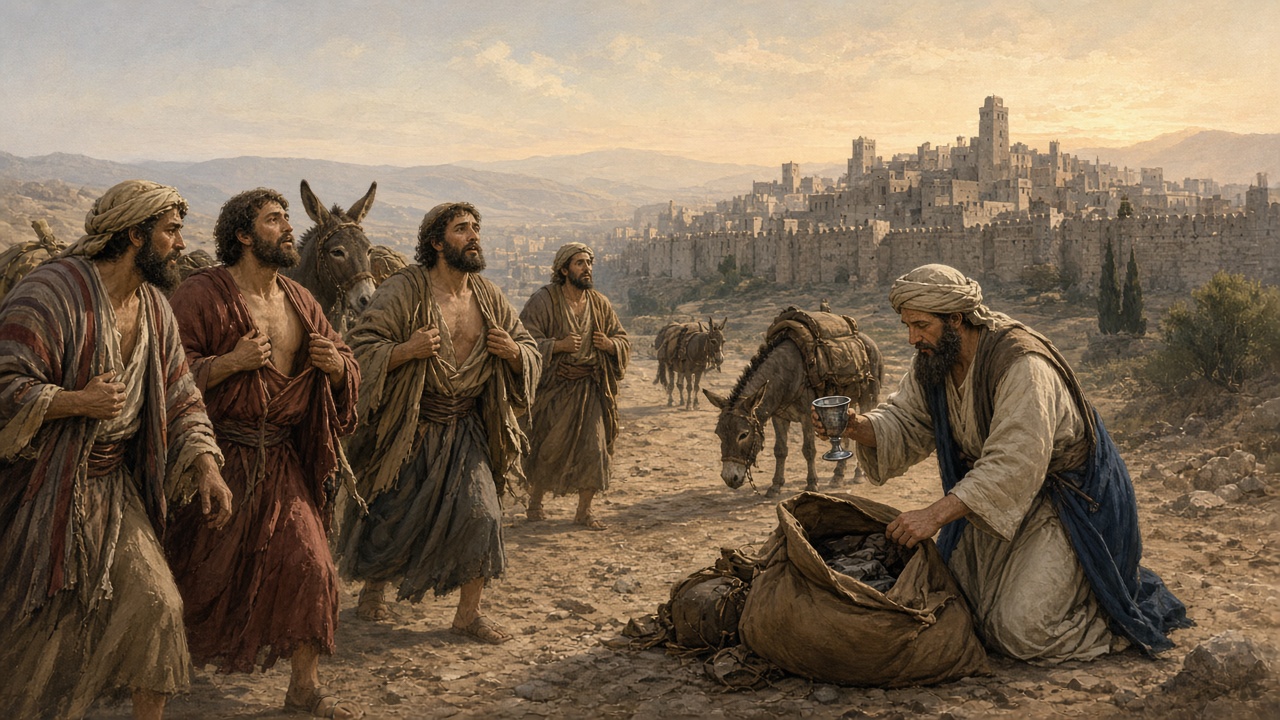
The Hidden Cup and Judah's Plea
- Judah, Jacob's fourth son by Leah, speaks for the brothers and offers to remain as a slave in the boy's place so that Benjamin may return with his brothers. Easton's Bible Dictionary (1897) notes that Judah had earlier intervened to spare Joseph's life, and that he took the lead in the family's affairs, including in the appeal recorded in this chapter.Sources: Judah (patriarch) · the Bible text itself
- Benjamin was the younger of Jacob's two sons by Rachel; she died giving birth to him and called him Ben-oni, "son of my pain," before his father named him Benjamin. The brothers tell Joseph that the boy is the only son of his mother still living, and that their father believes the other was torn to pieces. They say this to Joseph himself—Rachel's elder son, loved by Jacob as the child of his old age—while still speaking to him as a lord equal to Pharaoh.Sources: Benjamin (patriarch) · Joseph (son of Jacob) · the Bible text itself
- On Joseph's orders, the steward hid Joseph's silver cup—the cup he drank from and used for divination—in Benjamin's sack, along with the silver paid for the grain. When it was found, the brothers tore their clothes and returned to the city. Joseph then asked whether they did not know that a man like him could divine the truth, although the narrative shows that he had arranged for the cup to be found.Sources: the Bible text itself
Notes written with AI assistance from open sources (Theographic Bible Metadata, CC BY-SA 4.0; Easton’s Bible Dictionary, public domain) and reviewed before publishing.
Places in this chapter
- Canaan · 32.767, 35.333 · verse 8
Only places identified with high confidence are shown (90% or more according to the scholarly sources compiled by OpenBible). Period map: DARE (Digital Atlas of the Roman Empire), CC BY 4.0; modern map: © OpenStreetMap contributors; places: OpenBible.info (CC BY 4.0).
Credits and license for this translation
כתבי הקודש
The Old Testament in ancient Hebrew, following the Masoretic Text
Public Domain
Language: עברית (Hebrew)
Dialect: Biblical/Ancient
2013-12-11
Source: http://ebible.org/hbo/ · eBible.org