Genesis 23
כתבי הקודש · Tap a verse to see its cross-references.
1וַיִּהְיוּ֙ חַיֵּ֣י שָׂרָ֔ה מֵאָ֥ה שָׁנָ֛ה וְעֶשְׂרִ֥ים שָׁנָ֖ה וְשֶׁ֣בַע שָׁנִ֑ים שְׁנֵ֖י חַיֵּ֥י שָׂרָֽה׃ 2וַתָּ֣מָת שָׂרָ֗ה בְּקִרְיַ֥ת אַרְבַּ֛ע הִ֥וא חֶבְרֹ֖ון בְּאֶ֣רֶץ כְּנָ֑עַן וַיָּבֹא֙ אַבְרָהָ֔ם לִסְפֹּ֥ד לְשָׂרָ֖ה וְלִבְכֹּתָֽהּ׃ 3וַיָּ֙קָם֙ אַבְרָהָ֔ם מֵעַ֖ל פְּנֵ֣י מֵתֹ֑ו וַיְדַבֵּ֥ר אֶל־בְּנֵי־חֵ֖ת לֵאמֹֽר׃ 4גֵּר־וְתֹושָׁ֥ב אָנֹכִ֖י עִמָּכֶ֑ם תְּנ֨וּ לִ֤י אֲחֻזַּת־קֶ֙בֶר֙ עִמָּכֶ֔ם וְאֶקְבְּרָ֥ה מֵתִ֖י מִלְּפָנָֽי׃ 5וַיַּעֲנ֧וּ בְנֵי־חֵ֛ת אֶת־אַבְרָהָ֖ם לֵאמֹ֥ר לֹֽו׃ 6שְׁמָעֵ֣נוּ ׀ אֲדֹנִ֗י נְשִׂ֨יא אֱלֹהִ֤ים אַתָּה֙ בְּתֹוכֵ֔נוּ בְּמִבְחַ֣ר קְבָרֵ֔ינוּ קְבֹ֖ר אֶת־מֵתֶ֑ךָ אִ֣ישׁ מִמֶּ֔נּוּ אֶת־קִבְרֹ֛ו לֹֽא־יִכְלֶ֥ה מִמְּךָ֖ מִקְּבֹ֥ר מֵתֶֽךָ׃ 7וַיָּ֧קָם אַבְרָהָ֛ם וַיִּשְׁתַּ֥חוּ לְעַם־הָאָ֖רֶץ לִבְנֵי־חֵֽת׃ 8וַיְדַבֵּ֥ר אִתָּ֖ם לֵאמֹ֑ר אִם־יֵ֣שׁ אֶֽת־נַפְשְׁכֶ֗ם לִקְבֹּ֤ר אֶת־מֵתִי֙ מִלְּפָנַ֔י שְׁמָע֕וּנִי וּפִגְעוּ־לִ֖י בְּעֶפְרֹ֥ון בֶּן־צֹֽחַר׃ 9וְיִתֶּן־לִ֗י אֶת־מְעָרַ֤ת הַמַּכְפֵּלָה֙ אֲשֶׁר־לֹ֔ו אֲשֶׁ֖ר בִּקְצֵ֣ה שָׂדֵ֑הוּ בְּכֶ֨סֶף מָלֵ֜א יִתְּנֶ֥נָּה לִ֛י בְּתֹוכְכֶ֖ם לַאֲחֻזַּת־קָֽבֶר׃ 10וְעֶפְרֹ֥ון יֹשֵׁ֖ב בְּתֹ֣וךְ בְּנֵי־חֵ֑ת וַיַּעַן֩ עֶפְרֹ֨ון הַחִתִּ֤י אֶת־אַבְרָהָם֙ בְּאָזְנֵ֣י בְנֵי־חֵ֔ת לְכֹ֛ל בָּאֵ֥י שַֽׁעַר־עִירֹ֖ו לֵאמֹֽר׃ 11לֹֽא־אֲדֹנִ֣י שְׁמָעֵ֔נִי הַשָּׂדֶה֙ נָתַ֣תִּי לָ֔ךְ וְהַמְּעָרָ֥ה אֲשֶׁר־בֹּ֖ו לְךָ֣ נְתַתִּ֑יהָ לְעֵינֵ֧י בְנֵי־עַמִּ֛י נְתַתִּ֥יהָ לָּ֖ךְ קְבֹ֥ר מֵתֶֽךָ׃ 12וַיִּשְׁתַּ֙חוּ֙ אַבְרָהָ֔ם לִפְנֵ֖י עַ֥ם הָאָֽרֶץ׃ 13וַיְדַבֵּ֨ר אֶל־עֶפְרֹ֜ון בְּאָזְנֵ֤י עַם־הָאָ֙רֶץ֙ לֵאמֹ֔ר אַ֛ךְ אִם־אַתָּ֥ה ל֖וּ שְׁמָעֵ֑נִי נָתַ֜תִּי כֶּ֤סֶף הַשָּׂדֶה֙ קַ֣ח מִמֶּ֔נִּי וְאֶקְבְּרָ֥ה אֶת־מֵתִ֖י שָֽׁמָּה׃ 14וַיַּ֧עַן עֶפְרֹ֛ון אֶת־אַבְרָהָ֖ם לֵאמֹ֥ר לֹֽו׃ 15אֲדֹנִ֣י שְׁמָעֵ֔נִי אֶרֶץ֩ אַרְבַּ֨ע מֵאֹ֧ת שֶֽׁקֶל־כֶּ֛סֶף בֵּינִ֥י וּבֵֽינְךָ֖ מַה־הִ֑וא וְאֶת־מֵתְךָ֖ קְבֹֽר׃ 16וַיִּשְׁמַ֣ע אַבְרָהָם֮ אֶל־עֶפְרֹון֒ וַיִּשְׁקֹ֤ל אַבְרָהָם֙ לְעֶפְרֹ֔ן אֶת־הַכֶּ֕סֶף אֲשֶׁ֥ר דִּבֶּ֖ר בְּאָזְנֵ֣י בְנֵי־חֵ֑ת אַרְבַּ֤ע מֵאֹות֙ שֶׁ֣קֶל כֶּ֔סֶף עֹבֵ֖ר לַסֹּחֵֽר׃ 17וַיָּ֣קָם ׀ שְׂדֵ֣ה עֶפְרֹ֗ון אֲשֶׁר֙ בַּמַּכְפֵּלָ֔ה אֲשֶׁ֖ר לִפְנֵ֣י מַמְרֵ֑א הַשָּׂדֶה֙ וְהַמְּעָרָ֣ה אֲשֶׁר־בֹּ֔ו וְכָל־הָעֵץ֙ אֲשֶׁ֣ר בַּשָּׂדֶ֔ה אֲשֶׁ֥ר בְּכָל־גְּבֻלֹ֖ו סָבִֽיב׃ 18לְאַבְרָהָ֥ם לְמִקְנָ֖ה לְעֵינֵ֣י בְנֵי־חֵ֑ת בְּכֹ֖ל בָּאֵ֥י שַֽׁעַר־עִירֹֽו׃ 19וְאַחֲרֵי־כֵן֩ קָבַ֨ר אַבְרָהָ֜ם אֶת־שָׂרָ֣ה אִשְׁתֹּ֗ו אֶל־מְעָרַ֞ת שְׂדֵ֧ה הַמַּכְפֵּלָ֛ה עַל־פְּנֵ֥י מַמְרֵ֖א הִ֣וא חֶבְרֹ֑ון בְּאֶ֖רֶץ כְּנָֽעַן׃ 20וַיָּ֨קָם הַשָּׂדֶ֜ה וְהַמְּעָרָ֧ה אֲשֶׁר־בֹּ֛ו לְאַבְרָהָ֖ם לַאֲחֻזַּת־קָ֑בֶר מֵאֵ֖ת בְּנֵי־חֵֽת׃ ס
Did you know?
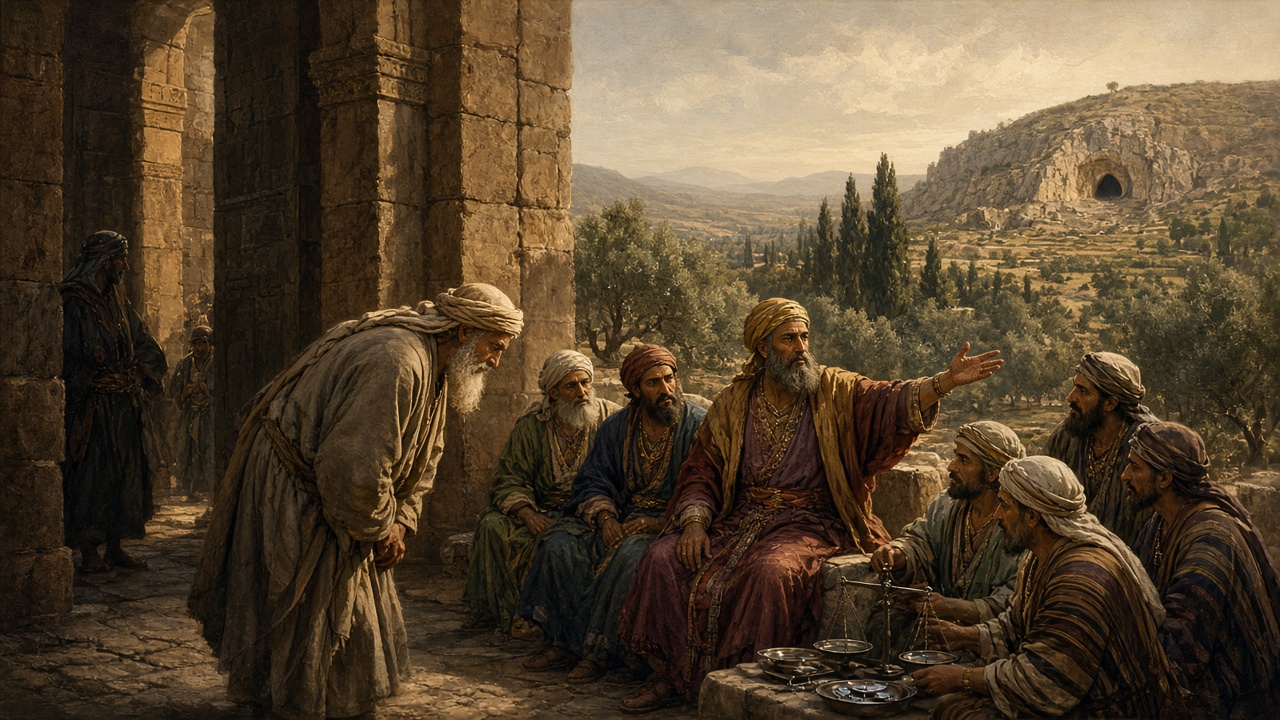
Sarah’s death and the cave of Machpelah
- Sarah died at the age of 127 in Kiriath-arba, that is, Hebron, in the land of Canaan. Easton's Bible Dictionary (1897) notes that this is the only place in Scripture where a woman’s age is recorded, and that her death led Abraham to buy the cave of Machpelah as a family burial place.Sources: the Bible text itself · Sarah
- Abraham told the sons of Heth—the Hittites, descended from Canaan through Heth and living near Hebron—that he was a foreigner among them and needed a burial site. At the city gate, before the Hittites gathered there, he bought the field and cave of Ephron son of Zohar for four hundred shekels of silver, weighed according to the merchants’ standard.Sources: the Bible text itself · Heth · Ephron
- The name Machpelah is explained as “portion” or “double cave.” The cave Abraham bought stood in Ephron’s field near Mamre, on a hillside east of Hebron, and the same place later received the bodies of Abraham and Sarah, Isaac and Rebekah, and Jacob and Leah.Sources: Machpelah · the Bible text itself
Notes written with AI assistance from open sources (Theographic Bible Metadata, CC BY-SA 4.0; Easton’s Bible Dictionary, public domain) and reviewed before publishing.
Places in this chapter
- Canaan · 32.767, 35.333 · verses 2, 19
- Hebron · Today: Tel Rumeida · 31.525, 35.102 · verses 2, 19
- Machpelah · Today: Cave of the Patriarchs · 31.525, 35.111 · verses 9, 17, 19
Only places identified with high confidence are shown (90% or more according to the scholarly sources compiled by OpenBible). Period map: DARE (Digital Atlas of the Roman Empire), CC BY 4.0; modern map: © OpenStreetMap contributors; places: OpenBible.info (CC BY 4.0).
Credits and license for this translation
כתבי הקודש
The Old Testament in ancient Hebrew, following the Masoretic Text
Public Domain
Language: עברית (Hebrew)
Dialect: Biblical/Ancient
2013-12-11
Source: http://ebible.org/hbo/ · eBible.org