Genesis 10
כתבי הקודש · Tap a verse to see its cross-references.
1וְאֵ֙לֶּה֙ תֹּולְדֹ֣ת בְּנֵי־נֹ֔חַ שֵׁ֖ם חָ֣ם וָיָ֑פֶת וַיִּוָּלְד֥וּ לָהֶ֛ם בָּנִ֖ים אַחַ֥ר הַמַּבּֽוּל׃ 2בְּנֵ֣י יֶ֔פֶת גֹּ֣מֶר וּמָגֹ֔וג וּמָדַ֖י וְיָוָ֣ן וְתֻבָ֑ל וּמֶ֖שֶׁךְ וְתִירָֽס׃ 3וּבְנֵ֖י גֹּ֑מֶר אַשְׁכֲּנַ֥ז וְרִיפַ֖ת וְתֹגַרְמָֽה׃ 4וּבְנֵ֥י יָוָ֖ן אֱלִישָׁ֣ה וְתַרְשִׁ֑ישׁ כִּתִּ֖ים וְדֹדָנִֽים׃ 5מֵ֠אֵלֶּה נִפְרְד֞וּ אִיֵּ֤י הַגֹּויִם֙ בְּאַרְצֹתָ֔ם אִ֖ישׁ לִלְשֹׁנֹ֑ו לְמִשְׁפְּחֹתָ֖ם בְּגֹויֵהֶֽם׃ 6וּבְנֵ֖י חָ֑ם כּ֥וּשׁ וּמִצְרַ֖יִם וּפ֥וּט וּכְנָֽעַן׃ 7וּבְנֵ֣י כ֔וּשׁ סְבָא֙ וֽ͏ַחֲוִילָ֔ה וְסַבְתָּ֥ה וְרַעְמָ֖ה וְסַבְתְּכָ֑א וּבְנֵ֥י רַעְמָ֖ה שְׁבָ֥א וּדְדָֽן׃ 8וְכ֖וּשׁ יָלַ֣ד אֶת־נִמְרֹ֑ד ה֣וּא הֵחֵ֔ל לֽ͏ִהְיֹ֥ות גִּבֹּ֖ר בָּאָֽרֶץ׃ 9הֽוּא־הָיָ֥ה גִבֹּֽר־צַ֖יִד לִפְנֵ֣י יְהוָ֑ה עַל־כֵּן֙ יֵֽאָמַ֔ר כְּנִמְרֹ֛ד גִּבֹּ֥ור צַ֖יִד לִפְנֵ֥י יְהוָֽה׃ 10וַתְּהִ֨י רֵאשִׁ֤ית מַמְלַכְתֹּו֙ בָּבֶ֔ל וְאֶ֖רֶךְ וְאַכַּ֣ד וְכַלְנֵ֑ה בְּאֶ֖רֶץ שִׁנְעָֽר׃ 11מִן־הָאָ֥רֶץ הַהִ֖וא יָצָ֣א אַשּׁ֑וּר וַיִּ֙בֶן֙ אֶת־נִ֣ינְוֵ֔ה וְאֶת־רְחֹבֹ֥ת עִ֖יר וְאֶת־כָּֽלַח׃ 12וְֽאֶת־רֶ֔סֶן בֵּ֥ין נִֽינְוֵ֖ה וּבֵ֣ין כָּ֑לַח הִ֖וא הָעִ֥יר הַגְּדֹלָֽה׃ 13וּמִצְרַ֡יִם יָלַ֞ד אֶת־לוּדִ֧ים וְאֶת־עֲנָמִ֛ים וְאֶת־לְהָבִ֖ים וְאֶת־נַפְתֻּחִֽים׃ 14וְֽאֶת־פַּתְרֻסִ֞ים וְאֶת־כַּסְלֻחִ֗ים אֲשֶׁ֨ר יָצְא֥וּ מִשָּׁ֛ם פְּלִשְׁתִּ֖ים וְאֶת־כַּפְתֹּרִֽים׃ ס 15וּכְנַ֗עַן יָלַ֛ד אֶת־צִידֹ֥ן בְּכֹרֹ֖ו וְאֶת־חֵֽת׃ 16וְאֶת־הַיְבוּסִי֙ וְאֶת־הָ֣אֱמֹרִ֔י וְאֵ֖ת הַגִּרְגָּשִֽׁי׃ 17וְאֶת־הֽ͏ַחִוִּ֥י וְאֶת־הֽ͏ַעַרְקִ֖י וְאֶת־הַסִּינִֽי׃ 18וְאֶת־הֽ͏ָאַרְוָדִ֥י וְאֶת־הַצְּמָרִ֖י וְאֶת־הֽ͏ַחֲמָתִ֑י וְאַחַ֣ר נָפֹ֔צוּ מִשְׁפְּחֹ֖ות הֽ͏ַכְּנַעֲנִֽי׃ 19וֽ͏ַיְהִ֞י גְּב֤וּל הֽ͏ַכְּנַעֲנִי֙ מִצִּידֹ֔ן בֹּאֲכָ֥ה גְרָ֖רָה עַד־עַזָּ֑ה בֹּאֲכָ֞ה סְדֹ֧מָה וַעֲמֹרָ֛ה וְאַדְמָ֥ה וּצְבֹיִ֖ם עַד־לָֽשַׁע׃ 20אֵ֣לֶּה בְנֵי־חָ֔ם לְמִשְׁפְּחֹתָ֖ם לִלְשֹֽׁנֹתָ֑ם בְּאַרְצֹתָ֖ם בְּגֹויֵהֶֽם׃ ס 21וּלְשֵׁ֥ם יֻלַּ֖ד גַּם־ה֑וּא אֲבִי֙ כָּל־בְּנֵי־עֵ֔בֶר אֲחִ֖י יֶ֥פֶת הַגָּדֹֽול׃ 22בְּנֵ֥י שֵׁ֖ם עֵילָ֣ם וְאַשּׁ֑וּר וְאַרְפַּכְשַׁ֖ד וְל֥וּד וֽ͏ַאֲרָֽם׃ 23וּבְנֵ֖י אֲרָ֑ם ע֥וּץ וְח֖וּל וְגֶ֥תֶר וָמַֽשׁ׃ 24וְאַרְפַּכְשַׁ֖ד יָלַ֣ד אֶת־שָׁ֑לַח וְשֶׁ֖לַח יָלַ֥ד אֶת־עֵֽבֶר׃ 25וּלְעֵ֥בֶר יֻלַּ֖ד שְׁנֵ֣י בָנִ֑ים שֵׁ֣ם הֽ͏ָאֶחָ֞ד פֶּ֗לֶג כִּ֤י בְיָמָיו֙ נִפְלְגָ֣ה הָאָ֔רֶץ וְשֵׁ֥ם אָחִ֖יו יָקְטָֽן׃ 26וְיָקְטָ֣ן יָלַ֔ד אֶת־אַלְמֹודָ֖ד וְאֶת־שָׁ֑לֶף וְאֶת־חֲצַרְמָ֖וֶת וְאֶת־יָֽרַח׃ 27וְאֶת־הֲדֹורָ֥ם וְאֶת־אוּזָ֖ל וְאֶת־דִּקְלָֽה׃ 28וְאֶת־עֹובָ֥ל וְאֶת־אֲבִֽימָאֵ֖ל וְאֶת־שְׁבָֽא׃ 29וְאֶת־אֹופִ֥ר וְאֶת־חֲוִילָ֖ה וְאֶת־יֹובָ֑ב כָּל־אֵ֖לֶּה בְּנֵ֥י יָקְטָֽן׃ 30וֽ͏ַיְהִ֥י מֹושָׁבָ֖ם מִמֵּשָׁ֑א בֹּאֲכָ֥ה סְפָ֖רָה הַ֥ר הַקֶּֽדֶם׃ 31אֵ֣לֶּה בְנֵי־שֵׁ֔ם לְמִשְׁפְּחֹתָ֖ם לִלְשֹׁנֹתָ֑ם בְּאַרְצֹתָ֖ם לְגֹויֵהֶֽם׃ 32אֵ֣לֶּה מִשְׁפְּחֹ֧ת בְּנֵי־נֹ֛חַ לְתֹולְדֹתָ֖ם בְּגֹויֵהֶ֑ם וּמֵאֵ֜לֶּה נִפְרְד֧וּ הַגֹּויִ֛ם בָּאָ֖רֶץ אַחַ֥ר הַמַּבּֽוּל׃ פ
Did you know?
The Nations after the Flood
- Genesis 10 follows the families of Noah’s three sons, Shem, Ham, and Japheth, and says that after the flood the nations of the earth spread out from them, grouped by clans, languages, lands, and nations. Japheth’s line is linked with peoples of eastern Europe and northern Asia: Gomer is generally regarded as an ancestor of the Celts and the Cimmerians, who in early times settled north of the Black Sea, and Javan became the Hebrew name that the peoples of the East used for the Greeks, especially those of Ionia.Sources: the Bible text itself · Japheth · Gomer (son of Japheth) · Javan
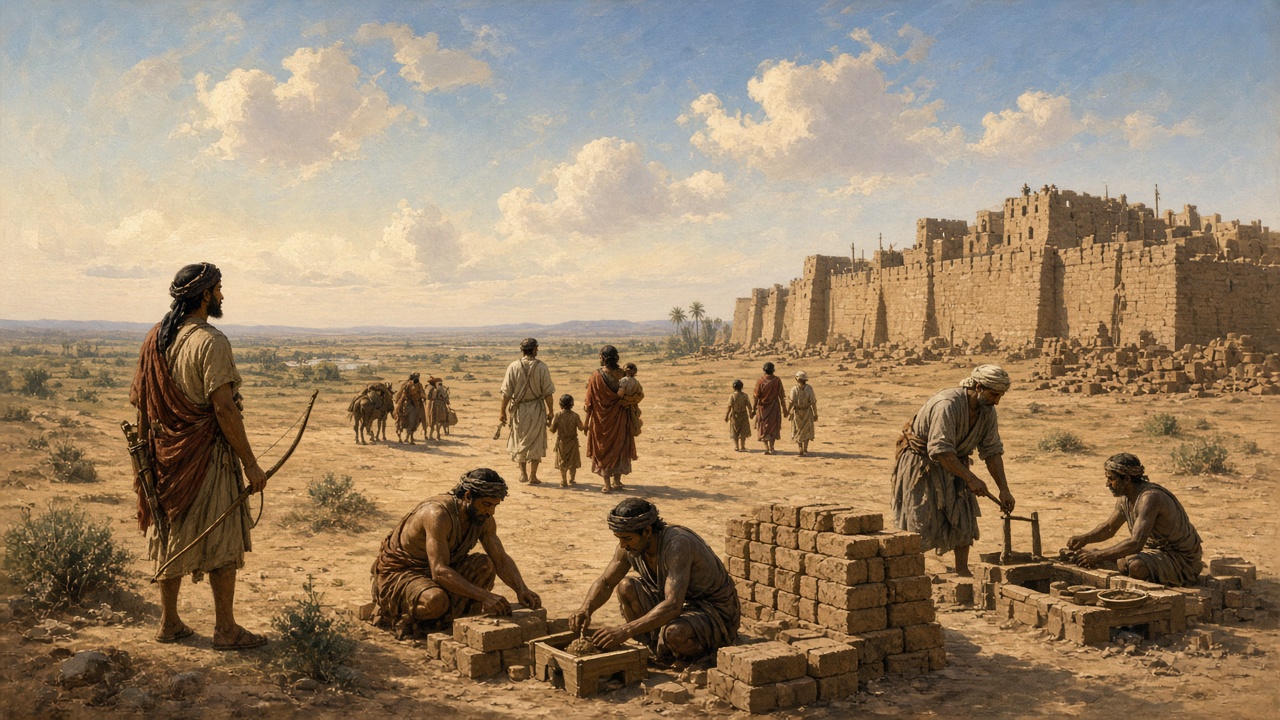
- Cush, a son of Ham, was the father of Nimrod, remembered as a mighty hunter before the Lord, whose kingdom began at Babylon, Erech, Accad, and Calneh in the land of Shinar, probably Babylonia or southern Mesopotamia. From that land he went into Assyria and built Nineveh, Rehoboth-Ir, Calah, and Resen; Calah’s site is probably the Nimrud ruins on the left bank of the Tigris.Sources: the Bible text itself · Shinar · Nineveh · Calah
- Mizraim, the dual form of a Hebrew word for a mound or fortress, may point to Upper and Lower Egypt and is the name the Hebrews usually gave that country; Arabic still calls it Muzr. Shem is called the older brother of Japheth and the forefather of all the sons of Eber, regarded as the founder of the Hebrew people, while an Arab tradition remembers Eber’s son Joktan, Kahtan in Arabic, as the ancestor of tribes of central and southern Arabia.Sources: the Bible text itself · Mizraim · Eber (Heber) · Joktan
Notes written with AI assistance from open sources (Theographic Bible Metadata, CC BY-SA 4.0; Easton’s Bible Dictionary, public domain) and reviewed before publishing.
Places in this chapter
- Erech · Today: Uruk · 31.322, 45.636 · verse 10
- Shinar · Today: Babylonia · 32.543, 44.422 · verse 10
- Assyria · 36.359, 43.153 · verse 11
- Calah · Today: Nimrud · 36.098, 43.329 · verses 11, 12
- Nineveh · 36.359, 43.153 · verses 11, 12
- Canaan · 32.767, 35.333 · verse 19
- Gaza · Today: Tell Harube · 31.504, 34.464 · verse 19
- Sidon · Today: Sandikli archaeological site in Sidon · 33.561, 35.372 · verse 19
Only places identified with high confidence are shown (90% or more according to the scholarly sources compiled by OpenBible). Period map: DARE (Digital Atlas of the Roman Empire), CC BY 4.0; modern map: © OpenStreetMap contributors; places: OpenBible.info (CC BY 4.0).
Credits and license for this translation
כתבי הקודש
The Old Testament in ancient Hebrew, following the Masoretic Text
Public Domain
Language: עברית (Hebrew)
Dialect: Biblical/Ancient
2013-12-11
Source: http://ebible.org/hbo/ · eBible.org