Exodus 13
כתבי הקודש · Tap a verse to see its cross-references.
1וַיְדַבֵּ֥ר יְהוָ֖ה אֶל־מֹשֶׁ֥ה לֵּאמֹֽר׃ 2קַדֶּשׁ־לִ֨י כָל־בְּכֹ֜ור פֶּ֤טֶר כָּל־רֶ֙חֶם֙ בִּבְנֵ֣י יִשְׂרָאֵ֔ל בָּאָדָ֖ם וּבַבְּהֵמָ֑ה לִ֖י הֽוּא׃ 3וַיֹּ֨אמֶר מֹשֶׁ֜ה אֶל־הָעָ֗ם זָכֹ֞ור אֶת־הַיֹּ֤ום הַזֶּה֙ אֲשֶׁ֨ר יְצָאתֶ֤ם מִמִּצְרַ֙יִם֙ מִבֵּ֣ית עֲבָדִ֔ים כִּ֚י בְּחֹ֣זֶק יָ֔ד הֹוצִ֧יא יְהֹוָ֛ה אֶתְכֶ֖ם מִזֶּ֑ה וְלֹ֥א יֵאָכֵ֖ל חָמֵֽץ׃ 4הַיֹּ֖ום אַתֶּ֣ם יֹצְאִ֑ים בְּחֹ֖דֶשׁ הָאָבִֽיב׃ 5וְהָיָ֣ה כִֽי־יְבִֽיאֲךָ֣ יְהוָ֡ה אֶל־אֶ֣רֶץ הַֽ֠כְּנַעֲנִי וְהַחִתִּ֨י וְהָאֱמֹרִ֜י וְהַחִוִּ֣י וְהַיְבוּסִ֗י אֲשֶׁ֨ר נִשְׁבַּ֤ע לַאֲבֹתֶ֙יךָ֙ לָ֣תֶת לָ֔ךְ אֶ֛רֶץ זָבַ֥ת חָלָ֖ב וּדְבָ֑שׁ וְעָבַדְתָּ֛ אֶת־הָעֲבֹדָ֥ה הַזֹּ֖את בַּחֹ֥דֶשׁ הַזֶּֽה׃ 6שִׁבְעַ֥ת יָמִ֖ים תֹּאכַ֣ל מַצֹּ֑ת וּבַיֹּום֙ הַשְּׁבִיעִ֔י חַ֖ג לַיהוָֽה׃ 7מַצֹּות֙ יֵֽאָכֵ֔ל אֵ֖ת שִׁבְעַ֣ת הַיָּמִ֑ים וְלֹֽא־יֵרָאֶ֨ה לְךָ֜ חָמֵ֗ץ וְלֹֽא־יֵרָאֶ֥ה לְךָ֛ שְׂאֹ֖ר בְּכָל־גְּבֻלֶֽךָ׃ 8וְהִגַּדְתָּ֣ לְבִנְךָ֔ בַּיֹּ֥ום הַה֖וּא לֵאמֹ֑ר בַּעֲב֣וּר זֶ֗ה עָשָׂ֤ה יְהוָה֙ לִ֔י בְּצֵאתִ֖י מִמִּצְרָֽיִם׃ 9וְהָיָה֩ לְךָ֨ לְאֹ֜ות עַל־יָדְךָ֗ וּלְזִכָּרֹון֙ בֵּ֣ין עֵינֶ֔יךָ לְמַ֗עַן תִּהְיֶ֛ה תֹּורַ֥ת יְהוָ֖ה בְּפִ֑יךָ כִּ֚י בְּיָ֣ד חֲזָקָ֔ה הֹוצִֽאֲךָ֥ יְהֹוָ֖ה מִמִּצְרָֽיִם׃ 10וְשָׁמַרְתָּ֛ אֶת־הַחֻקָּ֥ה הַזֹּ֖את לְמֹועֲדָ֑הּ מִיָּמִ֖ים יָמִֽימָה׃ ס 11וְהָיָ֞ה כִּֽי־יְבִֽאֲךָ֤ יְהוָה֙ אֶל־אֶ֣רֶץ הַֽכְּנַעֲנִ֔י כַּאֲשֶׁ֛ר נִשְׁבַּ֥ע לְךָ֖ וְלַֽאֲבֹתֶ֑יךָ וּנְתָנָ֖הּ לָֽךְ׃ 12וְהַעֲבַרְתָּ֥ כָל־פֶּֽטֶר־רֶ֖חֶם לַֽיהֹוָ֑ה וְכָל־פֶּ֣טֶר ׀ שֶׁ֣גֶר בְּהֵמָ֗ה אֲשֶׁ֨ר יִהְיֶ֥ה לְךָ֛ הַזְּכָרִ֖ים לַיהוָֽה׃ 13וְכָל־פֶּ֤טֶר חֲמֹר֙ תִּפְדֶּ֣ה בְשֶׂ֔ה וְאִם־לֹ֥א תִפְדֶּ֖ה וַעֲרַפְתֹּ֑ו וְכֹ֨ל בְּכֹ֥ור אָדָ֛ם בְּבָנֶ֖יךָ תִּפְדֶּֽה׃ 14וְהָיָ֞ה כִּֽי־יִשְׁאָלְךָ֥ בִנְךָ֛ מָחָ֖ר לֵאמֹ֣ר מַה־זֹּ֑את וְאָמַרְתָּ֣ אֵלָ֔יו בְּחֹ֣זֶק יָ֗ד הֹוצִיאָ֧נוּ יְהוָ֛ה מִמִּצְרַ֖יִם מִבֵּ֥ית עֲבָדִֽים׃ 15וַיְהִ֗י כִּֽי־הִקְשָׁ֣ה פַרְעֹה֮ לְשַׁלְּחֵנוּ֒ וַיַּהֲרֹ֨ג יְהֹוָ֤ה כָּל־בְּכֹור֙ בְּאֶ֣רֶץ מִצְרַ֔יִם מִבְּכֹ֥ר אָדָ֖ם וְעַד־בְּכֹ֣ור בְּהֵמָ֑ה עַל־כֵּן֩ אֲנִ֨י זֹבֵ֜חַ לַֽיהוָ֗ה כָּל־פֶּ֤טֶר רֶ֙חֶם֙ הַזְּכָרִ֔ים וְכָל־בְּכֹ֥ור בָּנַ֖י אֶפְדֶּֽה׃ 16וְהָיָ֤ה לְאֹות֙ עַל־יָ֣דְכָ֔ה וּלְטֹוטָפֹ֖ת בֵּ֣ין עֵינֶ֑יךָ כִּ֚י בְּחֹ֣זֶק יָ֔ד הֹוצִיאָ֥נוּ יְהוָ֖ה מִמִּצְרָֽיִם׃ ס 17וַיְהִ֗י בְּשַׁלַּ֣ח פַּרְעֹה֮ אֶת־הָעָם֒ וְלֹא־נָחָ֣ם אֱלֹהִ֗ים דֶּ֚רֶךְ אֶ֣רֶץ פְּלִשְׁתִּ֔ים כִּ֥י קָרֹ֖וב ה֑וּא כִּ֣י ׀ אָמַ֣ר אֱלֹהִ֗ים פֶּֽן־יִנָּחֵ֥ם הָעָ֛ם בִּרְאֹתָ֥ם מִלְחָמָ֖ה וְשָׁ֥בוּ מִצְרָֽיְמָה׃ 18וַיַּסֵּ֨ב אֱלֹהִ֧ים ׀ אֶת־הָעָ֛ם דֶּ֥רֶךְ הַמִּדְבָּ֖ר יַם־ס֑וּף וַחֲמֻשִׁ֛ים עָל֥וּ בְנֵי־יִשְׂרָאֵ֖ל מֵאֶ֥רֶץ מִצְרָֽיִם׃ 19וַיִּקַּ֥ח מֹשֶׁ֛ה אֶת־עַצְמֹ֥ות יֹוסֵ֖ף עִמֹּ֑ו כִּי֩ הַשְׁבֵּ֨עַ הִשְׁבִּ֜יעַ אֶת־בְּנֵ֤י יִשְׂרָאֵל֙ לֵאמֹ֔ר פָּקֹ֨ד יִפְקֹ֤ד אֱלֹהִים֙ אֶתְכֶ֔ם וְהַעֲלִיתֶ֧ם אֶת־עַצְמֹתַ֛י מִזֶּ֖ה אִתְּכֶֽם׃ 20וַיִּסְע֖וּ מִסֻּכֹּ֑ת וַיַּחֲנ֣וּ בְאֵתָ֔ם בִּקְצֵ֖ה הַמִּדְבָּֽר׃ 21וַֽיהוָ֡ה הֹלֵךְ֩ לִפְנֵיהֶ֨ם יֹומָ֜ם בְּעַמּ֤וּד עָנָן֙ לַנְחֹתָ֣ם הַדֶּ֔רֶךְ וְלַ֛יְלָה בְּעַמּ֥וּד אֵ֖שׁ לְהָאִ֣יר לָהֶ֑ם לָלֶ֖כֶת יֹומָ֥ם וָלָֽיְלָה׃ 22לֹֽא־יָמִ֞ישׁ עַמּ֤וּד הֶֽעָנָן֙ יֹומָ֔ם וְעַמּ֥וּד הָאֵ֖שׁ לָ֑יְלָה לִפְנֵ֖י הָעָֽם׃ פ
Did you know?
The Firstborn and the Departure from Egypt
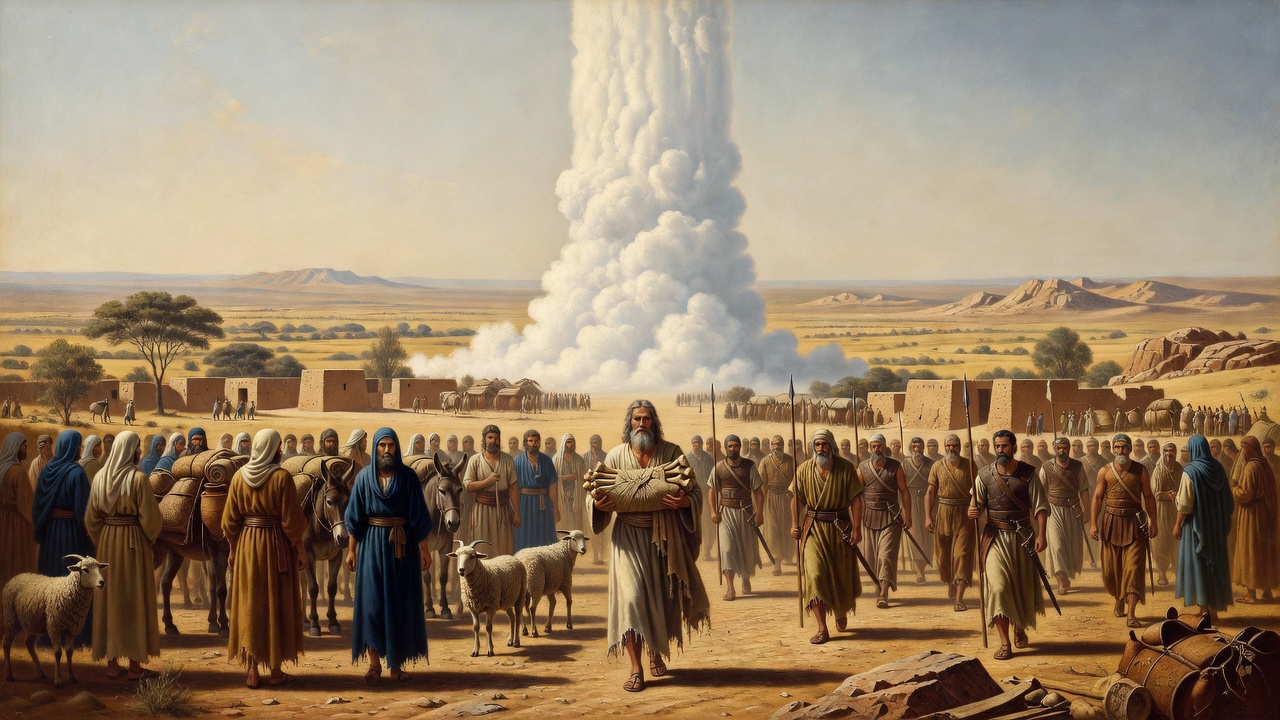
- God did not lead them by the shorter road through the land of the Philistines, lest war make them return to Egypt, but by the wilderness toward the Red Sea, which separates Asia from Africa. They set out from Succoth, the first encampment after leaving Ramesses and also the civil name of Pithom, and made their third camp at Etham, on the edge of the wilderness. Etham is perhaps another name for Khetam, or “fortress,” on the wall of Shur, which ran from the Mediterranean to the Gulf of Suez, and the camp was probably a little west of modern Ismailia.Sources: the Bible text itself · Succoth · Etham · Red Sea
- Moses took the bones of Joseph with him, because Joseph had made the sons of Israel swear that, when God attended to them, they must carry his bones from that place. Joseph was the elder of the two sons of Jacob by Rachel.Sources: the Bible text itself · Joseph (son of Jacob)
- The LORD told Moses to consecrate every firstborn male; the firstborn from every womb among the Israelites, both of people and of animals, belonged to him. Every firstborn donkey was to be redeemed with a lamb, or else have its neck broken, and every firstborn son was to be redeemed. When a son asked what this meant, he was to be told that Pharaoh had stubbornly refused to let them go, so the LORD killed every firstborn in Egypt, of people and of animals, and brought them out of the house of slavery.Sources: the Bible text itself
Notes written with AI assistance from open sources (Theographic Bible Metadata, CC BY-SA 4.0; Easton’s Bible Dictionary, public domain) and reviewed before publishing.
Places in this chapter
Only places identified with high confidence are shown (90% or more according to the scholarly sources compiled by OpenBible). Period map: DARE (Digital Atlas of the Roman Empire), CC BY 4.0; modern map: © OpenStreetMap contributors; places: OpenBible.info (CC BY 4.0).
Credits and license for this translation
כתבי הקודש
The Old Testament in ancient Hebrew, following the Masoretic Text
Public Domain
Language: עברית (Hebrew)
Dialect: Biblical/Ancient
2013-12-11
Source: http://ebible.org/hbo/ · eBible.org