2 Samuel 4
כתבי הקודש · Tap a verse to see its cross-references.
1וַיִּשְׁמַ֣ע בֶּן־שָׁא֗וּל כִּ֣י מֵ֤ת אַבְנֵר֙ בְּחֶבְרֹ֔ון וַיִּרְפּ֖וּ יָדָ֑יו וְכָל־יִשְׂרָאֵ֖ל נִבְהָֽלוּ׃ 2וּשְׁנֵ֣י אֲנָשִׁ֣ים שָׂרֵֽי־גְדוּדִ֣ים הָי֪וּ בֶן־שָׁא֟וּל שֵׁם֩ הָאֶחָ֨ד בַּֽעֲנָ֜ה וְשֵׁ֧ם הַשֵּׁנִ֣י רֵכָ֗ב בְּנֵ֛י רִמֹּ֥ון הַבְּאֶֽרֹתִ֖י מִבְּנֵ֣י בִנְיָמִ֑ן כִּ֚י גַּם־בְּאֵרֹ֔ות תֵּחָשֵׁ֖ב עַל־בִּנְיָמִֽן׃ 3וַיִּבְרְח֥וּ הַבְּאֵרֹתִ֖ים גִּתָּ֑יְמָה וַֽיִּהְיוּ־שָׁ֣ם גָּרִ֔ים עַ֖ד הַיֹּ֥ום הַזֶּֽה׃ ס 4וְלִיהֹֽונָתָן֙ בֶּן־שָׁא֔וּל בֵּ֖ן נְכֵ֣ה רַגְלָ֑יִם בֶּן־חָמֵ֣שׁ שָׁנִ֣ים הָיָ֡ה בְּבֹ֣א שְׁמֻעַת֩ שָׁא֨וּל וִיהֹֽונָתָ֜ן מִֽיִּזְרְעֶ֗אל וַתִּשָּׂאֵ֤הוּ אֹֽמַנְתֹּו֙ וַתָּנֹ֔ס וַיְהִ֞י בְּחָפְזָ֥הּ לָנ֛וּס וַיִּפֹּ֥ל וַיִּפָּסֵ֖חַ וּשְׁמֹ֥ו מְפִיבֹֽשֶׁת׃ 5וַיֵּ֨לְכ֜וּ בְּנֵֽי־רִמֹּ֤ון הַבְּאֵֽרֹתִי֙ רֵכָ֣ב וּבַעֲנָ֔ה וַיָּבֹ֙אוּ֙ כְּחֹ֣ם הַיֹּ֔ום אֶל־בֵּ֖ית אִ֣ישׁ בֹּ֑שֶׁת וְה֣וּא שֹׁכֵ֔ב אֵ֖ת מִשְׁכַּ֥ב הַֽצָּהֳרָֽיִם׃ 6וְ֠הֵנָּה בָּ֜אוּ עַד־תֹּ֤וךְ הַבַּ֙יִת֙ לֹקְחֵ֣י חִטִּ֔ים וַיַּכֻּ֖הוּ אֶל־הַחֹ֑מֶשׁ וְרֵכָ֛ב וּבַעֲנָ֥ה אָחִ֖יו נִמְלָֽטוּ׃ 7וַיָּבֹ֣אוּ הַבַּ֗יִת וְהֽוּא־שֹׁכֵ֤ב עַל־מִטָּתֹו֙ בַּחֲדַ֣ר מִשְׁכָּבֹ֔ו וַיַּכֻּ֙הוּ֙ וַיְמִתֻ֔הוּ וַיָּסִ֖ירוּ אֶת־רֹאשֹׁ֑ו וַיִּקְחוּ֙ אֶת־רֹאשֹׁ֔ו וַיֵּֽלְכ֛וּ דֶּ֥רֶךְ הָעֲרָבָ֖ה כָּל־הַלָּֽיְלָה׃ 8וַ֠יָּבִאוּ אֶת־רֹ֨אשׁ אִֽישׁ־בֹּ֥שֶׁת אֶל־דָּוִד֮ חֶבְרֹון֒ וַיֹּֽאמְרוּ֙ אֶל־הַמֶּ֔לֶךְ הִנֵּֽה־רֹ֣אשׁ אִֽישׁ־בֹּ֗שֶׁת בֶּן־שָׁאוּל֙ אֹֽיִבְךָ֔ אֲשֶׁ֥ר בִּקֵּ֖שׁ אֶת־נַפְשֶׁ֑ךָ וַיִּתֵּ֣ן יְ֠הוָה לַֽאדֹנִ֨י הַמֶּ֤לֶךְ נְקָמֹות֙ הַיֹּ֣ום הַזֶּ֔ה מִשָּׁא֖וּל וּמִזַּרְעֹֽו׃ ס 9וַיַּ֨עַן דָּוִ֜ד אֶת־רֵכָ֣ב ׀ וְאֶת־בַּעֲנָ֣ה אָחִ֗יו בְּנֵ֛י רִמֹּ֥ון הַבְּאֵֽרֹתִ֖י וַיֹּ֣אמֶר לָהֶ֑ם חַי־יְהוָ֕ה אֲשֶׁר־פָּדָ֥ה אֶת־נַפְשִׁ֖י מִכָּל־צָרָֽה׃ 10כִּ֣י הַמַּגִּיד֩ לִ֨י לֵאמֹ֜ר הִנֵּה־מֵ֣ת שָׁא֗וּל וְהֽוּא־הָיָ֤ה כִמְבַשֵּׂר֙ בְּעֵינָ֔יו וָאֹחֲזָ֣ה בֹ֔ו וָאֶהְרְגֵ֖הוּ בְּצִֽקְלָ֑ג אֲשֶׁ֥ר לְתִתִּי־לֹ֖ו בְּשֹׂרָֽה׃ 11אַ֞ף כִּֽי־אֲנָשִׁ֣ים רְשָׁעִ֗ים הָרְג֧וּ אֶת־אִישׁ־צַדִּ֛יק בְּבֵיתֹ֖ו עַל־מִשְׁכָּבֹ֑ו וְעַתָּ֗ה הֲלֹ֨וא אֲבַקֵּ֤שׁ אֶת־דָּמֹו֙ מִיֶּדְכֶ֔ם וּבִעַרְתִּ֥י אֶתְכֶ֖ם מִן־הָאָֽרֶץ׃ 12וַיְצַו֩ דָּוִ֨ד אֶת־הַנְּעָרִ֜ים וַיַּהַרְג֗וּם וַֽיְקַצְּצ֤וּ אֶת־יְדֵיהֶם֙ וְאֶת־רַגְלֵיהֶ֔ם וַיִּתְל֥וּ עַל־הַבְּרֵכָ֖ה בְּחֶבְרֹ֑ון וְאֵ֨ת רֹ֤אשׁ אִֽישׁ־בֹּ֙שֶׁת֙ לָקָ֔חוּ וַיִּקְבְּר֥וּ בְקֶֽבֶר־אַבְנֵ֖ר בְּחֶבְרֹֽון׃ פ
Did you know?
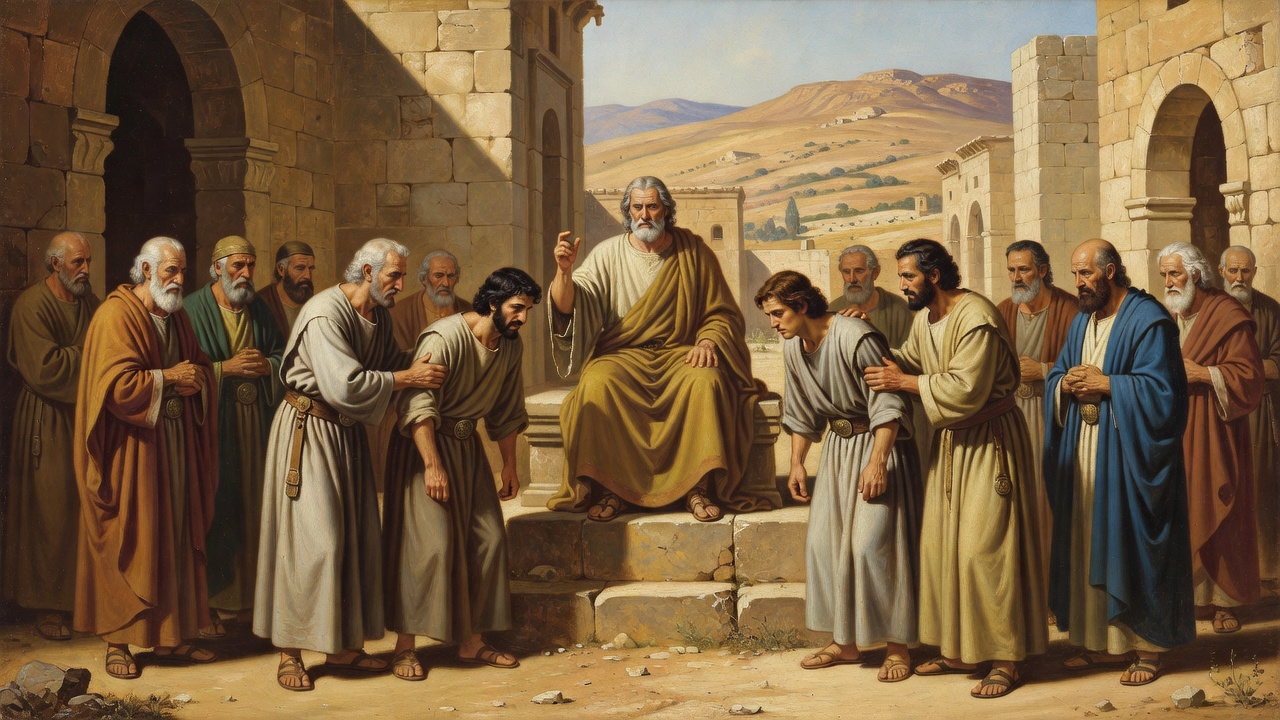
The Assassination of Ish-bosheth
- The assassins Baanah and Rechab were from Beeroth, an ancient Gibeonite town assigned to the territory of Benjamin. The biblical text notes that the Beerothites had previously fled to Gittaim, where they resided as foreigners.Sources: the Bible text itself · Beeroth · Gittaim · Rimmon
- The chapter introduces Mephibosheth, the surviving son of Jonathan and grandson of Saul. When news of the royal family's defeat arrived from Jezreel, the five-year-old child was dropped by his fleeing nurse, leaving him permanently lame in both feet.Sources: the Bible text itself · Mephibosheth
- When Rechab and Baanah brought Ish-bosheth's severed head to Hebron expecting praise, David recalled his earlier execution of the Amalekite messenger at Ziklag. David condemned the murder of an innocent man in his own bed, ordering the conspirators executed and burying Ish-bosheth's head in Abner's tomb.Sources: the Bible text itself · Baanah · Ziklag · Abner
Notes written with AI assistance from open sources (Theographic Bible Metadata, CC BY-SA 4.0; Easton’s Bible Dictionary, public domain) and reviewed before publishing.
Places in this chapter
Only places identified with high confidence are shown (90% or more according to the scholarly sources compiled by OpenBible). Period map: DARE (Digital Atlas of the Roman Empire), CC BY 4.0; modern map: © OpenStreetMap contributors; places: OpenBible.info (CC BY 4.0).
Credits and license for this translation
כתבי הקודש
The Old Testament in ancient Hebrew, following the Masoretic Text
Public Domain
Language: עברית (Hebrew)
Dialect: Biblical/Ancient
2013-12-11
Source: http://ebible.org/hbo/ · eBible.org