Psalms 99
Baibala Hemolele · Tap a verse to see its cross-references.
1KE noho alii nei o Iehova, e haalulu mai na kanaka; ke noho nei oia iwaena o na kerubima, e naueue ka honua.
2He nui o Iehova ma Ziona; Ua kiekie hoi oia maluna o na kanaka a pau.
3E hiilani lakou i kou inoa nui e weliweli ai, No ka mea, ua hemolele ia.
4Ua makemake no hoi ka ikaika o ko alii i ka hooponopono; Ua hookumupaa oe i ka pono, Ua hana mai no oe ma ka hoopono, a ma ka pololei maloko o ka Iakoba.
5E hapai oukou ia Iehova i ko kakou Akua, A e kulou hoomana ma kona keehana wawae; No ka mea, ua hoano oia.
6O Mose, a me Aarona, iwnena o na kahuna pule, A o Samuela hoi iwaena o ka poe i hea aku i kona inoa; Kahea aku lakou ia Iehova, a ae mai oia i ka lakou.
7Olelo mai la oia ia lakou ma ke kia ao; A malama aku la lakou i kana mau kauoha, A me ka olelopaa ana i haawi mai ai ia lakou.
8E Iehova, ko makou Akua, pane mai no oe ia lakou; O oe no ke Akua nana i kala i ko lakou hala, Hoopai mai no nae i ka lakou mau hana.
9E hapai oukou ia Iehova, i ko kakou Akua, A e hoomana aku hoi ma kona mauna hoano; No ka mea, he hoano o Iehova, ko kakou Akua.
Did you know?
The Holy King and His Intercessors
- Psalm 99 is structured around a recurring threefold declaration of God's holiness (verses 3, 5, and 9). It depicts the Lord as a sovereign king enthroned above the cherubim, reigning with justice and equity from Mount Zion.Sources: the Bible text itself · Zion
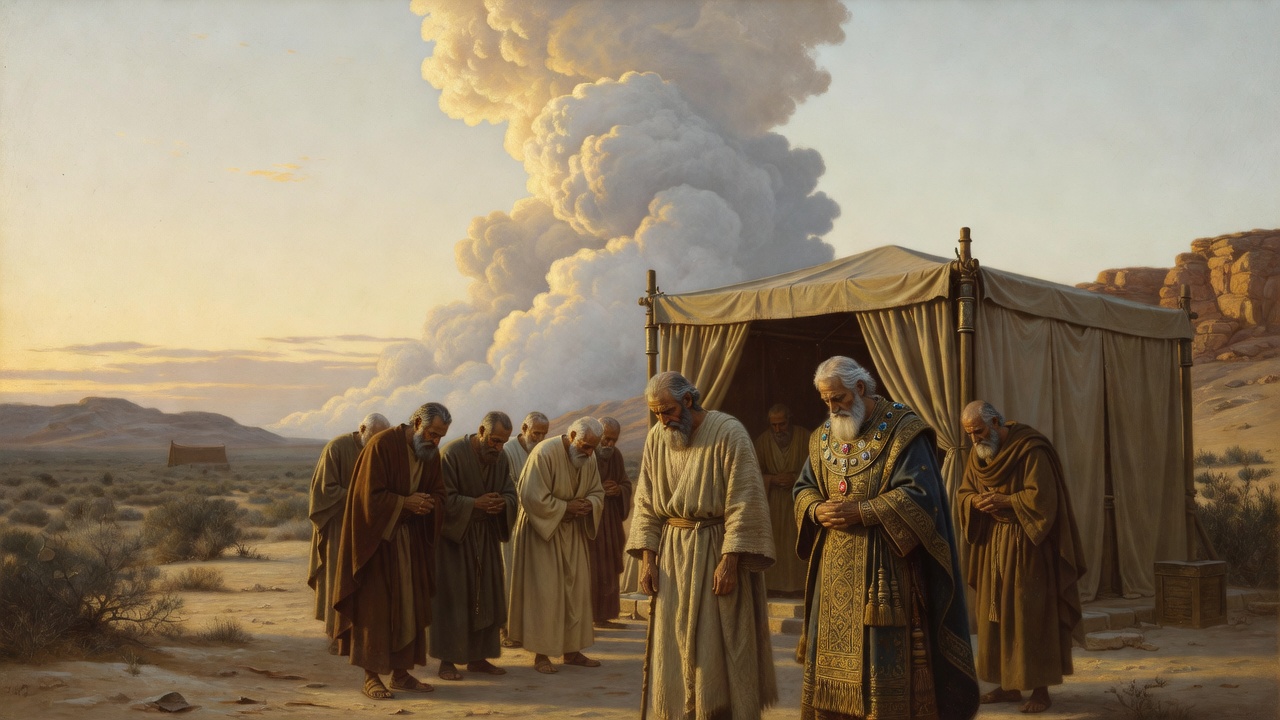
- The psalm highlights Moses, Aaron, and Samuel as exemplary intercessors who called upon God and kept His statutes. It recalls how God answered their cries and communicated from the pillar of cloud, offering forgiveness while maintaining divine justice.Sources: the Bible text itself · Moses · Aaron · Samuel
Notes written with AI assistance from open sources (Theographic Bible Metadata, CC BY-SA 4.0; Easton’s Bible Dictionary, public domain) and reviewed before publishing.
Places in this chapter
Only places identified with high confidence are shown (90% or more according to the scholarly sources compiled by OpenBible). Period map: DARE (Digital Atlas of the Roman Empire), CC BY 4.0; modern map: © OpenStreetMap contributors; places: OpenBible.info (CC BY 4.0).
Credits and license for this translation
Baibala Hemolele
The Holy Bible in the Hawaiian language of the United States, 1868 revision
Public Domain
Language: 'Olelo Hawai'i (Hawaiian)
Translation by: na na misionari i pai
2015-11-10
Source: http://ebible.org/haw1868/ · eBible.org