Psalms 53
Baibala Hemolele · Tap a verse to see its cross-references.
1U A olelo ka aia iloko o kona naau, Aohe Akua. Ua hewa pu lakou, ua hana hoi lakou i na mea e inainaia; Aohe mea i hana ma ka pono.
2Nana mai la ke Akua mai luna mai o ka lani i na keiki a kanaka, I ike mai i kekahi mea naauao paha e imi ana i ke Akua.
3Pau lakou i ka hoi hope pu; Pau pu lakou i ka haumia; Aohe mea hana maikai, aole loa hookahi.
4Aole anei naauao iki ko ka poe hana hewa? Ka poe e pau ai ko'u poe kanaka i ka aiia, E like me ko lakou ai ana i ka berena: Aole lakou i kahea i ke Akua.
5Malaila makau loa lakou ma kahi makau ole; No ka mea, ua hoohelelei ke Akua i na iwi o ka mea hoomoana ku e ia oe: Ua hoohilahila oe ia lakou, No ka mea, ua hoowahawaha mai ke Akua ia lakou.
6Nawai la ke ola e haawi mai i ka Iseraela mailoko mai o Ziona? Aia hoihoi mai ke Akua i ke pio ana o kona poe kanaka, E hauoli no o Iakoba, e olioli no hoi o Iseraela.
Did you know?
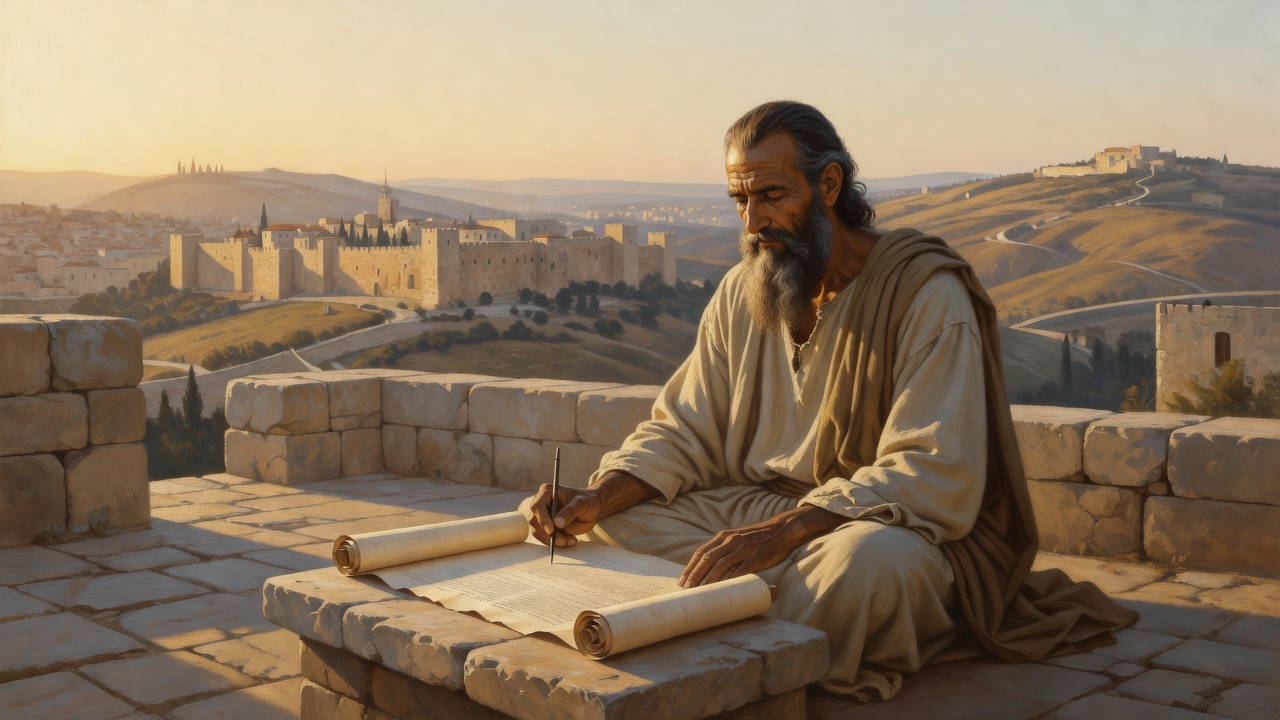
A Reflection on Folly and Deliverance
- The psalm depicts God observing humanity from heaven to see if any seek Him, observing that all have turned aside and become corrupt.Sources: the Bible text itself
- The closing verse calls for salvation to come from Zion, the south-eastern hill of Jerusalem where David established his citadel and palace after capturing it from the Jebusites.Sources: the Bible text itself · Zion
- The poem concludes by pairing the names Jacob and Israel in a call for rejoicing, recalling the patriarch Jacob, the son of Isaac, who also bore the name Israel.Sources: the Bible text itself · Jacob (Israel)
Notes written with AI assistance from open sources (Theographic Bible Metadata, CC BY-SA 4.0; Easton’s Bible Dictionary, public domain) and reviewed before publishing.
Places in this chapter
- Zion · Today: Jerusalem · 31.777, 35.234 · verse 6
Only places identified with high confidence are shown (90% or more according to the scholarly sources compiled by OpenBible). Period map: DARE (Digital Atlas of the Roman Empire), CC BY 4.0; modern map: © OpenStreetMap contributors; places: OpenBible.info (CC BY 4.0).
Credits and license for this translation
Baibala Hemolele
The Holy Bible in the Hawaiian language of the United States, 1868 revision
Public Domain
Language: 'Olelo Hawai'i (Hawaiian)
Translation by: na na misionari i pai
2015-11-10
Source: http://ebible.org/haw1868/ · eBible.org