Psalms 129
Baibala Hemolele · Tap a verse to see its cross-references.
1U A hoopilikia pinepine mai lakou ia'u, Mai ko'u wa opiopio mai, wahi a ka Iseraela;
2Ua hoopilikia pinepine mai lakou ia'u, mai ko'u wa opiopio mai; Aole nae lakou i lanakila mai maluna o'u.
3Ma ko'u kua i kahakaha ai ka poe kahakaha; A hana lakou i ko lakou kaha a loihi.
4Ua pono no o Iehova; Ua oki mai oia i na kaula o ka poe hewa.
5E hoohilahilaia a e hoihoi hope ia mai, Ka poe a pau e inaina mai ia Ziona.
6E like auanei lakou, me ka mauu maluna o na hale, Mae wale, ia mamua o ka liko ana.
7Aole e piha ka lima o ka mea i oki iho, Aole hoi ka umauma o ka mea hoopua i na pua.
8Aole hoi e olelo mai ka poe e hele ae, Maluna o oukou auanei ka hoomaikai ana o Iehova: Ke hoomaikai aku nei makou ia oukou ma ka inoa o Iehova.
Did you know?
Endurance in Affliction and the Fate of Zion’s Foes
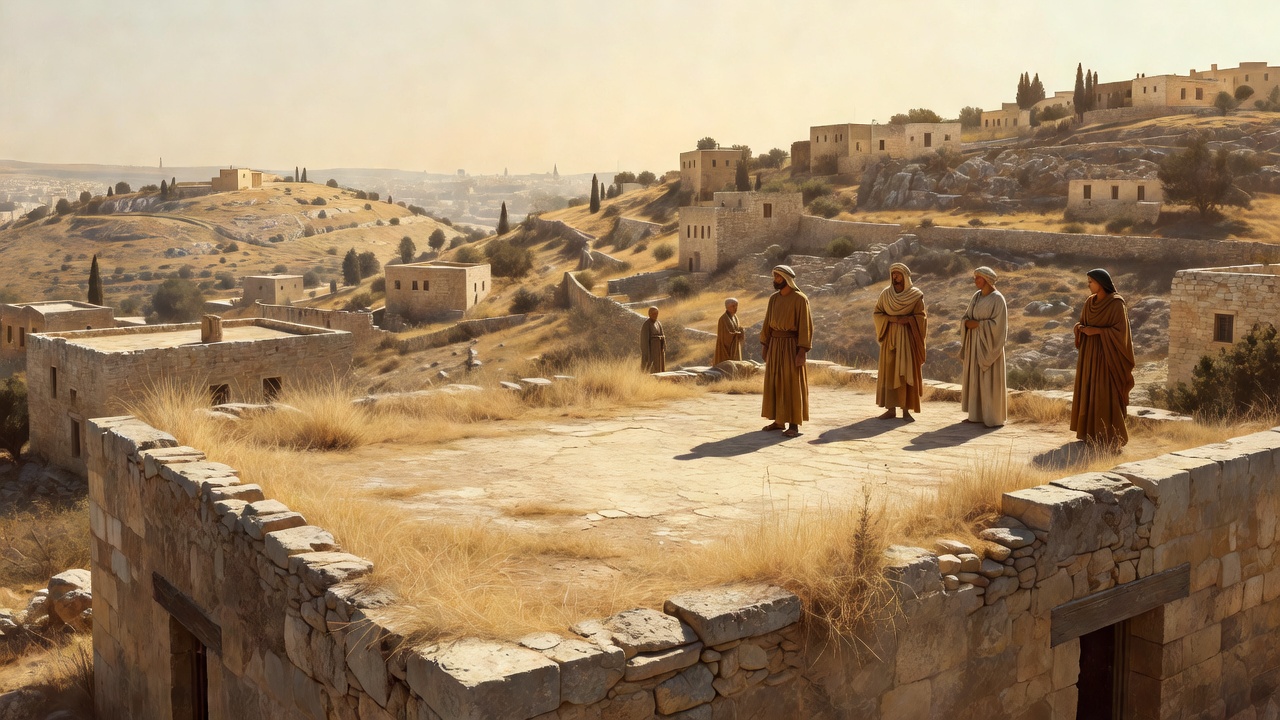
- The imagery of grass growing on rooftops reflects ancient construction, where flat roofs were often covered with packed earth. Seeds might sprout there after rains, but because the soil layer was shallow and exposed to the sun, the grass withered before it could mature or produce a harvest.Sources: the Bible text itself
- The phrase spoken by passersby in verse 8 mirrors the traditional agricultural greetings exchanged in ancient Israel, where travelers routinely blessed reapers and laborers working in the fields.Sources: the Bible text itself
- Zion was the prominent hill in Jerusalem where King David built his citadel, and in biblical poetry it often stands as a representation of God’s dwelling place and His people.Sources: the Bible text itself · Zion
Notes written with AI assistance from open sources (Theographic Bible Metadata, CC BY-SA 4.0; Easton’s Bible Dictionary, public domain) and reviewed before publishing.
Places in this chapter
Only places identified with high confidence are shown (90% or more according to the scholarly sources compiled by OpenBible). Period map: DARE (Digital Atlas of the Roman Empire), CC BY 4.0; modern map: © OpenStreetMap contributors; places: OpenBible.info (CC BY 4.0).
Credits and license for this translation
Baibala Hemolele
The Holy Bible in the Hawaiian language of the United States, 1868 revision
Public Domain
Language: 'Olelo Hawai'i (Hawaiian)
Translation by: na na misionari i pai
2015-11-10
Source: http://ebible.org/haw1868/ · eBible.org