Psalms 125
Baibala Hemolele · Tap a verse to see its cross-references.
1O KA poe hilinai aku ia Iehova, E like no lakou me ka mauna o Ziona, Aole ia e naue, e noho mau loa no.
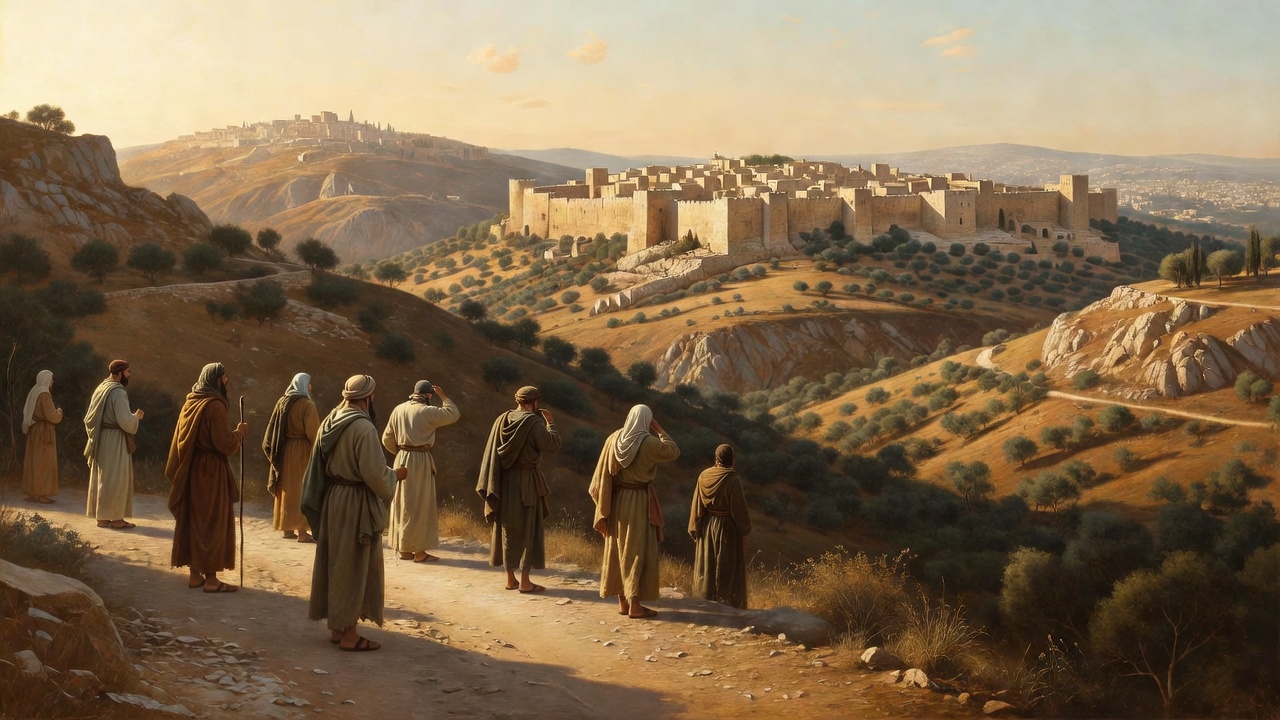
2Ua puni o Ierusalema i na mauna, Pela o Iehova e hoopuni ai i kona poe kanaka, Mai keia wa aku, a i ka manawa pau ole.
3Aole e waihoia ke kookoo o ka poe hewa, Ma ka puu o ka poe pono; O kau aku ka poe pono i ko lakou lima ma ka hewa.
4E hana maikai mai oe, e Iehova, i ka poe maikai, A i ka poe hoi i pololei ma ko lakou naau.
5O ka poe kapae ma ko lakou ala keekee, E alakai pu aku no o Iehova ia lakou me ka poe hana lapuwale; A he malu no maluna o ka Iseraela.
Did you know?
Unshakable Security in Jerusalem
- Psalm 125 is one of the Songs of Ascents, comparing those who trust in God to Mount Zion. Mount Zion was a naturally fortified hill in Jerusalem, surrounded by deep valleys on nearly all sides, making it a fitting symbol of permanence and stability.Sources: the Bible text itself · Mount Zion
- The psalmist draws on local geography by noting how mountains encircle Jerusalem. Built as a mountain fortress among neighboring heights, the city provided an evocative physical illustration of divine protection surrounding the community.Sources: the Bible text itself · Jerusalem
- The psalm concludes with a prayer for peace upon Israel, which resonates with the traditional interpretation of Jerusalem's Hebrew name as a foundation or possession of peace.Sources: the Bible text itself · Jerusalem
Notes written with AI assistance from open sources (Theographic Bible Metadata, CC BY-SA 4.0; Easton’s Bible Dictionary, public domain) and reviewed before publishing.
Places in this chapter
Only places identified with high confidence are shown (90% or more according to the scholarly sources compiled by OpenBible). Period map: DARE (Digital Atlas of the Roman Empire), CC BY 4.0; modern map: © OpenStreetMap contributors; places: OpenBible.info (CC BY 4.0).
Credits and license for this translation
Baibala Hemolele
The Holy Bible in the Hawaiian language of the United States, 1868 revision
Public Domain
Language: 'Olelo Hawai'i (Hawaiian)
Translation by: na na misionari i pai
2015-11-10
Source: http://ebible.org/haw1868/ · eBible.org