Malachi 1
Baibala Hemolele · Tap a verse to see its cross-references.
About this book
About Malachi
- Easton's Bible Dictionary (1897) presents Malachi, a name meaning "messenger" or "angel," as the last of the minor prophets and the writer of the last book of the Old Testament canon. Nothing is known of him beyond what is contained in his book of prophecies.Sources: Easton: Malachi · Malachi
- Some have supposed that the name is simply a title for a messenger of Jehovah, not a proper name. Easton's Bible Dictionary (1897) concludes, however, that there is reason to regard Malachi as the prophet's ordinary name.Sources: Easton: Malachi · Malachi
- Easton's Bible Dictionary (1897) dates the prophecies to about 420 B.C., after Nehemiah's second return from Persia, or possibly before that return. Because Ezra does not mention him and he does not mention the restoration of the temple, the dictionary infers that he prophesied after Haggai and Zechariah.Sources: Easton: Malachi
- Easton's Bible Dictionary (1897) treats Malachi as a contemporary of Nehemiah, comparing Malachi 2:8 with Nehemiah 13:15 and Malachi 2:10-16 with Nehemiah 13:23. It also notes that the temple services were still in existence, citing Malachi 1:10, 3:1 and 3:10.Sources: Easton: Malachi
Notes written with AI assistance from open sources (Theographic Bible Metadata, CC BY-SA 4.0; Easton’s Bible Dictionary, public domain) and reviewed before publishing.
MALAKI.
1K A WANANA o ka olelo a Iehova i ka Iseraela ma o Malaki la.
2Ua aloha aku au ia oukou, wahi a Iehova; Aka, ke ninau mai nei oukou, Ma ke aha la kau i aloha mai ai ia makou? Aole anei o Esau ka hoahanau o Iakoba? wahi a Iehova; Aka, i aloha aku au ia Iakoba,
3A hoowahawaha hoi au ia Esau, A hooneoneo aku la au i kona mau mauna, A hoolilo iho la i kona aina i mau wahi noho o ka waonahele.
4No ka mea, ke olelo nei ko Edoma, Ua auhulihia kakou, Aka, e kukulu hou auanei kakou i na wahi neoneo: Penei ka Iehova o na kaua i olelo mai ai, E kukulu lakou, a e wawahi hoi au: E kapaia lakou, Na aina o ka aia, A o na kanaka a Iehova e inaina mau loa ai.
5A e ike auanei ko oukou mau maka, a e olelo aku oukou, E hoonuiia auanei o Iehova mai ka palena aku o Iseraela.
6Ua hoomaikai ke keiki i kona makuakane, A o ke kauwa i kona haku: Ina hoi he makua wau, auhea la kuu hoomaikaiia? Ina hoi he haku wau, auhea la hoi kuu weliweliia? Wahi a Iehova o na kaua ia oukou, e na kahuna hoowahawaha i kuu inoa. Ke ninau mai nei oukou, Ma ke aha ka makou i hoowahawaha ai i kou inoa?
7Ke mohai mai nei oukou i ka berena haumia maluna o ko'u kuahu; Ke ninau mai nei oukou, Ma ke aha la ka makou i hoohaumia aku ai ia oe? Ma ka mea a oukou e olelo nei, He mea wahawaha ka papaaina o Iehova.
8Ina paha e kaumaha oukou i ka mea makapo i mea mohai, aole anei ia he hewa? Ina hoi e mohai oukou i ka mea oopa a me ka mea mai, aole anei he hewa ia? Ke i aku nei au, e haawi aku ia mea na kou alii, E oluolu mai anei ia ia oe? E maliu mai anei kela ia oe? wahi a Iehova o na kaua.
9Nolaila hoi, ke nonoi aku nei oukou i ke Akua, e aloha mai oia ia kakou: No oukou aku ia mea; e maliu mai anei kela ia oukou? Wahi a Iehova o na kaua.
10Owai la ka mea o oukou e pani wale i na puka? Aole oukou e kuni make hewa maluna o kuu kuahu. Aole au i oluolu ia oukou, wahi a Iehova o na kaua; Aole hoi e maliu au i ka mohai na ko oukou lima mai.
11No ka mea, mai ka hikina o ka la a hiki i ke komohana, E nui auanei kuu inoa iwaena o na lahuikanaka; A ma na wahi a pau loa e kuniia'i ka mea ala no kuu inoa, A me ka mohai maemae: No ka mea, e nui auanei kuu inoa iwaena o na lahuikanaka, Wahi a Iehova o na kaua.
12Aka, ua hoino oukou ia i ka oukou olelo ana, Ua haumia ka papaaina o Iehova, A o ka hua maluna, oia o kana ai, he mea hoowahawaha ia.
13Ke olelo nei oukou, Ka! kai ka luhi! A na oukou ia i hoopailuaia'i, wahi a Iehova o na kaua; No ka mea, ke mohai iho nei oukou i ka mea i haehaeia, A me ka oopa, a me ka maimai, A pela oukou i lawe mai ai i ka mohai. E oluolu anei au i keia mea na ko oukou lima mai? wahi a Iehova.
14Aka, auwe ka mea hoopunipuni, Ka mea nana ka hipakane maloko o kana ohana, Aka, ua hoolaa, a ua mohai iho i ka mea haumia: No ka mea, he alii nui hoi wau, wahi a Iehova o na kaua, A he mea weliweli ko'u inoa iwaena o na lahuikanaka.
Did you know?
Honoring God and Defective Offerings
- The name Malachi means messenger or angel. While some have suggested it was a title rather than a proper name, scholars and traditions widely treat it as the prophet's personal name, placing his ministry during the period of Nehemiah, after Haggai and Zechariah.Sources: Malachi
- The opening dispute recalls the twin brothers Jacob and Esau, the ancestors of Israel and Edom. The text contrasts God's covenant love for Israel with the judgment and desolation coming upon the mountainous region of Edom.Sources: Esau (Edom) · Jacob (Israel) · Edom · the Bible text itself
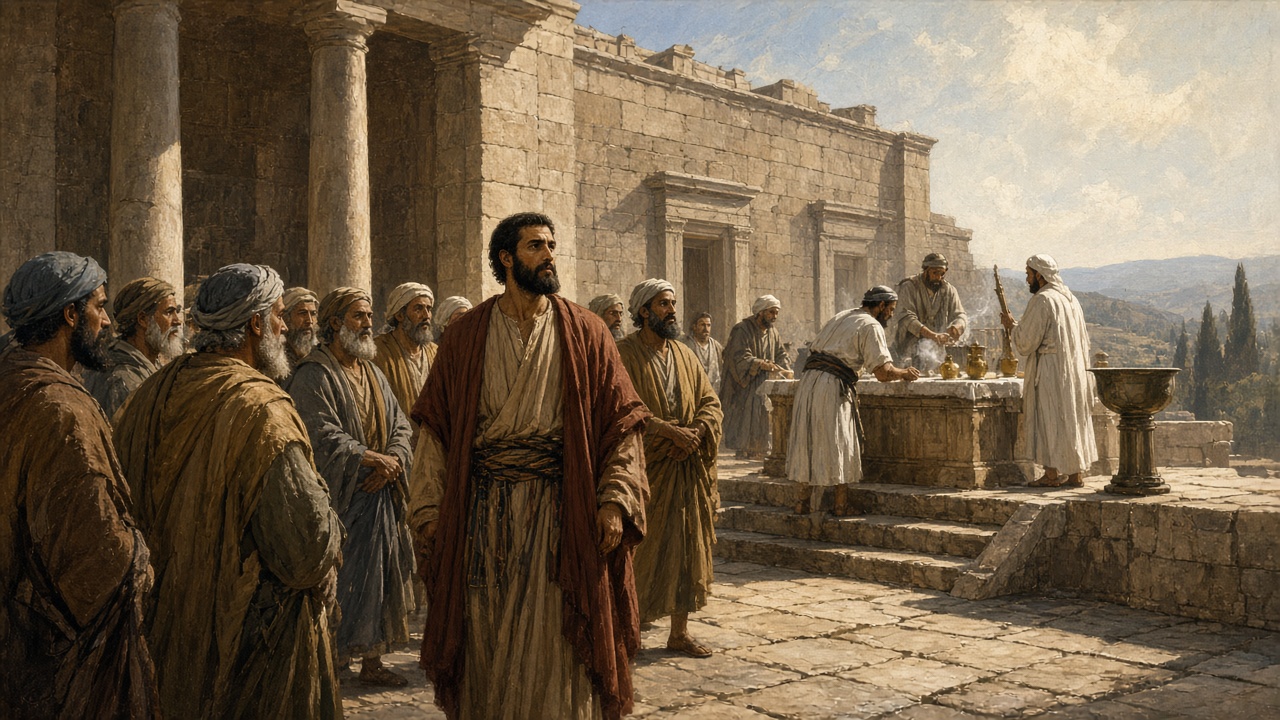
- The priests are rebuked for offering blind, lame, and diseased animals on the altar rather than unblemished livestock. Malachi exposes their disrespect by asking whether a civil governor would accept such inferior gifts.Sources: the Bible text itself
Notes written with AI assistance from open sources (Theographic Bible Metadata, CC BY-SA 4.0; Easton’s Bible Dictionary, public domain) and reviewed before publishing.
Places in this chapter
- Edom · 30.746, 35.604 · verse 4
Only places identified with high confidence are shown (90% or more according to the scholarly sources compiled by OpenBible). Period map: DARE (Digital Atlas of the Roman Empire), CC BY 4.0; modern map: © OpenStreetMap contributors; places: OpenBible.info (CC BY 4.0).
Credits and license for this translation
Baibala Hemolele
The Holy Bible in the Hawaiian language of the United States, 1868 revision
Public Domain
Language: 'Olelo Hawai'i (Hawaiian)
Translation by: na na misionari i pai
2015-11-10
Source: http://ebible.org/haw1868/ · eBible.org