Leviticus 17
Baibala Hemolele · Tap a verse to see its cross-references.
1OLELO mai la hoi o Iehova ia Mose, i mai la,
2E olelo ae oe ia Aarona a me kana mau keiki, a me na mamo a pau a Iseraela, a e i aku ia lakou; Eia ka mea a Iehova i kauoha mai ai, i ka i ana mai,
3O kela kanaka, keia kanaka o ka ohana o Iseraela, nana i pepehi i ka bipikauo, a i ke keikihipa paha, a i ke kao paha, maloko o kahi hoomoana, a i pepehi ae paha ia mawaho o kahi hoomoana,
4Aole hoi i lawe mai ia mea ma ka puka o ka halelewa o ke anaina, e kaumaha i ka mohai ia Iehova, ma ke alo o ka halelewa o Iehova; e hooiliia ke koko maluna o ia kanaka, ua hookahe oia i ke koko; a e okiia'ku ua kanaka la maiwaena aku o kona poe kanaka:
5I mea e lawe mai ai na mamo a Iseraela i ka lakou mau mohai i kaumaha ai lakou ma ke kula, e lawe mai lakou ia mau mea ia Iehova, ma ka puka o ka halelewa o ke anaina, i ke kahuna, a e kaumaha ia mau mea i mau mohaihoomalu no Iehova.
6A e pipi ke kahuna i ke koko maluna o ke kuahu o Iehova, ma ka puka o ka halelewa o ke anaina, a e puhi i ke kaikea i mea ala ono no Iehova.
7Aole e kaumaha hou lakou i ka lakou mau mohai i na daimonio, mamuli o ia mau mea lakou i hele moe kolohe ai. He kanawai e mau ana keia no lakou i ko lakou mau hanauna.
8A e olelo aku oe ia lakou, O kela kanaka keia kanaka o ka ohana o Iseraela, a o na malihini e noho ana iwaena o oukou, o ka mea e kaumaha i mohaikuni a i alanapaha,
9Aole nae e lawe mai ia ma ka puka o ka halelewa o ke anaina e kaumaha no Iehova; e okiia'ku ua kanaka la maiwaena aku o kona poekanaka.
10A o kela kanaka keia kanaka o ka ohana o Iseraela, a o na malihini e noho ana iwaena o oukou, o ka mea e ai i kahi koko, e hooku e au i kuu maka i kela kanaka, a e oki aku au ia ia mai waena aku o kona poe kanaka.
11No ka mea, iloko o ke koko ke ola o ka io, a ua haawi au ia mea ia oukou maluna o ke kuahu i mea e hana i kalahala no ko oukou mau uhane; no ka mea, o ke koko ka i hana i kalahala no ka uhane.
12Nolaila i olelo aku ai au i na mamo a Iseraela, Aole kekahi o oukou e ai i ke koko, aole hoi kekahi malihini e noho ana iwaena o oukou e ai i ke koko.
13A o kela kanaka keia kanaka o na mamo a Iseraela, a o na malihini e noho ana iwaena o oukou, e huli ana a e paa ana i ka holoholona a i ka manu paha e pono ke aiia, e ninini oia i kona koko a e hoouhi me ka lepo.
14No ka mea, o ke ola o ka io a pau, o ke koko ke ola nona. Nolaila i olelo aku ai au i na mamo a Iseraela, Aole oukou e ai i ke koko o kela io keia io; no ka mea, o ke koko ke ola o na io a pau: o ka mea e ai ia mea, e okiia'ku no ia.
15A o ke kanaka nana e ai i ka mea make wale, a i ka mea paha i pepehiia e na holoholona, o ka mea o ko oukou aina ponoi, a o ka malihini paha, e holoi oia i kona mau kapa, e auau hoi i ka wai, a e haumia a hiki i ke ahiahi.
16Aka ina e holoi ole oia ia mau mea, aole hoi i hoauau i kona io; alaila maluna ona kona hewa.
Did you know?
Sacrificial Slaughter and the Sacredness of Blood
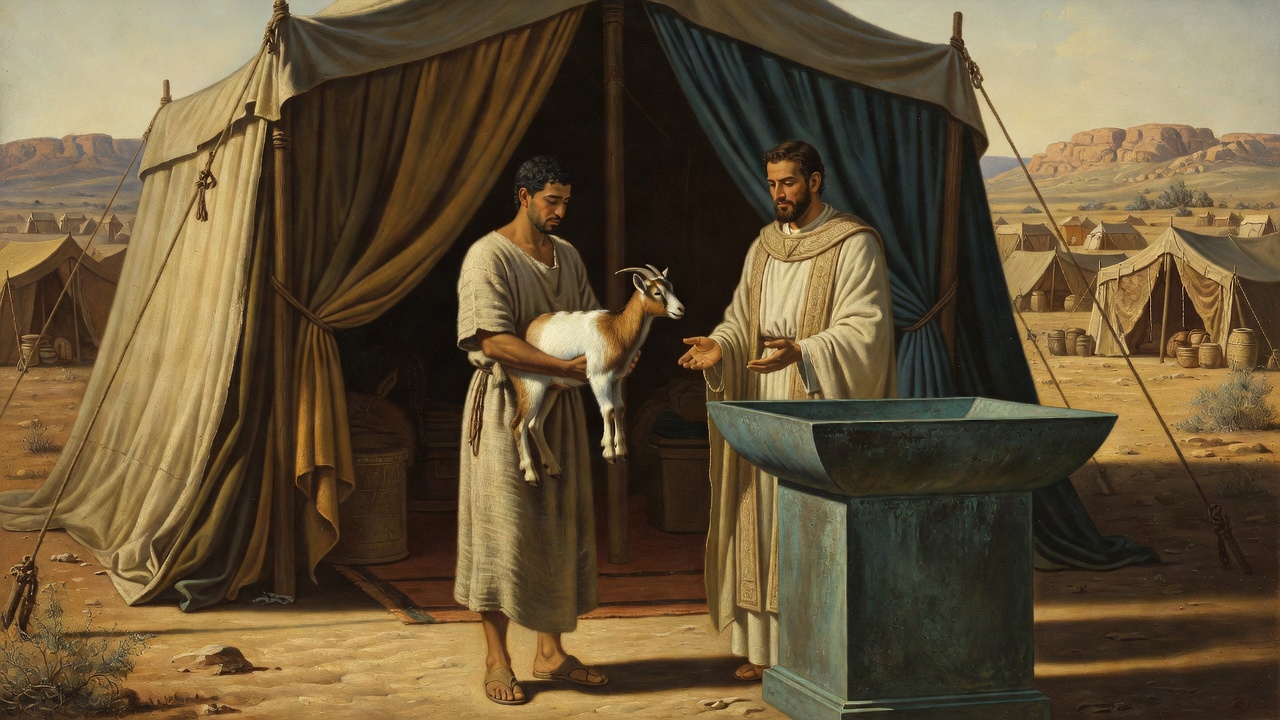
- Leviticus mandates that domestic animals such as oxen, lambs, and goats be brought directly to the entrance of the Tent of Meeting rather than slaughtered in open fields. This rule ensured sacrifices were presented exclusively as peace offerings to the LORD and halted illicit sacrifices to goat demons.Sources: the Bible text itself
- Both native Israelites and resident foreigners were strictly prohibited from eating blood, on penalty of being cut off from the community. The text grounds this law in the theological principle that the life of the flesh is in the blood, which God appointed specifically for making atonement upon the altar.Sources: the Bible text itself
- When Israelites or resident aliens hunted wild animals or birds that were clean for food, they were commanded to drain the blood upon the ground and cover it with dirt. This instruction reinforced that life belongs to God and preserved the sanctity of blood outside the sacrificial sanctuary.Sources: the Bible text itself
Notes written with AI assistance from open sources (Theographic Bible Metadata, CC BY-SA 4.0; Easton’s Bible Dictionary, public domain) and reviewed before publishing.
Credits and license for this translation
Baibala Hemolele
The Holy Bible in the Hawaiian language of the United States, 1868 revision
Public Domain
Language: 'Olelo Hawai'i (Hawaiian)
Translation by: na na misionari i pai
2015-11-10
Source: http://ebible.org/haw1868/ · eBible.org