Joshua 1
Baibala Hemolele · Tap a verse to see its cross-references.
About this book
About Joshua
- Easton's Bible Dictionary (1897) explains Joshua's name as "Jehovah is his help" or "Jehovah the Saviour." He was the son of Nun, of the tribe of Ephraim, born in Egypt, and Moses' successor as leader of Israel; the wars of conquest he carried on are recorded in the book that bears his name. That entry does not name the book's author or give a date for its writing.Sources: Easton: Joshua · Joshua
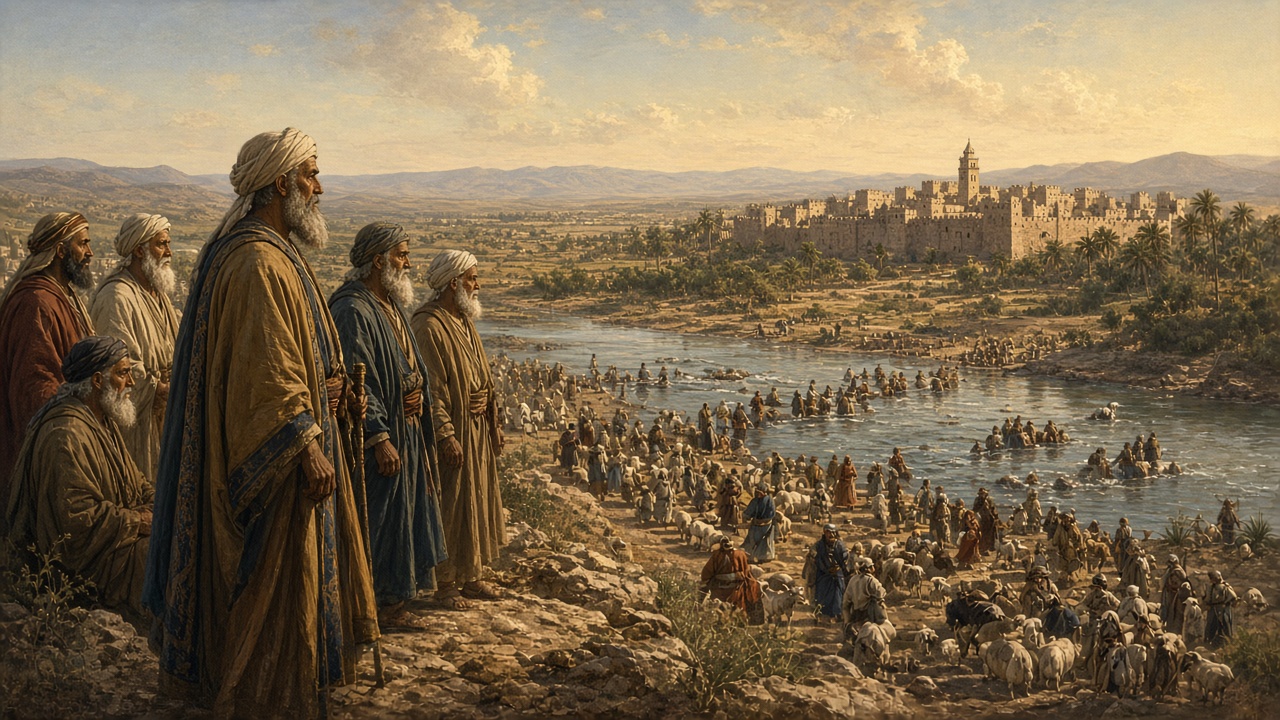
- When Joshua took command, the people were encamped at Shittim. They crossed the Jordan and camped at Gilgal, where, Easton says, he circumcised the people and kept the Passover. Jericho, a fortified city among palm trees about five miles west of the Jordan, is described as Canaan's strongest fortress and the key to western Palestine; Ai, east of Bethel, was the second Canaanite city taken, after an initial defeat.Sources: Easton: Joshua · Jericho · Ai
- Easton's Bible Dictionary (1897) says Joshua conquered six nations and thirty-one kings, then divided the land among the tribes, with Timnath-serah in Mount Ephraim assigned to himself. East of the Jordan, Gilead is described as a mountainous region held by the tribes of Gad and Reuben and the southern part of Manasseh.Sources: Easton: Joshua · Gilead
- Quoting Edersheim, the dictionary says Joshua's name was changed from Oshea, "help," to Jehoshua, "Jehovah is help," and notes that he is called Jesus in Acts 7:45 and Hebrews 4:8. It states that he died at the age of one hundred and ten, twenty-five years after crossing the Jordan, and was buried in his own city of Timnath-serah; of his father Nun, nothing more is recorded than that he was Joshua's father.Sources: Easton: Joshua · Joshua · Nun
- Before leading the conquest, Joshua commanded Israel's host against the Amalekites at Rephidim, served as Moses' minister, and was one of twelve sent to explore Canaan; only he and Caleb brought back an encouraging report. As Easton sketches the book, it runs from the crossing of the Jordan and the taking of Jericho through years of war to the division of the land and Joshua's last address.Sources: Easton: Joshua
Notes written with AI assistance from open sources (Theographic Bible Metadata, CC BY-SA 4.0; Easton’s Bible Dictionary, public domain) and reviewed before publishing.
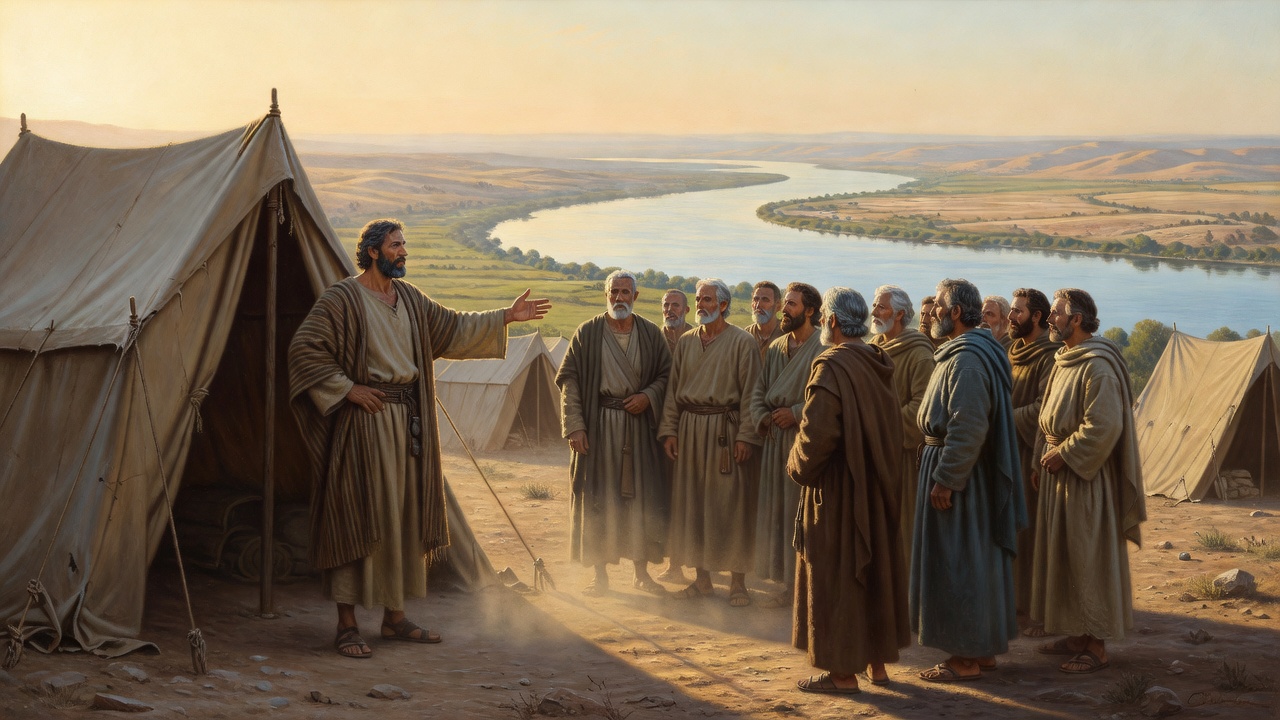
KA BUKE
1MAHOPE iho o ka make ana o Mose, ke kauwa a Iehova, alaila, olelo mai la o Iehova ia Iosua i ke keiki a Nuna, ke kokoolua o Mose, i mai la,
2Ua make ka'u kauwa o Mose, ano e ku ae oe, a e hele i kela kapa o Ioredane nei; o oe a me keia poe kanaka a pau, a i ka aina a'u e haawi aku nei ia lakou, i ka poe mamo a Iseraela.
3O na wahi a pau loa a ke kapuwai a ko oukou wawae e hehi aku ai, oia ka'u i haawi aku ai no oukou, e like me ka'u i olelo aku ai ia Mose.
4Mai ka waonahele mai, a mai Lebanona nei a hiki i ka muliwai nui, oia hoi ka muliwai o Euperate, o ka aina a pau o ka Heta, a hiki i ka moana nui ma ke komohana, oia ko oukou mokuna.
5Aole loa e hiki i kekahi kanaka ke ku imua ou, i na la a pau o kou ola ana. Me a'u i noho pu ai me Mose, pela no wau me oe. Aole au e waiho aku, aole hoi e haalele ia oe.
6E ikaika oe a e koa hoi, no ka mea, nau no e hooili i keia poe kanaka i ka aina a'u i hoohiki ai i ko lakou poe makua e haawi aku no lakou.
7E ikaika io, a e koa loa hoi, me ka hoolohe, a me ka hana aku, e like me ke kanawai a pau a kuu kauwa a Mose i kauoha aku ai ia oe; Mai huli iki ae ma ka lima akau, aole hoi ma ka lima hema, i pomaikai ai oe i ke ala a pau au e hele ai.
8O ka palapala o keia kanawai, aole ia e haalele i kou waha: e noonoo oe ia mea, i ke ao a me ka po, i hiki ia oe ke malama aku a e hana hoi e like me na mea a pau i kakauia malaila. Alaila e hoomalu ai oe i kou hele ana a pau, a e pomaikai io oe.
9Aole anei au i kauoha aku ia oe? E ikaika a e koa hoi. Mai makau oe, aole hoi e weliweli, no ka mea, me oe pu no o Iehova o kou Akua, ma ke ala a pau au e hele ai.
10Alaila, kauoha ae la o Iosua i na luna o kanaka, i ae la,
11E hele ae oukou mawaena o ka poe kanaka, a e kauoha aku ia lakou, penei, E hoomakaukau oukou i o na oukou; no ka mea, ekolu la i koe, alaila, e hele aku oukou i kela kapa o Ioredane nei, e komo i ka aina a Iehova ko oukou Akua i haawi mai ai i hooilina no oukou.
12Olelo mai la o Iosua i ka Reubena, a i ka Gada, a i ka ohana hapa a Manase, i mai la,
13E hoomanao oukou i ka olelo a Mose, ke kauwa a Iehova i kauoha mai ai ia oukou, i ka i ana mai, Ua hoomaha mai o Iehova ko oukou Akua ia oukou, a ua haawi mai hoi i keia aina no oukou.
14O ka oukou poe wahine, a me ka oukou poe kamalii, a me ka oukou poe holoholona, e noho no lakou ma ka aina a Mose i haawi mai ai no lakou ma keia aoao o Ioredane; a e hele makaukau hoi oukou, ka poe ikaika a pau i ke kaua, mamua o ko oukou poe hoahanau, a e kokua aku ia lakou;
15A hiki i ka wa e hoomaha mai ai o Iehova i ko oukou poe hoahanau, e like me oukou nei; a loaa hoi ia lakou ka aina a Iehova ko oukou Akua i haawi mai ai no lakou; alaila, e hoi mai no oukou i ka aina e ili mai ana no oukou a e komo i ka aina a Mose, ke kauwa a Iehova i haawi mai ai no oukou, ma keia aoao o Ioredane, ma ka hikina a ka la.
16Olelo aku la lakou ia Iosua, i aku la, O na mea a pau au e kauoha mai nei ia makou, oia ka makou e hana'i: a o na wahi a pau au e hoouna aku ai ia makou, malaila makou e hele ai.
17Me makou i hoolohe aku ai ia Mose, ma na mea a pau, pela makou e hoolohe aku ai ia oe: o Iehova pu kekahi me oe, me ia i noho pu ai me Mose.
18O na mea a pau, e hoole i kou waha, a hoolohe ole i kau olelo ma na mea a pau au e kauoha mai ai, e make ia, Eikaika hoi oe, a e koa no.
Did you know?
Joshua Assumes Leadership
- Joshua, the son of Nun from the tribe of Ephraim, served as Moses' assistant and military commander before being commissioned to succeed him as leader of Israel. His name means "Jehovah is his help" or "Jehovah the Saviour."Sources: Joshua · the Bible text itself
- The territory outlined in God's commission to Joshua stretches from the southern wilderness and the Lebanon mountain range in the north to the Euphrates (called "the great river") in the east and the Mediterranean ("the Great Sea") to the west.Sources: the Bible text itself · Lebanon · Euphrates · Great Sea
- The tribes of Reuben, Gad, and the half-tribe of Manasseh had already received territory east of the Jordan River under Moses. However, their armed warriors were required to cross over ahead of the other tribes to assist them until the entire land was secured.Sources: the Bible text itself · Manasseh (son of Joseph)
Notes written with AI assistance from open sources (Theographic Bible Metadata, CC BY-SA 4.0; Easton’s Bible Dictionary, public domain) and reviewed before publishing.
Places in this chapter
- Jordan · Today: Jordan River · 31.761, 35.558 · verses 2, 11, 14, 15
- Euphrates · Today: Euphrates River · 31.004, 47.442 · verse 4
- Great Sea · Today: Mediterranean Sea · 31.805, 34.170 · verse 4
- Lebanon · 33.540, 35.584 · verse 4
- Negeb · 31.245, 34.841 · verse 4
- Syria · Today: Aram · 33.511, 36.306 · verse 4
Only places identified with high confidence are shown (90% or more according to the scholarly sources compiled by OpenBible). Period map: DARE (Digital Atlas of the Roman Empire), CC BY 4.0; modern map: © OpenStreetMap contributors; places: OpenBible.info (CC BY 4.0).
Credits and license for this translation
Baibala Hemolele
The Holy Bible in the Hawaiian language of the United States, 1868 revision
Public Domain
Language: 'Olelo Hawai'i (Hawaiian)
Translation by: na na misionari i pai
2015-11-10
Source: http://ebible.org/haw1868/ · eBible.org