Jonah 4
Baibala Hemolele · Tap a verse to see its cross-references.
1A HE mea hewa nui ia ia Iona, a huhu iho la ia.
2A pule aku la no ia ia Iehova, i aku la, Ke noi aku nei au ia oe, e Iehova, aole anei keia kuu olelo, i kuu noho ana ma ko'u aina? Nolaila i holo aku ai au mamua i Taresisa: no ka mea, ua ike no au he Akua ahonui oe, a me ke aloha, e hakalia ana i ka huhu, a he lokomaikai nui, a me ka haalele i ka manao hoopai.
3Ano hoi, e Iehova, ke noi aku nei au ia oe, e lawe oe i kuu ola mai o'u aku la; no ka mea, ua oi ka maikai o kuu make mamua o ke ola.
4A olelo mai o Iehova, He pono anei nou ka huhu?
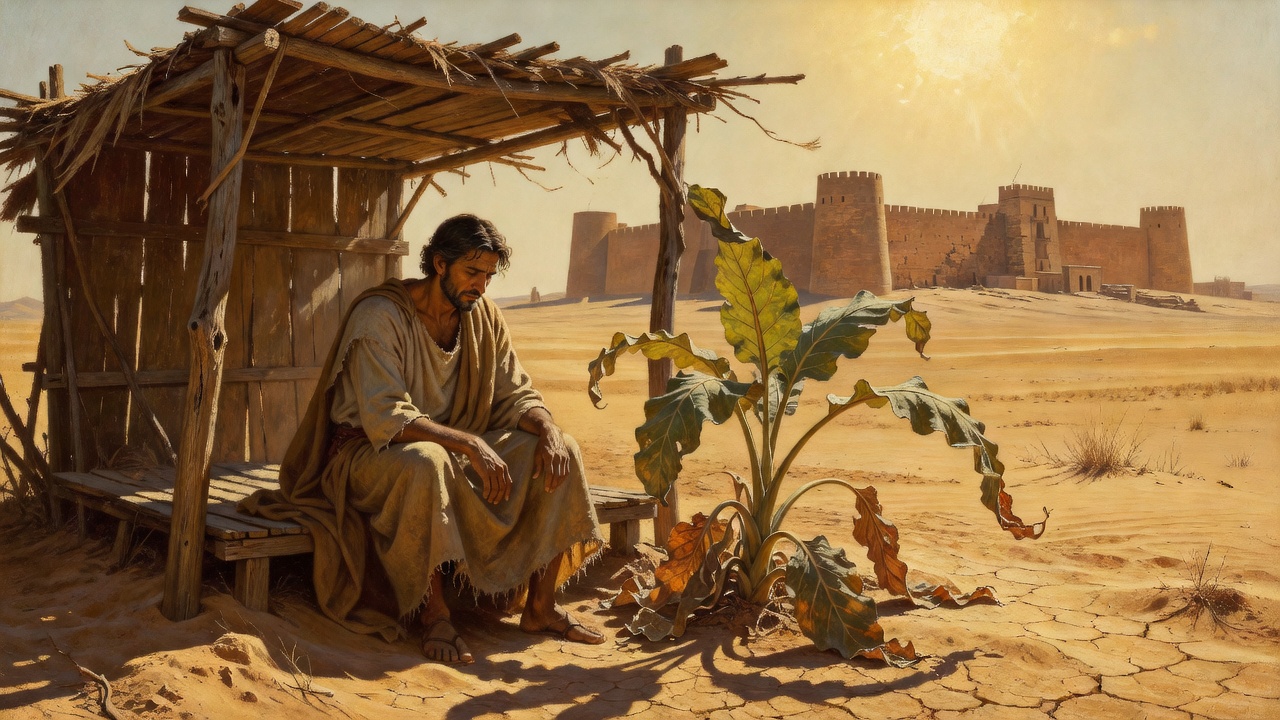
5A hele aku la o Iona iwaho o ke kulanakauhale, a noho iho la ma ka hikina o ke kulanakauhale, a hana iho la ilaila i wahi lanai nona, a noho iho la malalo o kona malu, i ike aku ia i ka mea e hanaia ma ke kulanakauhale.
6A hoomakaukau o Iehova ke Akua i laau aila, a hooulu ae la ia mea maluna o Iona, i lilo ia i wahi malumalu o kona poo, e hoopakele ia ia mai kona mea kaumaha. A olioli nui o Iona i ka laau aila.
7A hoomakaukau ke Akua i wahi enuhe i ka wanaao i ka la apopo, a ai iho la ia i ka laau aila, a mae iho la ia.
8A i ka wa i puka mai ai ka la, hoomakaukau ke Akua i makani hikina wela: a kau ka la maluna o ke poo o Iona, a maule iho la ia, a manao iho la iloko ona e make, a i iho la, ua oi ka maikai o kuu make mamua o ke ola.
9A olelo mai la ke Akua ia Iona, He pono anei kou huhu no ka laau aila? A i aku la ia, He pono ko'u huhu a i ka make.
10A olelo mai o Iehova, Ua minamina anei oe i ka laau aila, ka mea aole oe i luhi, aole hoi oe i hooulu: kupu mai no ia i ka po hookahi, a make iho la i ka po hookahi:
11Aole anei he pono ko'u mina mina ana ia Nineva, ke kulanakauhale nui, iloko ona he lehulehu, hookahi haneri a me ka iwakalua na tausani a keu aku, ka poe ike ole iwaena o ka lima akau a me ka lima hema; a ua nui loa hoi na holoholona?
Did you know?
Jonah's Anger and God's Compassion
- Jonah admits that he originally attempted to flee toward Tarshish precisely because he knew God is gracious, compassionate, slow to anger, and relents from sending disaster. His distress arose when God chose to spare Nineveh rather than destroy it.Sources: the Bible text itself · Tarshish
- Nineveh, the flourishing capital of the Assyrian empire, is described at the conclusion of the book as home to more than 120,000 people who cannot discern between their right and left hand, along with many cattle. God highlights this massive population to contrast divine compassion with Jonah's concern for a single withered plant.Sources: the Bible text itself · Nineveh
Notes written with AI assistance from open sources (Theographic Bible Metadata, CC BY-SA 4.0; Easton’s Bible Dictionary, public domain) and reviewed before publishing.
Places in this chapter
- Nineveh · 36.359, 43.153 · verse 11
Only places identified with high confidence are shown (90% or more according to the scholarly sources compiled by OpenBible). Period map: DARE (Digital Atlas of the Roman Empire), CC BY 4.0; modern map: © OpenStreetMap contributors; places: OpenBible.info (CC BY 4.0).
Credits and license for this translation
Baibala Hemolele
The Holy Bible in the Hawaiian language of the United States, 1868 revision
Public Domain
Language: 'Olelo Hawai'i (Hawaiian)
Translation by: na na misionari i pai
2015-11-10
Source: http://ebible.org/haw1868/ · eBible.org