Isaiah 15
Baibala Hemolele · Tap a verse to see its cross-references.
1KA wanana no Moaba. A lukuia Ara-Moaba i ka po, ua anaiia; He oiaio, i ka po i lukuia'i o Kira-Moaba, Ua anai loa ia no.
2Pii aku no ia i ka heiau, ma Dibona hoi, Ma na wahi kiekie e uwe ai. E aoa no o Moaba, no Nebo a me Medeba; E ohule no ko lakou poo a pau, E pau no ka umiumi i ke kahiia.
3Ma kona alanui e kaei no lakou ia lakou iho i ke hapa ino: Maluna o kona mau hale, a ma kona wahi akea, E aoa no na mea a pau me ka waimaka e kahe ana.
4E uwe hamama no o Hesebona a me Eleale; E loheia ko lakou leo ma Iahaza; No ka mea, e uwe aku no ka poe kaua o Moaba, E ehaeha no kona naau maloko ona.
5E uwe nui no ko'u naau no Moaba, O kona poe i pee, aia no ma Zoara, ma Egelaselesia: I ka pii ana i Luhita, pii lakou me ka uwe iho; Oiaio, ma ke ala o Horonaima lakou e uwe at ai no ka make.
6No ka mea, e mehameha auanei na wai o Nimerima, Ua maloo hoi ka mauu, ua pau ka launahele, aohe mea uliuli.
7Nolaila, ua laweia'ku ka waiwai i loaa ia ia, A me ka lakou ukana hoi, a i ke kahawai o na wilou.
8Ua poai kona uwe ana i na mokuna o Moaba; Ua hiki kona aoa i Egelaima, a me kona kaniuhu i Beer-Elima.
9No ka mea, ua piha na wai o Dimona i ke koko: A e kau hou no wau maluna o Dimona, I na liona hoi maluna o ka poe i pakele o Moaba, A me ka poe o ka aina i koe.
Did you know?
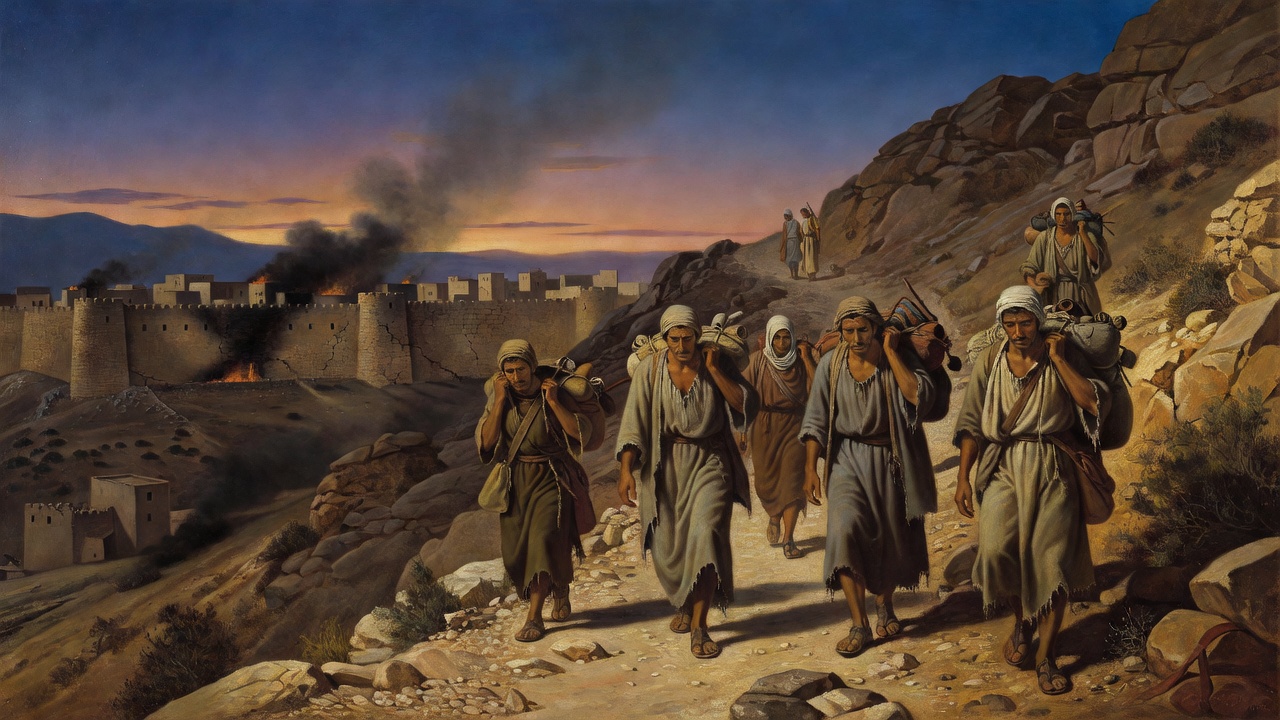
The Oracle Concerning Moab
- Moab was a territory situated east of the Dead Sea and the Jordan River, containing ancient settlements such as Ar, Kir, and Medeba. In this chapter, the prophet laments the sudden overnight destruction and wailing throughout these Moabite towns and high places.Sources: Moab · Medeba · the Bible text itself
- The chapter depicts traditional ancient mourning rituals practiced across the region in times of catastrophe. As grief overtakes the land, the people of Moab shave their heads, cut off their beards, and put on sackcloth while weeping publicly in the squares and on flat rooftops.Sources: the Bible text itself
- The city of Dibon, situated north of the Arnon River and east of the Dead Sea, is also identified as Dimon in Isaiah 15:9. The oracle vividly portrays the severity of the invasion by describing the waters of Dimon filled with blood while surviving refugees flee.Sources: Dibon · the Bible text itself
Notes written with AI assistance from open sources (Theographic Bible Metadata, CC BY-SA 4.0; Easton’s Bible Dictionary, public domain) and reviewed before publishing.
Places in this chapter
- Moab · Today: Moab 1 · 31.181, 35.701 · verses 1, 2, 4, 5, 8, 9
- Dibon · Today: Tall Dhiban · 31.502, 35.777 · verse 2
- Medeba · Today: Madaba · 31.716, 35.795 · verse 2
Only places identified with high confidence are shown (90% or more according to the scholarly sources compiled by OpenBible). Period map: DARE (Digital Atlas of the Roman Empire), CC BY 4.0; modern map: © OpenStreetMap contributors; places: OpenBible.info (CC BY 4.0).
Credits and license for this translation
Baibala Hemolele
The Holy Bible in the Hawaiian language of the United States, 1868 revision
Public Domain
Language: 'Olelo Hawai'i (Hawaiian)
Translation by: na na misionari i pai
2015-11-10
Source: http://ebible.org/haw1868/ · eBible.org