Hosea 3
Baibala Hemolele · Tap a verse to see its cross-references.
1A LAILA olelo mai la o Iehova ia'u, E hele hoi, e aloha aku i ka wahine i alohaia e ka hoalauna, aka, ke moe kolohe nae: E like me ke aloha o Iehova i na mamo a Iseraela, I ka poe e huli ana i na akua e, A e makemake hoi i na pai huawaina.
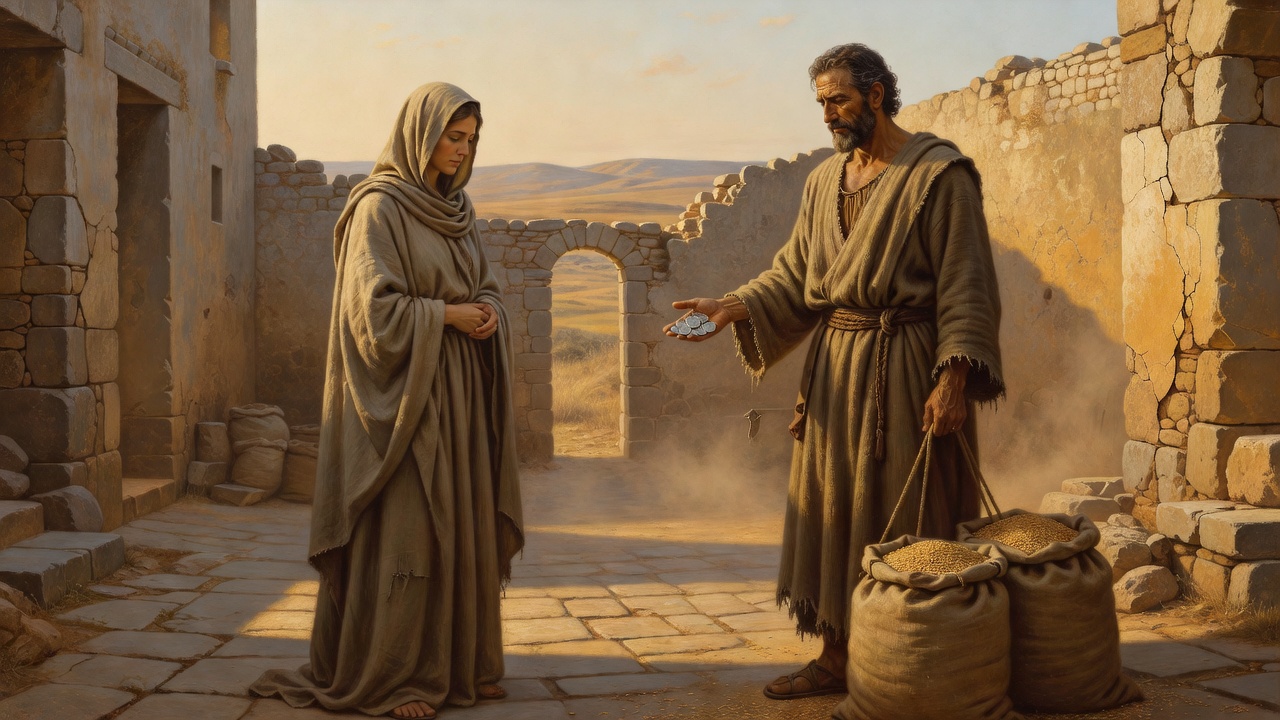
2A kuai aku la au ia ia na'u i na kala he umikumamalua a me ka homera a me ka hapalua o ka homera bale:
3A i aku la au ia ia, E kali oe ia'u i na la he nui, Aole oe e hele i ka moe kolohe, Aole oe e lilo i ke kanaka e ae: Pela hoi e lilo ai au nau.
4No ka mea, he nui na la e noho ai na mamo a Iseraela, aohe alii, aohe haku, aohe mohai, aohe kii, aohe epoda, aohe terapima:
5Mahope iho e huli mai na mamo a Iseraela, a imi ia Iehova ko lakou Akua, a me Davida ko lakou alii; A e makau lakou ia Iehova, a me kona lokomaikai i na la mahope.
Did you know?
A Symbolic Redemption
- In Hosea 3, the prophet is commanded to buy back his unfaithful wife, paying fifteen shekels of silver along with a homer and a lethech of barley. This personal act serves as a living illustration of God's enduring love for Israel despite the nation's unfaithfulness and devotion to other gods.Sources: the Bible text itself
- The chapter foretells a long period during which the Israelites would live without king, prince, sacrifice, sacred pillar, ephod, or idol. Afterward, they are prophesied to return in reverence to seek the LORD and David their king in the last days.Sources: the Bible text itself
Notes written with AI assistance from open sources (Theographic Bible Metadata, CC BY-SA 4.0; Easton’s Bible Dictionary, public domain) and reviewed before publishing.
Credits and license for this translation
Baibala Hemolele
The Holy Bible in the Hawaiian language of the United States, 1868 revision
Public Domain
Language: 'Olelo Hawai'i (Hawaiian)
Translation by: na na misionari i pai
2015-11-10
Source: http://ebible.org/haw1868/ · eBible.org