Amos 6
Baibala Hemolele · Tap a verse to see its cross-references.
1A UWE ka poe palaka ma Ziona, A hilinai hoi ma ka mauna o Samaria: Ka poe i oleloia, o na pookela o na lahuikanaka, Io lakou la i hele mai ka Iseraela!
2E hele aku oukou i Kalene, a e nana; A mai laila aku e hele ai oukou i Hamata nui; Alaila, e iho aku i Gata o ko Pilisetia: Ua oi anei ko lakou maikai mamua o ko keia mau aupuni? Ua oi anei ka palahalaha o ko lakou mokuna mamua o ko oukou mokuna?
3Auwe ka poe i hooloihi aku i ka la ino, A hookokoke i ka noho hookaumaha wale;
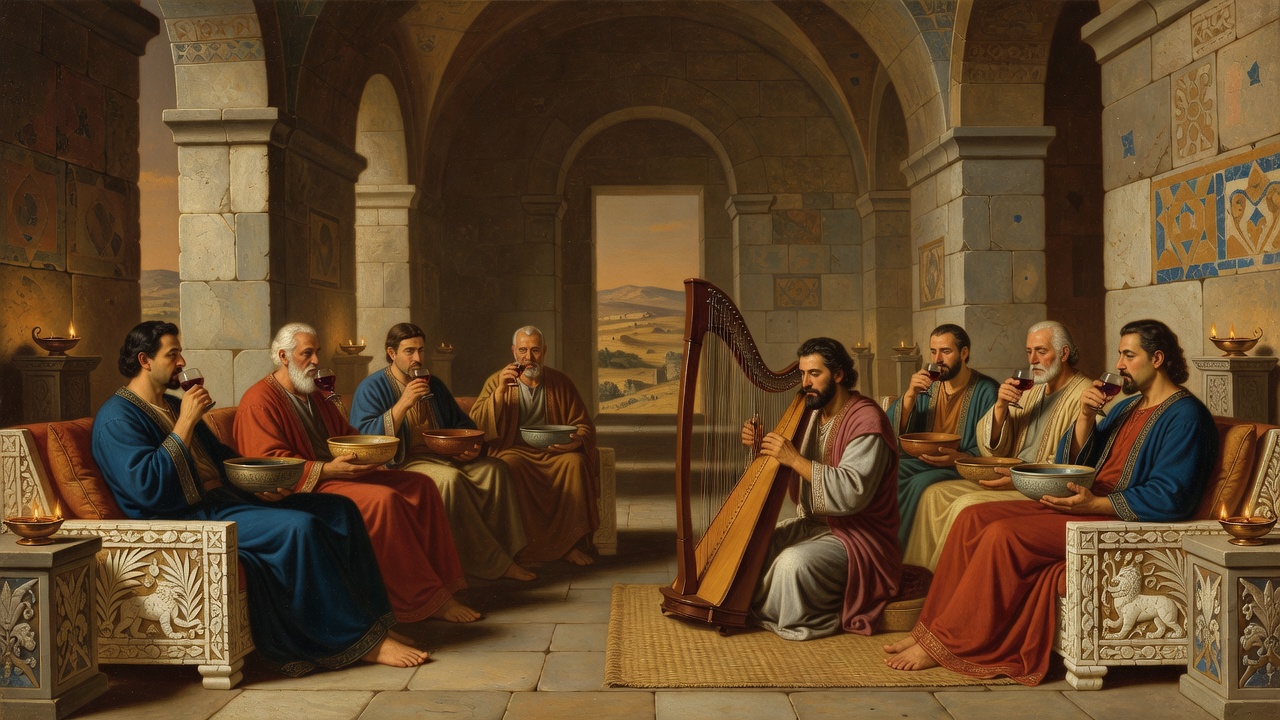
4Ka poe e moe ana maluna o na wahi moe niho elepani, A moe hoolei loa maluna o ko lakou wahi moe, A ai iho i na keikihipa o ka poe hipa, A me na keiki bipi i kupeleia;
5Ka poe mele mamuli o ka viola, A hana lakou no lakou iho i na mea kani e like me Davida;
6Ka poe inu waina maloko o na kiaha, A kahinu ia lakou iho i ka hinu maikai: Aka, aole i kaumaha lakou no ka eha ana o ka Iosepa!
7No ia mea, ano e hele pio aku ai lakou iwaena o ka poe pio mua, A e laweia'ku ka olioli o ka poe moe hoolei loa.
8Ua hoohiki o Iehova ka Haku, ma kona ola, wahi a Iehova, ke Akua o na kaua, Ke hoopailua nei au i ka haaheo o Iakoba, A ke hoowahawaha nei hoi i kona mau halealii; Nolaila, e hoolilo aku ai au i ke kulanakauhale, a me kona mea i piha ai.
9A ina e waihoia na kanaka he umi ma ka hale hookahi, e make no lakou.
10A o ka hoahanau o kona makuakane e lawe aku ia ia, A o ka mea i puhi ia ia, e lawe aku iwaho i na iwi mailoko mai o ka hale, A e olelo aku i ka mea maloko loa o ka hale, Aole anei he mea i koe me oe? e i mai kela, Aole. Alaila, e i aku ia, Hamau; no ka mea, aole e olelo ma ka inoa o Iehova.
11No ka mea, aia hoi, ke kauoha mai nei o Iehova, A e hahau aku ia i ka hale nui me ka nahaha, A i ka hale uuku me ka wawahi.
12E holo anei na lio maluna o na pohaku? E mahi oopalau ia anei malaila me na bipi kauo? No ka mea, ua hoolilo oukou i ka hoopono ana i laau make, A i ka hua o ka pono, i laau awaawa:
13E oukou, ka poe e olioli ana i ka mea ole, Ka poe e olelo, Aole anei kakou i lawe no kakou i na pepeiaohao ma ko kakou ikaika?
14Aka, aia hoi, e hoala ku e auanei au i lahuikanaka ia oukou, e ko ka hale o Iseraela, wahi a Iehova, ke Akua o na kaua; A e hookaumaha lakou ia oukou mai ke komo ana o Hamata a hiki i ke kahawai o ka papu.
Did you know?
Complacency and Impending Exile
- Amos addresses the ruling elite who felt secure in both Zion, the fortified hill of Jerusalem, and Mount Samaria, the capital of the northern kingdom built on an elevated summit by King Omri. Despite the natural defenses and prestige of these cities, their leaders are warned that their ease and overconfidence would end in captivity.Sources: Zion · Samaria · the Bible text itself
- The prophet challenges Israel to look at renowned foreign cities such as Calneh near the Euphrates, Hamath on the Orontes in Upper Syria, and the Philistine stronghold of Gath. These neighboring powers were neither smaller nor less protected, yet they could not escape destruction.Sources: Calneh · Hamath · Gath · the Bible text itself
- Amos criticizes the aristocracy for indulging in extravagant banquets, resting on beds inlaid with ivory, and improvising music on harps like David, all while ignoring the impending ruin of Joseph. The name Joseph here designates the northern tribes of Israel, whose moral decay and social injustice were neglected by their wealthy leaders.Sources: David · Joseph (son of Jacob) · the Bible text itself
Notes written with AI assistance from open sources (Theographic Bible Metadata, CC BY-SA 4.0; Easton’s Bible Dictionary, public domain) and reviewed before publishing.
Places in this chapter
- Samaria · 32.276, 35.195 · verses 1, 8
- Zion · Today: Jerusalem · 31.777, 35.234 · verse 1
- Hamath · Today: Hama · 35.136, 36.750 · verse 2
- Philistia · 31.664, 34.546 · verse 2
Only places identified with high confidence are shown (90% or more according to the scholarly sources compiled by OpenBible). Period map: DARE (Digital Atlas of the Roman Empire), CC BY 4.0; modern map: © OpenStreetMap contributors; places: OpenBible.info (CC BY 4.0).
Credits and license for this translation
Baibala Hemolele
The Holy Bible in the Hawaiian language of the United States, 1868 revision
Public Domain
Language: 'Olelo Hawai'i (Hawaiian)
Translation by: na na misionari i pai
2015-11-10
Source: http://ebible.org/haw1868/ · eBible.org