Malachi 1
Biblica® Buɗaɗɗen Littafi Mai Tsarki, Sabon Rai Don Kowa™ · Tap a verse to see its cross-references.
About this book
About Malachi
- Easton's Bible Dictionary (1897) presents Malachi, a name meaning "messenger" or "angel," as the last of the minor prophets and the writer of the last book of the Old Testament canon. Nothing is known of him beyond what is contained in his book of prophecies.Sources: Easton: Malachi · Malachi
- Some have supposed that the name is simply a title for a messenger of Jehovah, not a proper name. Easton's Bible Dictionary (1897) concludes, however, that there is reason to regard Malachi as the prophet's ordinary name.Sources: Easton: Malachi · Malachi
- Easton's Bible Dictionary (1897) dates the prophecies to about 420 B.C., after Nehemiah's second return from Persia, or possibly before that return. Because Ezra does not mention him and he does not mention the restoration of the temple, the dictionary infers that he prophesied after Haggai and Zechariah.Sources: Easton: Malachi
- Easton's Bible Dictionary (1897) treats Malachi as a contemporary of Nehemiah, comparing Malachi 2:8 with Nehemiah 13:15 and Malachi 2:10-16 with Nehemiah 13:23. It also notes that the temple services were still in existence, citing Malachi 1:10, 3:1 and 3:10.Sources: Easton: Malachi
Notes written with AI assistance from open sources (Theographic Bible Metadata, CC BY-SA 4.0; Easton’s Bible Dictionary, public domain) and reviewed before publishing.
1Annabci, wannan ita ce maganar Ubangiji ga Isra’ila ta wurin Malaki.
An ƙaunaci Yaƙub, aka ƙi Isuwa
2“Na ƙaunace ku, in ji Ubangiji.
“Amma sai kuka ce, ‘Yaya ka ƙaunace mu?’
“Isuwa ba ɗan’uwan Yaƙub ba ne?” In ji Ubangiji. “Duk da haka na ƙaunaci Yaƙub, 3amma na ƙi Isuwa, na kuma mai da ƙasarsa da take kan duwatsu kango, na ba da gādonsa ga dilolin hamada.”
4Edom zai iya cewa, “Ko da yake an ragargaza mu, ai, za mu sāke gina kufanmu.”
Amma ga abin da Ubangiji Maɗaukaki ya ce, “Za su iya gini, amma zan rushe. Za a ce da su Muguwar Ƙasa, mutane da kullum suke a ƙarƙashi fushin Ubangiji. 5Za ku ga wannan da idanunku ku kuma ce, ‘ Ubangiji da girma yake, har gaba da iyakokin Isra’ila ma!’
Hadayu masu aibi
6“Ɗa yakan girmama mahaifinsa, bawa kuma yakan girmama maigidansa. In ni mahaifi ne, ina girman da ya dace da ni? In ni maigida ne, ina girman da ya dace da ni?” In ji Ubangiji Maɗaukaki.
“Ku firistoci, ku ne kuka rena sunana.
“Amma sai kuka ce, ‘Yaya muka rena sunanka?’
7“Kun ajiye abinci mai ƙazanta a kan bagadena.
“Sai kuka ce, ‘Yaya muka ƙazantar da kai?’
“Ta wurin cewa teburin Ubangiji abin reni ne. 8Sa’ad da kuka kawo makauniyar dabba don ku miƙa mini hadaya, wannan daidai ne? Sa’ad da kuka miƙa gurguwar dabba ko marar lafiya, wannan daidai ne? Ku gwada ba wa gwamnanku irin wannan ku gani! Kuna gani zai ji daɗinku? Zai karɓe ku ne?” In ji Ubangiji Maɗaukaki.
9“To, firistoci yanzu ku gwada ku roƙi Allah yă yi mana alheri. Da irin hadayun nan a hannuwanku ne zai ji ku?” In ji Ubangiji Maɗaukaki.
10“Kash, da ma wani daga cikinku ya rufe ƙofofin haikali don kada ku shiga, ku hura wuta marar amfani a bisa bagadena! Ba na jin daɗinku, ba zan kuwa karɓi hadaya daga hannuwanku ba” in ji Ubangiji Maɗaukaki. 11Sunana zai zama mai girma a cikin al’ummai, daga fitowar rana har zuwa fāɗuwarta. A kowane wuri za a miƙa wa sunana turare da tsabtacciyar hadaya domin sunana zai zama mai girma a cikin al’ummai, in ji Ubangiji Maɗaukaki.
12“Amma kun ƙazantar da sunana ta wurin cewa ‘Teburin Ubangiji ya ƙazantu,’ kuka kuma yi magana a kan abincinsa kuna cewa, ‘Abin reni ne.’ 13Kun kuma ce, ‘Mun gaji da irin wannan wahala!’ Kuna hura mini hancin reni,” in ji Ubangiji Maɗaukaki.
“Sa’ad da kuka kawo raunannu, gurguntattun dabbobi, ko kuma dabbobi masu fama da cuta, kuka kuma miƙa su hadaya, kuna gani zan karɓi wannan daga gare ku?” In ji Ubangiji. 14“La’ananne ne macucin da yake da lafiyayyiyar dabba namiji a garkensa wadda ya yi alkawari zai bayar, amma sai ya miƙa hadayar dabba mai aibi ga Ubangiji. Gama ni babban sarki ne, za a kuma ji tsoron sunana a cikin al’ummai,” in ji Ubangiji Maɗaukaki.
Did you know?
Honoring God and Defective Offerings
- The name Malachi means messenger or angel. While some have suggested it was a title rather than a proper name, scholars and traditions widely treat it as the prophet's personal name, placing his ministry during the period of Nehemiah, after Haggai and Zechariah.Sources: Malachi
- The opening dispute recalls the twin brothers Jacob and Esau, the ancestors of Israel and Edom. The text contrasts God's covenant love for Israel with the judgment and desolation coming upon the mountainous region of Edom.Sources: Esau (Edom) · Jacob (Israel) · Edom · the Bible text itself
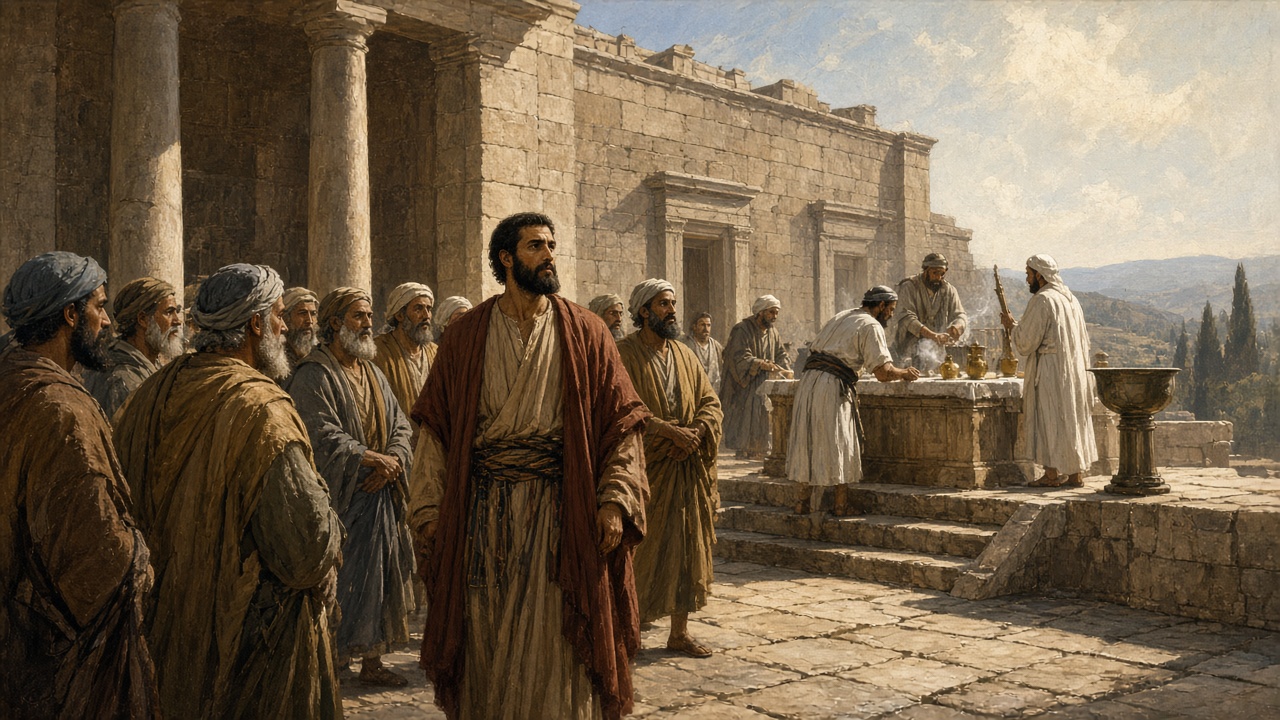
- The priests are rebuked for offering blind, lame, and diseased animals on the altar rather than unblemished livestock. Malachi exposes their disrespect by asking whether a civil governor would accept such inferior gifts.Sources: the Bible text itself
Notes written with AI assistance from open sources (Theographic Bible Metadata, CC BY-SA 4.0; Easton’s Bible Dictionary, public domain) and reviewed before publishing.
Places in this chapter
- Edom · 30.746, 35.604 · verse 4
Only places identified with high confidence are shown (90% or more according to the scholarly sources compiled by OpenBible). Period map: DARE (Digital Atlas of the Roman Empire), CC BY 4.0; modern map: © OpenStreetMap contributors; places: OpenBible.info (CC BY 4.0).
Credits and license for this translation
Biblica® Buɗaɗɗen Littafi Mai Tsarki, Sabon Rai Don Kowa™ Hausa: Biblica® Buɗaɗɗen Littafi Mai Tsarki, Sabon Rai Don Kowa™ (Bible) of Nigeria copyright © 2009, 2020 Biblica, Inc. Language: Hausa Contributor: Biblica, Inc. An sami wannan aiki a sauƙaƙe a ƙarƙashin lasisin Ƙasa da ƙasa na Lasisin Creative Commons Attribution-ShareAlike 4.0 na Ƙasa da ƙasa (CC BY-SA). Don a ga kwafin wannan lasisi, a ziyarci: http://creativecommons.org/licenses/by-sa/4.0 ko kuma a aika ta wasiƙa zuwa ga Creative Commons, PO Box 1866, Mountain View, CA 94042, USA. “Biblica” wani tambarin ne da aka yi wa rajista ta hannun Biblica, Inc., kuma yin amfani da tambarin Biblica® na bukata rubutaccen izinin Biblica, Inc. A ƙarƙashin sharaɗin lasisin CC BY-SA, za ka iya kwafa ka kuma sāke raba wannan aikin da ba a gyaggyara ba muddin ba ka taɓa tambarin nan na Biblica® ba. Idan ka gyara wani kwafi ko ka juya wannan aiki, ta wurin kirkiro da aikin da aka samu, dole ne ka ka cire tambarin Biblica®. A aikin da aka samo, dole ne ka nuna canje-canjen da ka yi, ka kuma nuna aikin haka: “Ainihi aikin ta hannun Biblica, Inc. yana nan kyauta a www.biblica.com da buɗaɗɗen Littafi Mai Tsarki.” Dole sharaɗin neman izini ya fita a kan kan magana ko kuma a shafi neman izinin aiki kamar haka: Biblica® Buɗaɗɗen Littafi Mai Tsarki, Sabon Rai Don Kowa™ Neman RubutaccenIzini © 2009, 2020 ta hannun Biblica, Inc. Biblica® Open Hausa Contemporary Bible™ Copyright © 2009, 2020 by Biblica, Inc. “Biblica” wani tambarin ne da aka yi wa rajista a ofishi Lamba Ƙerar da Tambari a Amurka ta hannun Biblica, Inc. Wanda aka yi amfani ta wurin samun izini. “Biblica” is a trademark registered in the United States Patent and Trademark Office by Biblica, Inc. Used with permission. Dole kuma a samo aikin da ka yi daga ainihin aikin a ƙarƙashin wannan lasisi (CC BY-SA). Idan za ka so ka sanar da Biblica, Inc. dangane da juyinka na wannan aiki, sai ka tuntuɓe mu a https://open.bible/contact-us. This work is made available under the Creative Commons Attribution-ShareAlike 4.0 International License (CC BY-SA). To view a copy of this license, visit http://creativecommons.org/licenses/by-sa/4.0 or send a letter to Creative Commons, PO Box 1866, Mountain View, CA 94042, USA. Biblica® is a trademark registered by Biblica, Inc., and use of the Biblica® trademark requires the written permission of Biblica, Inc. Under the terms of the CC BY-SA license, you may copy and redistribute this unmodified work as long as you keep the Biblica® trademark intact. If you modify a copy or translate this work, thereby creating a derivative work, you must remove the Biblica® trademark. On the derivative work, you must indicate what changes you have made and attribute the work as follows: “The original work by Biblica, Inc. is available for free at www.biblica.com and open.bible.” Notice of copyright must appear on the title or copyright page of the work as follows: Biblica® Buɗaɗɗen Littafi Mai Tsarki, Sabon Rai Don Kowa™ Neman RubutaccenIzini © 2009, 2020 ta hannun Biblica, Inc. Biblica® Open Hausa Contemporary Bible™ Copyright © 2009, 2020 by Biblica, Inc. “Biblica” wani tambarin ne da aka yi wa rajista a ofishi Lamba Ƙerar da Tambari a Amurka ta hannun Biblica, Inc. Wanda aka yi amfani ta wurin samun izini. “Biblica” is a trademark registered in the United States Patent and Trademark Office by Biblica, Inc. Used with permission. You must also make your derivative work available under the same license (CC BY-SA). If you would like to notify Biblica, Inc. regarding your translation of this work, please contact us at https://open.bible/contact-us. This translation is made available to you under the terms of the Creative Commons Attribution Share-Alike license 4.0. You have permission to share and redistribute this Bible translation in any format and to make reasonable revisions and adaptations of this translation, provided that: You include the above copyright and source information. If you make any changes to the text, you must indicate that you did so in a way that makes it clear that the original licensor is not necessarily endorsing your changes. If you redistribute this text, you must distribute your contributions under the same license as the original. Pictures included with Scriptures and other documents on this site are licensed just for use with those Scriptures and documents. For other uses, please contact the respective copyright owners. Note that in addition to the rules above, revising and adapting God's Word involves a great responsibility to be true to God's Word. See Revelation 22:18-19. 2025-05-03
Source: http://ebible.org/hausa/ · eBible.org