Joshua 1
Bib Sen An · Tap a verse to see its cross-references.
About this book
About Joshua
- Easton's Bible Dictionary (1897) explains Joshua's name as "Jehovah is his help" or "Jehovah the Saviour." He was the son of Nun, of the tribe of Ephraim, born in Egypt, and Moses' successor as leader of Israel; the wars of conquest he carried on are recorded in the book that bears his name. That entry does not name the book's author or give a date for its writing.Sources: Easton: Joshua · Joshua
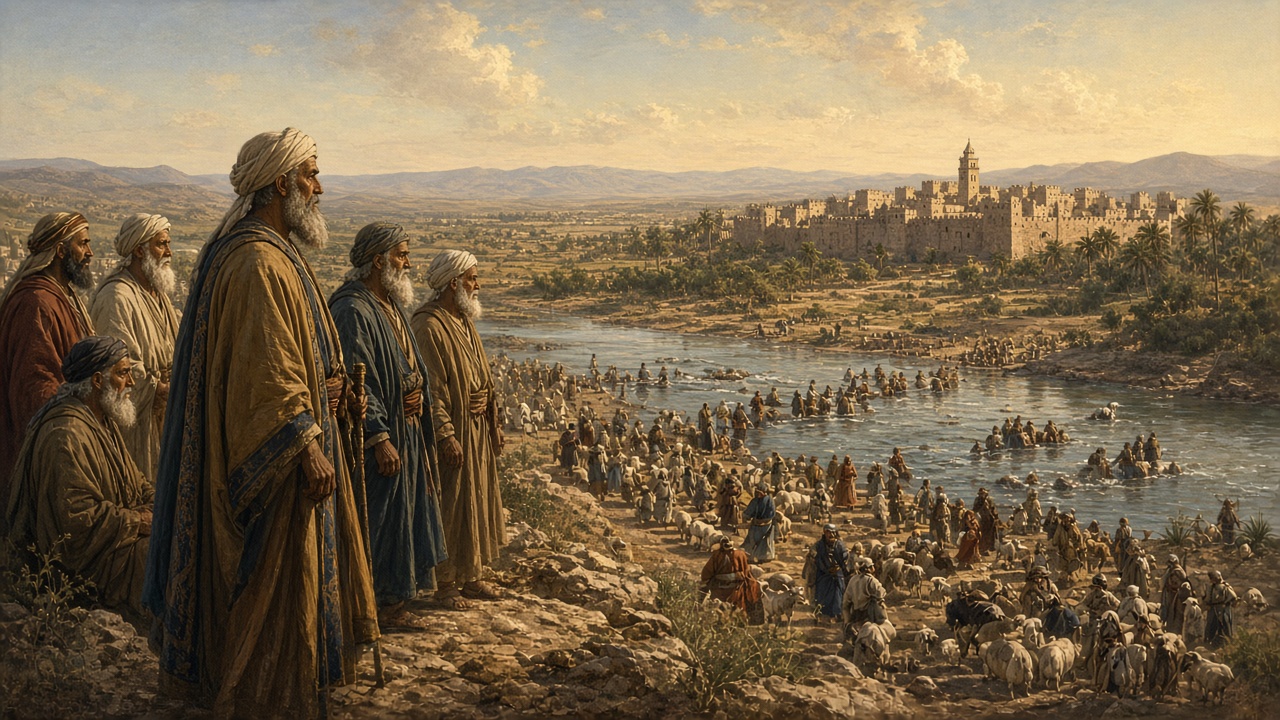
- When Joshua took command, the people were encamped at Shittim. They crossed the Jordan and camped at Gilgal, where, Easton says, he circumcised the people and kept the Passover. Jericho, a fortified city among palm trees about five miles west of the Jordan, is described as Canaan's strongest fortress and the key to western Palestine; Ai, east of Bethel, was the second Canaanite city taken, after an initial defeat.Sources: Easton: Joshua · Jericho · Ai
- Easton's Bible Dictionary (1897) says Joshua conquered six nations and thirty-one kings, then divided the land among the tribes, with Timnath-serah in Mount Ephraim assigned to himself. East of the Jordan, Gilead is described as a mountainous region held by the tribes of Gad and Reuben and the southern part of Manasseh.Sources: Easton: Joshua · Gilead
- Quoting Edersheim, the dictionary says Joshua's name was changed from Oshea, "help," to Jehoshua, "Jehovah is help," and notes that he is called Jesus in Acts 7:45 and Hebrews 4:8. It states that he died at the age of one hundred and ten, twenty-five years after crossing the Jordan, and was buried in his own city of Timnath-serah; of his father Nun, nothing more is recorded than that he was Joshua's father.Sources: Easton: Joshua · Joshua · Nun
- Before leading the conquest, Joshua commanded Israel's host against the Amalekites at Rephidim, served as Moses' minister, and was one of twelve sent to explore Canaan; only he and Caleb brought back an encouraging report. As Easton sketches the book, it runs from the crossing of the Jordan and the taking of Jericho through years of war to the division of the land and Joshua's last address.Sources: Easton: Joshua
Notes written with AI assistance from open sources (Theographic Bible Metadata, CC BY-SA 4.0; Easton’s Bible Dictionary, public domain) and reviewed before publishing.
1Alò, li te vin rive ke apre lanmò Moïse, sèvitè SENYÈ a, ke SENYÈ a te pale avèk Josué, fis a Nun nan, sèvitè Moïse la. Li te di: 2“Moïse, sèvitè Mwen an, gen tan mouri. Pou sa, leve, travèse Jourdain sila a, ou menm avèk tout pèp sa a, nan peyi ke Mwen ap bay a yo menm, a fis Israël yo.
3“Chak kote ke pla pye ou va pile, Mwen ap ba ou li, jis jan ke Mwen te pale a Moïse la. 4Soti nan dezè a ak Liban sila a, menm jis rive nan gran rivyè a, Rivyè Euphrate la, tout peyi Etyen an, jis rive nan Gran Lamè a vè solèy kouche a va tèritwa pa nou. 5Nanpwen moun ki kapab kanpe devan ou pandan tout jou lavi ou. Menm jan ke Mwen te avèk Moïse la, Mwen va avèk ou. Mwen p ap fè bak ni abandone ou. 6Kenbe fèm e pran kouraj, paske ou va bay pèp sa a posesyon a peyi ke Mwen te sèmante a zansèt yo pou M ba yo a.
7“Sèlman rete fò avèk anpil kouraj; fè atansyon pou fè tout sa lalwa ke Moïse, sèvitè Mwen an, te kòmande ou fè a. Pa vire ni adwat ni agoch, pou ou kapab reyisi nenpòt kote ke ou ale.
8“Liv lalwa sila a pa pou janm kite bouch ou, men ou va reflechi sou li lajounen kon lannwit, pou ou kapab fè atansyon pou fè tout sa ki ekri ladann; paske konsa, ou va fè chemen ou yo pwospere e konsa, yo va byen reyisi.
9“Èske mwen pa t kòmande ou? Kenbe fèm e pran kouraj! Pa tranble ni enkyete, paske SENYÈ a, Bondye ou a, avèk ou nenpòt kote ou ale.”
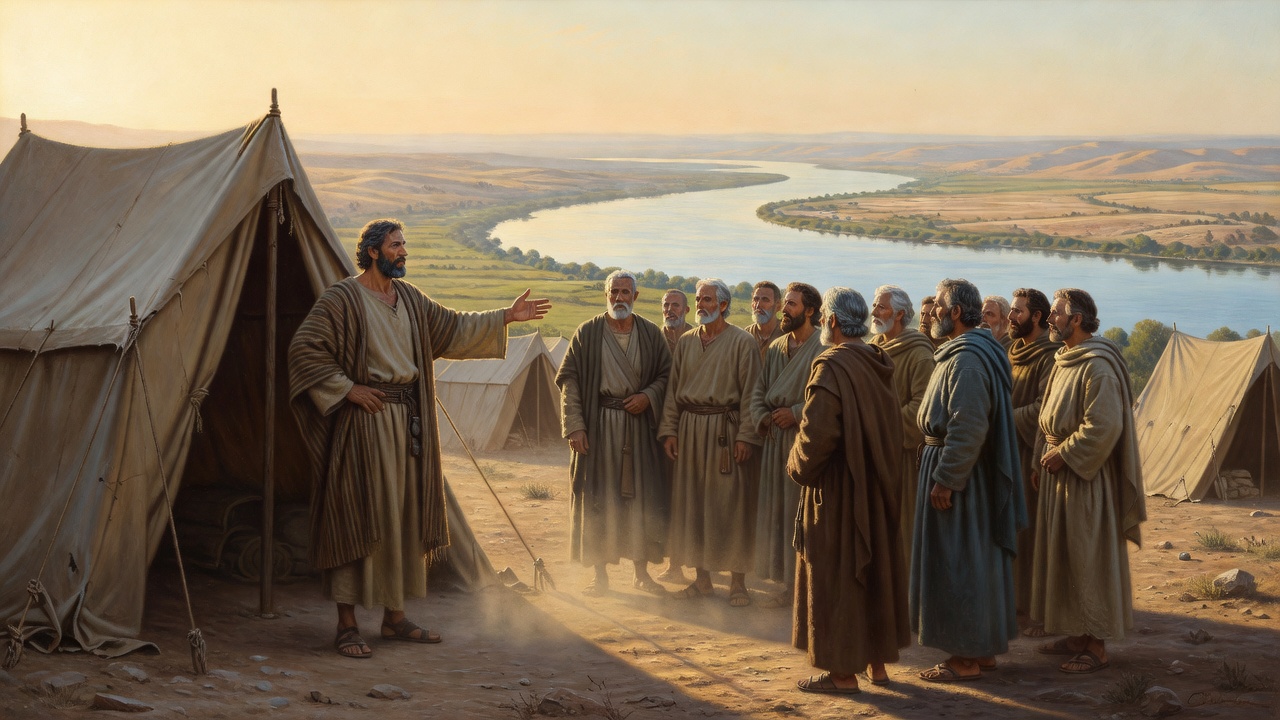
10Konsa, Josué te kòmande ofisye pèp yo. Li te di: 11“Pase nan mitan kan an e kòmande pèp la pou di yo: ‘Prepare pwovizyon nou. Paske nan twa jou, nou va travèse Jourdain sila a, pou antre pran peyi ke SENYÈ a, Bondye nou an, ap bannou pou posede a.’”
12A Ribenit yo avèk Gadit yo ak mwatye tribi Manassé a, Josué te di: 13“Sonje pawòl ke Moïse, sèvitè SENYÈ a, te kòmande nou, lè l te di: ‘SENYÈ a, Bondye nou an, ap bannou repo, e Li va bannou peyi sa a.
14“‘Madanm nou yo, pitit nou yo ak bèt nou yo va rete nan peyi ke Moïse te bannou lòtbò Jourdain an; men nou va travèse devan frè nou yo, prepare an lòd batay la, tout sòlda vanyan nou yo e ou va bay yo soutyen, 15jiskaske SENYÈ a bay frè nou yo repo, tankou nou, epi yo menm tou, yo posede peyi ke SENYÈ a, Bondye nou an, ap bay yo a. Epi nan lè sa a, nou va retounen nan pwòp tèren pa nou an, e posede sa ke Moïse, sèvitè SENYÈ a, te bannou lòtbò Jourdain an, vè solèy leve a.’”
16Yo te reponn Josué e te di: “Tout sa ke ou te kòmande nou, nou va fè l, epi nenpòt kote ke ou voye nou, nou va ale. 17Jis jan ke nou te obeyi Moïse nan tout bagay la, konsa nou va obeyi ou. Sèlman ke SENYÈ a, Bondye nou an, kapab avèk ou tankou Li te avèk Moïse la. 18Nenpòt moun ki fè rebèl kont lòd ou, e ki pa obeyi pawòl ou yo nan tout sa ou kòmande li fè yo, li va vin mete a lanmò. Sèlman, kenbe fèm e pran kouraj.”
Did you know?
Joshua Assumes Leadership
- Joshua, the son of Nun from the tribe of Ephraim, served as Moses' assistant and military commander before being commissioned to succeed him as leader of Israel. His name means "Jehovah is his help" or "Jehovah the Saviour."Sources: Joshua · the Bible text itself
- The territory outlined in God's commission to Joshua stretches from the southern wilderness and the Lebanon mountain range in the north to the Euphrates (called "the great river") in the east and the Mediterranean ("the Great Sea") to the west.Sources: the Bible text itself · Lebanon · Euphrates · Great Sea
- The tribes of Reuben, Gad, and the half-tribe of Manasseh had already received territory east of the Jordan River under Moses. However, their armed warriors were required to cross over ahead of the other tribes to assist them until the entire land was secured.Sources: the Bible text itself · Manasseh (son of Joseph)
Notes written with AI assistance from open sources (Theographic Bible Metadata, CC BY-SA 4.0; Easton’s Bible Dictionary, public domain) and reviewed before publishing.
Places in this chapter
- Jordan · Today: Jordan River · 31.761, 35.558 · verses 2, 11, 14, 15
- Euphrates · Today: Euphrates River · 31.004, 47.442 · verse 4
- Great Sea · Today: Mediterranean Sea · 31.805, 34.170 · verse 4
- Lebanon · 33.540, 35.584 · verse 4
- Negeb · 31.245, 34.841 · verse 4
- Syria · Today: Aram · 33.511, 36.306 · verse 4
Only places identified with high confidence are shown (90% or more according to the scholarly sources compiled by OpenBible). Period map: DARE (Digital Atlas of the Roman Empire), CC BY 4.0; modern map: © OpenStreetMap contributors; places: OpenBible.info (CC BY 4.0).
Credits and license for this translation
Bib Sen An
The Holy Bible in Haitian Creole, 2023 update
copyright © 2017-2023 Ron Smith
Language: Kreyòl Ayisyen (Haitian)
Translation by: Ron Smith
Contributor: Felix Nixon
This translation is made available to you under the terms of the
Creative Commons Attribution Share-Alike license 4.0.
You have permission to share and redistribute this Bible translation in any format and to make reasonable revisions and adaptations of this translation, provided that:
You include the above copyright and source information.
If you make any changes to the text, you must indicate that you did so in a way that makes it clear that the original licensor is not necessarily endorsing your changes.
If you redistribute this text, you must distribute your contributions under the same license as the original.
Pictures included with Scriptures and other documents on this site are licensed just for use with those Scriptures and documents.
For other uses, please contact the respective copyright owners.
Note that in addition to the rules above, revising and adapting God's Word involves a great responsibility to be true to God's Word. See Revelation 22:18-19.
2026-06-11
Source: http://ebible.org/hatbsa/ · eBible.org