Jonah 4
Bib Sen An · Tap a verse to see its cross-references.
1Men sa te fè Jonas pa kontan anpil e li te vin fache. 2Li te priye a SENYÈ a. Li te di: “Souple, SENYÈ, èske se pa sa ke m te di lè m te nan pwòp peyi mwen an? Alò, se pou m te evite sa ki fè m te sove ale rive Tarsis. Paske mwen te konnen ke Ou se yon Bondye ki plen gras ak mizerikòd, ki lan nan kòlè, ki ranpli ak lanmou dous, e Ou se Sila ki ralanti selon malè a. 3Alò, pou sa, koulye a, O SENYÈ, souple, pran lavi mwen. Paske lanmò pi bon ke lavi pou mwen.”
4SENYÈ a te di: “Èske ou gen bon rezon pou ou fache a?”
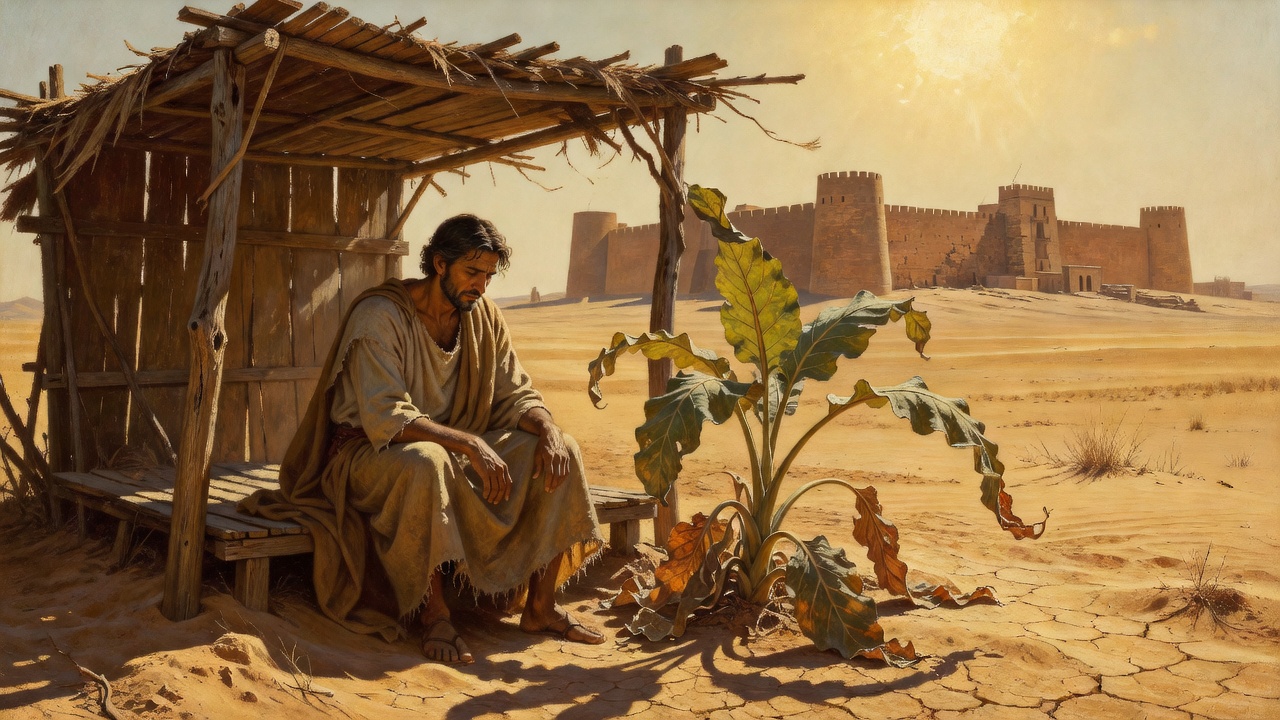
5Epi Jonas te sòti nan vil la e te chita sou kote lès la. La, li te fè yon tonèl pou li menm, e li te chita anba l nan lonbraj jis pou l ta wè sa ki ta rive nan vil la. 6Konsa, SENYÈ Bondye a te chwazi yon plant lyann. Lyann nan te monte grandi sou Jonas pou l ta sèvi kon abri sou tèt li, pou delivre l de mekontantman li an. Epi lyann nan te fè Jonas byen kontan. 7Men Bondye te chwazi yon cheni nan granmmaten nan pwochen jou a. Li te atake lyann nan e li te vin fennen. 8Lè solèy la te leve, Bondye te chwazi yon van lès byen cho, solèy la te bat tèt Jonas jiskaske li te vin fèb. Konsa, li t ap mande ak tout nanm li, e te di: “Lanmò pi bon ke lavi pou mwen.”
9Epi Bondye te di a Jonas: “Èske ou gen bon rezon pou fache akoz lyann nan?”
Jonas te reponn: “Mwen gen bon rezon pou m fache, menm jiska lanmò.”
10Konsa, SENYÈ a te di: “Ou te gen konpasyon pou plant sila ke ou pa t fè okenn travay pou li a, ke ou menm pa t fè grandi, ki te vin parèt nan yon nwit e te vin peri nan yon nwit. 11Èske Mwen pa ta dwe gen konpasyon pou Ninive, gwo vil la, nan sila ki genyen plis ke san-ven-mil moun ki pa konn diferans antre men dwat ak men goch yo ak yon gwo kantite bèt, tou?”
Did you know?
Jonah's Anger and God's Compassion
- Jonah admits that he originally attempted to flee toward Tarshish precisely because he knew God is gracious, compassionate, slow to anger, and relents from sending disaster. His distress arose when God chose to spare Nineveh rather than destroy it.Sources: the Bible text itself · Tarshish
- Nineveh, the flourishing capital of the Assyrian empire, is described at the conclusion of the book as home to more than 120,000 people who cannot discern between their right and left hand, along with many cattle. God highlights this massive population to contrast divine compassion with Jonah's concern for a single withered plant.Sources: the Bible text itself · Nineveh
Notes written with AI assistance from open sources (Theographic Bible Metadata, CC BY-SA 4.0; Easton’s Bible Dictionary, public domain) and reviewed before publishing.
Places in this chapter
- Nineveh · 36.359, 43.153 · verse 11
Only places identified with high confidence are shown (90% or more according to the scholarly sources compiled by OpenBible). Period map: DARE (Digital Atlas of the Roman Empire), CC BY 4.0; modern map: © OpenStreetMap contributors; places: OpenBible.info (CC BY 4.0).
Credits and license for this translation
Bib Sen An
The Holy Bible in Haitian Creole, 2023 update
copyright © 2017-2023 Ron Smith
Language: Kreyòl Ayisyen (Haitian)
Translation by: Ron Smith
Contributor: Felix Nixon
This translation is made available to you under the terms of the
Creative Commons Attribution Share-Alike license 4.0.
You have permission to share and redistribute this Bible translation in any format and to make reasonable revisions and adaptations of this translation, provided that:
You include the above copyright and source information.
If you make any changes to the text, you must indicate that you did so in a way that makes it clear that the original licensor is not necessarily endorsing your changes.
If you redistribute this text, you must distribute your contributions under the same license as the original.
Pictures included with Scriptures and other documents on this site are licensed just for use with those Scriptures and documents.
For other uses, please contact the respective copyright owners.
Note that in addition to the rules above, revising and adapting God's Word involves a great responsibility to be true to God's Word. See Revelation 22:18-19.
2026-06-11
Source: http://ebible.org/hatbsa/ · eBible.org