Jeremiah 9
Bib Sen An · Tap a verse to see its cross-references.
1O ke tèt mwen te dlo,
e ke zye m yo te yon fontèn dlo,
pou m ta ka kriye lajounen kon lannwit
pou lanmò a fi a pèp mwen an!
2O ke m ta gen nan dezè a,
yon plas pou moun k ap vwayaje rete,
pou m ta ka sòti nan mitan pèp mwen an.
Pou m kite yo nèt!
Paske yo tout se adiltè, yon bann moun trèt.
3“Yo koube lang yo konsi se banza pou tire ak fo prensip.
Yo fò nan peyi a, men pa pou verite a.
Yo kite yon kalite mal pou antre nan yon lòt,
e yo pa rekonèt Mwen”, deklare SENYÈ a.
4“Fòk chak byen veye kont vwazen li,
pou l pa mete konfyans nan okenn frè;
akoz tout frè yo aji nan koken,
e tout vwazen yo ap voye kout lang.
5Yo tout pase vwazen parèy yo nan rizib.
Yo refize pale verite.
Yo fin enstwi pwòp lang yo pou pale manti;
yo vin fatige nèt nan fè inikite.
6Abitasyon ou se nan mitan desepsyon.
Nan desepsyon yo refize rekonèt Mwen”, deklare SENYÈ a.
7Pou sa, konsa pale SENYÈ dèzame yo:
“Gade byen, Mwen va fann yo nèt, e fè yo pase a leprèv;
paske se kisa anplis ke M ka fè, akoz fi a pèp Mwen an?
8Lang pa yo se yon flèch mòtèl;
li pale manti.
Avèk bouch li, li pale lapè ak vwazen li,
men anndan li fè plan anbiskad pou pran l.
9Èske mwen p ap pini yo pou bagay sa yo?” deklare SENYÈ a.
“Sou yon nasyon konsa, èske Mwen p ap pran vanjans?
10Paske mòn yo va tanmen fè gwo kri
ak dèy pou patiraj dezè a,
gwo plent, akoz yo vin brile nèt,
jiskaske pèsòn pa pase ladann.
Menm vwa a bèt yo p ap tande la ankò;
ni zwazo syèl yo ak bèt latè yo fin sove ale;
yo ale nèt.
11“Mwen va fè Jérusalem tounen yon pil mazi,
yon kote abandone pou chen mawon.
Mwen va fè vil Juda yo yon kote ki kraze nèt,
san pèsòn pou rete ladann.”
12Ki moun saj ki ka konprann sa a? Epi kilès li menm bouch SENYÈ a te pale, pou l ka fè deklarasyon sa a? Poukisa peyi a vin detwi konsa, brile nèt kon yon dezè, pou pèsòn pa menm pase ladann?
13SENYÈ a di: “Akoz yo te abandone Lalwa ke Mwen te mete devan yo a e yo pa t obeyi vwa Mwen, ni mache selon li, 14men te mache dèyè tèt di a pwòp kè yo, e dèyè Baal yo, kon papa yo te montre yo a.” 15Pou sa, pale SENYÈ dèzame yo, Bondye Israël la: “Gade byen, Mwen va fè yo manje bwa anmè e bay yo dlo anpwazone pou yo bwè. 16Mwen va gaye yo pami nasyon, ke ni yo menm, ni papa zansèt yo pa t janm konnen. Mwen va voye nepe pou swiv yo jiskaske yo vin detwi nèt.”
17Konsa pale SENYÈ dèzame yo:
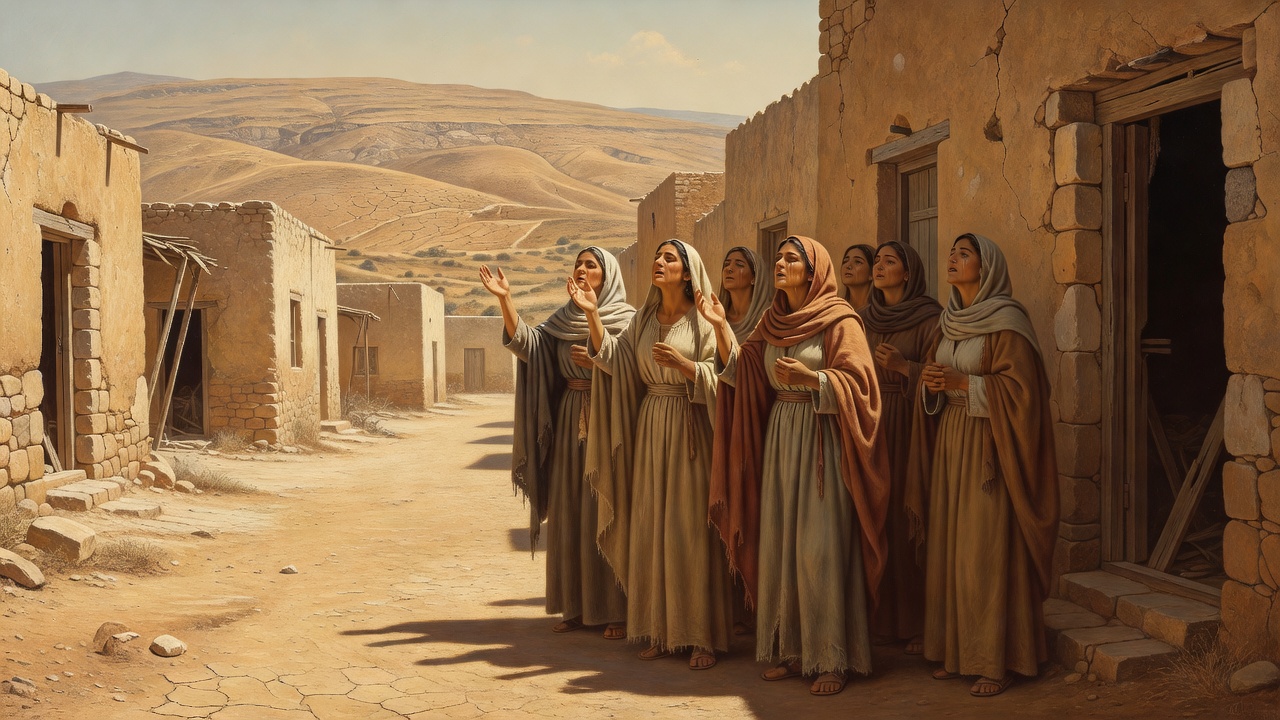
“Konsidere e rele fanm pou fè dèy, pou yo ka vini.
Voye fanm enstwi sa yo, pou yo ka vini!
18Kite yo fè vit pran rele anmwey pou nou,
pou zye nou ka vide dlo e pòpyè zye nou ka
fè dlo kouri desann.
19Paske vwa ki rele anmwey la tande soti nan Sion:
‘A la detwi nou vin detwi nèt!
Nou te vin mete nan gwo wont,
paske nou te kite peyi la,
akoz yo te kraze tout lakay nou yo.’”
20Alò tande byen pawòl SENYÈ a, O fanm yo.
Kite zòrèy nou resevwa pawòl bouch Li.
Montre fi nou yo jan pou yo fè dèy.
Chak moun montre vwazen li yon chan lamante.
21Paske lanmò fin antre nan fenèt nou nèt.
Li te antre nan palè nou yo
pou fèmen timoun yo andedan
ak jenn gason yo nan lari.
22Pale, “Konsa di SENYÈ a,
“‘Kadav moun yo va tonbe tankou fimye bèt nan chan,
tankou men plen sereyal lè moun fin rekòlt la.
Pèsòn p ap ranmase yo.’”
23Konsa pale SENYÈ a:
“Pa kite yon nonm saj vin ògeye nan sajès li.
Pa kite yon nonm pwisan vin ògeye nan fòs li,
ni yon nonm rich vin ògeye nan richès li.
24Men kite sila ki vin ògeye a, vin ògeye nan sa;
ke li gen konprann, e li rekonèt Mwen,
ke Mwen se SENYÈ a,
ki aji nan lanmou dous, jistis,
ak ladwati sou latè a;
paske Mwen pran gwo plezi nan bagay sa yo,” deklare SENYÈ a.
25Gade byen, gen jou k ap vini, “deklare SENYÈ a, ke Mwen va pini tout sila ki te sikonsi, men vrèman yo pa sikonsi— 26Égypte ak Juda, Édom ak fis a Ammon yo e Moab ak tout sila k ap viv nan dezè yo, k ap taye cheve sou de bò tanp yo; paske tout nasyon yo ensikonsi e tout lakay Israël se ensikonsi nan kè.”
Did you know?
A Lament over Deceit and Ruin
- In ancient Near Eastern culture, skilled professional mourning women were summoned during major calamities and funerals to lead communal laments and teach dirges to the next generation.Sources: the Bible text itself
- The passage warns against boasting in human wisdom, military power, or material riches, presenting the true knowledge of God—characterized by loving devotion, justice, and righteousness—as the only legitimate ground for confidence.Sources: the Bible text itself
- The chapter groups Judah with its regional neighbors—Egypt, Edom, Ammon, and Moab—warning that external religious marks like physical circumcision offer no protection if the heart remains uncircumcised and disobedient.Sources: the Bible text itself · Edom · Ammon · Moab
Notes written with AI assistance from open sources (Theographic Bible Metadata, CC BY-SA 4.0; Easton’s Bible Dictionary, public domain) and reviewed before publishing.
Places in this chapter
- Jerusalem · 31.777, 35.234 · verse 11
- Zion · Today: Jerusalem · 31.777, 35.234 · verse 19
- Ammon · 31.955, 35.934 · verse 26
- Edom · 30.746, 35.604 · verse 26
- Egypt · 30.129, 31.308 · verse 26
- Moab · Today: Moab 1 · 31.181, 35.701 · verse 26
Only places identified with high confidence are shown (90% or more according to the scholarly sources compiled by OpenBible). Period map: DARE (Digital Atlas of the Roman Empire), CC BY 4.0; modern map: © OpenStreetMap contributors; places: OpenBible.info (CC BY 4.0).
Credits and license for this translation
Bib Sen An
The Holy Bible in Haitian Creole, 2023 update
copyright © 2017-2023 Ron Smith
Language: Kreyòl Ayisyen (Haitian)
Translation by: Ron Smith
Contributor: Felix Nixon
This translation is made available to you under the terms of the
Creative Commons Attribution Share-Alike license 4.0.
You have permission to share and redistribute this Bible translation in any format and to make reasonable revisions and adaptations of this translation, provided that:
You include the above copyright and source information.
If you make any changes to the text, you must indicate that you did so in a way that makes it clear that the original licensor is not necessarily endorsing your changes.
If you redistribute this text, you must distribute your contributions under the same license as the original.
Pictures included with Scriptures and other documents on this site are licensed just for use with those Scriptures and documents.
For other uses, please contact the respective copyright owners.
Note that in addition to the rules above, revising and adapting God's Word involves a great responsibility to be true to God's Word. See Revelation 22:18-19.
2026-06-11
Source: http://ebible.org/hatbsa/ · eBible.org