Ezekiel 44
Bib Sen An · Tap a verse to see its cross-references.
1Nan lè sa a, Li te mennen m retounen pa chemen a pòtay eksteryè sanktyè a, ki bay fas li vè lès la; epi li te fèmen. 2SENYÈ a te di mwen: “Pòtay sa a va fèmen. Li p ap louvri, ni pèsòn p ap janm antre pa li, paske SENYÈ Bondye Israël la te, antre pa li. Akoz sa, li va fèmen. 3Pou prens lan, li va chita ladann tankou prens pou manje pen devan SENYÈ a. Li va antre pa chemen galri pòtay la, e li va sòti pa menm chemen an.”
4Epi li te mennen m pa chemen pòtay nò a pou rive devan kay la. Konsa, mwen te gade e vwala glwa SENYÈ a te ranpli lakay SENYÈ a, e mwen te tonbe sou figi m.
5SENYÈ a te di mwen: “Fis a lòm, make byen, gade ak zye ou, e tande ak zòrèy ou tout sa ke M di ou konsènan tout règleman lakay SENYÈ yo, e konsènan tout lwa li yo. Epi make byen antre kay la, ak tout sòti ki gen nan sanktyè a. 6Ou va di a sila k ap fè rebèl yo: ‘Senyè BONDYE a di: “Se kont! Sispann fè tout abominasyon nou yo, O lakay Israël. 7Lè nou te mennen etranje yo antre, ensikonsi nan kè yo ak ensikonsi nan chè yo, pou antre nan sanktyè Mwen an, pou pwofane li, menm lakay Mwen an, lè nou te ofri manje Mwen an, grès ak san an; paske yo te anile akò Mwen an—tout sa, anplis de tout abominasyon nou yo. 8Epi nou pa t rete responsab nou menm, de bagay sen Mwen yo, men te mete etranje yo responsab de sanktyè mwen an.” 9Konsa pale Senyè BONDYE a: “Okenn etranje ensikonsi nan kè, ak ensikonsi nan chè, tout etranje ki pami fis Israël yo, p ap antre nan sanktyè pa M nan.
10“‘“Men Levit ki te ale lwen Mwen lè Israël te vin egare a, ki te vin egare kite Mwen ki t ap kouri dèyè zidòl yo, va pote pinisyon pou inikite pa yo. 11Malgre sa, yo va fè sèvis nan sanktyè Mwen an, pou gen zye sou pòtay kay yo, ak fè sèvis nan kay la. Yo va touye ofrann brile ak sakrifis pou pèp la, e yo va kanpe devan yo pou fè sèvis. 12Akoz yo te fè sèvis pou yo devan zidòl yo, e yo te vin yon wòch chite, inikite, pou lakay Israël; akoz sa, Mwen te sèmante kont yo”, deklare Senyè BONDYE a: “Ke yo va pote pinisyon pou inikite pa yo a. 13Konsa, yo p ap vin rapwoche de Mwen, pou sèvi kon prèt pou Mwen, ni vin rapwoche de okenn nan bagay sen Mwen yo, vè bagay ki sen pase tout lòt yo; men yo va pote wont ak abominasyon ke yo te fè yo. 14Malgre sa, Mwen va deziye yo pou kenbe responsabilite kay la, pou tout sèvis ak tout sa k ap fèt ladann.
15“‘“Men prèt Levit yo, fis a Tsadok yo, ki te kenbe responsabilite sanktyè pa M nan lè fis Israël yo te vin egare kite Mwen an, va vin rapwoche de Mwen pou fè sèvis pou Mwen. Yo va kanpe devan M pou ofri Mwen grès ak san an,” deklare Senyè BONDYE a. 16Yo va antre nan sanktyè Mwen an. Yo va vin rapwoche de tab Mwen an pou fè sèvis Mwen, e kenbe responsabilite Mwe,n an.
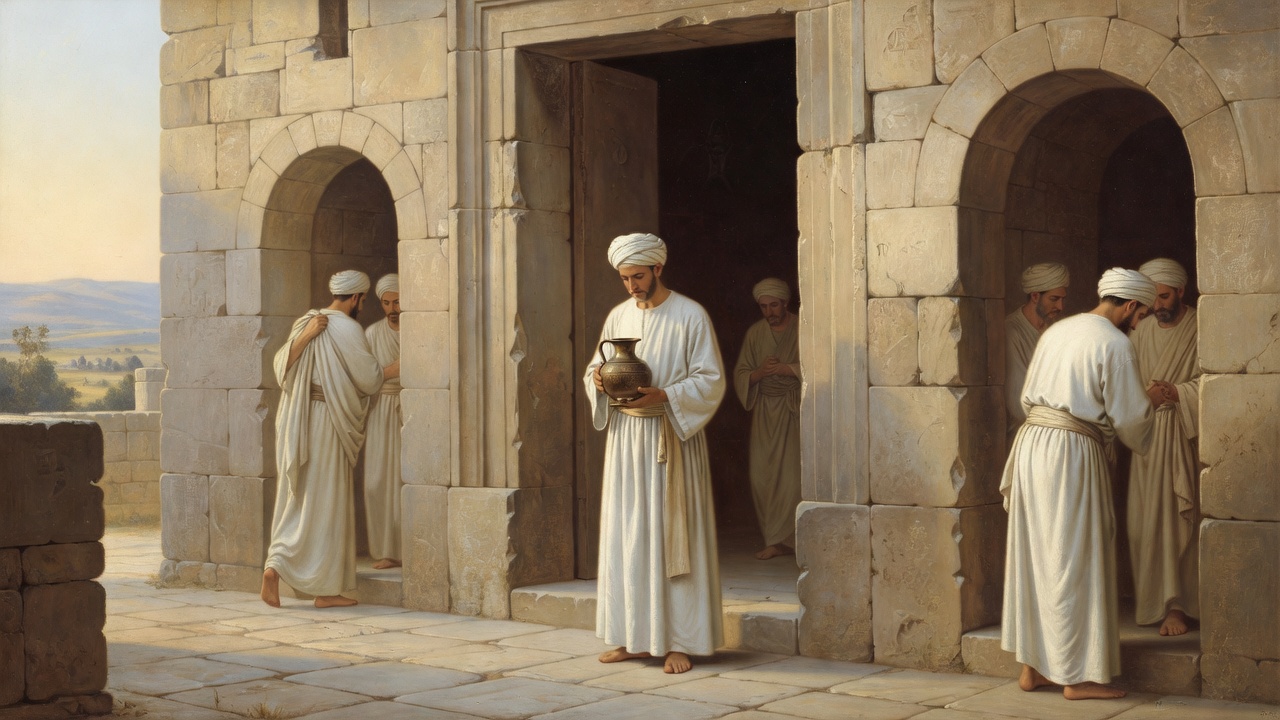
17“‘“Li va fèt ke lè yo antre nan pòtay lakou enteryè yo, yo va abiye ak vètman len. Epi lenn p ap sou yo pandan y ap fè sèvis nan pòtay lakou enteryè yo ak anndan kay yo. 18Mòso twal an len va sou tèt yo e souvètman fèt ak len va nan ren yo. Yo p ap abiye ak okenn bagay ki pou fè yo swe. 19Lè yo sòti deyò vè pèp la, nan lakou deyò a, yo va retire vètman yo te sèvi nan fè sèvis la, e lage yo nan chanm sen yo. Yo va mete lòt vètman pou yo pa transmèt sentete a pèp la avèk vètman yo.
20“‘“Anplis, yo p ap pase razwa nan tèt yo, ni yo p ap kite cheve a vin long. Se sèl cheve nan tèt yo y ap koupe. 21Ni okenn nan prèt yo pa pou bwè diven pandan y ap antre nan lakou enteryè a. 22Epi yo p ap marye ak yon vèv ni yon fanm divòse, men yo va pran vyèj ki soti nan desandan lakay Israël yo, oswa yon vèv ki se vèv a yon prèt. 23Anplis, yo va enstwi pèp Mwen an pou distenge antre sa ki sen ak sa ki pwofàn, e fè yo distenge antre sa ki pa pwòp ak sa ki pwòp.
24“‘“Nan yon diskisyon, yo va kanpe pran plas yo pou jije. Yo va jije sa selon òdonans Mwen yo. Yo va anplis, kenbe lwa M yo, ak règleman Mwen yo, nan tout fèt chwazi Mwen yo. Yo va kenbe tout Saba Mwen yo sen.
25“‘“Yo p ap ale kote yon moun mouri pou yo vin souye; sepandan, pou papa, manman, pou fis, fi, pou frè, oswa yon sè ki pa t gen mari, yo kapab souye tèt yo. 26Aprè li fin netwaye, sèt jou va ekoule pou li. 27Nan jou ke li antre nan sanktyè a, nan lakou enteryè pou fè sèvis nan sanktyè a, li va ofri lofrann peche pa li a”, deklare Senyè BONDYE a.
28“‘Epi sa va konsidere kon yon eritaj pou yo, ke se Mwen ki eritaj yo; epi ou p ap bay yo okenn posesyon an Israël——se Mwen menm ki posesyon yo. 29Yo va manje ofrann sereyal la, ofrann peche a, ak ofrann koupabilite; epi tout bagay ki konsakre an Israël va pou yo. 30Premye a tout premye fwi tout kalite ak tout don a tout kalite soti nan tout sa nou kontribye va pou prèt yo. Nou va, anplis, bay prèt la premye nan bòl farin nou yo, pou fè benediksyon vin poze sou lakay nou. 31Prèt yo p ap manje okenn zwazo, bèt ki te mouri pa mò natirèl, oswa ki te dechire an mòso.
Did you know?
Sanctuary Ordinances and the Priesthood
- The prophet distinguishes between the general Levites and the priests descended from Zadok. Because Zadok's line remained faithful when Israel strayed, they alone were granted the privilege of entering the inner sanctuary and ministering at the altar.Sources: Zadok · the Bible text itself
- Priests entering the inner court were required to wear pure linen garments and turbans rather than wool to avoid perspiring. Before returning to the outer court among the people, they had to change into everyday clothing in the holy chambers so that their consecrated garments would not transmit holiness to the people.Sources: the Bible text itself
- The outer east gate of the temple was permanently closed because the glory of the God of Israel had entered through it. Only the prince was permitted to sit within its portico to partake of communal meals before the Lord.Sources: the Bible text itself
Notes written with AI assistance from open sources (Theographic Bible Metadata, CC BY-SA 4.0; Easton’s Bible Dictionary, public domain) and reviewed before publishing.
Places in this chapter
- Most Holy Place · Today: on Mount Moriah · 31.778, 35.236 · verse 13
- Holy Place · Today: on Mount Moriah · 31.778, 35.236 · verse 27
Only places identified with high confidence are shown (90% or more according to the scholarly sources compiled by OpenBible). Period map: DARE (Digital Atlas of the Roman Empire), CC BY 4.0; modern map: © OpenStreetMap contributors; places: OpenBible.info (CC BY 4.0).
Credits and license for this translation
Bib Sen An
The Holy Bible in Haitian Creole, 2023 update
copyright © 2017-2023 Ron Smith
Language: Kreyòl Ayisyen (Haitian)
Translation by: Ron Smith
Contributor: Felix Nixon
This translation is made available to you under the terms of the
Creative Commons Attribution Share-Alike license 4.0.
You have permission to share and redistribute this Bible translation in any format and to make reasonable revisions and adaptations of this translation, provided that:
You include the above copyright and source information.
If you make any changes to the text, you must indicate that you did so in a way that makes it clear that the original licensor is not necessarily endorsing your changes.
If you redistribute this text, you must distribute your contributions under the same license as the original.
Pictures included with Scriptures and other documents on this site are licensed just for use with those Scriptures and documents.
For other uses, please contact the respective copyright owners.
Note that in addition to the rules above, revising and adapting God's Word involves a great responsibility to be true to God's Word. See Revelation 22:18-19.
2026-06-11
Source: http://ebible.org/hatbsa/ · eBible.org