Deuteronomy 23
Bib Sen An · Tap a verse to see its cross-references.
1“Nanpwen pèsòn avèk boul grenn li kraze oswa koupe ki va antre nan asanble SENYÈ a.
2Nanpwen pèsòn ki ne nan yon relasyon ilejitim ki va antre nan asanble SENYÈ a. Ni okenn nan desandan li yo menm jis rive nan dizyèm jenerasyon p ap antre nan asanble SENYÈ a.
3Nanpwen Amonit ni Moabit ki va antre nan asanble SENYÈ a. Okenn nan desandan li yo menm jis rive nan dizyèm jenerasyon p ap antre nan asanble SENYÈ a, 4akoz yo pa t vin jwenn nou avèk manje ak dlo lè nou te sòti an Égypte la, epi akoz yo te achte sèvis Balaam, fis Beor ki sòti Pethor nan Mésopotamie pou modi nou. 5Sepandan, SENYÈ a, Bondye nou an, pa t dakò tande Balaam. Men SENYÈ a, Bondye nou an, te vire madichon an pou l devni yon benediksyon pou nou akoz SENYÈ nou an renmen nou. 6Nou pa pou chache lapè pou yo, ni pwosperite yo pandan tout jou nou yo.
7Nou pa pou meprize yon Edomit, paske li se frè nou. Nou pa pou meprize yon Ejipsyen, paske nou te yon etranje nan peyi li. 8Fis a twazyèm jenerasyon ki fèt pou yo a kapab antre nan asanble SENYÈ a.
9Lè nou sòti kòm yon lame kont lènmi nou yo, nou va evite tout kalite move bagay. 10Si gen pami nou, yon nonm ki pa pwòp akoz li ejakile nan lannwit; alò, li oblije ale deyò kan an. Li pa kapab reantre nan kan an, 11men li va fèt ke lè aswè rive, li va benyen tèt li avèk dlo. Konsa, lè solèy kouche, li kapab reantre nan kan an.
12Nou va, osi, gen yon kote deyò kan an; epi se la nou gen pou nou ale pou elimine pèsonèl. 13Konsa, nou va genyen yon pèl pami zouti nou yo, epi li va fèt ke lè nou chita deyò a, nou va fouye avèk li, e nou va kouvri poupou nou. 14Akoz SENYÈ a, Bondye nou an, mache nan mitan kan nou yo pou delivre nou, e venk lènmi nou yo devan nou; pou sa, fòk kan nou yo sen. Fòk Li pa wè anyen ki pa pwòp pami nou; oswa, Li va vire kite nou.
15Nou pa pou lonje remèt yon esklav ki te kouri kite mèt li pou rive kote nou. 16Li va viv avèk nou nan mitan nou, nan yon kote li chwazi pami youn nan vil pa nou yo ki fè l plezi. Nou pa pou maltrete li.
17Okenn nan fi Israël yo p ap sèvi kòm pwostitiye nan tanp payen yo. Ni okenn nan fis Israël yo p ap sèvi pou pwostitiye nan tanp payen yo. 18Nou pa pou mennen salè a yon pwostitiye ni frè jounalye a yon chen pede pou antre lakay SENYÈ a, Bondye nou an, pou okenn ofrann ve; paske toude sa yo abominab a SENYÈ a, Bondye nou an.
19Nou pa pou mande enterè lajan a sitwayen parèy nou yo: enterè sou lajan, manje, oswa nenpòt bagay ki kapab prete ak enterè. 20Nou kapab tire enterè sou yon etranje; men pou sitwayen parèy nou, nou pa pou mande enterè, jis pou SENYÈ, Bondye nou an, kapab beni nou nan tout sa ke nou eseye fè nan peyi ke nou prèt pou antre posede a.
21Lè nou fè yon ve a SENYÈ a, Bondye nou an, nou p ap pran reta pou peye li, paske sa ta yon peche nan ou, e SENYÈ, Bondye nou an, va, anverite, egzije l nan men nou. 22Sepandan, si nou te evite fè ve a, sa pa t ap peche nan nou. 23Nou va fè atansyon pou fè tout sa ki sòti nan lèv nou. Nenpòt jan ke nou te fè ve selon volonte SENYÈ a, Bondye nou an, tout sa nou oblije fè.
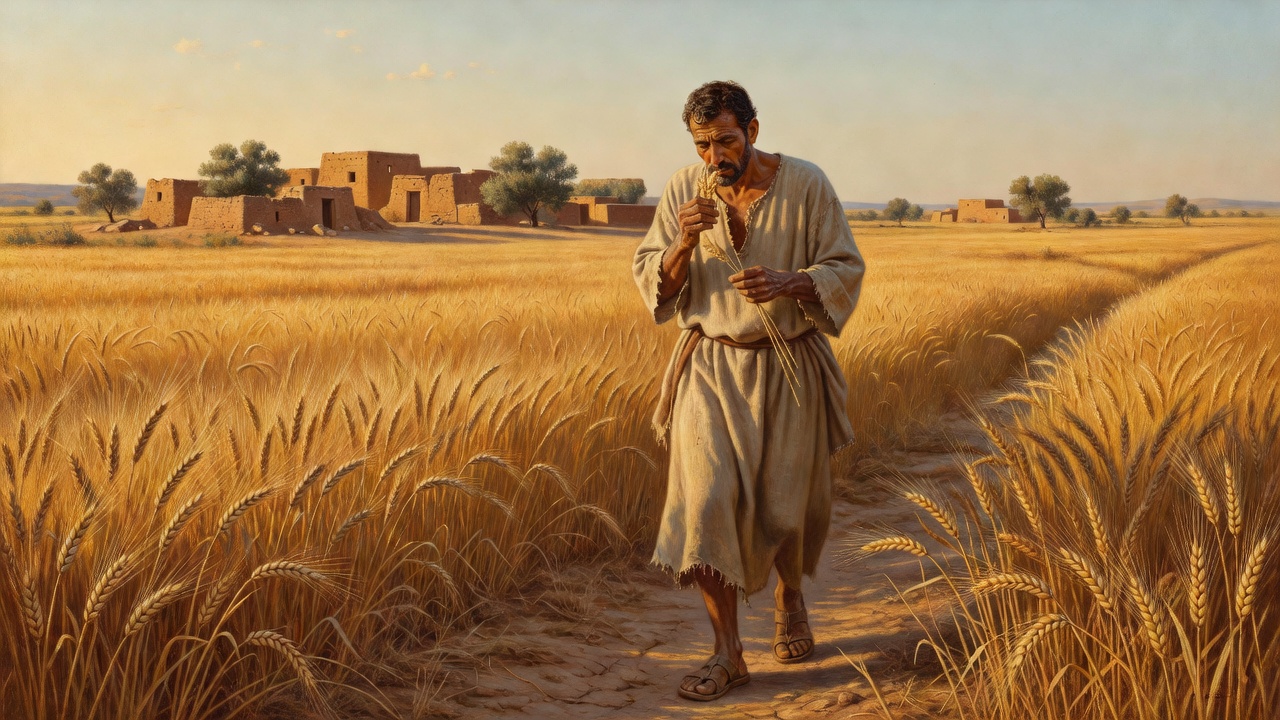
24Lè nou antre nan chan rezen vwazen nou, nou kapab manje rezen yo jiskaske vant nou plen; men nou pa pou mete nan panyen nou. 25Lè nou antre nan chan sereyal ki pou vwazen nou, nou gen dwa rekòlte tèt grenn yo avèk men nou; men nou pa kapab voye kouto a nan rekòlt sereyal a vwazen nou an.
Did you know?
Community Purity and Social Laws
- Ammonites and Moabites were excluded from the assembly because they withheld food and water and hired Balaam son of Beor against Israel. Balaam came from Pethor in Aram-naharaim (Mesopotamia), a region between the Tigris and Euphrates rivers where Pethor is identified with the ancient site of Pitru.Sources: the Bible text itself · Balaam · Pethor · Mesopotamia
- In contrast to the exclusion of Ammon and Moab, Israelites were instructed not to despise Edomites, whom they regarded as kin, or Egyptians, among whom they had lived as foreigners. Descendants of the third generation from both groups were permitted to enter the assembly of the Lord.Sources: the Bible text itself · Egypt
- The chapter outlines distinct social and military protections, including granting refuge to runaway foreign slaves rather than returning them to their masters. It also permitted hungry travelers to eat grapes or pluck grain by hand in a neighbor's field, provided they did not gather surplus into containers or use a sickle.Sources: the Bible text itself
Notes written with AI assistance from open sources (Theographic Bible Metadata, CC BY-SA 4.0; Easton’s Bible Dictionary, public domain) and reviewed before publishing.
Places in this chapter
- Egypt · 30.129, 31.308 · verse 4
- Mesopotamia · Today: Aram-naharaim · 36.864, 39.033 · verse 4
- Pethor · Today: Til Barsip · 36.701, 38.087 · verse 4
Only places identified with high confidence are shown (90% or more according to the scholarly sources compiled by OpenBible). Period map: DARE (Digital Atlas of the Roman Empire), CC BY 4.0; modern map: © OpenStreetMap contributors; places: OpenBible.info (CC BY 4.0).
Credits and license for this translation
Bib Sen An
The Holy Bible in Haitian Creole, 2023 update
copyright © 2017-2023 Ron Smith
Language: Kreyòl Ayisyen (Haitian)
Translation by: Ron Smith
Contributor: Felix Nixon
This translation is made available to you under the terms of the
Creative Commons Attribution Share-Alike license 4.0.
You have permission to share and redistribute this Bible translation in any format and to make reasonable revisions and adaptations of this translation, provided that:
You include the above copyright and source information.
If you make any changes to the text, you must indicate that you did so in a way that makes it clear that the original licensor is not necessarily endorsing your changes.
If you redistribute this text, you must distribute your contributions under the same license as the original.
Pictures included with Scriptures and other documents on this site are licensed just for use with those Scriptures and documents.
For other uses, please contact the respective copyright owners.
Note that in addition to the rules above, revising and adapting God's Word involves a great responsibility to be true to God's Word. See Revelation 22:18-19.
2026-06-11
Source: http://ebible.org/hatbsa/ · eBible.org