Deuteronomy 17
Bib Sen An · Tap a verse to see its cross-references.
1“Nou p ap fè sakrifis a SENYÈ Bondye nou an, ni bèf, ni mouton ki gen fot oswa okenn defo; paske sa se yon bagay abominab a SENYÈ a, Bondye nou an.
2“Si sa twouve nan mitan nou, nan okenn vil nou yo ke SENYÈ a, Bondye nou an, ap bannou yo, yon nonm oswa yon fanm ki fè sa ki mal nan zye SENYÈ Bondye nou an, nan transgrese akò Li a, 3epi te ale sèvi lòt dye yo pou adore yo, kit se solèy la, lalin nan, oswa nenpòt nan lame syèl la, ke mwen pa te kòmande, 4epi si yo di nou sa, e nou te tande sa, alò, nou va fè yon ankèt avèk dilijans. Veye byen, epi si se vre, e se sèten ke bagay abominab sila a te fèt an Israël, 5alò, nou va mennen nonm sa a oswa fanm sa a ki te fè zak mechan sa a nan pòtay nou yo, e nou va lapide li ak kout wòch jiskaske li mouri.
6“Sou temwayaj a de temwen oswa twa temwen, sila ki dwe mouri an, va vin mete a lanmò. Li p ap mete a lanmò sou temwayaj a yon sèl temwen. 7Se men a temwen yo k ap premye kont li pou mete li a lanmò; epi apre, se men a tout pèp la. Konsa nou va netwaye mechanste a soti nan mitan ou.
8“Si yon ka twò difisil pou nou deside, pa egzanp, a nivo touye moun, oswa yon lòt nivo, oswa yon kalite pwosè ak yon lòt, oswa antre blese moun ak yon lòt; alò, nou va mennen yo kote SENYÈ Bondye nou an, chwazi a.
9“Konsa, nou va rive kote prèt Levit la ki se chèf la nan jou sa yo, nou va mande yo, e yo va deklare jijman sou ka a. 10Nou va konfòme avèk tèm a jijman sila ke yo te deklare a nou menm soti kote ke SENYÈ a chwazi a. Nou va fè atansyon pou obsève tout sa ke yo enstwi nou. 11Selon tèm lalwa ke yo enstwi nou yo, e selon desizyon ke yo di nou, nou va fè yo. Nou pa pou vire akote pawòl ke yo deklare a nou menm yo, ni adwat, ni agoch.
12“Nonm nan ki aji avèk ògèy e ki pa koute prèt la ki kanpe la a pou sèvi SENYÈ Bondye nou an, ni jij la, nonm sila a va mouri. Se konsa, nou va retire mal sa a soti an Israël. 13Epi tout pèp la va tande, pou gen krentif, e yo p ap aji avèk ògèy ankò.
14“Lè nou antre nan peyi ke SENYÈ Bondye nou an, bannou an pou posede, e nou viv ladann, nou va di: ‘Annou mete yon wa sou nou tankou tout nasyon ki antoure nou yo’. 15Nou va, anverite, mete yon wa ke SENYÈ a chwazi sou nou, youn ki soti nan sitwayen parèy nou yo, nou va mete l kòm wa sou nou.
“Nou pa kapab mete yon etranje sou nou menm, ki pa sitwayen parèy nou. 16Anplis, li p ap miltipliye cheval pou pwòp tèt li, ni li p ap fè pèp la retounen an Égypte pou miltipliye cheval; akoz SENYÈ a te di nou: ‘Nou p ap retounen la ankò.’ 17Li p ap pran anpil fanm; sinon, kè li va detounen. Ni li p ap ranmase anpil ajan avèk lò pou tèt li.
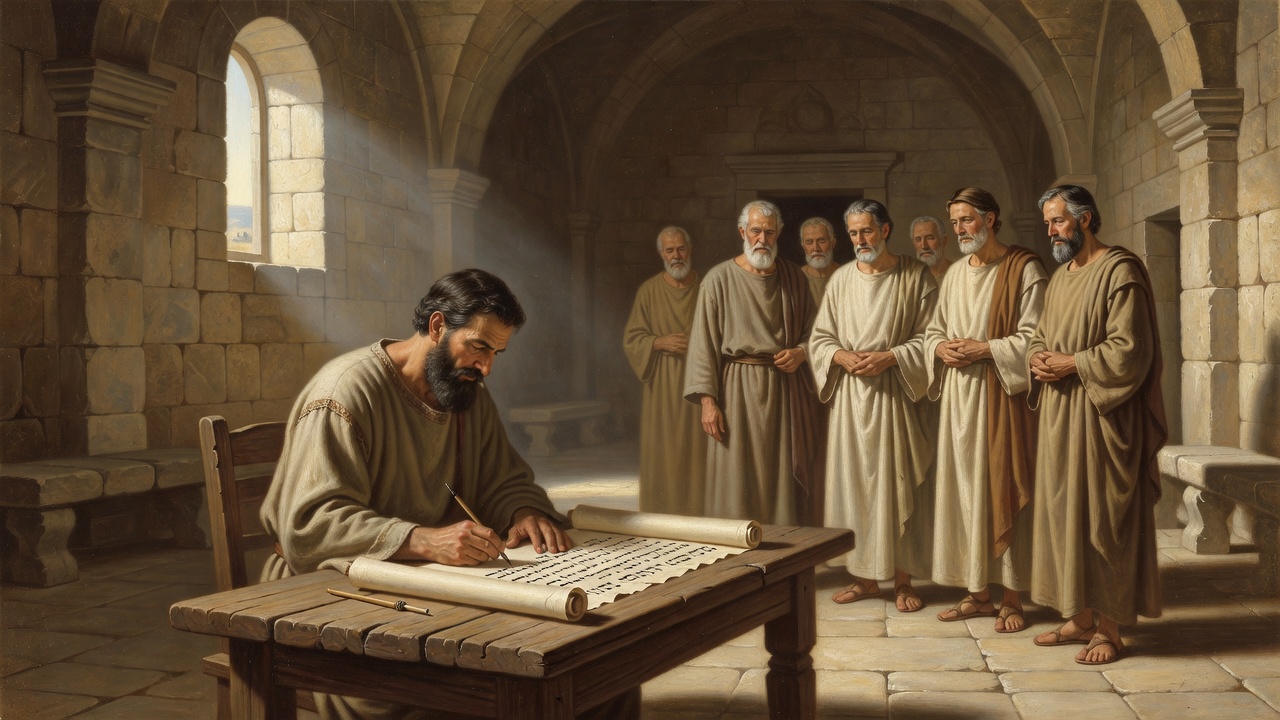
18“Alò, li va rive ke lè li chita sou twòn wayòm li an, li va ekri pou tèt li yon kopi de lwa sila a sou yon woulo papye, nan prezans prèt Levit yo. 19Li va rete avèk li, e li va li li pandan tout jou lavi li, pou li kapab aprann gen krent SENYÈ a, Bondye li a, pou l swiv avèk atansyon tout pawòl lwa sa a, ak règleman sila yo, pou fè yo; 20e pou li pa konsidere tèt li pi bon ke Izrayelit parèy li yo, e ke li pa detounen de kòmandman an, ni adwat, ni agoch, dekwa ke li menm avèk fis li yo kapab dire anpil tan nan wayòm li a nan mitan Israël.
Did you know?
Justice and the Law of the King
- Legal matters required rigorous standards of evidence, mandating at least two or three witnesses for a capital conviction, with the witnesses required to cast the first stones. Difficult legal disputes over bloodshed, civil lawsuits, or assaults were escalated to a central tribunal composed of the Levitical priests and the presiding judge.Sources: the Bible text itself
- Anticipating Israel's desire for a monarchy, the text establishes strict boundaries for a king: he had to be a fellow Israelite and was prohibited from accumulating vast numbers of horses, sending people back to Egypt for trade, taking many wives, or hoarding excessive silver and gold.Sources: the Bible text itself · Egypt
- Upon taking the throne, an Israelite king was required to write his own personal copy of the law on a scroll in the presence of the Levitical priests. He was instructed to read it daily throughout his life so that he would remain obedient to God and not view himself as superior to his countrymen.Sources: the Bible text itself
Notes written with AI assistance from open sources (Theographic Bible Metadata, CC BY-SA 4.0; Easton’s Bible Dictionary, public domain) and reviewed before publishing.
Places in this chapter
- Egypt · 30.129, 31.308 · verse 16
Only places identified with high confidence are shown (90% or more according to the scholarly sources compiled by OpenBible). Period map: DARE (Digital Atlas of the Roman Empire), CC BY 4.0; modern map: © OpenStreetMap contributors; places: OpenBible.info (CC BY 4.0).
Credits and license for this translation
Bib Sen An
The Holy Bible in Haitian Creole, 2023 update
copyright © 2017-2023 Ron Smith
Language: Kreyòl Ayisyen (Haitian)
Translation by: Ron Smith
Contributor: Felix Nixon
This translation is made available to you under the terms of the
Creative Commons Attribution Share-Alike license 4.0.
You have permission to share and redistribute this Bible translation in any format and to make reasonable revisions and adaptations of this translation, provided that:
You include the above copyright and source information.
If you make any changes to the text, you must indicate that you did so in a way that makes it clear that the original licensor is not necessarily endorsing your changes.
If you redistribute this text, you must distribute your contributions under the same license as the original.
Pictures included with Scriptures and other documents on this site are licensed just for use with those Scriptures and documents.
For other uses, please contact the respective copyright owners.
Note that in addition to the rules above, revising and adapting God's Word involves a great responsibility to be true to God's Word. See Revelation 22:18-19.
2026-06-11
Source: http://ebible.org/hatbsa/ · eBible.org