Amos 6
Bib Sen An · Tap a verse to see its cross-references.
1Malè a sila ki alèz nan Sion yo,
e ak sila ki santi yo ansekirite nan mòn Samarie yo,
mesye ki distenge pami meyè nan nasyon yo,
a sila lakay Israël konn vini yo.
2Ale janbe kote Calné pou gade.
Soti la rive Hamath Gran an,
pou desann kote Gath de Filisten yo.
Èske yo pi bon ke wayòm sila yo?
Èske tèritwa pa yo a pi gran pase pa nou an?
3Malè a nou ki konn ranvoye jou malè!
Ka pote sant vyolans lan vin pi pre!
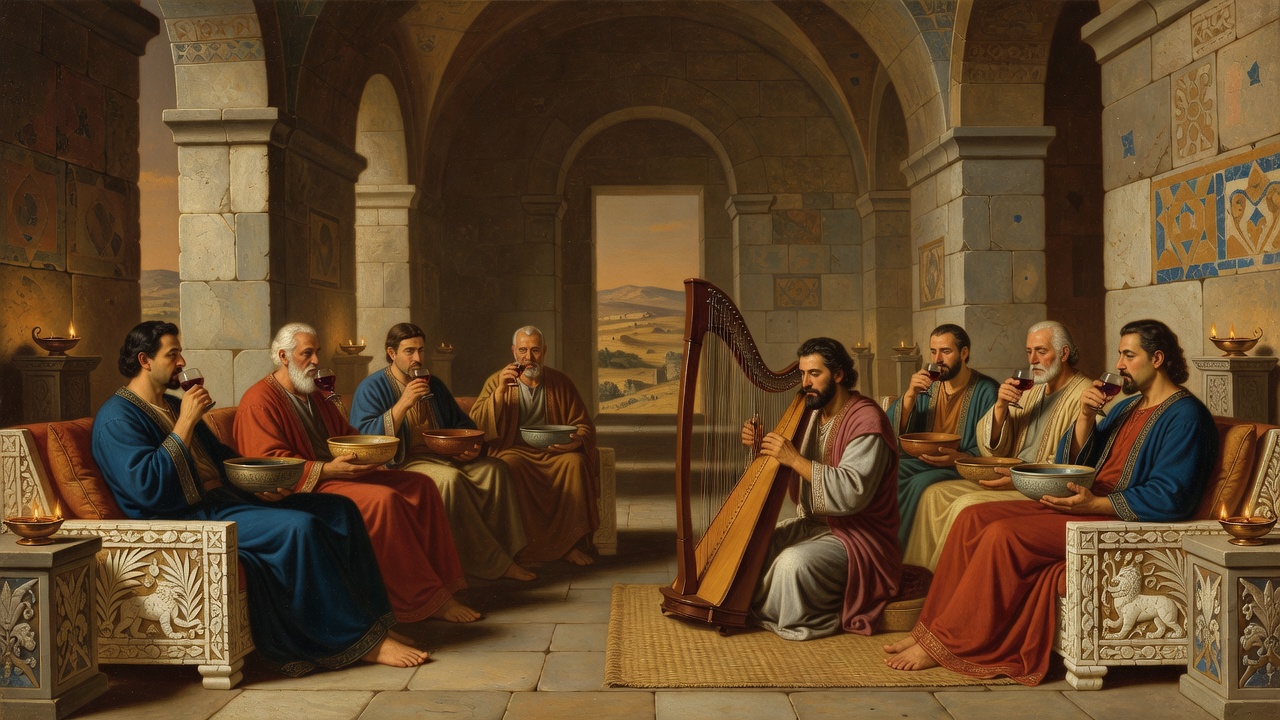
4K ap repoze sou kabann fèt ak livwa yo,
k ap gaye kò yo sou gwo sofa yo,
e k ap manje jenn mouton ki soti nan pak la,
ak jenn bèf ki soti nan mitan tonèl bèt la;
5sila ki enpwovize ak son ap la,
ki envante lenstriman mizik yo menm jan ak David;
6Sila k ap bwè diven nan kalbas sakrifis yo pandan yo
onksyone kò yo ak pi bon lwil yo,
malgre sa, yo pa kriye pou Joseph,
ki fin devaste nèt la.
7Akoz sa, yo va antre an egzil nan tèt a egzile yo.
Banbòch a sanzave yo va sispann.
8Senyè BONDYE a te sèmante pa Li menm,
SENYÈ Bondye dèzame yo te deklare:
“Mwen rayi awogans a Jacob la,
e Mwen deteste sitadèl li yo.
Pou sa, Mwen va livre tout vil la ak tout sa ki ladann.”
9Epi li va vin rive ke si genyen dizòm ki rete
nan yon kay, yo va mouri.
10Alò tonton a youn, oswa mèt mòg k ap antere l la, va leve pote zo li sòti nan kay la. Konsa, li va mande a sila ki nan pati pi anndan nan kay la: “Èske gen lòt moun avèk ou?” Epi sila a va reponn: “Nanpwen moun”. Konsa li va reponn: “Rete an silans. Paske non a SENYÈ a pa dwe nonmen menm.”
11“Paske gade byen, SENYÈ a pral kòmande
pou gwo lakay la vin kraze nèt,
e ti kay la an ti mòso.
12Èske cheval konn kouri sou wòch,
oswa èske yo ka charye wòch yo ak bèf?
Konsa, nou te fè Lajistis vin tounen pwazon
e fwi ladwati vin anmè nèt.
13Nou menm k ap rejwi nan yon bagay ki pa anyen,
epi k ap di: ‘Èske se pa ak pwòp fòs kouraj
nou nou rive pran kòn nan pou nou?’
14Paske gade byen, Mwen pral leve yon nasyon
kont nou, O lakay Israël,”
deklare SENYÈ Bondye dèzame yo;
“e yo va aflije nou soti nan antre Hamath
pou rive jis nan flèv Araba a.”
Did you know?
Complacency and Impending Exile
- Amos addresses the ruling elite who felt secure in both Zion, the fortified hill of Jerusalem, and Mount Samaria, the capital of the northern kingdom built on an elevated summit by King Omri. Despite the natural defenses and prestige of these cities, their leaders are warned that their ease and overconfidence would end in captivity.Sources: Zion · Samaria · the Bible text itself
- The prophet challenges Israel to look at renowned foreign cities such as Calneh near the Euphrates, Hamath on the Orontes in Upper Syria, and the Philistine stronghold of Gath. These neighboring powers were neither smaller nor less protected, yet they could not escape destruction.Sources: Calneh · Hamath · Gath · the Bible text itself
- Amos criticizes the aristocracy for indulging in extravagant banquets, resting on beds inlaid with ivory, and improvising music on harps like David, all while ignoring the impending ruin of Joseph. The name Joseph here designates the northern tribes of Israel, whose moral decay and social injustice were neglected by their wealthy leaders.Sources: David · Joseph (son of Jacob) · the Bible text itself
Notes written with AI assistance from open sources (Theographic Bible Metadata, CC BY-SA 4.0; Easton’s Bible Dictionary, public domain) and reviewed before publishing.
Places in this chapter
- Samaria · 32.276, 35.195 · verses 1, 8
- Zion · Today: Jerusalem · 31.777, 35.234 · verse 1
- Hamath · Today: Hama · 35.136, 36.750 · verse 2
- Philistia · 31.664, 34.546 · verse 2
Only places identified with high confidence are shown (90% or more according to the scholarly sources compiled by OpenBible). Period map: DARE (Digital Atlas of the Roman Empire), CC BY 4.0; modern map: © OpenStreetMap contributors; places: OpenBible.info (CC BY 4.0).
Credits and license for this translation
Bib Sen An
The Holy Bible in Haitian Creole, 2023 update
copyright © 2017-2023 Ron Smith
Language: Kreyòl Ayisyen (Haitian)
Translation by: Ron Smith
Contributor: Felix Nixon
This translation is made available to you under the terms of the
Creative Commons Attribution Share-Alike license 4.0.
You have permission to share and redistribute this Bible translation in any format and to make reasonable revisions and adaptations of this translation, provided that:
You include the above copyright and source information.
If you make any changes to the text, you must indicate that you did so in a way that makes it clear that the original licensor is not necessarily endorsing your changes.
If you redistribute this text, you must distribute your contributions under the same license as the original.
Pictures included with Scriptures and other documents on this site are licensed just for use with those Scriptures and documents.
For other uses, please contact the respective copyright owners.
Note that in addition to the rules above, revising and adapting God's Word involves a great responsibility to be true to God's Word. See Revelation 22:18-19.
2026-06-11
Source: http://ebible.org/hatbsa/ · eBible.org