Psalms 129
Bib La · Tap a verse to see its cross-references.
1Se yon chante pou yo chante lè y'ap moute lavil Jerizalèm. Nou menm, pèp Izrayèl se pou nou rekonèt sa: Yo te fè nou pase kont mizè nou depi nou te jenn. 2Wi, depi nou te jenn, yo te fè nou pase kont mizè nou, men yo pa t' janm rive mete pye sou kou nou. 3Yo tonbe sou do nou, ou ta di moun k'ap bat tè pou plante. 4Men, Seyè a pa nan patipri, li koupe kòd mechan yo te pase nan kou nou. 5Moun ki pa vle wè moun Siyon yo, se pou yo wont, se pou yo fè bak. 6Se pou yo tankou plant k'ap pouse arebò glasi: y'ap cheche anvan menm yo donnen. 7Moun k'ap ranmase rekòt p'ap okipe yo menm, moun k'ap antre rekòt la p'ap mete yo nan pakèt li. 8Moun k'ap pase bò la yo p'ap di: -Se pou Seyè a beni nou! N'ap beni ou nan non Seyè a!
Did you know?
Endurance in Affliction and the Fate of Zion’s Foes
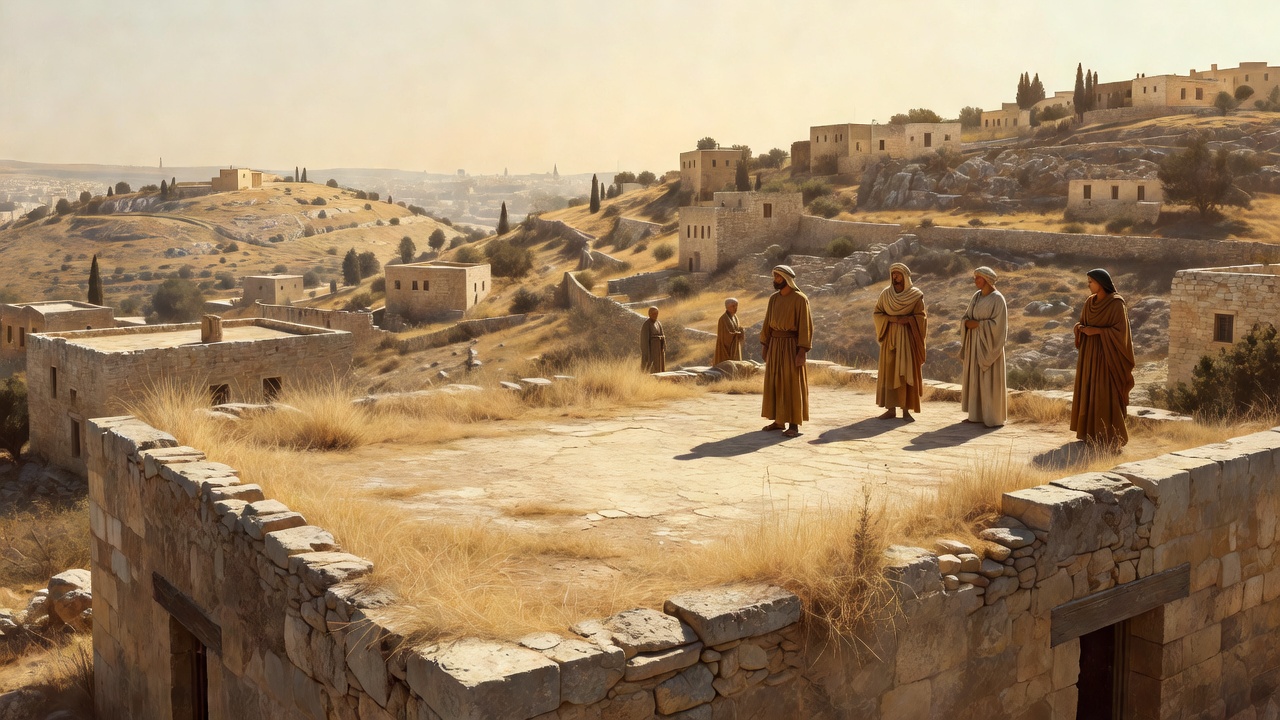
- The imagery of grass growing on rooftops reflects ancient construction, where flat roofs were often covered with packed earth. Seeds might sprout there after rains, but because the soil layer was shallow and exposed to the sun, the grass withered before it could mature or produce a harvest.Sources: the Bible text itself
- The phrase spoken by passersby in verse 8 mirrors the traditional agricultural greetings exchanged in ancient Israel, where travelers routinely blessed reapers and laborers working in the fields.Sources: the Bible text itself
- Zion was the prominent hill in Jerusalem where King David built his citadel, and in biblical poetry it often stands as a representation of God’s dwelling place and His people.Sources: the Bible text itself · Zion
Notes written with AI assistance from open sources (Theographic Bible Metadata, CC BY-SA 4.0; Easton’s Bible Dictionary, public domain) and reviewed before publishing.
Places in this chapter
Only places identified with high confidence are shown (90% or more according to the scholarly sources compiled by OpenBible). Period map: DARE (Digital Atlas of the Roman Empire), CC BY 4.0; modern map: © OpenStreetMap contributors; places: OpenBible.info (CC BY 4.0).
Credits and license for this translation
Bib La
The Holy Bible in Haitian Creole
Public Domain
Language: Kreyòl Ayisyen (Haitian)
In the Public Domain due to publication without copyright notice in 1985, and without subsequent registration within 5 years.
2020-03-10
Source: http://ebible.org/hat/ · eBible.org