Proverbs 9
Bib La · Tap a verse to see its cross-references.
1Bon konprann bati kay li, li kanpe l' avèk sèt gwo poto. 2Li fè yo pare bon vyann pou fè fèt, li fè bon konpoze ak diven, li ranje tab la byen ranje. 3Li rele sèvant li yo, li voye yo moute kote ki pi wo nan lavil la pou fè tout moun konnen nouvèl la, pou di yo: 4Nou menm ki poko konn anyen, vini non! Li rele moun san konprann yo, l'ap di yo: 5Vin manje manje mwen an non! Vin bwè bon diven mwen pare a non! 6Kite sòt! Vin aprann lavi! Vin mache nan chemen konesans. 7Si w'ap kouri dèyè yon moun k'ap pase moun nan betiz, l'ap joure ou mete sou li. Si w'ap rale zòrèy yon mechan, l'ap bat ou mete sou li. 8Pa janm kouri dèyè yon moun k'ap pase moun nan betiz. L'a rayi ou. Men, si w'ap kouri dèyè yon moun ki gen konprann, l'a gen respè pou ou. 9Si ou pale ak yon moun ki gen bon konprann, w'ap fè l' gen plis bon konprann toujou. Plis w'ap moutre yon nonm debyen, plis l'ap mete sou konesans li. 10Lè ou gen krentif pou Bondye, se lè sa a ou konmanse gen bon konprann. Si ou konnen ki moun Bondye ye, ou gen lespri. 11Bon konprann ap fè ou viv lontan. L'ap fè ou wè plizyè lanne. 12Si ou gen bon konprann, premye moun k'ap pwofite sa se ou menm. Konsa tou, si w'ap pase konesans nan betiz, se ou menm tou k'ap peye konsekans lan pou kont ou. 13Moun sòt, se tankou yon fanm ki pale fò, ki pa konn anyen, ki pa wont anyen. 14Li chita sou yon chèz devan papòt lakay li, li kage chèz li kote ki pi wo nan lavil la. 15L'ap rele moun ki sou wout yo, ki pa sou bò l'. L'ap di yo: 16Vini jwenn mwen non, nou menm ki poko konn anyen! Li pale ak moun ki san konprann yo, li di yo: 17Dlo kay moun toujou pi fre. Manje deyò toujou gen pi bon gou! 18Men, moun ki pran nan pawòl fanm sa a pa konnen lè yo mete pye lakay li se papye lanmò yo yo senyen. Depi yo antre lakay li, yo deja mouri.
Did you know?
The Invitations of Wisdom and Folly
- Proverbs 9 contrasts two personified figures, Wisdom and Folly, who each present a rival banquet. Both women issue public invitations from the highest places of the city, appealing directly to the simple and those lacking judgment to make a choice between their paths.Sources: the Bible text itself
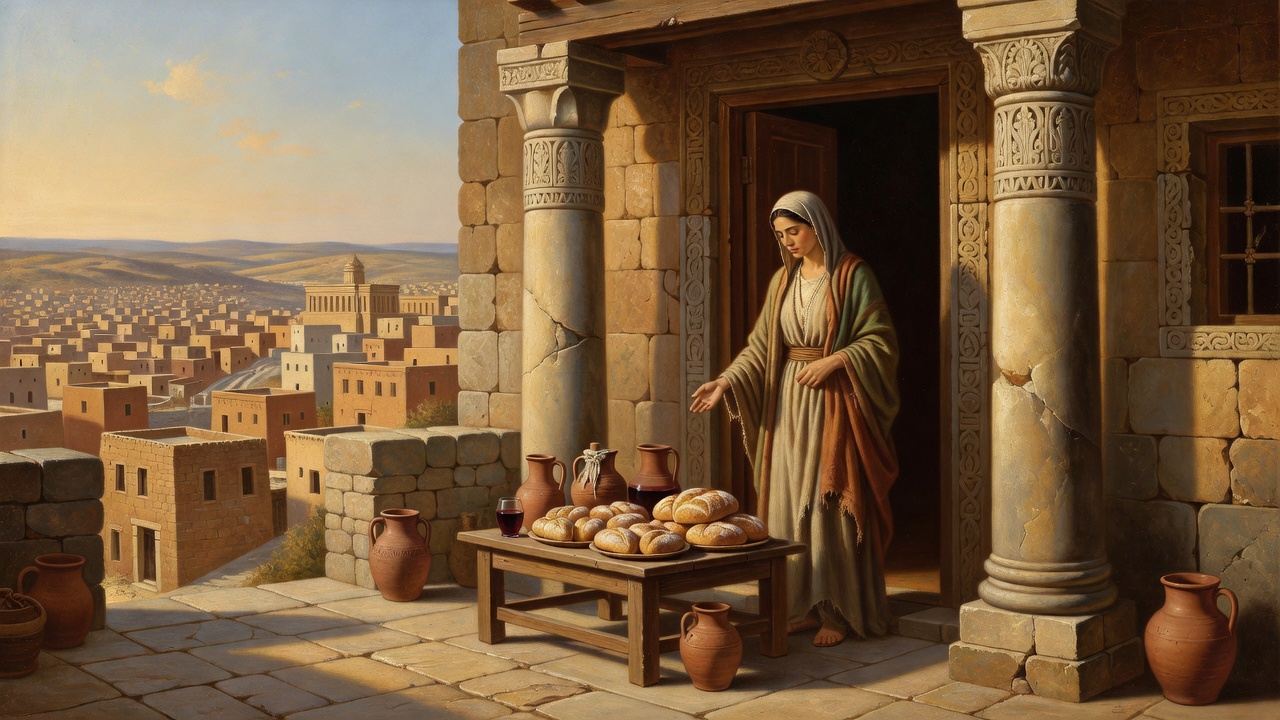
- The two feasts offer starkly different outcomes. Wisdom invites guests to a prepared house with seven carved pillars to eat her meat, drink mixed wine, and gain life, whereas Folly seductively offers stolen water and secret food, concealing that her guests end up in the depths of the grave.Sources: the Bible text itself
- The chapter highlights differing responses to instruction: correcting a mocker brings insult and hatred, whereas teaching a wise person increases their understanding. The foundation of true discernment is described as the fear of the LORD and the knowledge of the Holy One.Sources: the Bible text itself
Notes written with AI assistance from open sources (Theographic Bible Metadata, CC BY-SA 4.0; Easton’s Bible Dictionary, public domain) and reviewed before publishing.
Credits and license for this translation
Bib La
The Holy Bible in Haitian Creole
Public Domain
Language: Kreyòl Ayisyen (Haitian)
In the Public Domain due to publication without copyright notice in 1985, and without subsequent registration within 5 years.
2020-03-10
Source: http://ebible.org/hat/ · eBible.org