Proverbs 5
Bib La · Tap a verse to see its cross-references.
1Pitit mwen, louvri lespri ou pou koute sa m'ap di ou, mwen menm ki gen bon konprann. Louvri zòrèy ou pou ou tande konsèy m'ap ba ou, mwen menm ki gen bon konprann. 2Konsa, w'a konnen jan pou ou kondi tèt ou byen. Pawòl ki soti nan bouch ou va moutre jan ou se moun ki gen bon konprann. 3Bouch madanm lòt moun ka dous kou siwo myèl, pawòl ka koule nan bouch yo tankou dlo. 4Men, lè tout bagay fini, bouch li anmè kou fyèl, lang li file tankou kouto de bò. 5L'ap mennen ou kote mò yo ye a. Tou sa l'ap fè se pou touye ou. 6Li p'ap chache chemen lavi. L'ap pwonmennen toupatou, li pa konnen kote li prale. 7Koulye a, pitit mwen yo, koute m' byen. Pa janm bliye sa m' pral di nou la a. 8Rete lwen yon fanm konsa. Pa janm pwoche bò pòt lakay li, 9pou fanm deyò pa fini avè ou, pou ou pa fè nèg ankòlè touye ou anvan lè ou! 10Si se pa sa, se etranje ki va pran tout byen ou yo. Se lòt moun ki va jwi tou sa ou te travay fè. 11Lè w'a prèt pou ou mouri, w'a kouche sou kabann ou ap plenn. Maladi ap manje ou nan tout kò ou. 12Lè sa a, w'a di: Poukisa mwen pa t' vle kite yo rale zòrèy mwen? 13Mwen pa t' vle koute moun ki t'ap moutre m' sa pou m' fè. Mwen pa t' louvri zòrèy mwen lè yo t'ap pale m'. 14Yon ti kras ankò, mwen t'ap nan tout kalite malè. La, devan tout moun, mwen t'ap pèdi repitasyon m'. 15Bwè dlo nan kannari ou. Se ak madanm ou ase pou ou rete. 16Pa fè pitit ak fanm deyò, pou san ou pa trennen nan lari. 17Se pou pitit ou grandi anndan lakay ou. Yo pa ka ap sèvi ou pou y'ap sèvi moun deyò tou. 18Fè kè ou kontan ak madanm ou. Pran plezi ou ak madanm ou renmen depi lè ou te jenn lan. 19L'ap bèl, l'ap anfòm tankou nègès banda. Se pou karès li yo toujou fè kè ou kontan, se pou ou toujou renmen fè lamou ak li. 20Pitit mwen, poukisa pou ou renmen yon lòt fanm? Poukisa pou ou kite madanm ou pou madanm lòt moun? 21Seyè a wè tou sa w'ap fè. Kote ou pase, je l' sou ou. 22Mechanste mechan yo se yon pèlen pou pwòp tèt yo. Sa yo pare pou lòt moun, se yo menm li rive. 23Y'ap mouri paske yo pa konn kontwole tèt yo. Y'ap peri paske yo fin pèdi tèt yo nèt.
Did you know?
Wisdom, Fidelity, and the Pitfalls of Seduction
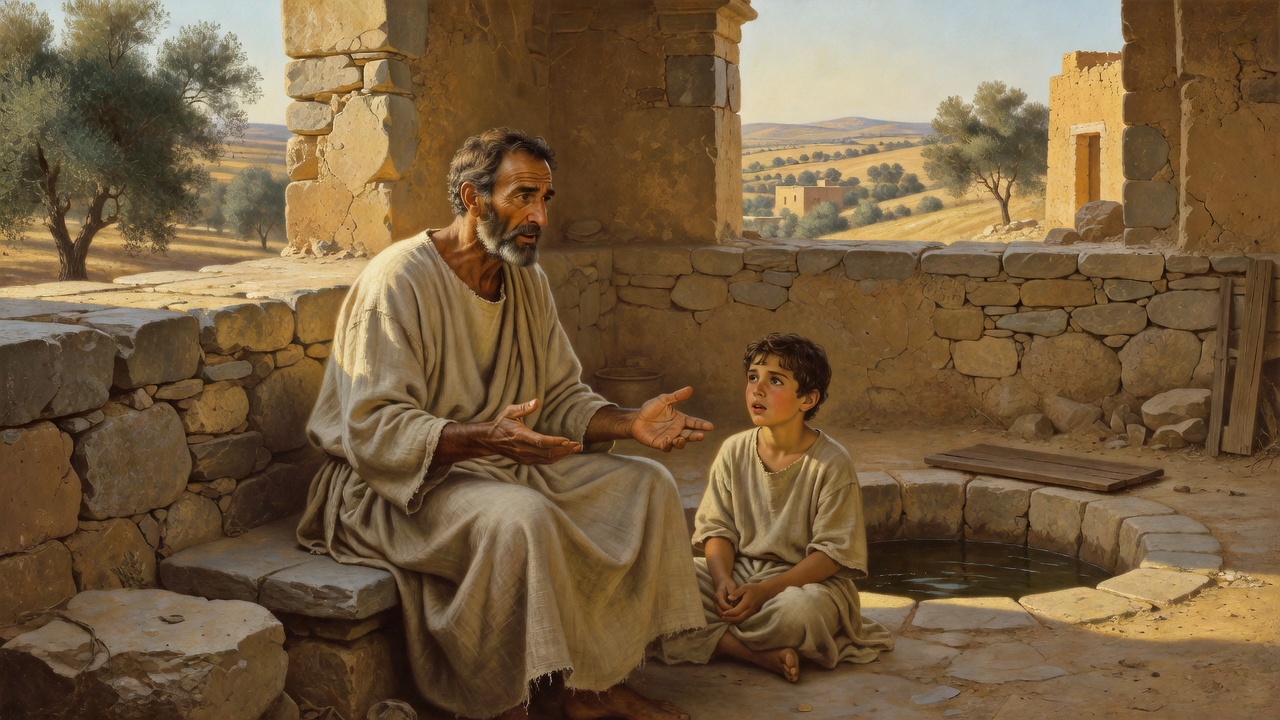
- The passage uses domestic water sources, such as a personal cistern and well, as metaphors for marital intimacy and fidelity. The father advises finding satisfaction at home rather than letting one's springs and streams scatter into public streets and squares.Sources: the Bible text itself
- Seductive speech is contrasted with its consequences: while its words are portrayed as sweet like honey and smooth like oil, the ultimate outcome is described as bitter like wormwood, piercing like a double-edged sword, and leading to death and Sheol.Sources: the Bible text itself
- The warning highlights both practical and spiritual costs of infidelity, from the loss of personal wealth and physical vigor to public disgrace before the community assembly, concluding that all human ways are examined by the LORD.Sources: the Bible text itself
Notes written with AI assistance from open sources (Theographic Bible Metadata, CC BY-SA 4.0; Easton’s Bible Dictionary, public domain) and reviewed before publishing.
Credits and license for this translation
Bib La
The Holy Bible in Haitian Creole
Public Domain
Language: Kreyòl Ayisyen (Haitian)
In the Public Domain due to publication without copyright notice in 1985, and without subsequent registration within 5 years.
2020-03-10
Source: http://ebible.org/hat/ · eBible.org