Malachi 1
Bib La · Tap a verse to see its cross-references.
About this book
About Malachi
- Easton's Bible Dictionary (1897) presents Malachi, a name meaning "messenger" or "angel," as the last of the minor prophets and the writer of the last book of the Old Testament canon. Nothing is known of him beyond what is contained in his book of prophecies.Sources: Easton: Malachi · Malachi
- Some have supposed that the name is simply a title for a messenger of Jehovah, not a proper name. Easton's Bible Dictionary (1897) concludes, however, that there is reason to regard Malachi as the prophet's ordinary name.Sources: Easton: Malachi · Malachi
- Easton's Bible Dictionary (1897) dates the prophecies to about 420 B.C., after Nehemiah's second return from Persia, or possibly before that return. Because Ezra does not mention him and he does not mention the restoration of the temple, the dictionary infers that he prophesied after Haggai and Zechariah.Sources: Easton: Malachi
- Easton's Bible Dictionary (1897) treats Malachi as a contemporary of Nehemiah, comparing Malachi 2:8 with Nehemiah 13:15 and Malachi 2:10-16 with Nehemiah 13:23. It also notes that the temple services were still in existence, citing Malachi 1:10, 3:1 and 3:10.Sources: Easton: Malachi
Notes written with AI assistance from open sources (Theographic Bible Metadata, CC BY-SA 4.0; Easton’s Bible Dictionary, public domain) and reviewed before publishing.
1Men mesaj Seyè a te bay Malachi pou fè pèp Izrayèl la konnen volonte li. Men desizyon Seyè a: 2Seyè a di: Mwen renmen nou! Men, pèp la reponn: Ki jan ou renmen nou an? Men sa Seyè a reponn yo: Ezaou ak Jakòb, apa de frè yo ye. Mwen renmen Jakòb ak tout pitit pitit li yo. 3Men, mwen rayi Ezaou ak tout pitit pitit li yo. Mwen ravaje tout mòn peyi Ezaou a. Mwen fè peyi yo a tounen savann kote bèt nan bwa rete. 4Si moun peyi Edon yo di: Yo detwi lavil nou yo, men n'ap rebati yo, Seyè a menm ap reponn yo: Nou mèt rebati yo, m'ap toujou kraze yo. Moun pral rele yo: Peyi mechan yo, nasyon ki fè Seyè a ankòlè tout tan an. 5Moun Izrayèl yo pral wè sa ak pwòp je yo. Epi y'a di: Seyè a gen pouvwa menm andeyò peyi Izrayèl la. 6Seyè ki gen tout pouvwa a ap pale ak nou koulye a, nou menm prèt yo ki pa respekte l'. Li di nou konsa: Yon pitit fèt pou l' respekte papa l'. Yon domestik fèt pou l' gen krentif pou mèt li. Mwen se papa nou. Poukisa nou pa respekte m'? Mwen se mèt nou. Poukisa nou pa gen krentif pou mwen? Epi nou gen kouraj pou nou di: Ki jan nou derespekte ou la? 7Men ki jan: nou pran manje ki pa bon pou fè sèvis pou mwen, nou ofri l' sou lotèl la ban mwen. Epi n'ap di: nou pa wè ki jan nou derespekte ou la a? Mwen menm, mwen di nou se lè nou di lotèl Seyè a pa merite yo respekte l'. 8Lè nou mennen yon bèt je pete pou yo touye pou mwen, atò, sa se pa bagay ki mal? Lè nou mennen yon bèt k'ap mache bwete, yon bèt tou malad, sa se pa bagay ki mal? Seye pote yon bèt konsa bay yon gwo chèf non! Eske l'ap kontan? Eske la ba ou yon favè? 9Koulye a, nou menm prèt yo, lapriyè nan pye Bondye pou l' gen pitye pou nou non! Eske la ban nou favè l'? Se nou menm ki va lakòz li pa fè sa pou nou! 10Seyè ki gen tout pouvwa a pale, li di: Mwen ta swete yonn nan nou ta fèmen tout pòt tanp lan pou nou pa limen dife pou gremesi sou lotèl mwen an. Mwen pa kontan menm ak nou. Se Seyè ki gen tout pouvwa a ki di sa. Mwen p'ap asepte ankenn ofrann nan men nou. 11Toupatou sou latè, depi sou solèy leve jouk sou solèy kouche, moun lòt nasyon yo ap di jan mwen gen pouvwa. Toupatou y'ap boule lansan pou mwen, y'ap ofri m' bagay ki bon pou sèvis mwen. Paske moun toupatou respekte m'. Se Seyè ki gen tout pouvwa a ki di sa. 12Men, nou menm, nou pa respekte lotèl mwen lè nou di: Lotèl Seyè a pa bon ankò. Se vye manje n'ap ofri sou li. 13Lèfini, n'ap plede di: Nou bouke ak tout bagay sa yo. Nou pa pran ka m' ankò. Se Seyè ki gen tout pouvwa a ki di sa. Nou pran bèt nou vòlò, bèt enfim, osinon bèt malad, nou vin ofri ban mwen. Seyè a mande nou: Nou kwè mwen ka asepte bagay konsa nan men nou? Se Seyè a ki mande nou sa. 14Madichon pou moun k'ap twonpe m' yo. Yo vin ofri bèt ki pa bon pou yo touye pou mwen epi yo kite bon ti mal yo te pwomèt y'ap ban mwen an nan bann mouton yo. Paske, se yon wa ki gen anpil pouvwa mwen ye. Moun tout nasyon va respekte m'. Se Seyè ki gen tout pouvwa a ki di sa.
Did you know?
Honoring God and Defective Offerings
- The name Malachi means messenger or angel. While some have suggested it was a title rather than a proper name, scholars and traditions widely treat it as the prophet's personal name, placing his ministry during the period of Nehemiah, after Haggai and Zechariah.Sources: Malachi
- The opening dispute recalls the twin brothers Jacob and Esau, the ancestors of Israel and Edom. The text contrasts God's covenant love for Israel with the judgment and desolation coming upon the mountainous region of Edom.Sources: Esau (Edom) · Jacob (Israel) · Edom · the Bible text itself
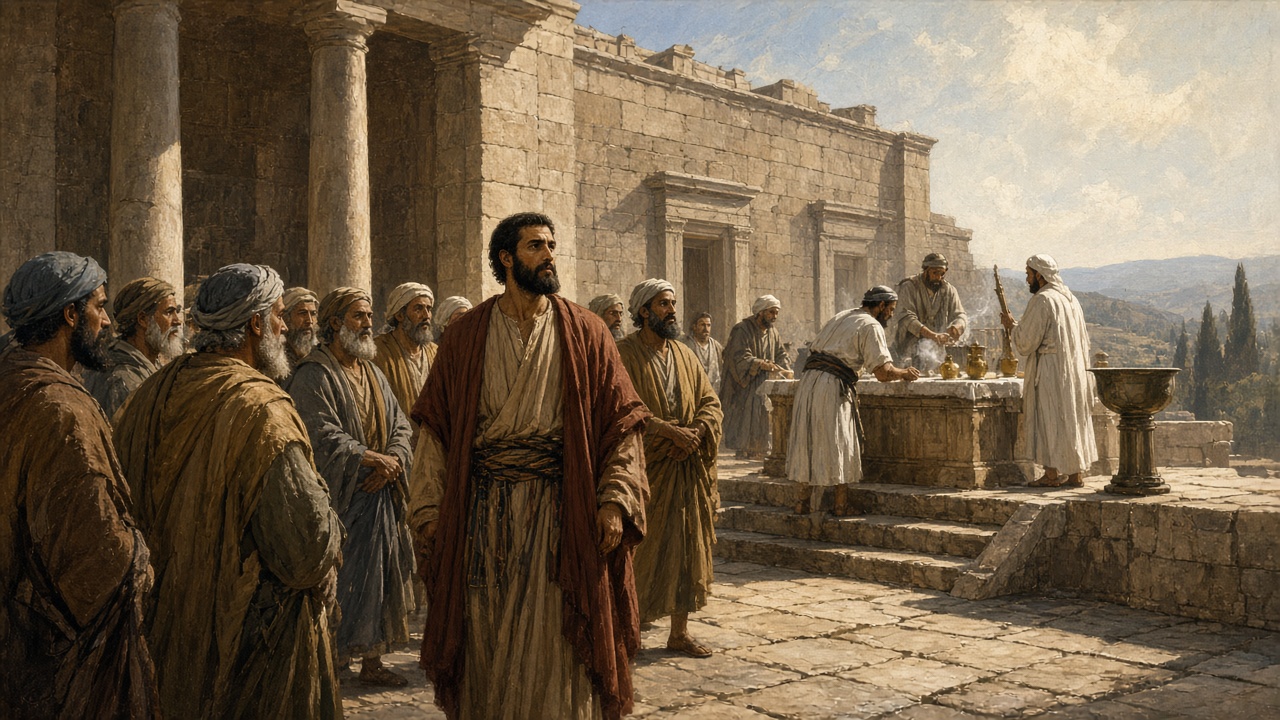
- The priests are rebuked for offering blind, lame, and diseased animals on the altar rather than unblemished livestock. Malachi exposes their disrespect by asking whether a civil governor would accept such inferior gifts.Sources: the Bible text itself
Notes written with AI assistance from open sources (Theographic Bible Metadata, CC BY-SA 4.0; Easton’s Bible Dictionary, public domain) and reviewed before publishing.
Places in this chapter
- Edom · 30.746, 35.604 · verse 4
Only places identified with high confidence are shown (90% or more according to the scholarly sources compiled by OpenBible). Period map: DARE (Digital Atlas of the Roman Empire), CC BY 4.0; modern map: © OpenStreetMap contributors; places: OpenBible.info (CC BY 4.0).
Credits and license for this translation
Bib La
The Holy Bible in Haitian Creole
Public Domain
Language: Kreyòl Ayisyen (Haitian)
In the Public Domain due to publication without copyright notice in 1985, and without subsequent registration within 5 years.
2020-03-10
Source: http://ebible.org/hat/ · eBible.org