Leviticus 17
Bib La · Tap a verse to see its cross-references.
1Seyè a pale ak Moyiz, li di l' konsa: 2-Pale ak Arawon ak pitit gason l' yo epi ak tout moun pèp Izrayèl yo. W'a di yo: Men bagay Seyè a bay lòd pou nou fè: 3Si yonn nan moun Izrayèl yo touye yon towo bèf, yon mouton osinon yon kabrit nan kan kote yo rete a, ou ankò lòt bò limit kan an, 4depi se pa devan pòt Tant Randevou a li touye l' pou l' ofri l' bay Seyè a la devan kay Seyè a, moun sa a koupab, li fè yon krim, li fè san koule. Se pou yo wete l' nèt nan mitan moun pèp Bondye a. 5Sa vle di: Depi koulye a moun pèp Izrayèl yo gen pou mennen devan Seyè a tout bèt yo te konn touye nan jaden. Se pou yo mennen yo bay prèt la devan pòt Tant Randevou a. Se la y'a touye yo, menm jan yo touye bèt y'ap ofri pou di Bondye mèsi. 6Prèt la va pran san an, l'a vide l' sou lotèl la, devan pòt Tant Randevou a. L'a boule grès la pou l' fè yon bon sant ki va fè Seyè a plezi. 7Se pou moun pèp Izrayèl yo sispann ofri bèt pou yo touye bay zidòl nan jaden tankou yo te konn fè lè yo te vire do bay Bondye a. Se pou pèp la toujou kenbe lòd sa a de pitit an pitit. 8Epi w'a di yo ankò: Ankenn moun nan pèp Izrayèl la, ni moun lòt nasyon k'ap viv nan mitan yo pa gen dwa touye bèt yo ofri ni pou yo boule nèt ni pou lòt kalite sèvis 9ankenn lòt kote, si se pa devan pòt Tant Randevou a pou li ofri l' bay Seyè a. Si se pa sa, y'a wete l' nèt nan mitan moun pèp Bondye a. 10Pesonn ni nan pèp Izrayèl la, ni pami moun lòt nasyon k'ap viv nan mitan yo pa gen dwa manje vyann ak tout san li ladan l'. Si li fè l', mwen menm Seyè a, mwen p'ap okipe l' ankò, m'ap wete l' nan mitan pèp mwen an. 11Nanm tout bèt vivan se nan san an li ye. Se poutèt sa, mwen menm Seyè a, mwen mande pou yo vide tout san an sou lotèl la pou li ka wete peche pèp la. Nou bay san an pou nanm nou. 12Se poutèt sa Seyè a te di moun pèp Izrayèl yo: Pesonn nan pèp Izrayèl la, ni ankenn moun lòt nasyon k'ap viv nan mitan nou pa gen dwa manje vyann ki gen san ladan l'. 13Lè yon moun nan pèp Izrayèl la osinon yon moun lòt nasyon k'ap viv nan mitan yo al lachas, si li pran yon bèt osinon yon zwazo yo gen dwa manje, l'a vide tout san bèt la atè epi la kouvri l' ak tè. 14Paske nanm tout bèt vivan se nan san an li ye. Se poutèt sa mwen menm, Seyè a, mwen di moun pèp Izrayèl yo: Yo pa gen dwa manje vyann ankenn bèt ak tout san an ladan l'. Paske se nan san an nanm lan ye. Tout moun ki manje vyann ak san li ladan l', m'ap wete yo nan mitan pèp mwen an. 15Mwen pa bezwen konnen si se moun pèp Izrayèl la osinon moun lòt nasyon k'ap viv nan mitan nou, depi yon moun manje vyann yon bèt mouri osinon vyann bèt yon lòt bèt nan bwa ta touye, l'a gen pou l' lave rad ki sou li, l'a benyen nan gwo dlo, epi li p'ap nan kondisyon pou fè sèvis Bondye jouk aswè. Se aprè sa l'a nan kondisyon pou fè sèvis Bondye ankò. 16Men, si li pa lave rad ki sou li yo, si li pa benyen nèt, l'a peye sa l' fè a.
Did you know?
Sacrificial Slaughter and the Sacredness of Blood
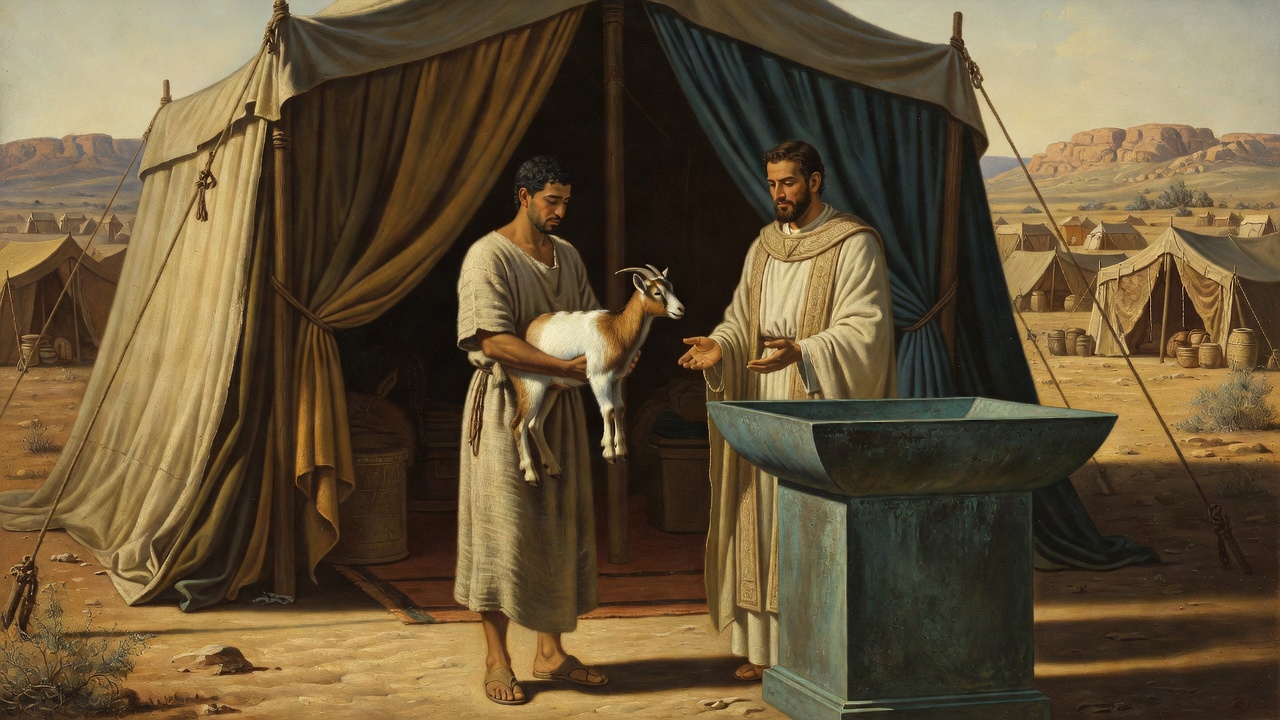
- Leviticus mandates that domestic animals such as oxen, lambs, and goats be brought directly to the entrance of the Tent of Meeting rather than slaughtered in open fields. This rule ensured sacrifices were presented exclusively as peace offerings to the LORD and halted illicit sacrifices to goat demons.Sources: the Bible text itself
- Both native Israelites and resident foreigners were strictly prohibited from eating blood, on penalty of being cut off from the community. The text grounds this law in the theological principle that the life of the flesh is in the blood, which God appointed specifically for making atonement upon the altar.Sources: the Bible text itself
- When Israelites or resident aliens hunted wild animals or birds that were clean for food, they were commanded to drain the blood upon the ground and cover it with dirt. This instruction reinforced that life belongs to God and preserved the sanctity of blood outside the sacrificial sanctuary.Sources: the Bible text itself
Notes written with AI assistance from open sources (Theographic Bible Metadata, CC BY-SA 4.0; Easton’s Bible Dictionary, public domain) and reviewed before publishing.
Credits and license for this translation
Bib La
The Holy Bible in Haitian Creole
Public Domain
Language: Kreyòl Ayisyen (Haitian)
In the Public Domain due to publication without copyright notice in 1985, and without subsequent registration within 5 years.
2020-03-10
Source: http://ebible.org/hat/ · eBible.org