Job 28
Bib La · Tap a verse to see its cross-references.
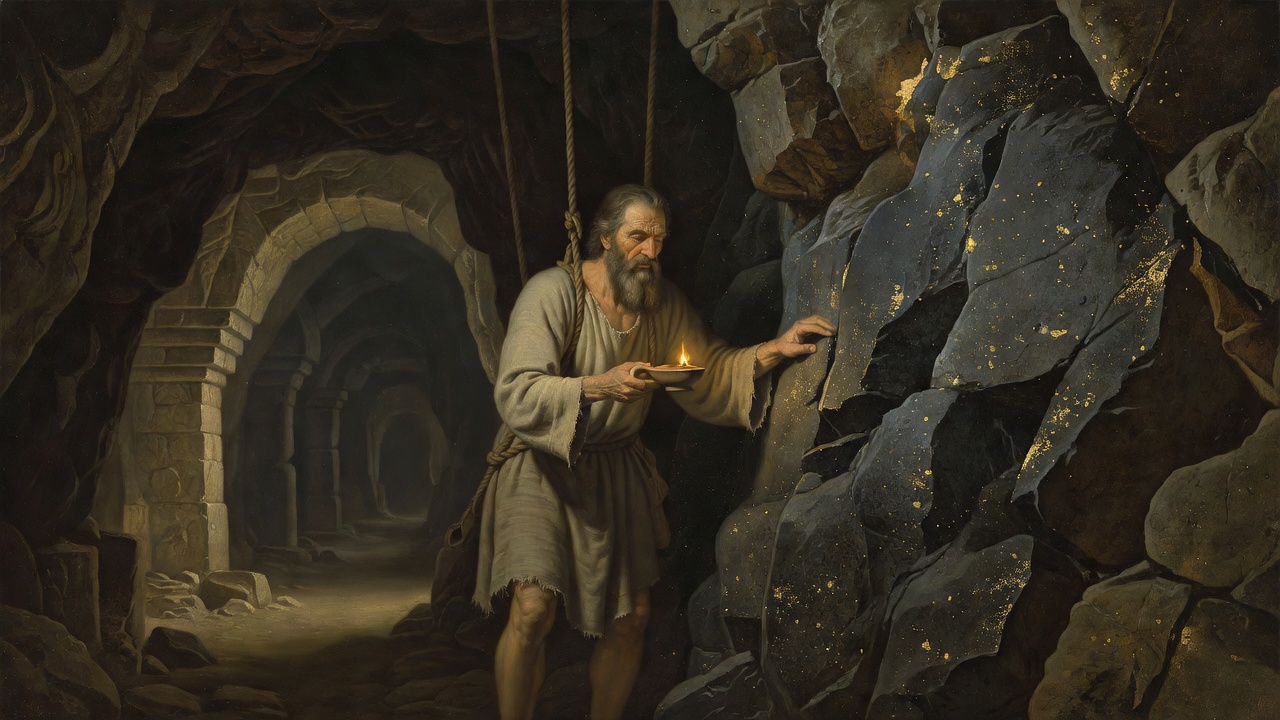
1Gen mi n anba tè kote yo jwenn ajan. Gen kote se la yo netwaye lò. 2Yo fouye tè pou jwenn fè. Yo fonn wòch pou jwenn kwiv. 3Yo desann ak limyè anba tè, kote ki fè nwa anpil, yo fouye byen fon nan vant latè, mezi yo kapab. Y' al chache wòch ki kache kote ki fè nwa anpil la. 4Byen lwen, kote moun pa ka rete, kote moun pa janm mete pye yo, moun ap fouye gwo koridò anba tè. Y'ap travay pou kont yo, ak yon kòd pase nan ren yo, y'ap balanse nan twou yo. 5Manje soti nan tè. Men, nan zantray latè a dife fin debòde. 6Wòch latè a gen bèl pyè safi ladan l'. Nan pousyè a yo jwenn ti grenn lò. 7Koukou pa janm konnen chemen pou ale la. Karanklou pa janm wè kote sa a ak je l'. 8Ni lyon, ni ankenn lòt bèt nan bwa, pa janm mete pye yo la. 9Yo fouye nan wòch dife. Yo fè gwo twou byen fon nan pye mòn yo. 10Yo fè gwo koridò byen long nan wòch yo. Yo jwenn tout kalite bèl pyè bijou ki koute chè. 11Yo fouye nan sous tèt dlo yo tou. Yo mete deyò tou sa ki te kache. 12Men, kote nou ka jwenn konesans lan? Kote bon konprann lan ye menm? 13Lèzòm pa konnen sa pou yo fè pou yo mete men sou li. Yo pa jwenn li ankenn kote sou latè. 14Fon lanmè a deklare li pa gen bagay konsa. Lanmè a deklare bon konprann pa lakay li. 15Ou te mèt gen lò, ou pa ka achte l'. Ou pa ka bay lajan pou ou genyen l'. 16Li gen plis valè pase lò peyi Ofi a. Bèl pyè oniks ak safi pa ka parèt la. 17Yo pa ka konpare l' ni ak lò ni ak bèl kristal. Yo pa ka boukante l' pou yon bèl veso fèt an lò. 18Pou grenn koray ak wòch kristal menm, yo pa ka parèt la. Pito ou al dèyè bon konprann pase ou ale dèyè bèl pyè lanbi. 19Topaz peyi Letiopi pa vo anyen devan l'. Pi bon lò a pa ka konpare ak bon konprann. 20Men, kote nou ka jwenn konesans lan? Kote bon konprann lan ye menm? 21Pa gen moun, pa gen bèt ki ka wè l', pa menm zwazo k'ap vole nan syèl la. 22Ata lanmò ak simityè di se tande yo tande nonmen non l'. 23Se Bondye ase ki konn chemen an. Se li ase ki konnen kote li rete. 24Paske Bondye wè dènye bout latè. Li voye je l', li gade tou sa ki anba syèl la. 25Lè Bondye t'ap bay van yo pèz yo, lè li t'ap bay dlo lanmè a mezi kote pou l' rive a, 26lè li t'ap bay lòd kote pou lapli tonbe ak chemen pou loraj yo pran lè y'ap gwonde, 27se lè sa a li te wè bon konprann, li wè sa li vo. Li egzaminen l' byen egzaminen, li sonde l' byen sonde. 28Apre sa, Bondye di moun konsa: -Gen krentif pou Bondye, se sa ki rele bon konprann. Vire do bay sa ki mal, men sa ki rele gen lespri.
Did you know?
The Mining of Treasures and the Value of Wisdom
- Job 28 offers a vivid description of ancient mining practices, including digging deep shafts far from human settlements, descending on ropes, tunneling through rock, and damming underground water sources to extract copper, iron, silver, and precious stones.Sources: the Bible text itself
- To emphasize that wisdom exceeds all earthly wealth, the poem references the gold of Ophir and topaz from Cush (translated as Ethiopia in the Greek Septuagint). Ophir was a famous ancient source of pure gold often linked to Arabia or India, while Cush designated the region south of Egypt.Sources: the Bible text itself · Ophir · Ethiopia
- The poem concludes that while humans can master the subterranean world to extract buried treasures, true wisdom cannot be bought or mined. Instead, God reveals that wisdom for mortals consists in the fear of the Lord and turning away from evil.Sources: the Bible text itself
Notes written with AI assistance from open sources (Theographic Bible Metadata, CC BY-SA 4.0; Easton’s Bible Dictionary, public domain) and reviewed before publishing.
Places in this chapter
- Ethiopia · 16.935, 33.751 · verse 19
Only places identified with high confidence are shown (90% or more according to the scholarly sources compiled by OpenBible). Period map: DARE (Digital Atlas of the Roman Empire), CC BY 4.0; modern map: © OpenStreetMap contributors; places: OpenBible.info (CC BY 4.0).
Credits and license for this translation
Bib La
The Holy Bible in Haitian Creole
Public Domain
Language: Kreyòl Ayisyen (Haitian)
In the Public Domain due to publication without copyright notice in 1985, and without subsequent registration within 5 years.
2020-03-10
Source: http://ebible.org/hat/ · eBible.org