Jeremiah 47
Bib La · Tap a verse to see its cross-references.
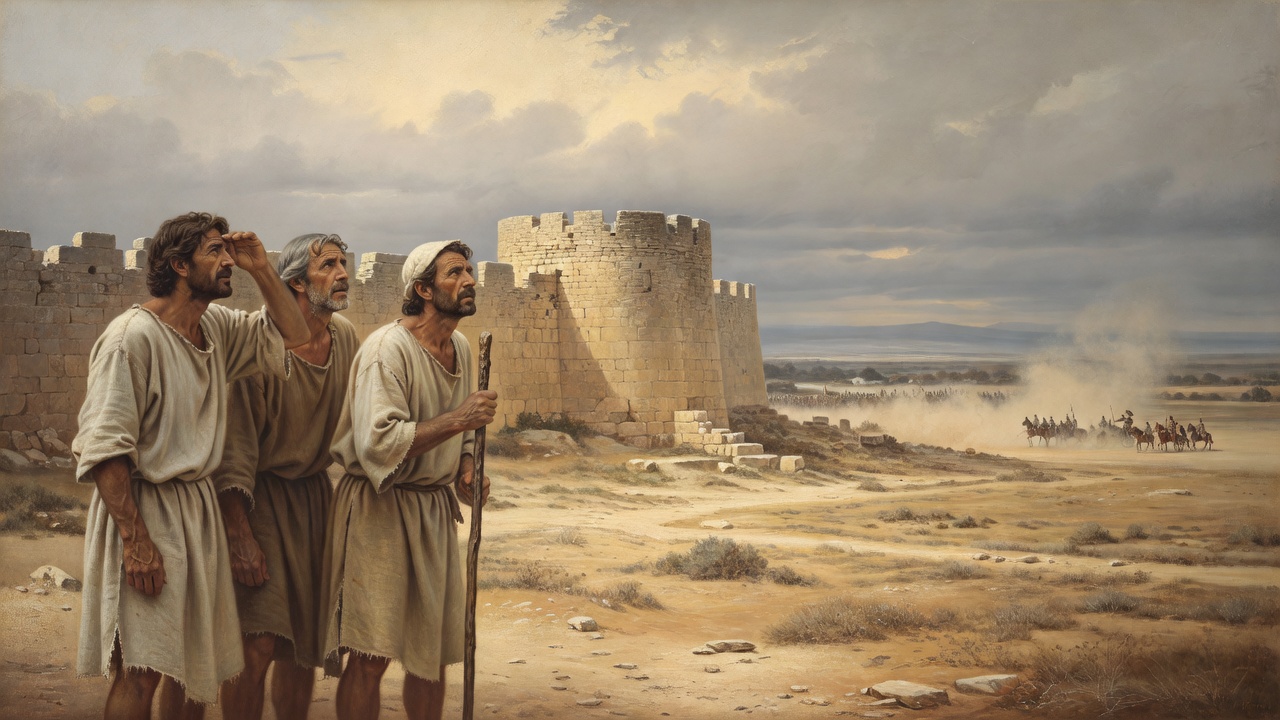
1Men mesaj Seyè a te bay pwofèt Jeremi sou peyi Filisti a, anvan farawon an t' al atake Gaza. 2Seyè a di konsa: -Gade! Bò nan nò, dlo yo ap gonfle, y'ap fè yon gwo lavalas k'ap desann, y'ap anvayi peyi a, y'ap kouvri tou sa ki ladan l'. Y'ap anvayi lavil yo ak tout moun ladan yo. Moun ap rele, y'ap plenn. Tout moun nan peyi a nan gwo lapenn. 3Lè y'a tande bri zago chwal yo ap frape tè a, bri cha lagè yo k'ap kouri vini ak bri wou yo k'ap woule atè a, papa p'ap ka fè anyen pou pitit yo, tèlman y'a dekouraje. 4Lè a rive pou yo ravaje tout peyi Filisti a nèt, pou yo disparèt tout rès moun ki t'ap bay lavil Tir ak lavil Sidon konkou. Se mwen menm Seyè a k'ap detwi tout moun Filisti yo, tout moun ki soti nan lil Krèt la. 5Moun Gaza yo nan gwo lapenn, yo kale tèt yo. Moun Askalon yo pa ka pale. Kilè rès moun nan fon Filisti a va sispann kòche kò yo ak kouto pou plenn sò mò yo? 6Adye! Kilè nepe Seyè a va sispann touye moun? Tounen nan djenn ou! Rete tou dousman, poze kò ou la! 7Men, ki jan pou li fè poze lè Seyè a ba li lòd travay? Li gen pou l' ale jouk lavil Askalon dèyè moun ki rete bò lanmè a. Se la mwen voye l' ale.
Did you know?
Judgment on the Philistines
- Jeremiah refers to the Philistines as the remnant from the coasts of Caphtor. Biblical traditions identify Caphtor as the place of origin of the Philistines, a location widely associated by scholars with Crete or parts of the eastern Mediterranean coast.Sources: the Bible text itself · Caphtor
- The chapter directs its warnings against Gaza and Ashkelon, two of the five prominent Philistine cities along the Mediterranean coast. Both were ancient centers known for their strategic position and trade links connecting Egypt and the surrounding regions.Sources: the Bible text itself · Gaza · Ashkelon
- The prophecy notes that the coming destruction would cut off every remaining ally from Tyre and Sidon. These two major Phoenician ports to the north were key maritime centers whose interests were closely intertwined with the coastal region.Sources: the Bible text itself · Tyre · Sidon
Notes written with AI assistance from open sources (Theographic Bible Metadata, CC BY-SA 4.0; Easton’s Bible Dictionary, public domain) and reviewed before publishing.
Places in this chapter
- Gaza · Today: Tell Harube · 31.504, 34.464 · verses 1, 5
- Sidon · Today: Sandikli archaeological site in Sidon · 33.561, 35.372 · verse 4
- Tyre · 33.271, 35.196 · verse 4
- Ashkelon · Today: Tel Ashkelon · 31.664, 34.546 · verses 5, 7
- Great Sea · Today: Mediterranean Sea · 31.805, 34.170 · verse 5
- Philistia · 31.664, 34.546 · verse 5
Only places identified with high confidence are shown (90% or more according to the scholarly sources compiled by OpenBible). Period map: DARE (Digital Atlas of the Roman Empire), CC BY 4.0; modern map: © OpenStreetMap contributors; places: OpenBible.info (CC BY 4.0).
Credits and license for this translation
Bib La
The Holy Bible in Haitian Creole
Public Domain
Language: Kreyòl Ayisyen (Haitian)
In the Public Domain due to publication without copyright notice in 1985, and without subsequent registration within 5 years.
2020-03-10
Source: http://ebible.org/hat/ · eBible.org