Isaiah 62
Bib La · Tap a verse to see its cross-references.
1Jan m' renmen mòn Siyon sa a! Se pou m' pale. Jan m' renmen lavil Jerizalèm sa a, mwen p'ap pran kanpo, jouk delivrans li va parèt tankou limyè solèy k'ap leve, tankou flanbo k'ap klere nan fènwa. 2Jerizalèm, tout nasyon yo va wè delivrans ou. Tout wa yo pral wè pouvwa ou. Y'a ba ou yon lòt non, non Seyè a menm va chwazi pou ou a. 3W'a tankou yon bèl kouwòn nan men Seyè a, tankou yon bèl foula nan men Bondye ou la. 4Yo p'ap rele ou ti mepriz ankò. Yo p'ap konsidere peyi ou la tankou yon madanm mari l' kite l'. Y'a rele ou Kè kontan pou Bondye. Y'a rele peyi ou la Bèl madan marye. Paske ou fè Seyè a plezi, l'ap tankou yon mari pou peyi ou la. 5Menm jan yon jenn gason marye ak yon jenn fi, Seyè a pral marye avè ou. Menm jan yon nonm marye kontan madanm li, Bondye ou la pral kontan ou 6Jerizalèm, mwen mete gad ap fè pòs sou miray ou yo. Lajounen kou lannwit, se pou yo pale. Se pou yo fè Seyè a chonje pwomès li te fè ou yo, pou li pa janm bliye ou. 7Se pou yo kenbe l' kout jouk l'a fè lavil Jerizalèm kanpe ankò, pou toupatou sou latè y'a fè lwanj pou li. 8Seyè a fè sèman, l'ap kenbe l' avèk fòs ponyèt li. -Mwen p'ap lage farin ble nou an nan men lènmi nou yo pou yo manje l'. Mwen p'ap kite moun lòt nasyon yo bwè diven nou te fatige kò nou fè ak kouraj nou. 9Men, nou menm ki te ranmase rekòt grenn yo, se nou ki va manje yo, lèfini n'a fè lwanj Seyè a. Se nou menm ki va bwè diven nan lakou kay ki apa pou Bondye a. 10Nou menm moun lavil Jerizalèm, pase nan pòtay la, soti nan lavil la. Al pare wout la pou pèp la tounen. Ranbleye! Wete wòch sou tout wout la! Leve drapo a, fè tout nasyon yo siyon! 11Seyè a pral fè tout latè a konnen nouvèl la: -Di moun lavil ki sou mòn Siyon an: Men moun ki delivre nou an ap vini. L'ap mennen moun li sove yo avè l'. Y'ap mache devan l'. Se rekonpans li, se rezilta travay li. 12Y'a rele nou pèp ki apa pou Bondye a, pèp Bondye delivre a. Y'a rele lavil Jerizalèm lavil Bondye renmen an, lavil Bondye p'ap janm lage a.
Did you know?
The Restoration and Renaming of Jerusalem
- In this chapter, Jerusalem and Zion are promised new symbolic names that reflect a dramatic change in status. Rather than being known as Forsaken or Desolate, the city and its land are given names such as Hephzibah (meaning delight is in her) and Beulah (signifying a married land), portraying restoration through the imagery of a joyous wedding feast.Sources: the Bible text itself · Jerusalem · Zion
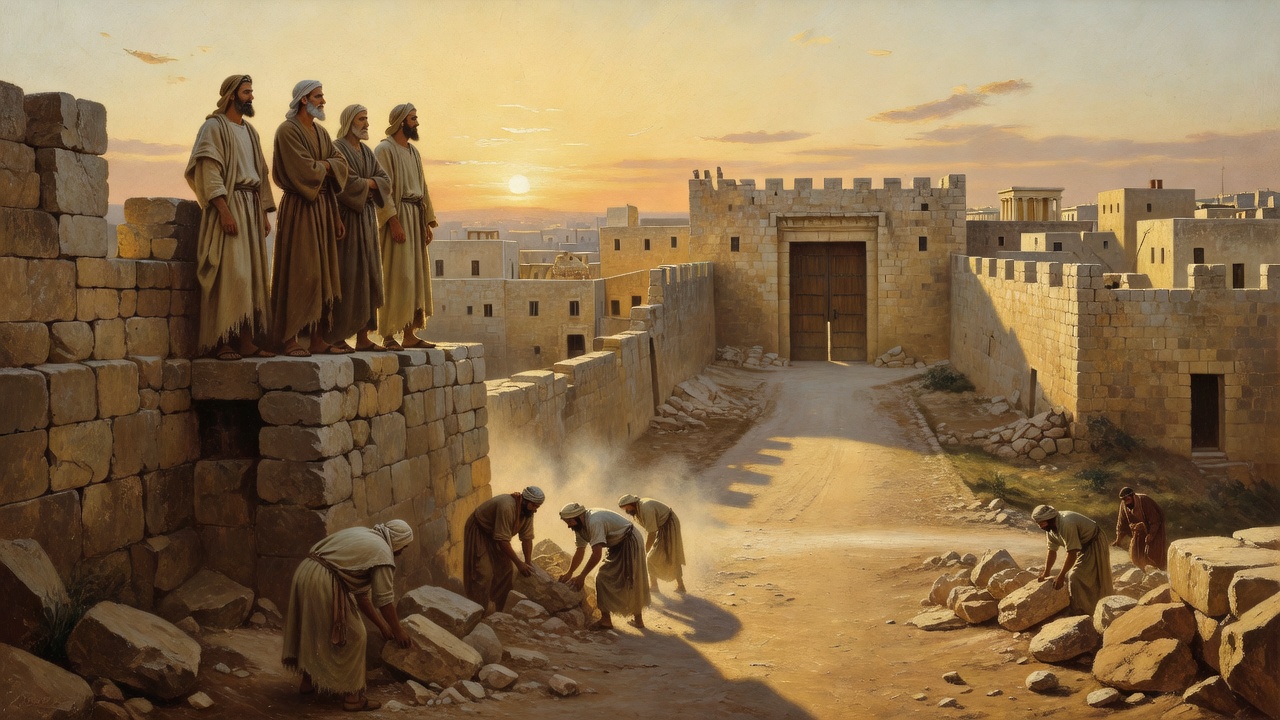
- The poem depicts continuous watchmen stationed atop the stone walls of Jerusalem who keep unceasing vigil day and night. Their role goes beyond standard military sentry duty, as they are instructed to persistently remind the LORD to establish the mountain city and make it the praise of the earth.Sources: the Bible text itself · Jerusalem
- The command to go through the city gates, clear stones, and build up a raised highway uses the ancient imagery of preparing a royal processional route to welcome returning people and signal salvation to surrounding nations.Sources: the Bible text itself
Notes written with AI assistance from open sources (Theographic Bible Metadata, CC BY-SA 4.0; Easton’s Bible Dictionary, public domain) and reviewed before publishing.
Places in this chapter
- Jerusalem · 31.777, 35.234 · verses 1, 5, 6, 7, 8, 12
- Zion · Today: Jerusalem · 31.777, 35.234 · verses 1, 11
Only places identified with high confidence are shown (90% or more according to the scholarly sources compiled by OpenBible). Period map: DARE (Digital Atlas of the Roman Empire), CC BY 4.0; modern map: © OpenStreetMap contributors; places: OpenBible.info (CC BY 4.0).
Credits and license for this translation
Bib La
The Holy Bible in Haitian Creole
Public Domain
Language: Kreyòl Ayisyen (Haitian)
In the Public Domain due to publication without copyright notice in 1985, and without subsequent registration within 5 years.
2020-03-10
Source: http://ebible.org/hat/ · eBible.org