Isaiah 50
Bib La · Tap a verse to see its cross-references.
1Men sa Seyè a di ankò: -Si m' te voye manman nou tounen lakay li, kote papye divòs mwen te ba li? Ki moun mwen te dwe lajan pou m' ta vann nou ba li tankou esklav? Se poutèt mechanste nou yo mwen te vann nou. Se poutèt peche nou yo mwen te voye manman nou tounen lakay li. 2Poukisa, atò, lè mwen vin delivre nou an, pa gen pesonn ki vini jwenn mwen? Poukisa, lè m' rele nou, pesonn pa reponn? Eske se fòs mwen pa gen fòs ase pou m' delivre nou? Eske ponyèt mwen twò fèb pou m' sove nou? Se konnen nou pa konnen mwen annik louvri bouch mwen epi tout dlo lanmè cheche, tout larivyè tounen ravin chèch, tout pwason mouri paske yo pa jwenn dlo. Y'ap pouri. 3Mwen kouvri syèl la ak nwaj nwa. Li tankou yon moun ki nan lapenn pou ka lanmò! 4Seyè a moutre m' sa pou m' di, pou m' ka ankouraje moun ki pa kapab ankò. Chak maten li louvri zòrèy mwen, pou m' ka tande sa li pral moutre m', jan yon bon patizan fèt pou fè. 5Seyè a, Bondye a, louvri lespri mwen, mwen pa kenbe tèt ak li. Mwen pa renka devan li. 6Mwen pare do m' bay moun k'ap bat mwen yo. Mwen lonje figi m' bay moun k'ap rache bab mwen yo. Mwen pa kache figi m' lè y'ap joure m', lè y'ap krache sou mwen. 7Seyè a, Bondye a, ap pote m' sekou. Se poutèt sa, jouman yo pa ka fè m' anyen. Mwen sere dan m', mwen mare kè m' pou m' soufri. Mwen sèten, Bondye p'ap fè m' wont. 8Moun ki pral rann mwen jistis la pa lwen rive. Ki moun ki vle plede ak mwen? Ann konparèt ansanm devan tribinal la? Kilès ki vle rele m' lajistis? Se pou l' vin kanpe la devan m'! 9Se Seyè a menm, Bondye a, k'ap pote m' sekou. Ki moun ki ka fè yo kondannen m'? Tout moun k'ap akize m' yo pral disparèt. Y'ap tankou yon rad vèmen ap devore. 10Nou tout ki gen krentif pou Seyè a, nou tout k'ap koute pawòl sèvitè li a, nou wè jan chemen m'ap swiv la fè nwa san yon ti limyè ladan l'. Se pou nou met konfyans nou nan Seyè a. Apiye sou Bondye nou an! 11Men nou tout k'ap pouse dife, k'ap fè plan pou detwi lòt moun, se nou menm ki pral boule nan dife nou limen an, se nou menm ki pral pran nan plan n'ap fè yo. Se Seyè a menm ki pral fè sa rive nou: Nou pral tòde ak doulè nan kabann nou.
Did you know?
The Obedient Servant and Divine Vindication
- In ancient Near Eastern legal custom, a husband issued a certificate of divorce to formalize a separation, and impoverished debtors might sell their children into servitude. In Isaiah 50:1, God uses these legal metaphors to demonstrate that Israel was not abandoned due to a divine debt or permanent annulment of the covenant, but went into exile because of its own transgressions.Sources: the Bible text itself
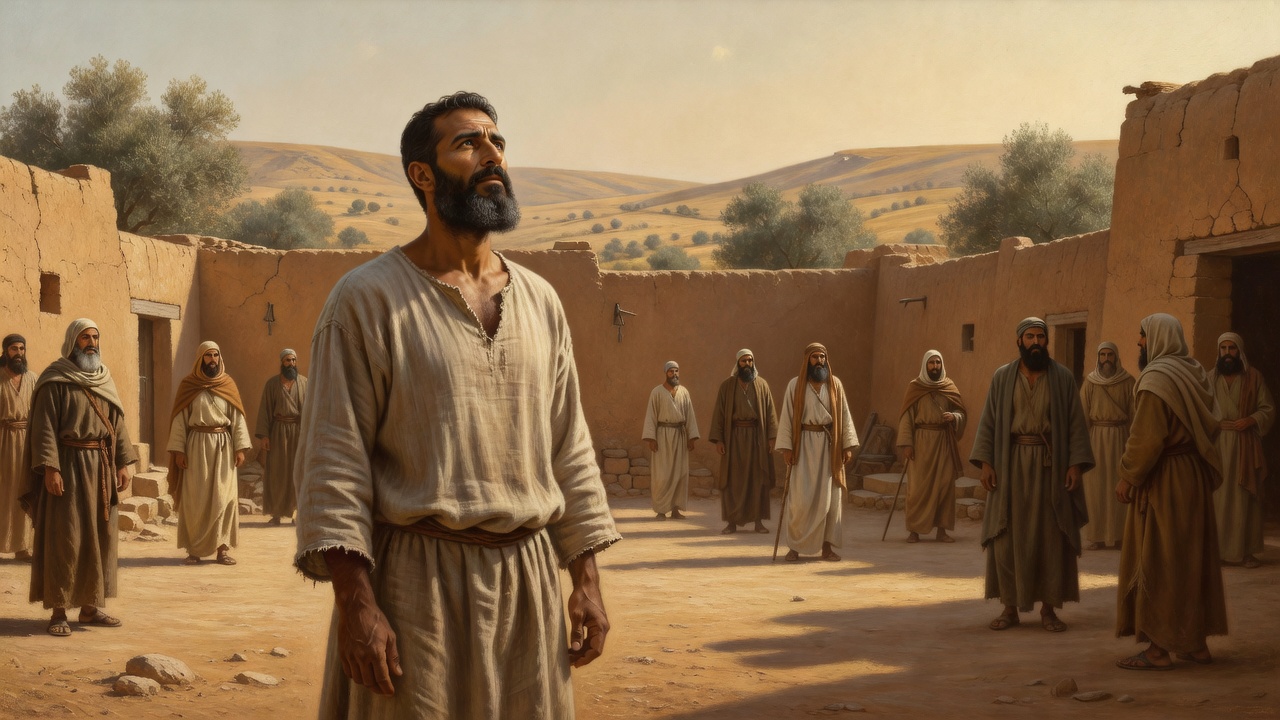
- The speaker in Isaiah 50:4–7 portrays the posture of an attentive disciple who willingly endures physical maltreatment, including beatings, the plucking of his beard, and being spat upon. Setting one's face 'like flint' is a vivid idiom signifying resolute determination and steadfast trust in God despite public shame and hostility.Sources: the Bible text itself
Notes written with AI assistance from open sources (Theographic Bible Metadata, CC BY-SA 4.0; Easton’s Bible Dictionary, public domain) and reviewed before publishing.
Credits and license for this translation
Bib La
The Holy Bible in Haitian Creole
Public Domain
Language: Kreyòl Ayisyen (Haitian)
In the Public Domain due to publication without copyright notice in 1985, and without subsequent registration within 5 years.
2020-03-10
Source: http://ebible.org/hat/ · eBible.org